The romanticisation of nature
Our specialist field shows that nature is a landscape inhabited by all kinds of plants and animals. A landscape shaped by circumstances that offer opportunities to every living thing, drawing on its innate will to (sur)vive.
The essential principle underpinning my philosophical approach to nature is that it is indifferent to humanity. Human beings are no more than a pinhead-sized element in the universe. But we have every reason to treat nature with care if we aspire to a good quality of (survival) here on Earth.
The idea that humans “dominate” nature or turn it into a picture through bold compositions, as in Baroque or Renaissance gardens, is, of course, entirely illusory. We may pretend to believe that we have nature under control in a reassuring piece of theatrical staging, but the balance of power between nature and humanity seems much like that between Don Quixote and the windmills.
Personally, I would say that I adopt a kind of “negotiating” stance towards nature. It must be treated with due consideration because, as I have just pointed out, nature has no concern for humanity.
Dry conditions on one hand, moisture on the other
As a landscape architect, I have spent the past decade specialising in two areas: green roofs on the one hand, and planted swales on the other.
In theory, the conditions for creating these two types of garden are diametrically opposed. On a green roof, plants must survive in very dry conditions. In a planted swale, by contrast, the aim is to retain water in the soil and thereby support rich biodiversity. Anyone with a knowledge of biology knows that water in the landscape provides a source of interesting biotopes.
What fascinates me is the “process” aspect of nature’s dynamics. Everything is in motion, and green roofs and planted swales are perfect illustrations of this. This is what the Greeks called Panta Rhei. In both roof gardens and rain gardens, we work with mixtures of different plant species which we believe, in theory, can adapt to the conditions they will encounter. Rather than imposing our will on nature, we let the “process” unfold, allowing the plant species best suited to the conditions to thrive.
We apply this methodology to both xerophytes (plants that live in dry environments) and helophytes (plants that can survive in water). What we see is that the plants best adapted to the prevailing conditions are the ones that thrive. We can never predict what the result will look like. We allow certain wild plants into the mix if they can add value to the garden’s appearance or attract birds, bees or other insects. Incidentally, I have observed that an attractive green roof or planted swale does not necessarily support rich biodiversity. This is a key point, but authorities often tend to conflate the two in their decisions or communications.
I have also observed that some dominant plant species drive out diversity! Take maples, for example, which can eventually take over an entire area. Or willows, which are common in our region and will colonise your planted swale very quickly.
Gardeners are essential
Fortunately, gardeners are there to ensure that one or more plant species do not disrupt the dynamic balance or the desired appearance. With their knowledge, they can step in to reorganise the “theatre” that is every garden!
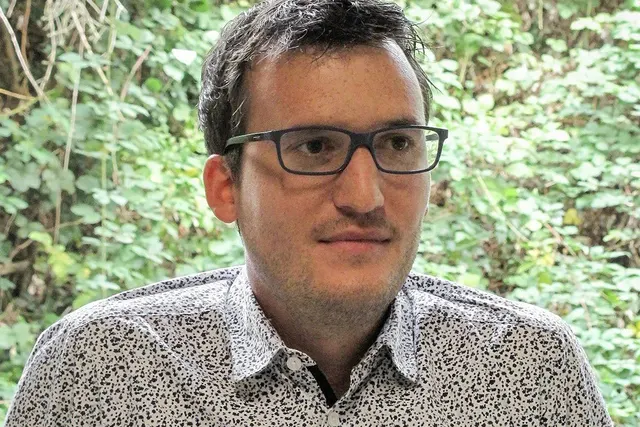
Denis Dujardin
Landscape-Urbanism-Scenography
Question about this story? Ask your question
Keep following this
Get an email when a new story is published. No account needed.
- ThemeGrowing suitable plants
- SubjectOpinion