Gravel stabilisation and landscaping
Texte Catherine Frennet | Photos ACO
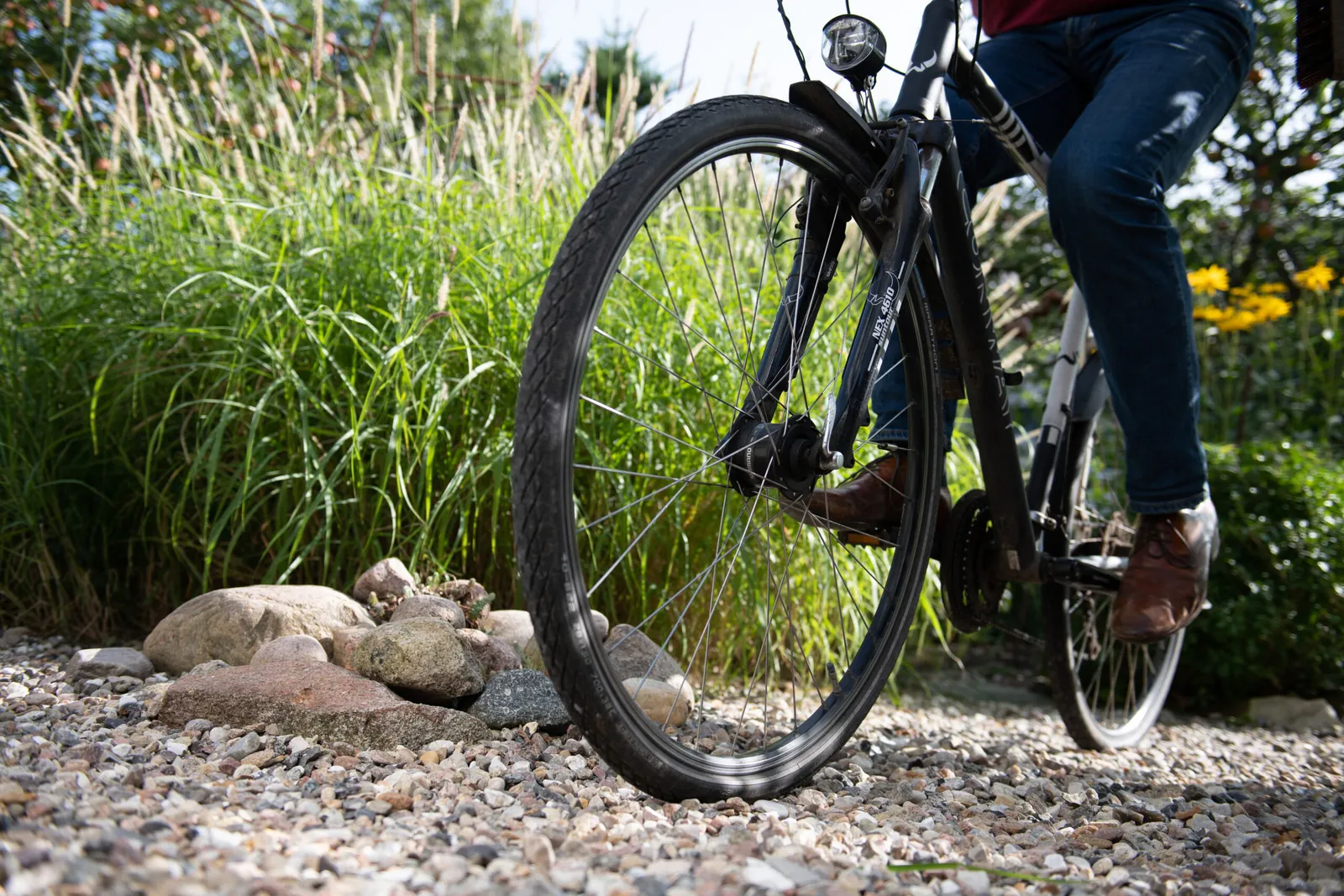
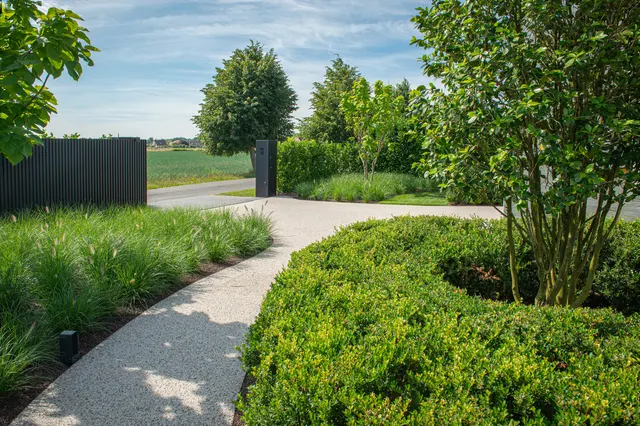
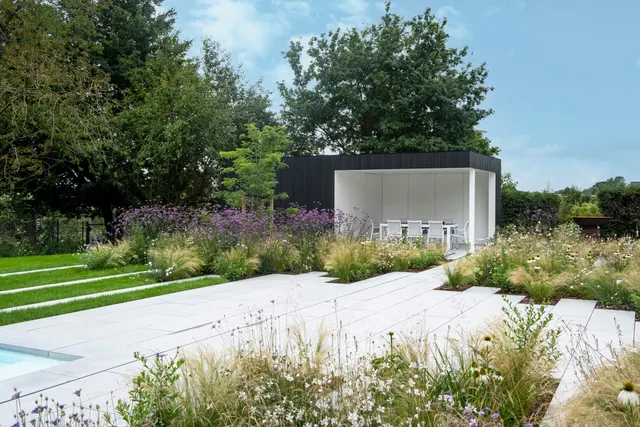
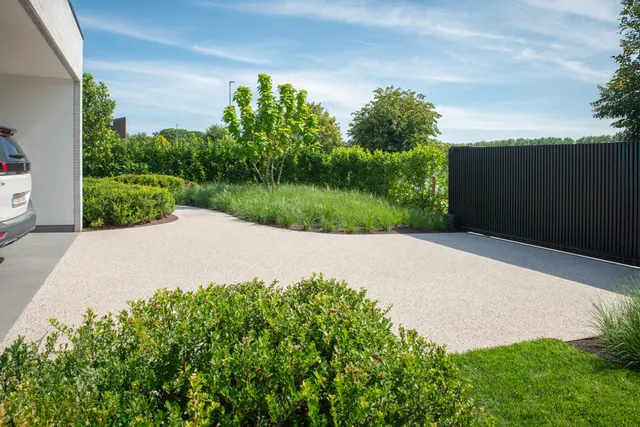
In landscaping projects, sports grounds and driveways, gravel is a popular choice thanks to its natural appearance and permeability. Without suitable stabilisation, however, it can present certain drawbacks: rutting, aggregate movement and frequent maintenance… To meet the needs of professionals, ACO’s Gravel Grid panels provide a reliable, durable technical solution.
A unique conical cellular design
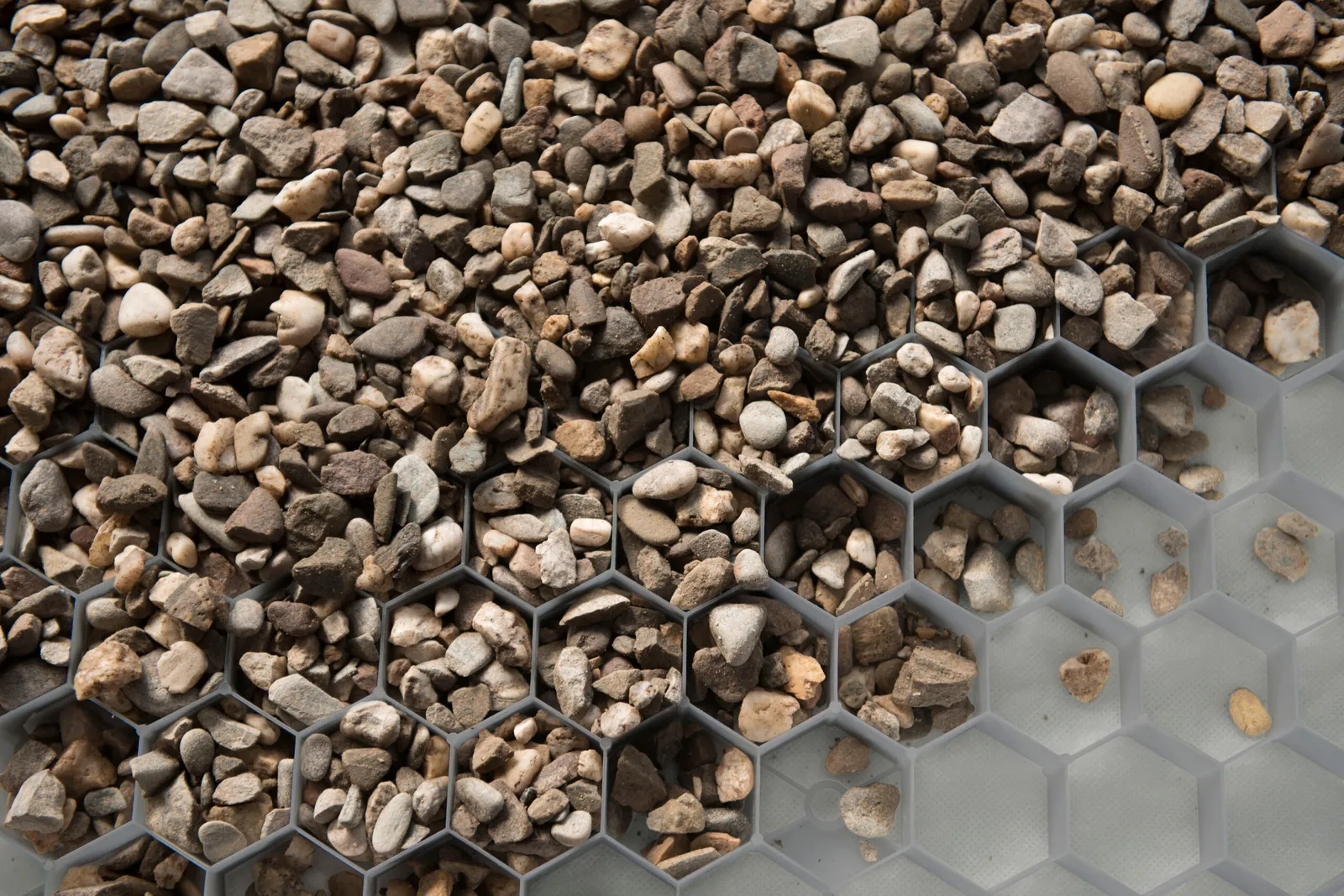
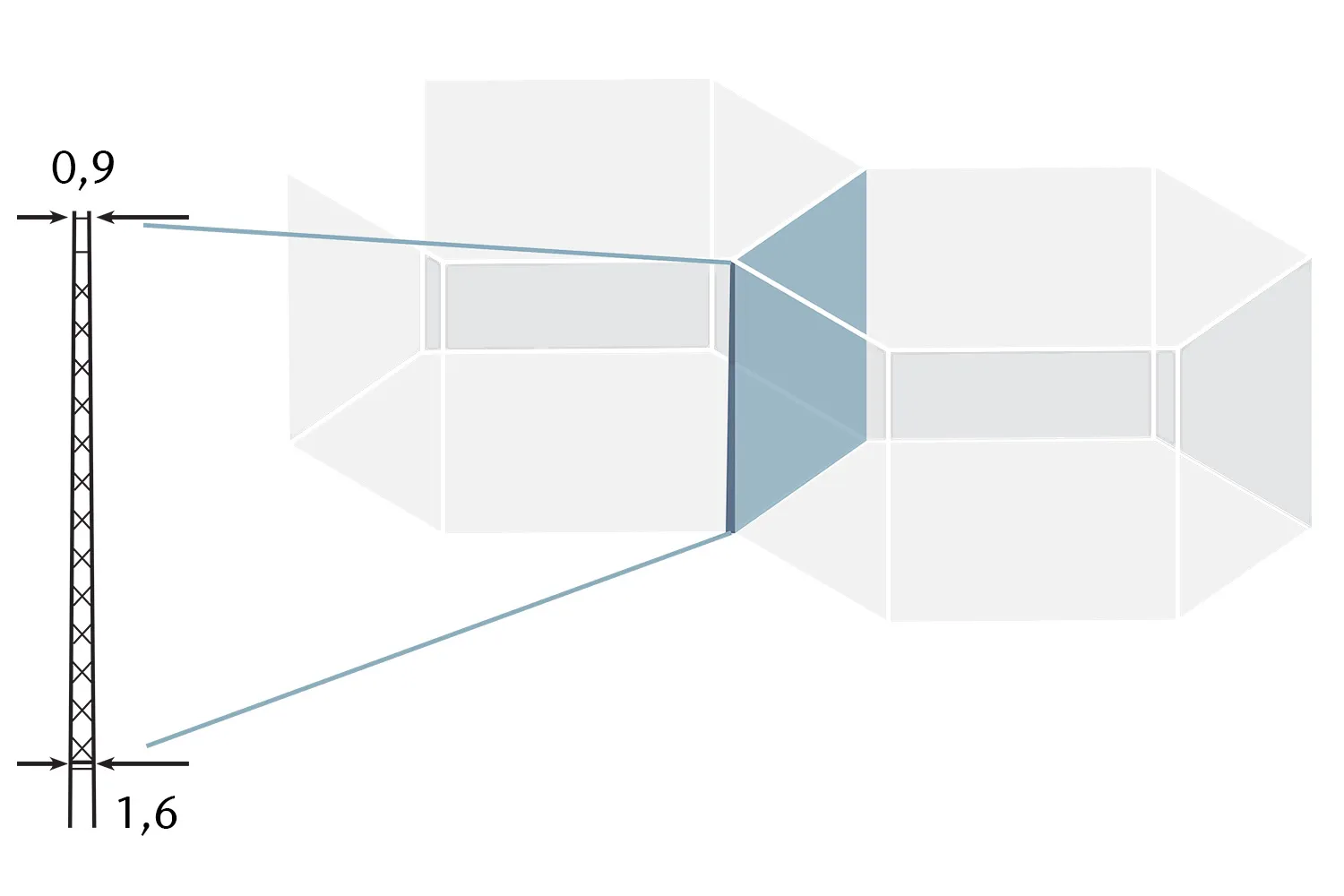
One of Gravel Grid’s main advantages is its innovative honeycomb structure. Unlike traditional systems, its cells are conical in shape: thicker at the base and thinner at the top. This design combines strength with flexibility. The reinforced base provides excellent compressive strength, while the upper section absorbs stresses and accommodates gravel movement without breaking. The result is lasting stability, even under heavy loads. Depending on the version selected, the panels withstand pressures of up to 300 t/m² (Standard) or 450 t/m² (Heavy Duty), making them suitable for both light vehicles and areas accessible to heavy goods vehicles.
Optimum stability, even under intensive use
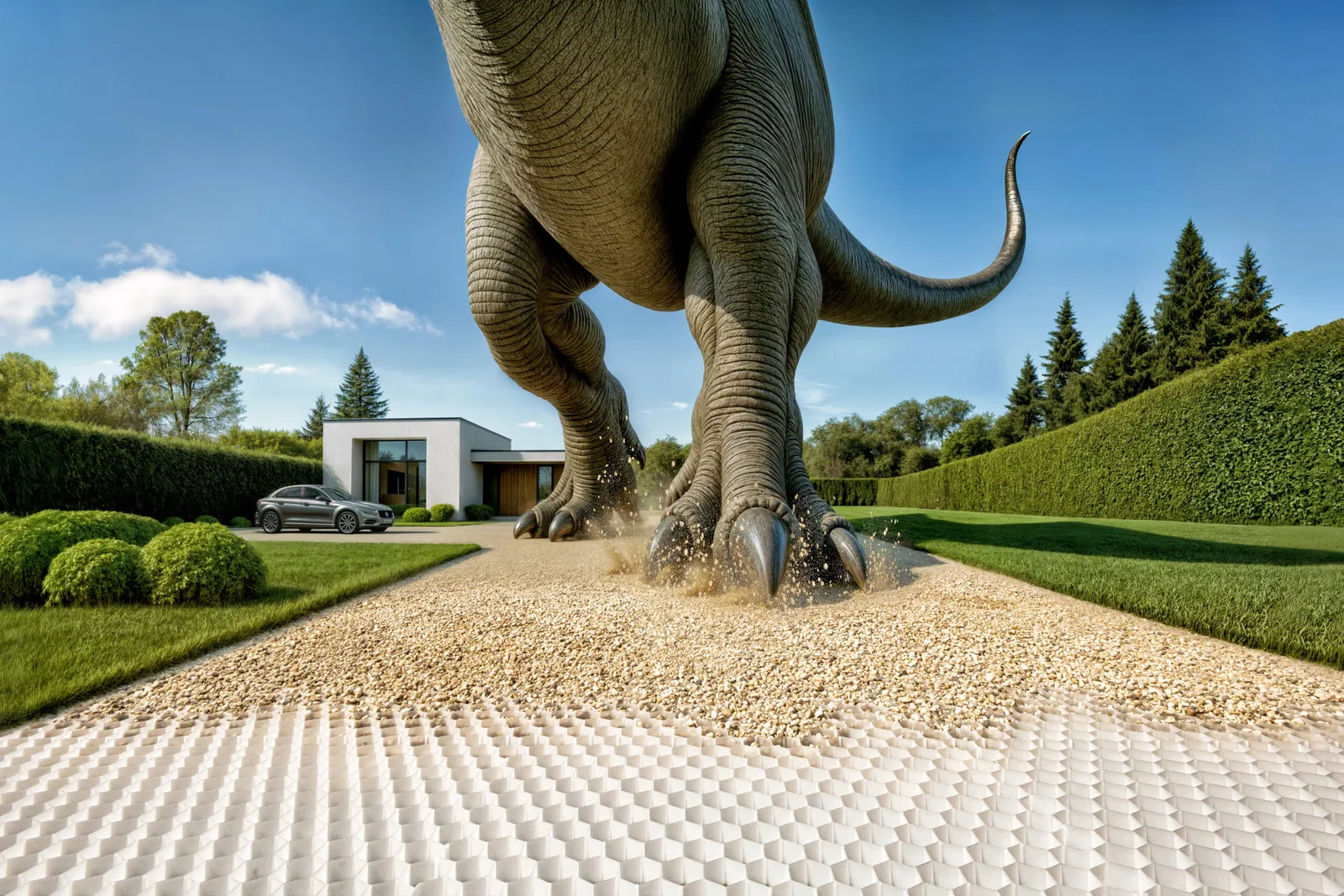
In use, this conical structure keeps the aggregate in place, limiting lateral movement, rutting and maintenance work. The integrated permeable geotextile is an added benefit: it reduces weed growth while allowing water to infiltrate naturally. The system therefore contributes to sustainable rainwater management, a key consideration in today’s projects.
A responsible solution
Made from 100% recyclable polypropylene, Gravel Grid panels form part of a coherent environmental approach. They also hold Blauer Engel certification, a recognised label that guarantees a low environmental impact throughout the product’s life cycle. This is an increasingly important criterion for projects subject to sustainability requirements.
The importance of choosing the right gravel
The system’s overall performance also depends on the choice of gravel. For areas subject to heavy loads, hard stone with a suitable particle size and an angular shape is recommended. These characteristics help the particles interlock and improve stability. By contrast, rounded or excessively coarse gravel should be avoided in areas used by vehicles, as it moves more easily.
Installation quality matters
As with any technical system, installation quality is crucial. The panels must be laid on a stable, well-levelled, free-draining sub-base, sized to suit the anticipated loads and incorporating a compacted crushed-stone foundation layer. Once the panels have been laid and filled, a 1.5 to 2 cm layer of gravel must be applied above the cells to protect the structure and ensure even load distribution. An excessive thickness, however, can compromise the surface’s stability.
Designed for professionals with high standards, ACO’s Gravel Grid panels offer a comprehensive solution: mechanical strength, durability, ease of maintenance and compliance with environmental requirements. This technical solution enables gravel to reach its full potential in outdoor landscaping.
Een zakelijke vraag aan ACO? Get in touch
Companies in this story

Keep following this
Get an email when a new story is published. No account needed.
- ThemeDesigning living landscapes
- SubjectNews
- CompanyACO