Sustainable concrete, innovation and prefabrication: how Béton de la Lomme is preparing for the future of construction
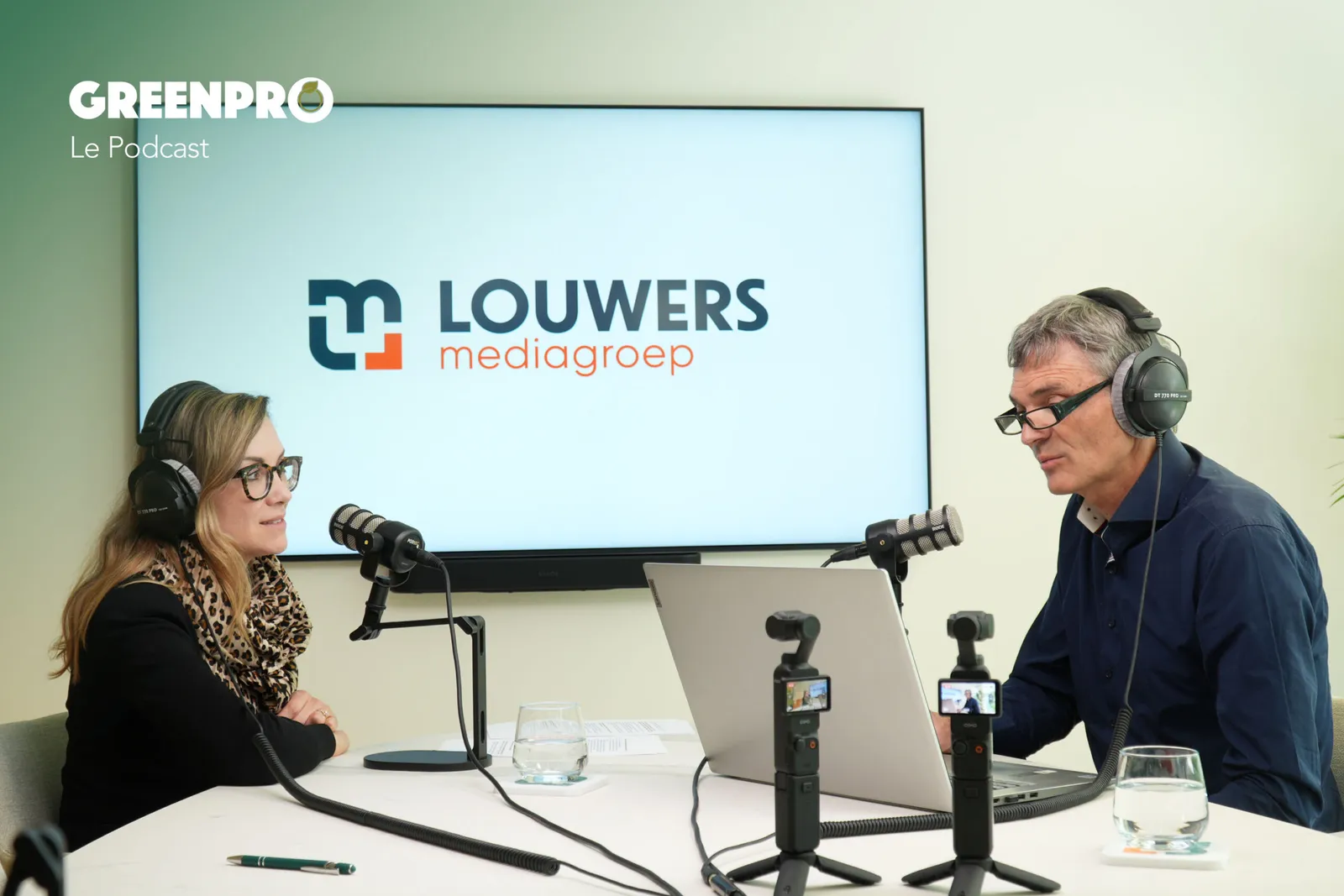
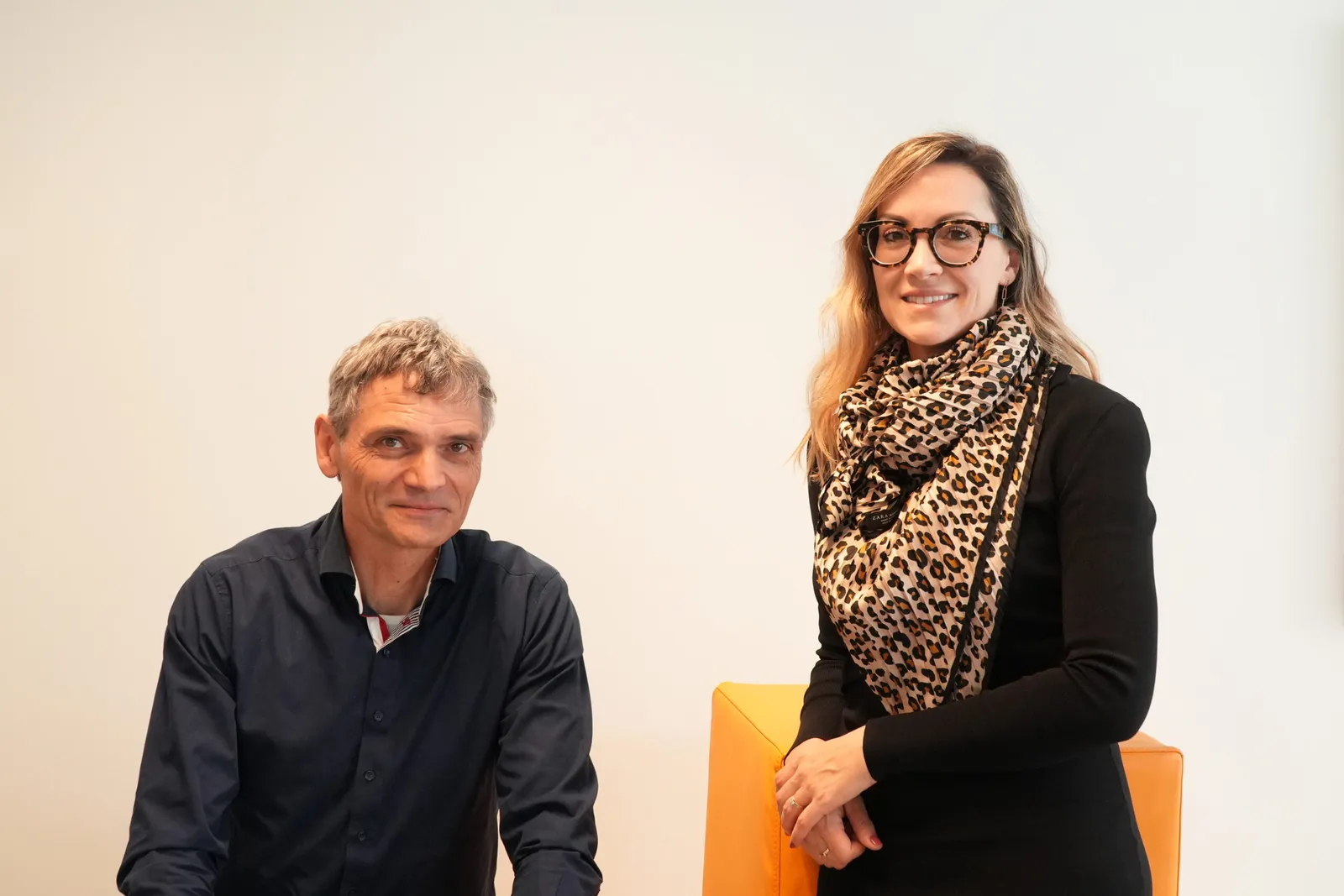
Concrete is an essential construction material, but it is also central to the challenge of reducing CO₂ emissions. In this episode of Construire la Wallonie, Stéphanie Diaz speaks to Jacky Chalon, head of the design office at Béton de la Lomme. Together, they discuss innovations in precast concrete, new finishes, research and development, ESG, circular construction and the opportunities offered by low-carbon concrete to meet the challenges of tomorrow’s construction sector.
Full transcript
All chapters (23)
- Introduction: concrete and the challenges of the transition
- The two demoulding methods
- The different product ranges
- Standardisation and bespoke products
- The benefits of precast concrete
- Ever higher-performing concrete
- An ESG-based management model
- ESG as a driver of innovation
- The three strands of research and development
- Improving existing products
- New finishes
- Green Wall elements
- A Corten® steel-effect finish
- Extending the outdoor landscaping range
- Rectilom® blocks
- Dummy joints and ergonomics
- The new generation of concrete
- An increasingly sustainable material
- Misconceptions about concrete
- The concrete of tomorrow
- Innovation and the future of Wallonia
- Prospects for Béton de la Lomme
- Conclusion
Introduction: concrete and the challenges of the transition
Stéphanie Diaz Hello everyone, and welcome to Construire la Wallonie, the podcast that gives a voice to those imagining and building the Wallonia of tomorrow. Today, we’re looking at concrete, a material said to account for 8 % of all CO2 emissions worldwide, which is a considerable figure. That is why this material, let’s remember, the most widely used in the world, is undergoing a major transformation. We’re discussing this evolution and precast concrete products with Jacky Chalon, head of the design office at Béton de la Lomme. Hello, Jacky.
Jacky Chalon Hello, Stéphanie.
Stéphanie Diaz Thanks for joining us today. What types of concrete does Béton de la Lomme offer? We know there are several.
The two demoulding methods
Jacky Chalon Generally speaking, all precast manufacturers work with two types of concrete, because there are two methods for demoulding concrete products: immediate demoulding and delayed demoulding. Immediate demoulding is possible with relatively dry concrete, mechanically pressed into moulds. The products can be demoulded onto boards straight away. They then dry in curing chambers. With this method, the moulds can be filled and demoulded several hundred times, sometimes several thousand times. This is normally done using automated machinery, such as block presses. The other method is delayed demoulding, which uses fluid concrete poured into moulds. Demoulding takes place later, once the concrete has fully hardened. In other words, with delayed demoulding, each mould is turned around only once or twice a day, depending on how quickly the concrete sets.
Read the full transcriptCollapse transcript21 chapters remaining
The different product ranges
Stéphanie Diaz In practical terms, what products do you make using these two types of concrete?
Jacky Chalon At our plant, immediate demoulding is used to manufacture all our construction blocks. We have three types of block. First, a complete range of masonry blocks under the Bénor label. We also manufacture Stepoc® blocks, the well-known formwork blocks that we have been producing for more than thirty years and have become specialists in. Our expertise covers the products themselves, as well as the technical support we offer our customers. We carry out studies and provide tailored advice on installation. Our third product range consists of milled Rectilom® blocks for adhesive bonding. In fact, we were the first in Belgium to offer concrete blocks that are bonded rather than laid with mortar. That covers everything we make using immediate demoulding on our block presses. We also use delayed demoulding for products such as L-shaped retaining wall elements, wall copings, bus shelters and various bespoke components.
Standardisation and bespoke products
Stéphanie Diaz Is precast concrete still a standardised material, or are we moving increasingly towards bespoke products?
Jacky Chalon Precast concrete is mainly used for standard products, because that is the very principle of prefabrication: producing in large batches to offer competitive prices. One-off pieces are more likely to be formed on site. That said, we are trying to get closer to bespoke production by expanding our range of sizes and finishes. When product ranges are sufficiently comprehensive and varied, precast products become almost bespoke.
The benefits of precast concrete
Stéphanie Diaz We’ve just touched on some of the benefits of prefabrication, including volume. What are the other advantages? Cost, speed?
Jacky Chalon Both, but I’d say cost comes first. Take our L-shaped elements, for example: their price per cubic metre is roughly equivalent to that of ready-mixed concrete delivered by truck mixer. But the products are completely different. L-shaped elements are moulded components, with precise shapes and integrated reinforcement. This shows how cost-effective prefabrication is. If these elements had to be cast on site, they would cost at least twice as much. Prefabrication has other advantages too. In the factory, we have better control over quality and how the concrete is placed. It is placed immediately after mixing. All this makes it possible to produce concrete with better performance than concrete poured on site.
Ever higher-performing concrete
Stéphanie Diaz Is the concrete produced today higher-performing than it was, say, twenty years ago?
Jacky Chalon Yes, certainly. Fluid concrete is now self-compacting. It flows into place by itself and no longer needs to be vibrated. Its compaction is almost perfect, its water absorption is almost zero and its strength has increased considerably. All this means that today’s concrete is much more durable than it was twenty years ago.
An ESG-based management model
Stéphanie Diaz This evolution is not just about products or techniques. It also affects how a company operates day to day. At Béton de la Lomme, for example, you have been using a participative management model based on ESG for nearly two years. Could you remind us what ESG stands for and explain how it works in practice?
Jacky Chalon ESG stands for three key words: environmental, social and governance. It is a management approach that does not focus solely on profitability. Profitability is necessary, of course, but it must not come at the expense of staff wellbeing or the environment. It is also a participative management approach, since all employees who wish to can take part in management decisions. In practical terms, we have three working groups: the R&D group, the sales group and the Quality & Operational Excellence group. ESG enables us to draw on collective intelligence. We share ideas, build on one another’s contributions and pool everyone’s experience and knowledge.
ESG as a driver of innovation
Stéphanie Diaz We can see the benefits that this collective intelligence can bring. But does it also change the way you innovate in practical terms?
Jacky Chalon Yes, because as well as giving us ideas we might not have come up with on our own, it also changes our staff’s mindset. There is a real desire to do things better and bring about positive change. For us, this has led to a willingness to innovate that we didn’t have before.
The three strands of research and development
Stéphanie Diaz Innovation is driven in part by research and development. At Béton de la Lomme, the R&D department works across several areas. Could you tell us about them?
Jacky Chalon We are currently working across three main areas: improving our existing products, developing new products and the next generation of concrete.
Improving existing products
Stéphanie Diaz Could you tell us a little more about each of these areas?
Jacky Chalon We are currently expanding and improving our range of L-shaped elements. We are developing new finishes because grey concrete tends to age poorly aesthetically. Structurally, concrete is highly durable, but that is not always true of its appearance. Over time, it darkens due to carbonation and pollution. It also tends to turn green fairly quickly, especially when it is exposed to little UV light or daylight. That is why we already offer L-shaped elements in exposed aggregate concrete, which showcases the aggregates. We offer several colours and textures, including light crushed stone, local limestone and black crushed stone, which is very much in fashion at the moment. The advantage is that these aggregates withstand ageing much better and retain a clean, consistent appearance over time. We also offer elements clad in a genuine sheet of slate, providing an elegant natural stone finish that remains attractive over time.
New finishes
Stéphanie Diaz On top of all that, do you have any other new products planned?
Jacky Chalon Yes. At the beginning of autumn, we will be offering patterned concrete elements, with a range of textures and, in some cases, different colours.
Green Wall elements
Stéphanie Diaz I also saw that you offer elements that can be planted.
Jacky Chalon Exactly. We call them Green Wall elements. Their vertical face has regularly spaced, angled openings where flowers or ground-cover plants can be planted. The roots grow into the backfill behind the elements. Depending on the plants selected, part or all of the wall can be greened. With suitable plants, the result is a living, colourful and attractive surface throughout the seasons.
A Corten® steel-effect finish
Stéphanie Diaz You also offer a new Corten® steel-effect finish, is that right?
Jacky Chalon Yes. We have obtained an exclusive licence in Belgium to offer concrete with this finish. It was not developed by our R&D department, but is covered by a German patent. The process oxidises the surface of the concrete to give it a rust-like appearance that does not stain and remains stable over time.
Extending the outdoor landscaping range
Stéphanie Diaz With all these new finishes, what products will you be offering? Steps, kerbs?
Jacky Chalon To begin with, we will be producing steps and kerbs. They will complement landscaping projects using our L-shaped elements. These kerbs will also be available with the Corten® steel-effect finish.
Rectilom® blocks
Stéphanie Diaz It’s clear that this drive to innovate is leading to new products. You have also developed Rectilom® adhesive-bonded blocks. What difference does that make on site in practical terms?
Jacky Chalon Milled blocks for adhesive laying are a very positive development in traditional masonry. Rectilom® blocks can be laid much faster than conventional blocks. The resulting productivity gain directly improves contractors’ profitability. Another advantage is that a wall built with bonded Rectilom® blocks is stronger than traditional masonry, because adhesive mortar bonds around three times better than conventional mortar.
Dummy joints and ergonomics
Jacky Chalon We also offer dummy-joint blocks in this range, which give the appearance of traditional masonry when walls are left exposed. Finally, we have recently added handholds to the blocks to make them easier to handle and install.
The new generation of concrete
Stéphanie Diaz We had no idea there were so many possibilities when it comes to concrete. Aside from these developments, you mentioned a new generation of concrete. What exactly does that mean?
Jacky Chalon It means greener concrete, with a lower carbon footprint. As you mentioned in your introduction, concrete’s environmental footprint is mainly linked to cement, particularly because of clinker, its main constituent, which has to be heated in kilns to temperatures above 1,400 degrees. That is why we are currently testing alternative binders to produce concrete with less cement, or even without cement. Next-generation concrete will also need to incorporate more recycled materials. Raw materials such as sand and stone are becoming increasingly scarce. This could become a real challenge in the coming years. We will therefore need to embrace what is known as circularity, in other words, recycling and turning waste into new raw materials.
An increasingly sustainable material
Stéphanie Diaz What is clear today is that concrete is becoming more technical, but also smarter in the way it is used. Do you think it is now seen as a sustainable material?
Jacky Chalon In any case, it is seen as a strong material, since everyone knows the expression “as hard as concrete”. As for whether it is sustainable, I think it is, because concrete is clearly evolving. Over the past ten years or so, it has changed profoundly and become increasingly sustainable. In agriculture, for example, we can now offer silo elements that are resistant to acid attack.
Misconceptions about concrete
Stéphanie Diaz Are there still any misconceptions about concrete that annoy you?
Jacky Chalon Yes. Concrete still has an overly negative environmental image. Unfortunately, several factors are often overlooked when assessing its environmental impact. First, its footprint needs to be assessed over its entire life cycle, which is an advantage for concrete given its long service life. It is also important to know that concrete carbonates as it ages. Carbonation is a natural chemical process in which concrete reacts with carbon dioxide in the air. This process allows it to reabsorb some of the CO2 emitted during its production. This reabsorption can account for up to 30% of emissions over its entire life cycle, which is far from negligible. We should also remember that some waste, such as hospital waste and used tyres, is recovered for use in clinker production kilns. Without cement plants, specific facilities would probably have to be built to treat it. All these factors need to be taken into account when assessing concrete’s environmental impact. The gradual introduction of increasingly low-carbon cements also needs to be considered.
The concrete of tomorrow
Stéphanie Diaz Looking ten or twenty years ahead, what will the concrete of the future look like? Will we see materials that are even higher-performing, lower-carbon and more customisable?
Jacky Chalon The future of concrete is already under way. It has been evolving very rapidly for several years. It will certainly become increasingly low-carbon. In some cases, it may even have a positive carbon balance, meaning it captures more carbon dioxide than it emits during production. That is already partly the case today. Concrete and cement will probably be produced differently, but we will always need concrete. It is easy to work with and can be moulded into almost any shape. It will continue to be widely used because it is strong, performs well structurally and will become ever more sustainable.
Innovation and the future of Wallonia
Stéphanie Diaz Do you also think products will become more specialised?
Jacky Chalon Certainly. I think most manufacturers are now very attentive to market expectations and contractors’ needs. New and innovative products will continue to emerge, but only time will tell which ones.
Prospects for Béton de la Lomme
Stéphanie Diaz And what about Wallonia? Does it have a real opportunity to make its mark?
Jacky Chalon Yes, I think Wallonia has real potential. Our Flemish competitors are sometimes very well established, but we are determined to innovate, stand our ground and keep moving forward.
Conclusion
Stéphanie Diaz What we can take away is that concrete is far from a static material. It evolves, changes and becomes more sustainable, more technical and more attractive. It is also being shaped by new ways of collaborating and innovating within companies. Thank you very much for this conversation, Jacky.
Jacky Chalon My pleasure.
Stéphanie Diaz Thank you, listeners. See you soon on Construire la Wallonie.
Keep following this
Get an email when a new story is published. No account needed.
- ThemeCreating sustainable outdoor spaces
- SubjectNews