The right conditions and substrates for successful landscaping and effective water management
Texte Niels Rouvrois | Photos Acterra
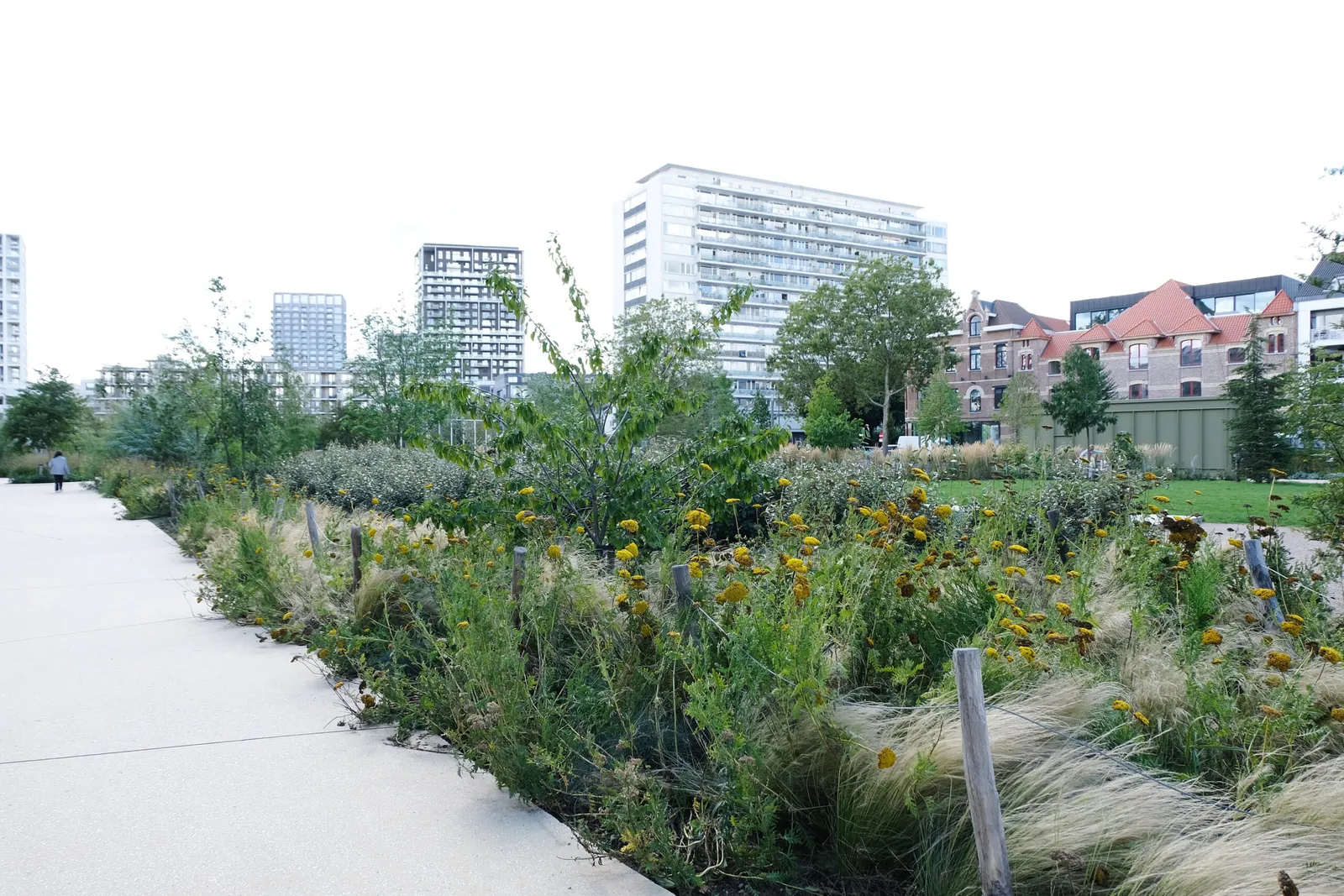
Climate change and increasing urbanisation inevitably bring new challenges for water management and the integration of green spaces in public areas. For Bart Geerts, director of Acterra, a company specialising in soil engineering, one key solution lies in intelligently combining rainwater management with planting, for example through green roofs and other green infrastructure.
Rainwater management is becoming increasingly important, particularly in urban areas where paved surfaces largely prevent water from infiltrating naturally. Integrating vegetation into projects, whether urban or infrastructure-related, is now more the rule than the exception.
A retention roof holds back water
For more than 20 years, Acterra has produced high-quality planting substrates for gardens, public spaces and infrastructure projects. Bart Geerts stresses the importance of water retention from the design stage: the aim is to retain water directly on roofs to supply vegetation. This is how Belgium’s largest retention roof was recently created as part of the redevelopment of the filled-in Docks Sud in Antwerp.
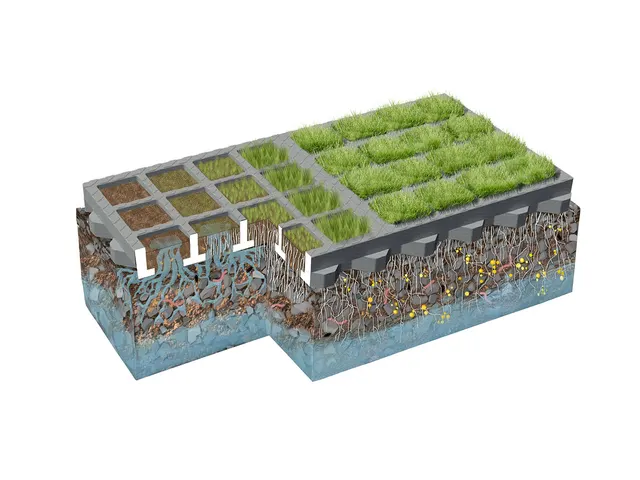
For this project, Acterra supplied TerraViva® sandy tree substrate, various plant substrates and a substrate for helophytes. The latter is a mixture of clay and silt, as well as a mix developed specifically for the project, consisting of 50% carbon-rich sand mix and lava. Bart Geerts explains: «With simple techniques, water is directed towards the substrate, creating a green space that also cools its surroundings. This approach also encourages biodiversity. By choosing suitable substrates made from local materials, we provide a better habitat for plants and animals. We have moved away from conventional lava-based substrates and now focus on mixes whose ingredients are available close to our production sites.»
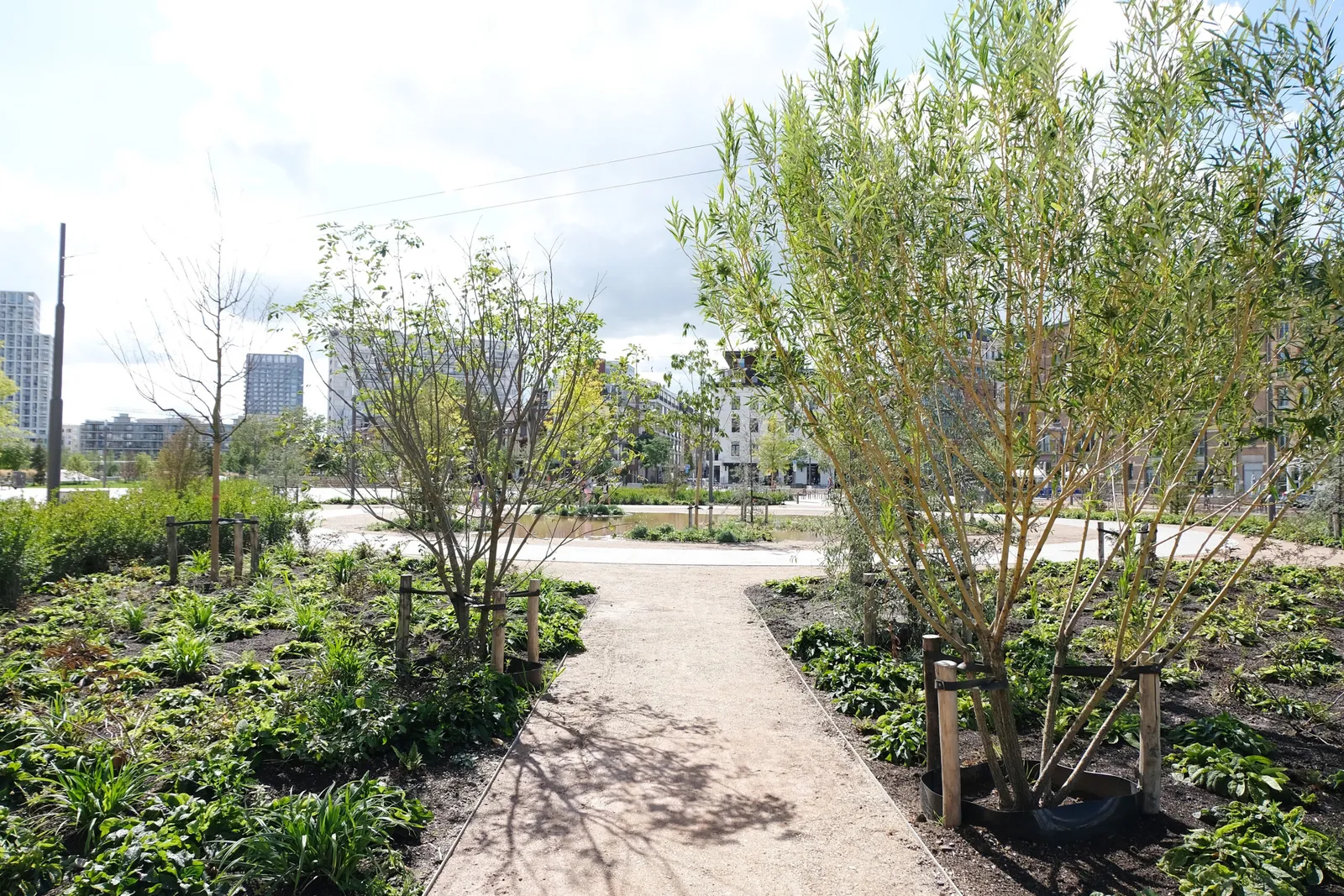
Regional rainwater regulations
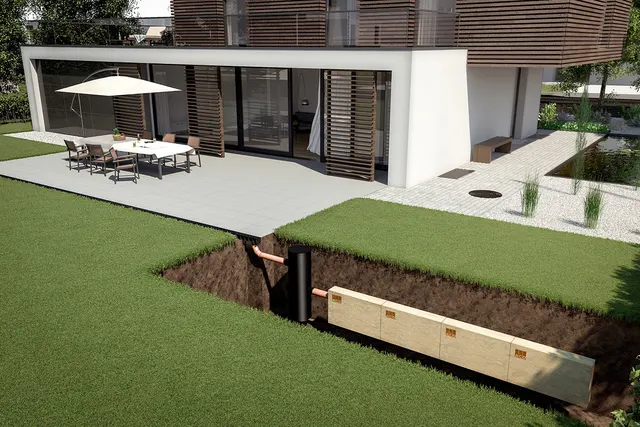
The 2023 regional rainwater regulations stipulate that new projects must maximise rainwater retention and infiltration. According to Bart Geerts, there is still plenty of scope for improvement in this area: «It is essential to approach this creatively while avoiding groundwater pollution. People too often assume that a swale has to be a deep excavation, when surface infiltration is often more effective.»
Bart Geerts emphasises that the integration of vegetation and water management must be analysed in detail during the early stages of a project. «As soon as a building is planned, it is crucial to have the key data: groundwater levels, soil types, existing vegetation… For example, a large presence of reeds indicates waterlogged soil. This information is essential both for designing green spaces and for choosing substrates.»
Nature takes time
One of the major challenges of integrating vegetation is the tension between the time nature needs to develop and the speed at which construction projects are delivered. «Nature always reclaims its territory, but the process often takes decades. What we are doing now with substrates is buying time. They must therefore be used with great care and patience. That is why I advocate giving natural development more room and taking a long-term view of construction projects. A truly sustainable ecosystem needs time to develop.»
«Integrating vegetation and rainwater management into public spaces requires, above all, a systematic and rigorous approach, with particular attention to soil quality, the choice of materials and substrates, and the involvement of experts from the earliest stages. This is how sustainable urban spaces that are resilient to climate change can be created», concludes Bart Geerts.
Question about this story? Ask your question
Keep following this
Get an email when a new story is published. No account needed.
- ThemeDesigning living landscapes
- SubjectWater management