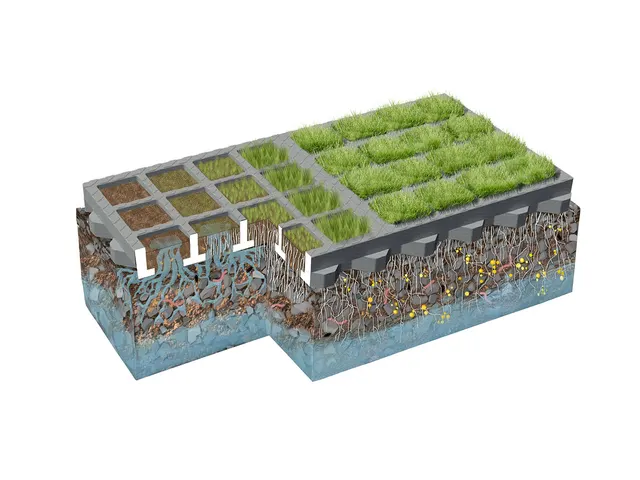
Infiltration made simple
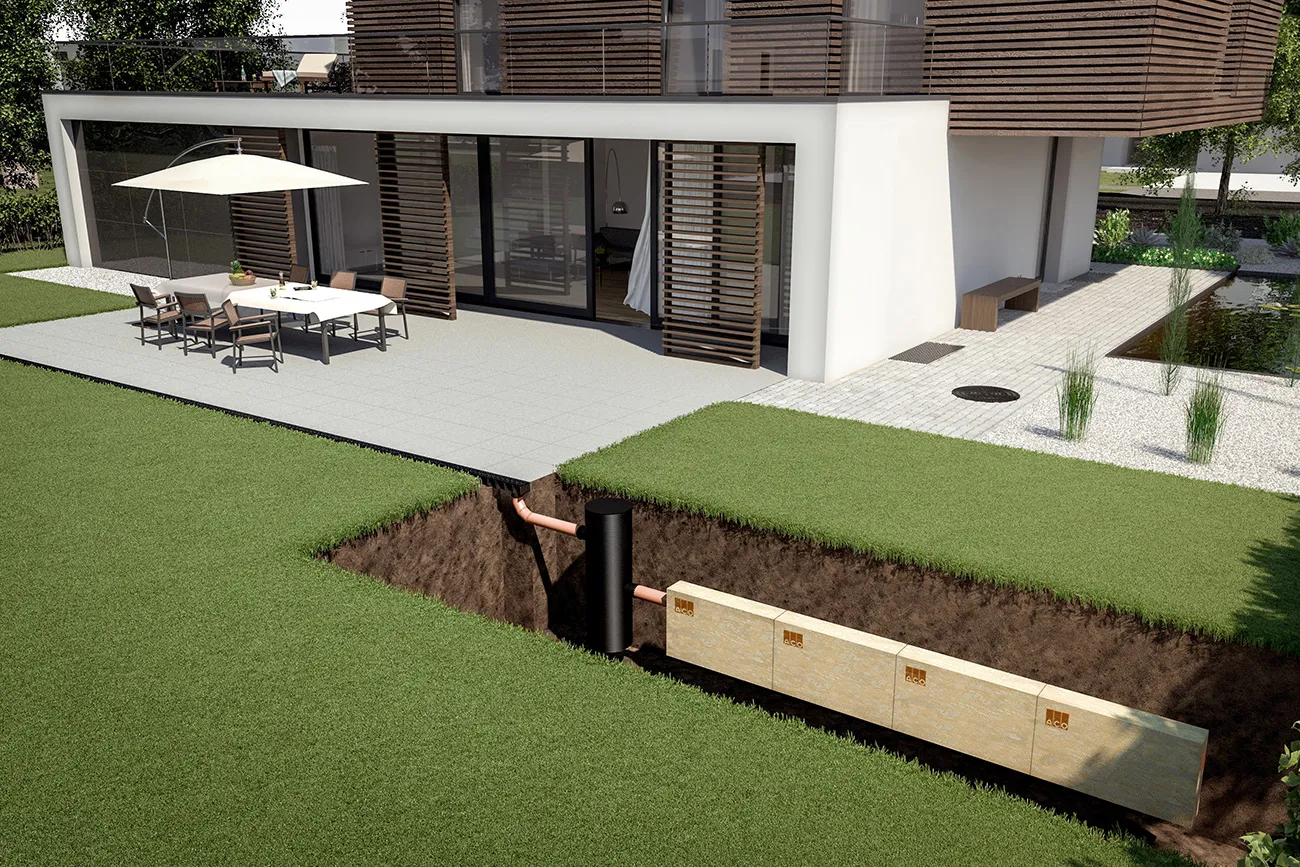
A welcoming pergola, an extension to the patio, a brand-new garden seating area… Anyone adding more hard landscaping to their garden needs to plan for the rainwater that falls on it. A rainwater tank or the drainage network may spring to mind, but you can also opt for an infiltration system. This helps maintain groundwater levels and protects the garden from prolonged dry spells.
“Discharging rainwater into the sewer is not really a good idea,” says Karolien Vanovertveld of ACO. “It wastes water that could be put to use and, during periods of heavy rain, can overload the drainage network. That is why rainwater regulations require rainwater to be retained on private property as far as possible, either by storing and reusing it in a rainwater tank or by attenuating and infiltrating it.”
Why infiltration?
It makes sense for property owners to try to direct rainwater into a tank wherever possible, says Vanovertveld. “That way, you can reuse the water, for example to flush toilets or water the garden during dry spells. However, this is not possible on every project. In renovations and conversions, for instance, installing a tank is not always straightforward, or connecting new roof and paved areas to an existing tank may involve too much work. In such cases, infiltration offers an excellent, environmentally friendly solution. Rainwater is temporarily stored and gradually released into the ground. This helps maintain groundwater levels, irrigates plants and makes the garden and landscape more resilient to prolonged dry spells.”
Accessible
The best-known solution is the infiltration crate. “It’s an excellent system,” says Vanovertveld. “But it has its limitations. It involves quite a lot of digging, and you always need to keep a sufficient distance from trees and other plants. If you don’t, there is a risk that roots will grow through the crates and the system will lose its functionality.”
Unfortunately, it is not always easy to meet this requirement in a small private garden. What’s more, property owners may not want to dig up the whole garden again for minor works such as extending the patio or adding a small outbuilding.
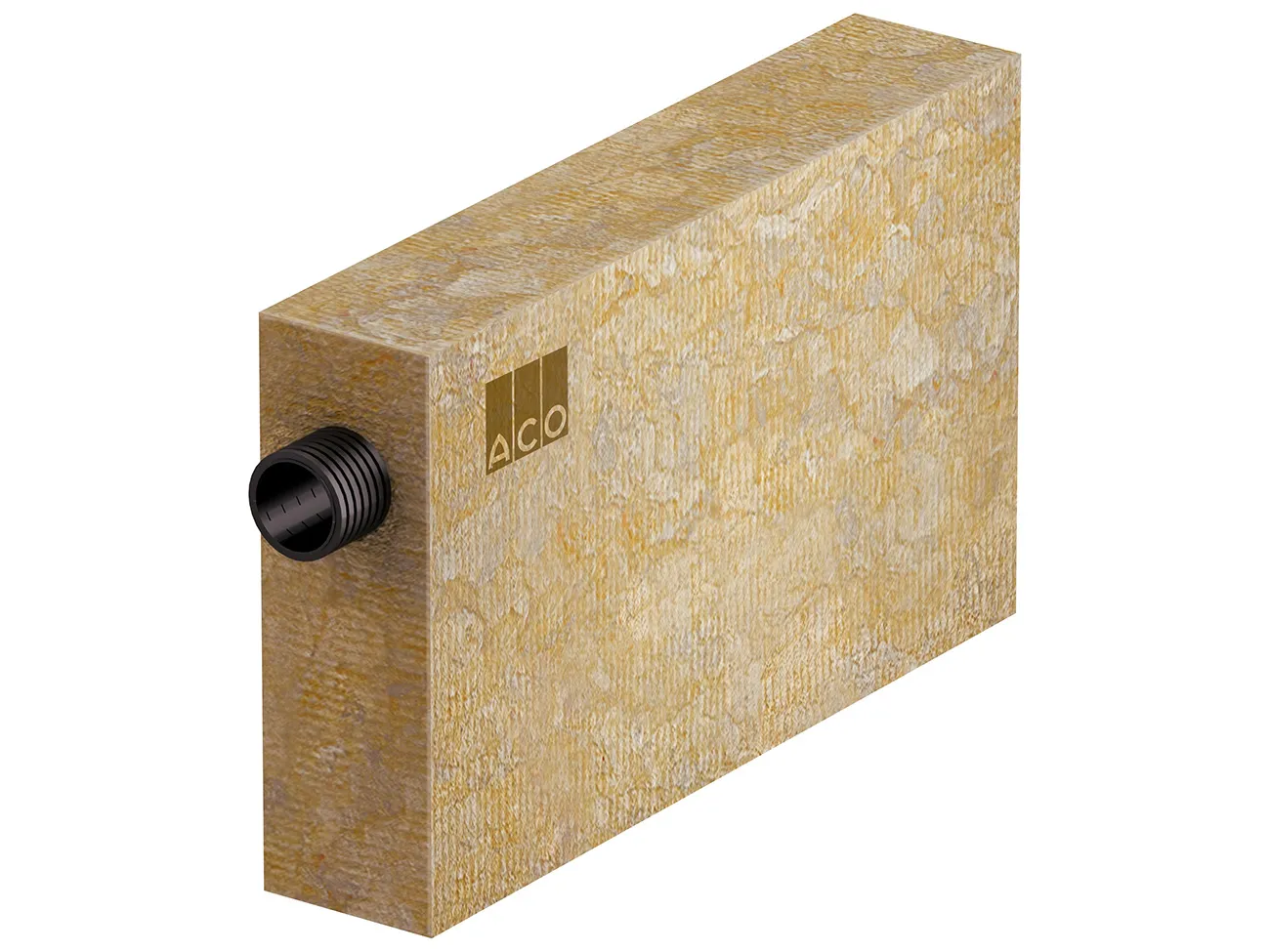
“In such cases, you can opt for a system based on water-absorbent rock wool blocks, such as our Infiltration Line. This 100% natural solution, rock wool is a natural product with a very low environmental impact, acts like a sponge: each 100x60x20 cm block can absorb up to 112.8 litres of water, which it then releases slowly into the ground. Depending on the required storage capacity, simply place several blocks in a row. Their compact size means you only need to dig a narrow trench, for example along the edge of the garden. Since roots can grow through the blocks without affecting the system’s operation, you also have flexibility in where you place them. This makes it a very accessible solution. The only thing to watch out for, as with all infiltration systems, is to keep dirt out as far as possible. A leaf trap or a gully trap at the outlet is therefore an essential accessory.”
For smaller projects
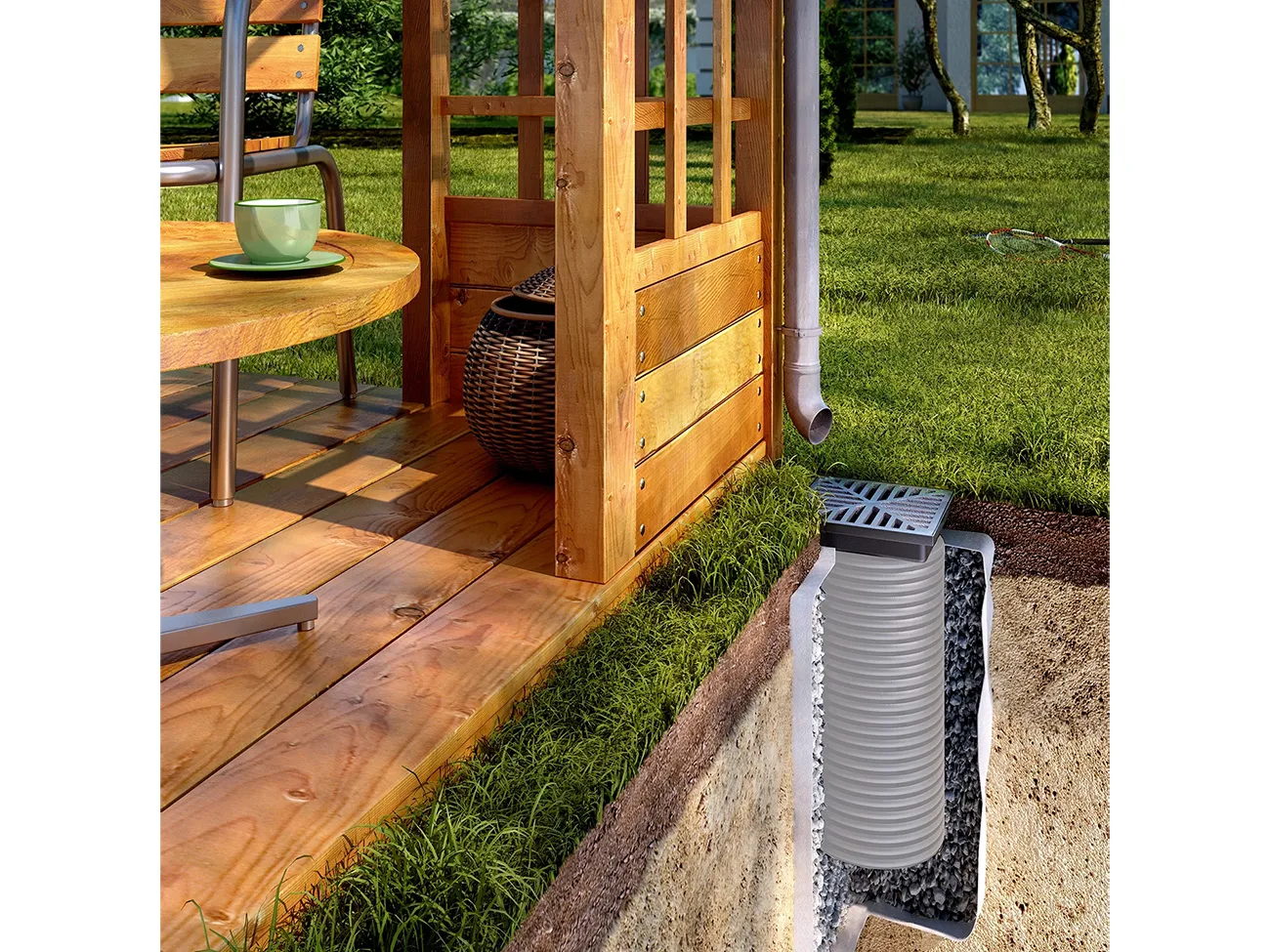
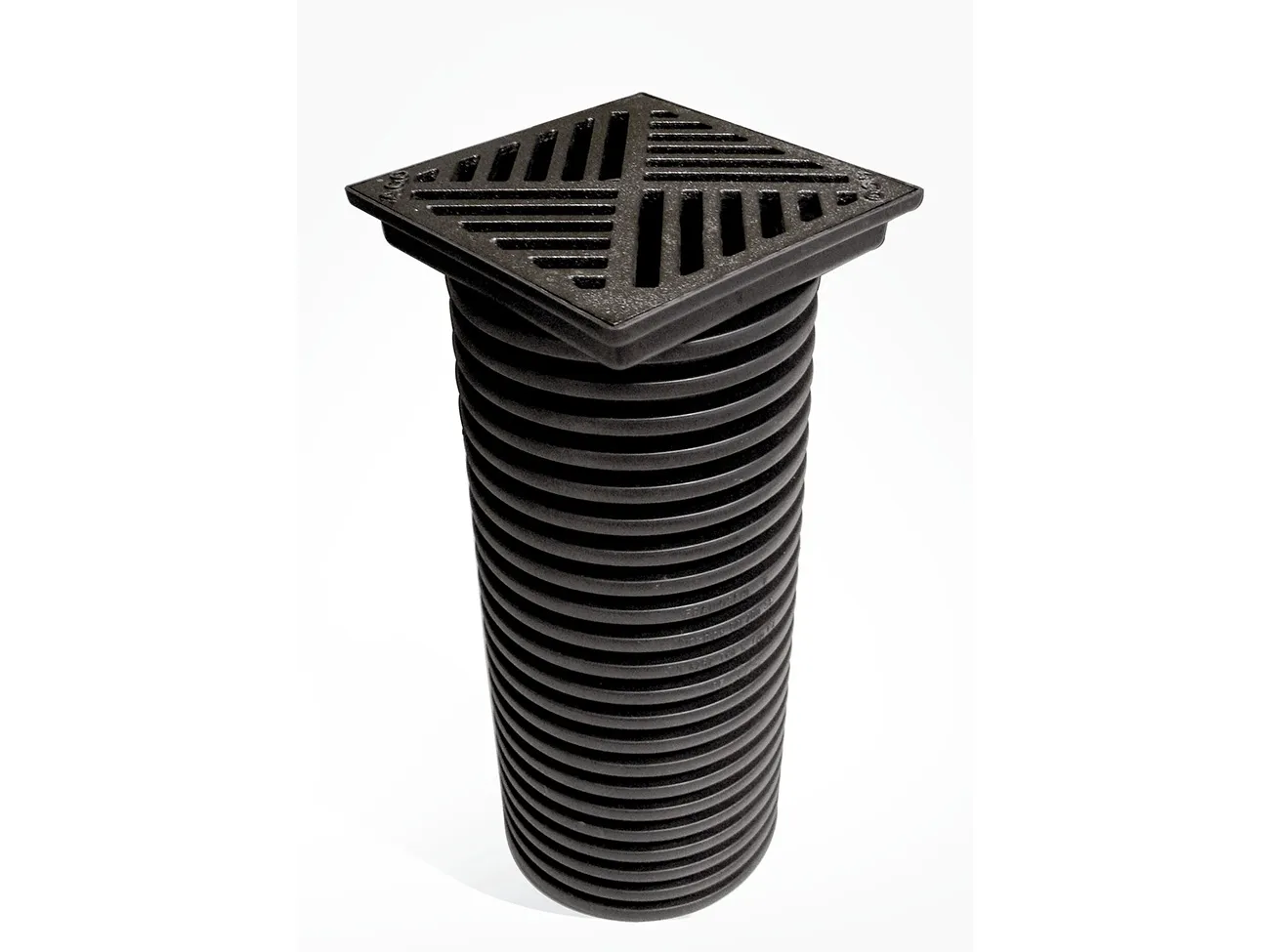
Finally, Vanovertveld recommends the Gully for smaller projects. “This infiltration sump is a simple, lower-cost alternative for infiltrating water from small areas. The Gully comprises a collector with a perforated pipe underneath. The unit is placed in a pit about 60 centimetres deep, with the surrounding space filled with gravel to encourage infiltration. This allows water to be released gradually into deeper soil layers and also prevents puddles from forming. The system has a capacity of 11 litres, which is enough for a small canopy, garden shed, carport or the overflow from a rain barrel, for example.”
Question about this story? Ask your question
Companies in this story

Keep following this
Get an email when a new story is published. No account needed.
- ThemeDesigning living landscapes
- SubjectWater management
- CompanyACO