Rethinking urban space and adding blue and green
Texte Luc Ophals | Photos O2D® Environnement
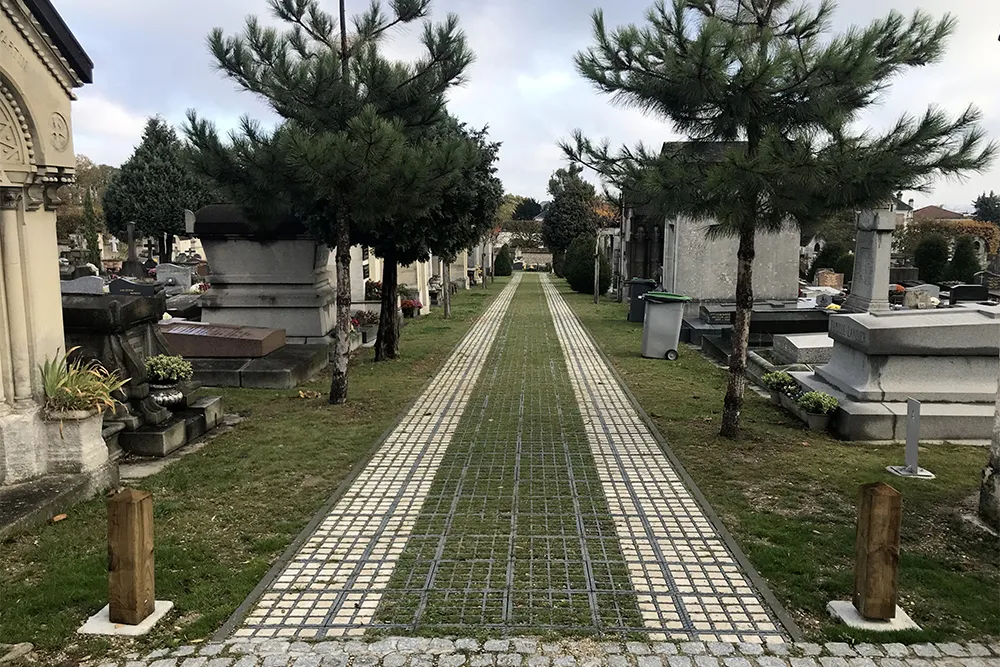
Designing multifunctional spaces that reconnect people with nature
The design of public spaces is increasingly focused on making ground permeable and creating green areas in response to major environmental challenges. Since the 1990s, stormwater management has gradually moved away from the “everything into the sewer” approach in favour of a new vision of urban hydrology that no longer treats water as “waste”, but restores its essential value as a resource at the heart of urban space. More recent developments take this approach even further, highlighting the design of hydraulic structures that help shape the landscape and create multifunctional spaces.
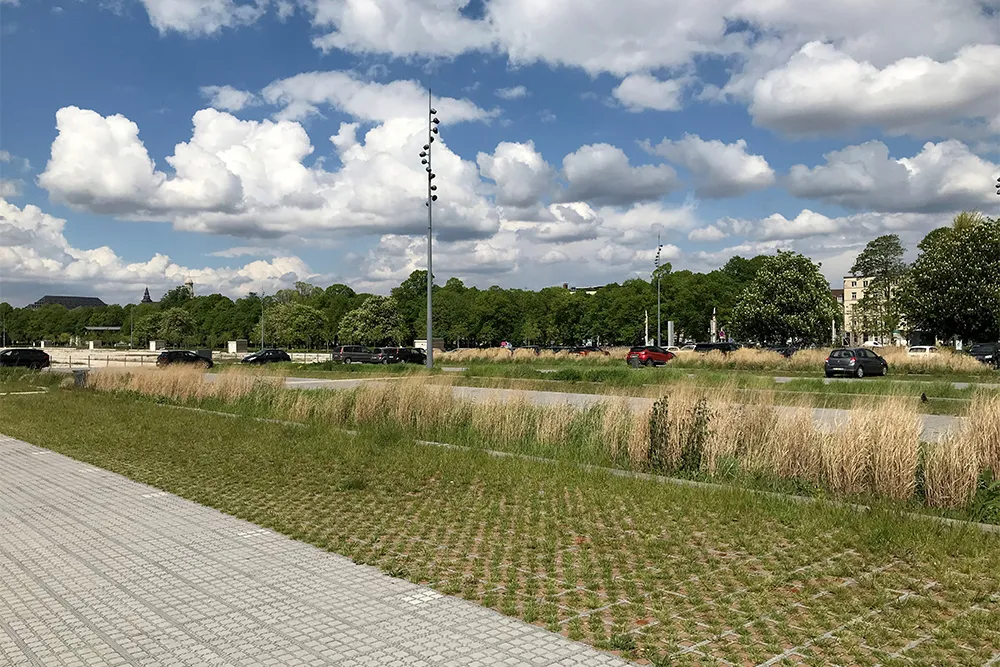
For a long time, stormwater management in cities meant building underground infrastructure (combined or separate sewer networks, storage tanks) or open-air structures (retention basins or stormwater basins), following an “everything into the network” approach. But we now know its limitations and dangers, including overloaded networks and wastewater treatment plants, poor maintenance and overflows that cause devastating floods. In the 1990s, the focus shifted towards alternative techniques to infiltrate or temporarily store stormwater before releasing it into the natural environment, or to limit its flow into the urban network where infiltration is difficult.
There is no need to revisit the damage caused by the July 2021 floods in our country to be convinced of the need for more effective urban hydrology. Just listen or turn to the news media to see the relevance of this issue day after day.
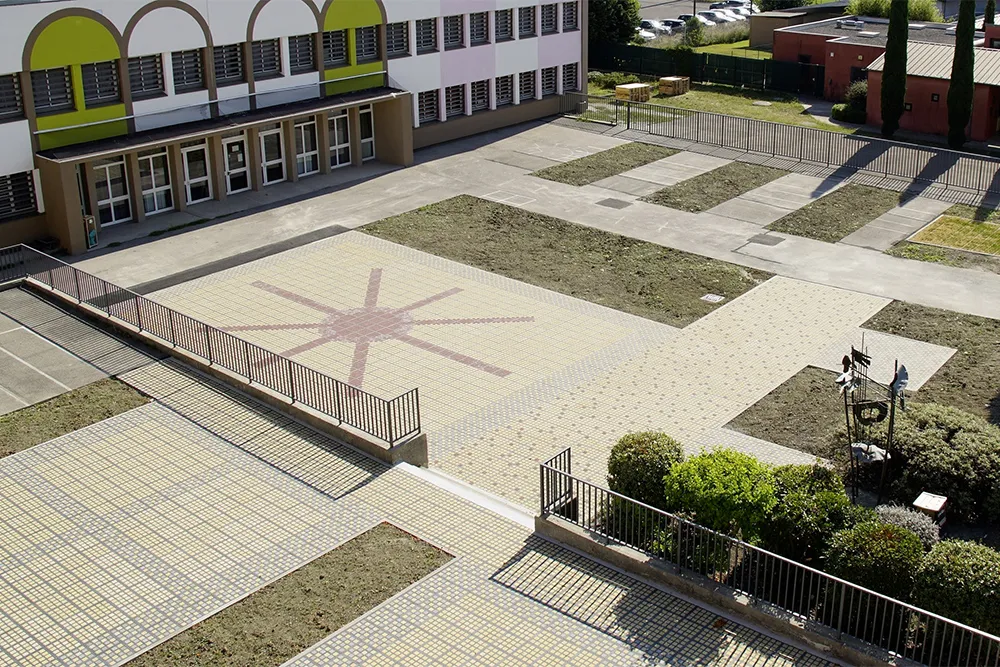
Creating multifunctional spaces
In response to climate and environmental challenges, recent years have seen efforts to make ground more permeable and disconnect roads, at least in part, from the drainage network. But, as mentioned, integrated stormwater management now reflects a desire to bring water and greenery back into the urban fabric as elements that shape the landscape. “This shift favours the creation of multifunctional spaces that meet human needs, ensure effective stormwater management, incorporate nature and address environmental challenges, while enhancing the landscape,” explains Jessica Lépinasse, Marketing and Communications Manager at O2D® Environnement. These are indeed multifunctional spaces, as they serve several vital purposes. Their hydraulic function is to slow down water flow, create water pathways, temporarily store water and infiltrate runoff or rainwater where it falls. They also help organise public space by defining areas and creating routes and green spaces, improving residents’ quality of life and strengthening social ties. In terms of landscaping, multifunctional structures aim to incorporate rain gardens or floodable meadows, using grading techniques to shape the landscape. Finally, from a strictly environmental perspective, the aim is to establish ecological corridors (green and blue networks) to encourage urban biodiversity, restore the soil’s water-retention properties, recreate appropriate ecosystems and create cool islands.
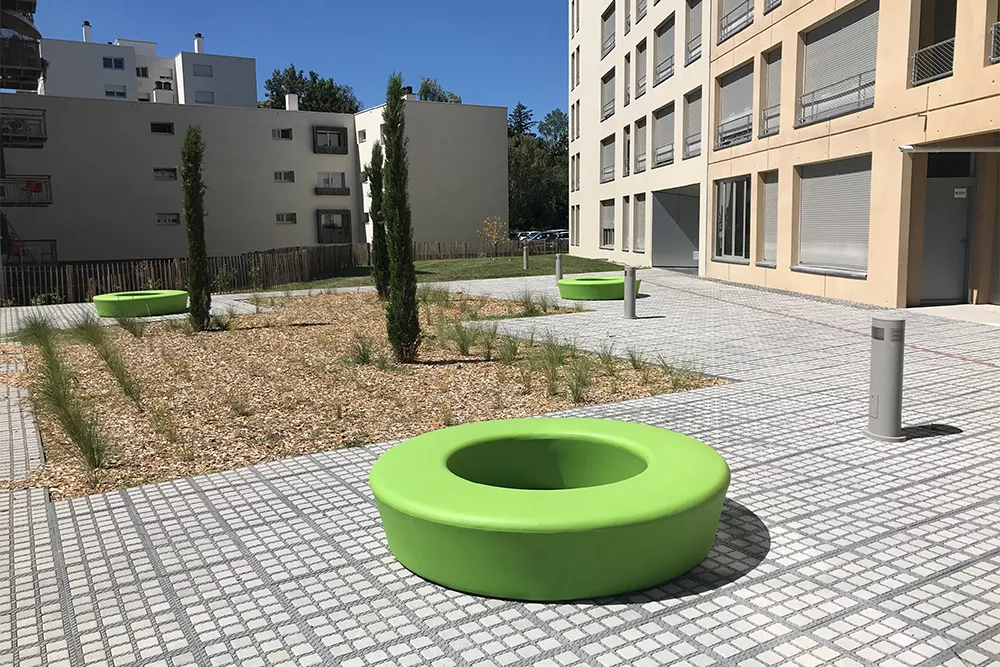
Supporting the ecological transition
Among public infrastructure, car parks offer an excellent opportunity to support the ecological transition. “Rather than making them impermeable by covering them with asphalt, they can be designed differently, incorporating permeable, vegetated ground systems. This disconnects the car park surface from the drainage network by prioritising direct infiltration and replenishment of groundwater,” explains Jessica Lépinasse. She adds: “There are effective, environmentally friendly solutions to achieve this, such as O2D® permeable ground systems. In addition to their hydraulic and landscaping functions, O2D® ecological parking surfaces help improve the living environment and the environmental quality of developments. Developed around the TTE® slab, they allow stormwater to infiltrate where it falls, offer high levels of strength and load-bearing capacity, and provide considerable flexibility in the choice of infill (paving, grass, gravel, mulch). They are also an eco-material made from 100% recycled plastic and manufactured in the Liège region. The grassing platform is also local, while suppliers of the foundation mixes are based in Flanders.” Choosing a local supply chain is, of course, beneficial for the environment.
Een zakelijke vraag aan O2D Environnement? Get in touch
Companies in this story
Keep following this
Get an email when a new story is published. No account needed.
- ThemeGreening dense urban areas
- SubjectNews
- CompanyO2D Environnement