Aquatic plant nursery R. Moerings supplies garden centres across Europe
Texte Trees Accou | Photos Thomas Goossens, Kwekerij R. Moerings
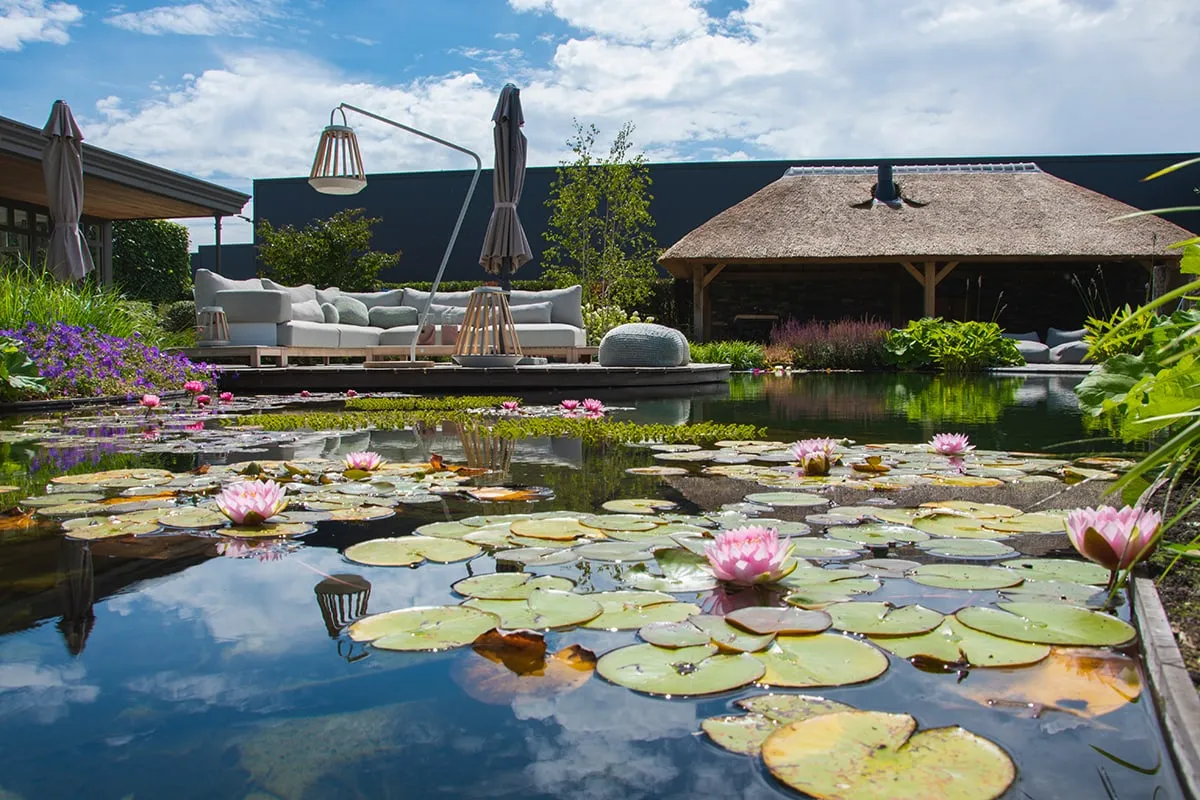
This autumn, aquatic plant nursery R. Moerings celebrated its 30th anniversary. Since founder Ronald Moerings took over his uncle’s small nursery in 1994, the business has rapidly become an authority on aquatic plants. Today, it supplies aquatic plants across Europe, is a pioneer in growing, selecting and caring for a range of species, and its expertise is sought after by gardeners in the Netherlands and Belgium.
Thirty years ago, Ronald Moerings took over his uncle’s aquatic plant nursery in Boskoop, the Netherlands. Thanks to his passion for plants and flair for presentation, the business soon grew. An opportunity arose to relocate to Rosendaal, and several employees moved away from home to make the move. Three of them are still part of the 35-strong team today, which can grow to around 120 staff during the peak season. “From January to December, we supply gardeners and garden centres across Europe, with demand peaking from March to June,” explains René Verspuij, representative for aquatic plant nursery R. Moerings. “As soon as the sun comes out, people want to work in the garden, and everything needs to be ready for sale and look commercially attractive.”
Growing and thriving
Ronald Moerings quickly realised that he should not be offering customers aquatic plants covered in mud. With plants that were visually appealing and beautifully rooted, he soon won space on the shelves of garden centres in the region and, later, across Europe. His sudden death in a car accident in 2015 came as a major shock to the business. Because Ronald, as captain, had mastered the art of delegating and passing his expertise on to his team, the nursery was able to continue growing under his wife’s leadership. “After his death, his words, ‘An aquatic plant in every hand’, remained our slogan. Today, they are even displayed in capital letters on the outside of our premises,” René adds. “The fact that we are Europe’s largest aquatic plant nursery, with 9 million plants leaving our greenhouses each year, is all thanks to him.”
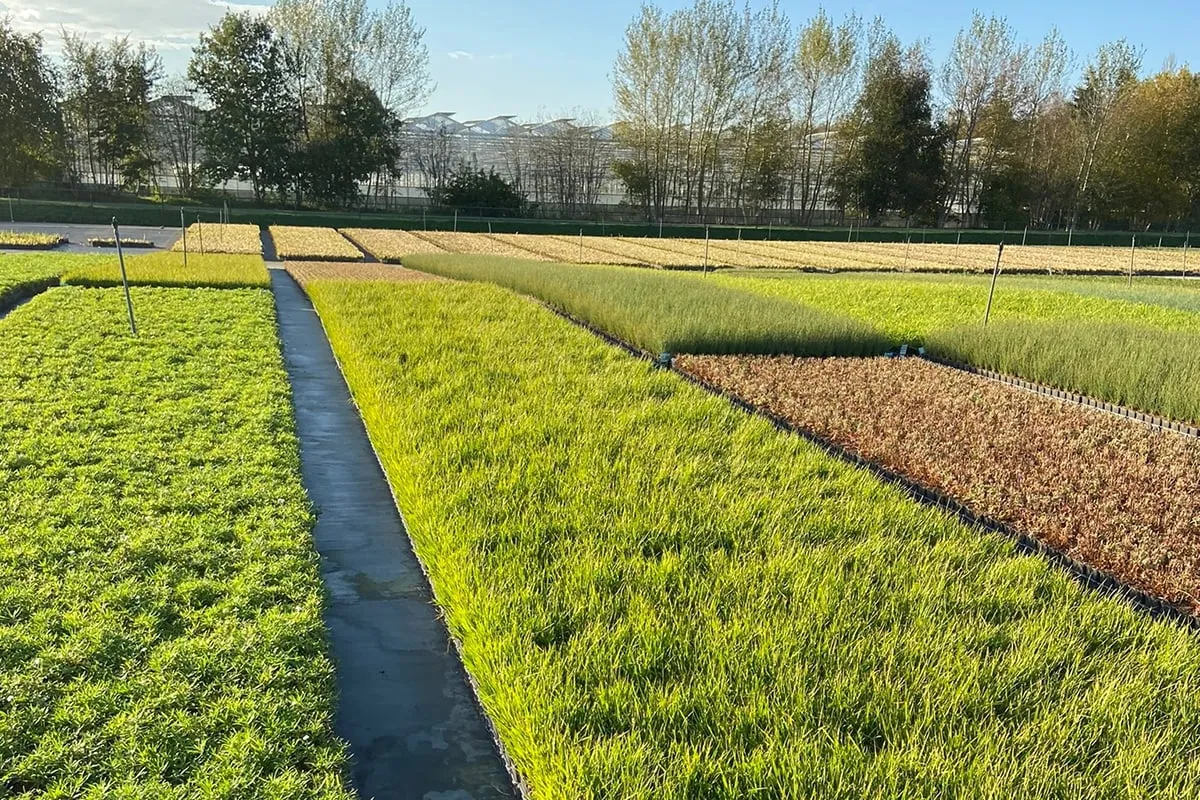
The greenhouse complex underwent a complete renovation seven years ago. “By using diffused glass, we let in more light, which encourages more vigorous flower and leaf development. We also chose a flood-and-drain system to water our plants. Most of the aquatic plants we grow do not need to be permanently submerged. Beside our greenhouses, you can see concrete growing beds where rainwater is collected and stored in large ponds. By being regularly covered with water, these plants absorb enough moisture. Only water lilies and oxygenating plants such as shining pondweed remain submerged at all times.”
Fight or improve?
As well as aquatic plants, the nursery has also developed its expertise in producing water treatment products. In the pond sector, as in green spaces generally, pesticides are being used less and less. That is a good thing, because the products used to combat algae growth also have a negative impact on the growth of your aquatic plants. René explains: “We take a different approach to water. When you optimise water conditions for your aquatic plants using minerals, they grow so well that they filter out all the phosphates and nitrates. This deprives algae of their energy source. As a pond is generally a closed system, you, as the owner, are responsible for the water quality. We help you improve water quality, both in the short and long term, including through our website Pond Trends.”
Aquatic plant nursery R. Moerings does this by using natural pest control agents in its growing process. For example, certain ducks are used to control duckweed, while beetles are used to control azolla, a floating plant. “Where people used to use a poison sprayer, they now turn to natural alternatives. That is a good thing, because chemicals affect the entire pond biotope or, in our case, the nursery.”

Tailor-made planting plans
As well as its wide product range, Moerings is also known for its expertise. Gardeners come to the nursery for advice or a planting plan for ponds and swimming ponds, and receive immediate tips on how to improve water quality. “One advantage of aquatic plants is that they can be planted all year round. We only advise against it when there is frost or snow. Customers come to us with information about their filtration system and the dimensions of the pond, and we draw up a full quotation on that basis, taking their preferences into account. For example, we now offer the classic yellow water lily in white and violet varieties. We also select tropical water lilies to make them hardier. Personally, I’m very fond of the beautiful water lilies in our range,” René concludes.
Question about this story? Ask your question
Keep following this
Get an email when a new story is published. No account needed.
- ThemeDesigning living landscapes
- SubjectNews