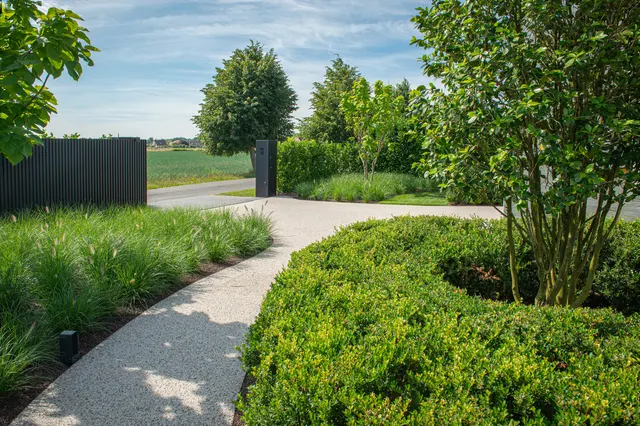
Boxwood as a bee plant
Texte Didier Hermans | Photos Herplant BV
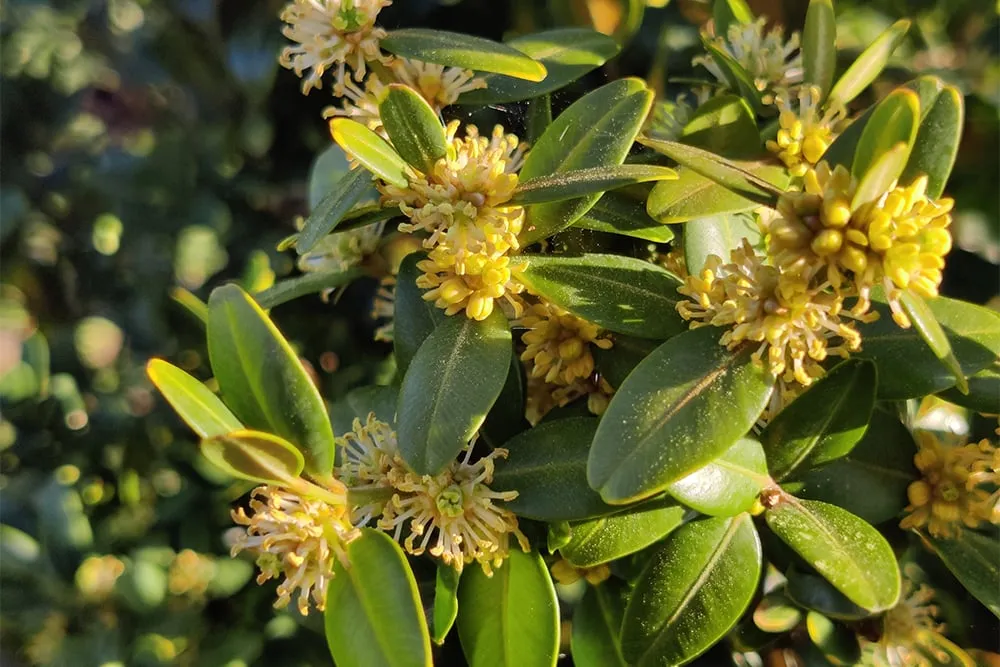
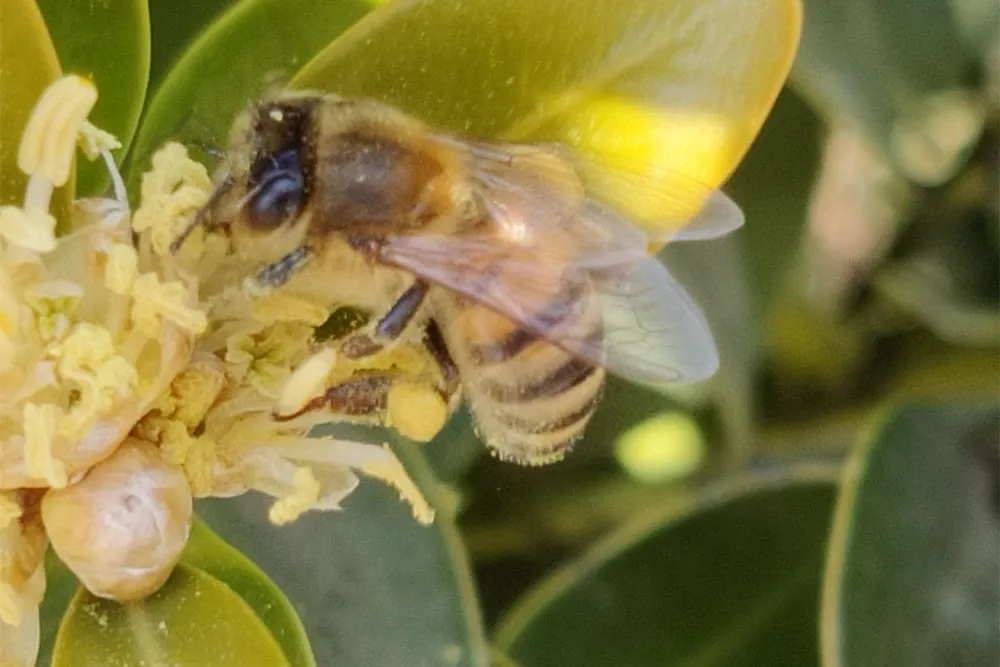
The general public may not realise it, which is a great shame, but beekeepers know boxwood as one of the best bee plants. Honey bees are not the only ones to flock to boxwood, however. Numerous species of wild bees and hoverflies also seek out this source of pollen and nectar in early spring.
In Europe, Buxus balearica and Buxus sempervirens are native species. The latter is also found in many gardens and is native to Belgium. The flowering periods of different boxwood species can vary considerably.
The earliest-flowering boxwood in our regions is Buxus microphylla var. koreana, Korean boxwood. It is usually a compact shrub with very small leaves and can start flowering as early as the beginning of February. The term ‘flowers’ may be something of an overstatement when it comes to boxwood, as they are generally small and inconspicuous, but bees know how to find them.
The main flowering period for Buxus sempervirens and its cultivars begins in late March or early April. Most other Asian species also flower during this period. Boxwood’s flowering season ends with Buxus balearica, which usually finishes flowering around 30 April.
Boxwood that is lightly pruned, or has reached a certain age, will flower every year. This has no negative effect on the plant and is a natural process. There is a great deal of confusion about this, even among the so-called professionals in our sector. People are generally referring to potted plants exposed to extreme conditions, such as a lack of feeding and watering, which causes them to flower. This is a survival instinct in the plant and has nothing to do with normal growing conditions.
Boxwood pollen and nectar are rated at the highest level. In addition, boxwood flowers at a time when few other plants are in bloom and is heavily pollinated by a wide variety of beneficial insects. They collect both pollen and nectar from it, which is crucial for young bees and other insects.
Bee and hoverfly species
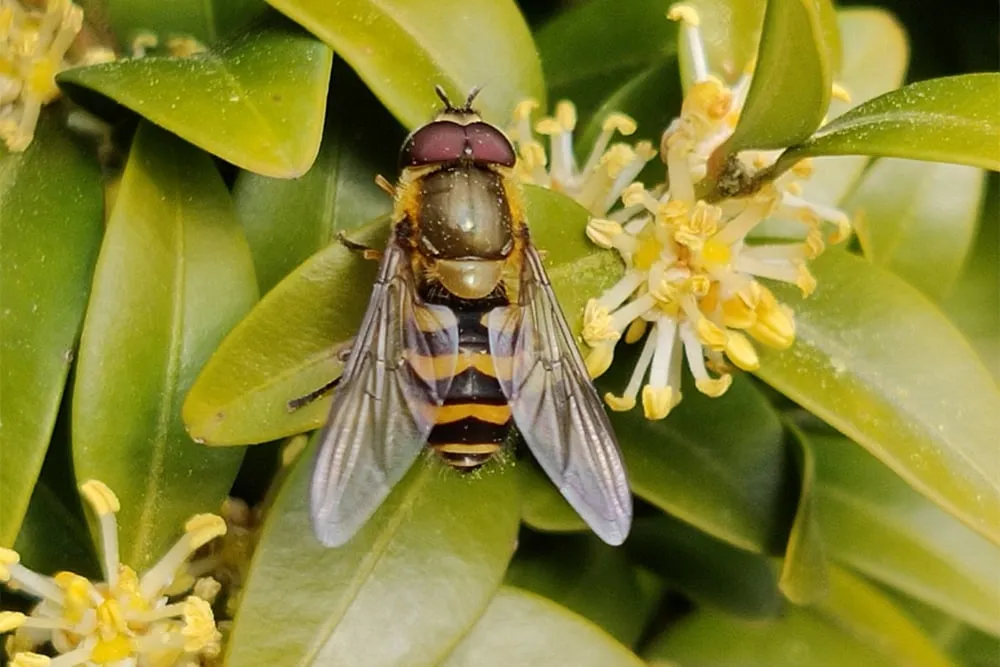
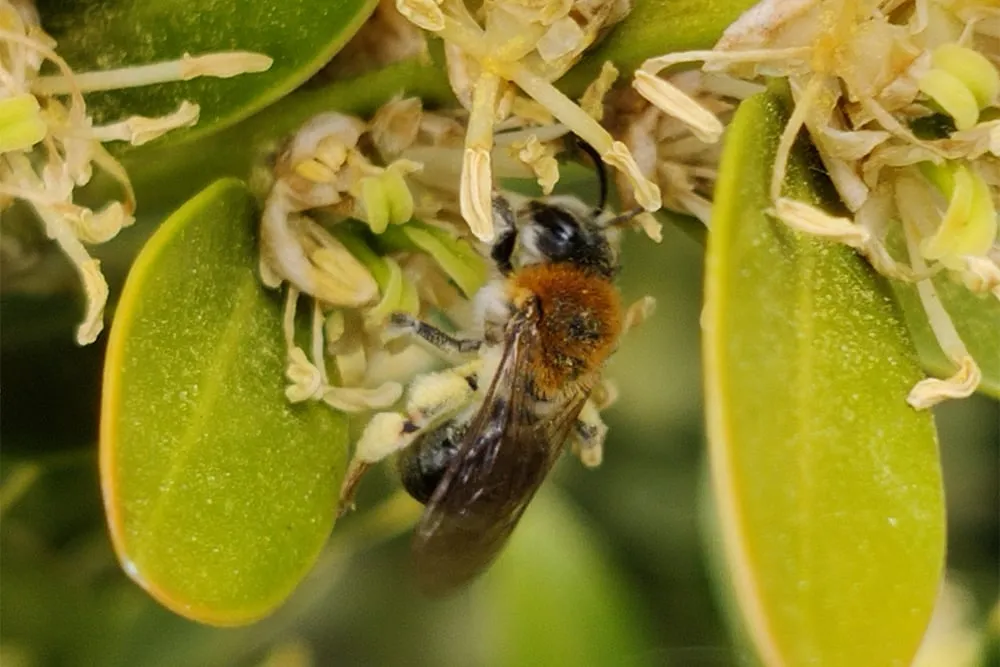
Belgium is home to around 360 species of wild bees and around 340 different species of hoverflies. Bees have four wings and long antennae, while hoverflies have two wings and short antennae. Hoverflies are highly mobile and can hover in one place. They mimic wasps and bees to frighten off their natural enemies. They have no sting, however, and are therefore harmless. Recent research (2020-2022) has shown that dozens of wild bee and hoverfly species visit flowering boxwood.
Conclusion
Boxwood is an important bee plant and a source of high-quality pollen and nectar for honey bees, wild bees and a whole range of other beneficial insects. Generally regarded as a ‘common garden plant’, it unfortunately receives far too little attention.
In recent years, boxwood has been affected by the box tree moth, an invasive species, and there have even been widespread calls for boxwood to be removed. This has undoubtedly led to the loss of many older boxwood bushes that flowered every year. This has probably had a major impact on our biodiversity and may also have been very damaging to the many species that forage on boxwood. Further research will be needed to establish the impact, but one thing is certain: insects appreciate this plant very much.
Boxwood, whether grown as a multi-stemmed shrub or small tree, or as a lightly pruned shrub, certainly has a place in our gardens and contributes to biodiversity. There are many species and cultivars that need little pruning and are perfectly suited to more natural gardens.
Question about this story? Ask your question
Keep following this
Get an email when a new story is published. No account needed.
- ThemeDesigning living landscapes
- SubjectNews