Ensuring water infiltration with the right load-bearing gravel
Texte Niels Rouvrois | Photos Acterra
The drive to depave and introduce more greenery is gathering pace. Swales and water-permeable surfaces are therefore now the rule rather than the exception, in both public spaces and private plots. Of course, this makes it crucial to have soils with good permeability. “With the RevivA® tree soil load-bearing substrate, water can infiltrate effectively within 24 hours of a heavy downpour,” explains Bart Geerts, director of Acterra, which produces, among other products, Gravier carrossable de trèfle RevivA® and TerraViva® substrates.
Every measure taken by local authorities and private individuals to make public spaces, homes and gardens more climate-resilient makes a difference. Swales, depressions or basins filled with gravel and sand, which can both hold water and allow it to infiltrate, are a common and useful solution in this context. In many cases, creating a swale means sacrificing a costly plot of land on a housing estate or industrial site.
Driveable swale
Bart Geerts: “A swale is designed to let rainwater infiltrate slowly into the subsoil, but in many cases it is dug extremely deep to provide sufficient water storage, while infiltration takes place over a very small area. As a result, the sides are very steep, making maintenance difficult. After a few years, the swale is overgrown and chainsaws are needed to bring it back into shape. Particularly in public places, this makes the swale unsafe and dirty, contributing to its negative image.”
Acterra has developed a solution that combines water infiltration with a driveable surface, making better use of the available space. For example, if the access road around a business is built 30 centimetres lower than the surrounding green space, water can be stored along the entire road. Even when water is present in the swale, vehicles can drive over it without causing subsidence or getting stuck. It is a win-win situation.
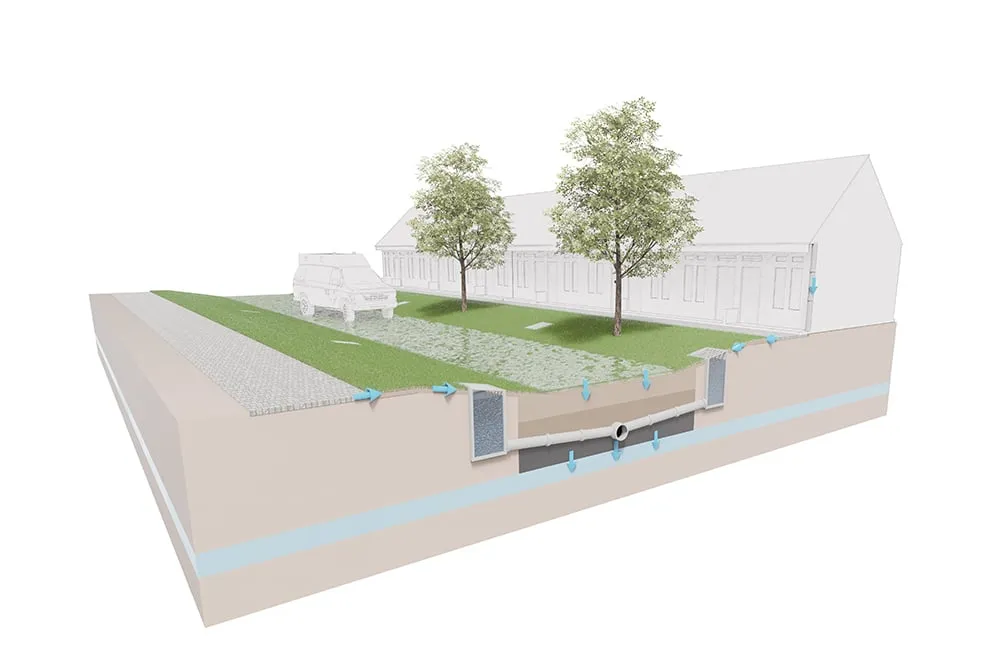
Gravier carrossable de trèfle RevivA®
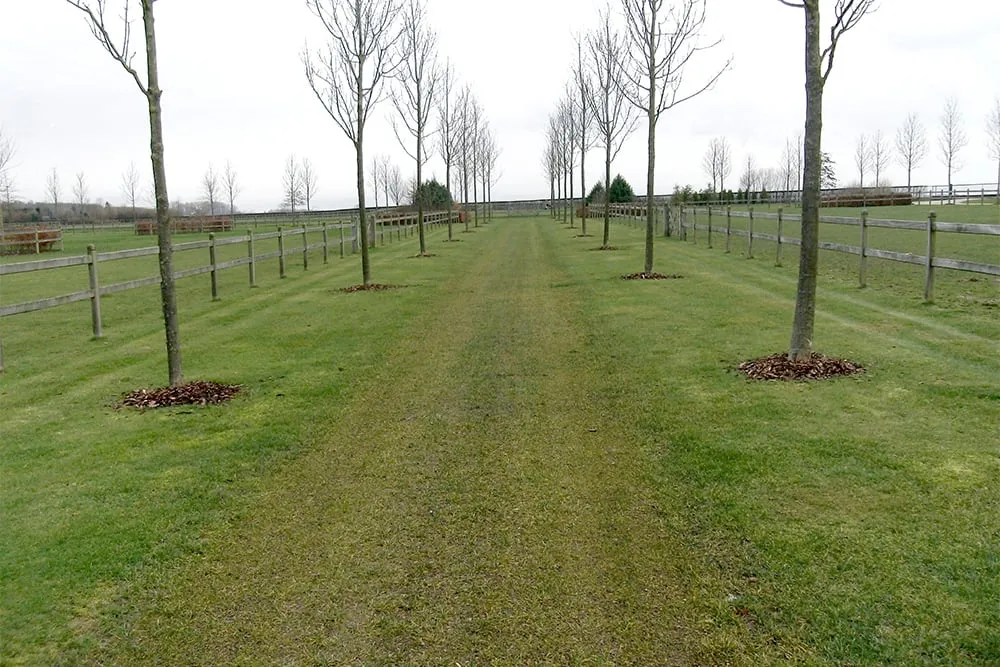
Gravier carrossable de trèfle RevivA® is one of the substrates used for occasional vehicle access over grass. Fire access routes, campsites, transport paths… are all places where load-bearing gravel can be used. The load-bearing gravel is premixed with grass seed and can be laid over RevivA® tree soil substrate. Gravier carrossable de trèfle RevivA® is a homogeneous mix of load-bearing aggregates (lava and fired clay) with nutrient-rich soil (humus, peat, Vlaco green compost, composted horse manure) and grass seed. This substrate can also be laid using an asphalt paver.
Bart Geerts: “Gravier carrossable de trèfle RevivA® can be a valuable solution for ensuring effective water infiltration over time following heavy rainfall. In regions where soils are naturally poorly permeable, such as clay soils, waterlogging can occur after intense rainfall. This can harm the environment, potentially leading to flooding and erosion. Traditional swales may have limited effectiveness when the natural soil structure is not conducive to good rainwater infiltration, as is the case across much of Belgium. By installing a TerraViva® Aqua Mobilis with Gravier carrossable riche en herbes aromatiques RevivA®, you can ensure infiltration regardless of the underlying soil. Additional benefits include sufficient load-bearing capacity for auxiliary vehicles, biodiversity-rich vegetation, nitrogen reduction and space savings. For example, a RevivA® swale in clay soil requires a significantly smaller area to achieve the same infiltration capacity, while the microclover incorporated into the load-bearing gravel fixes up to 200 kilograms of nitrogen per hectare per year.”
Question about this story? Ask your question
Keep following this
Get an email when a new story is published. No account needed.
- ThemeDesigning living landscapes
- SubjectNews