Four claims about drainage. True or false?
Water is blue gold. Prolonged dry spells in particular show just how poorly we manage water.
However, problems are also apparent when it rains. Drought means that soils and sewer networks are less able to cope with increasingly intense downpours. Karolien Vanovertveld from ACO explains why good water management matters, examining four common assumptions.
Terrace drainage is unnecessary
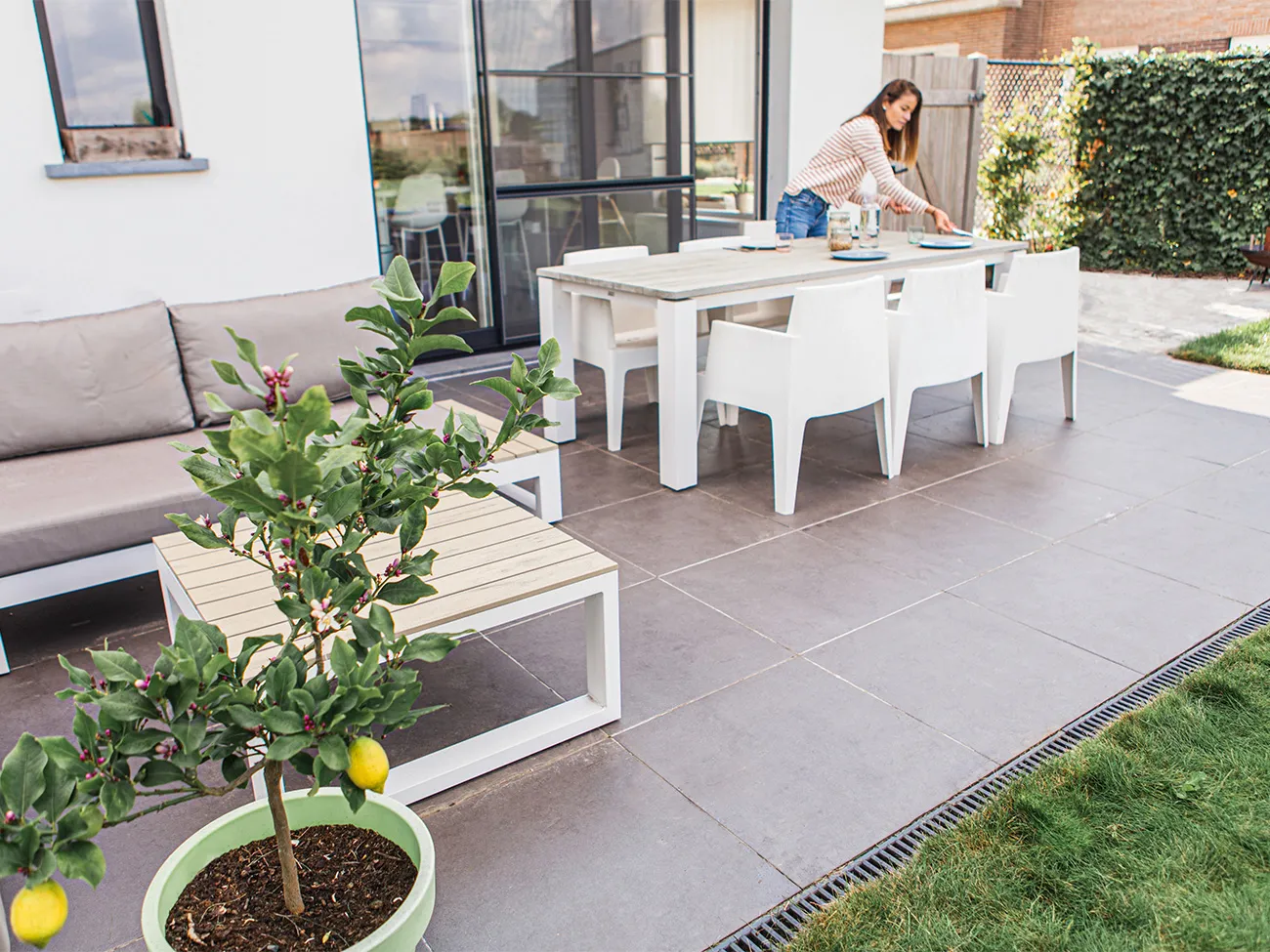
False. “The general rule is for a terrace to have a slope of around 2%, usually towards the garden. If you let the water run straight into the garden without a drainage channel, the garden will suddenly have to absorb a large volume of water in one spot, along the edge of the terrace. This can leave the lawn waterlogged, especially during intense or prolonged downpours.”
“By contrast, if you install a drainage channel at the lowest point of the terrace, you can collect rainwater and control how it is discharged. It can be directed straight into the sewer network, or the outlet can be connected to a rainwater tank or an infiltration system.”
It is better to retain rainwater on your own property
True. “Local management of rainwater is always preferable, for several reasons. First, water is a scarce resource these days. Discharging usable water into the sewer network is by no means an environmentally friendly solution. What’s more, sewers can become overloaded during heavy rainfall, causing flooding. Reusing rainwater, on the other hand, reduces pressure on the drinking water network, while gradual infiltration helps maintain groundwater levels. Both measures are essential to protecting our environment and water supply.”
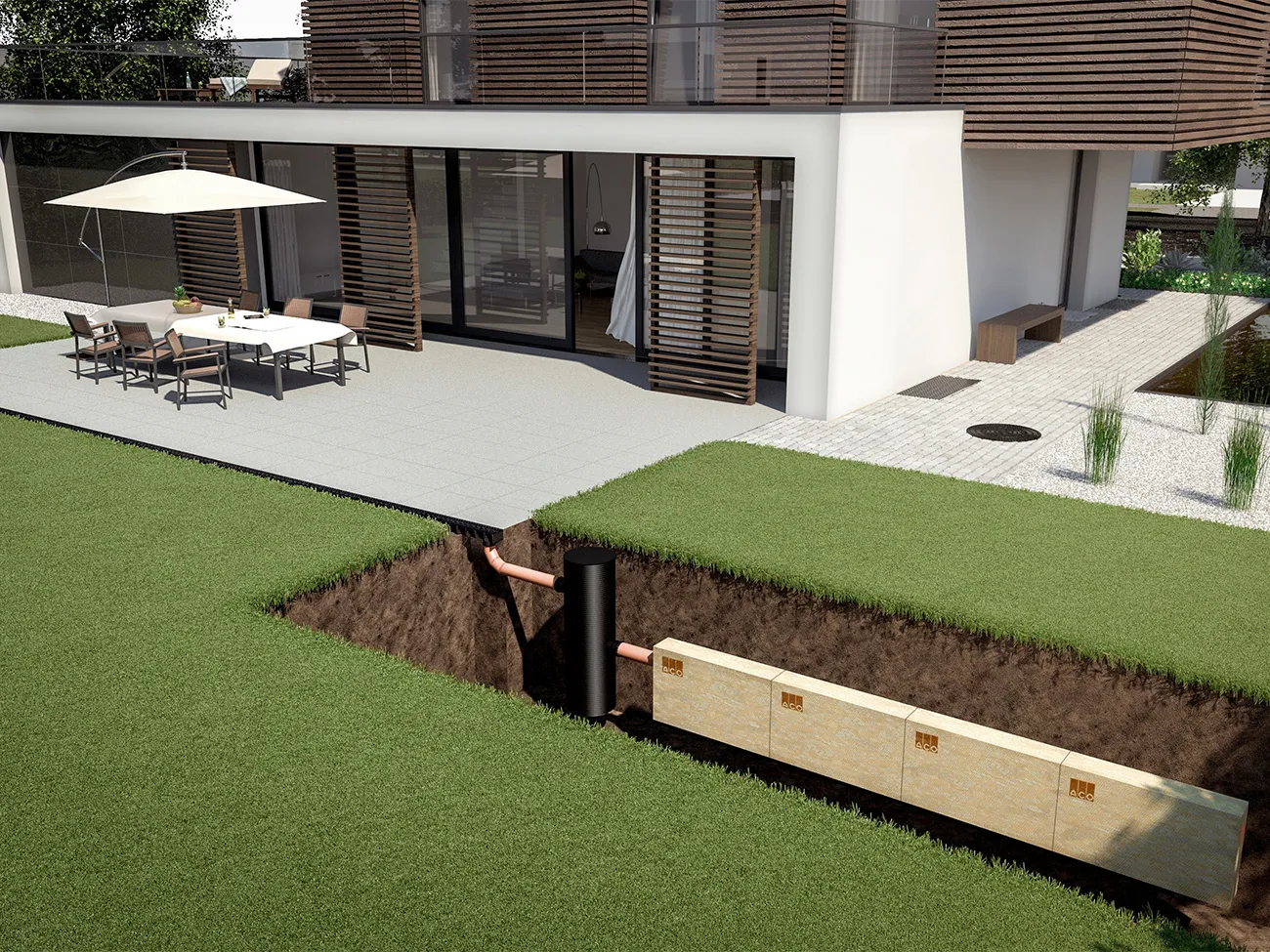
To reuse rainwater, simply connect the outlets to the rainwater network; there are various solutions for local infiltration. “The principle is always the same: store the water and release it gradually into the ground. Infiltration crates, such as our Infiltra 2.0, are the best-known solution. A 60 x 60 x 60 cm plastic crate, wrapped in geotextile and connected to the outlet, can hold up to 205 litres of water.”
“Our Infiltration Line is also unique. This system uses rockwool blocks to absorb water and release it slowly. It was designed in full compliance with Flemish infiltration regulations and has a storage capacity of more than 112 litres per block. At 100 x 20 x 60 cm, it only requires a narrow trench.”
Drainage channels are functional, but unattractive
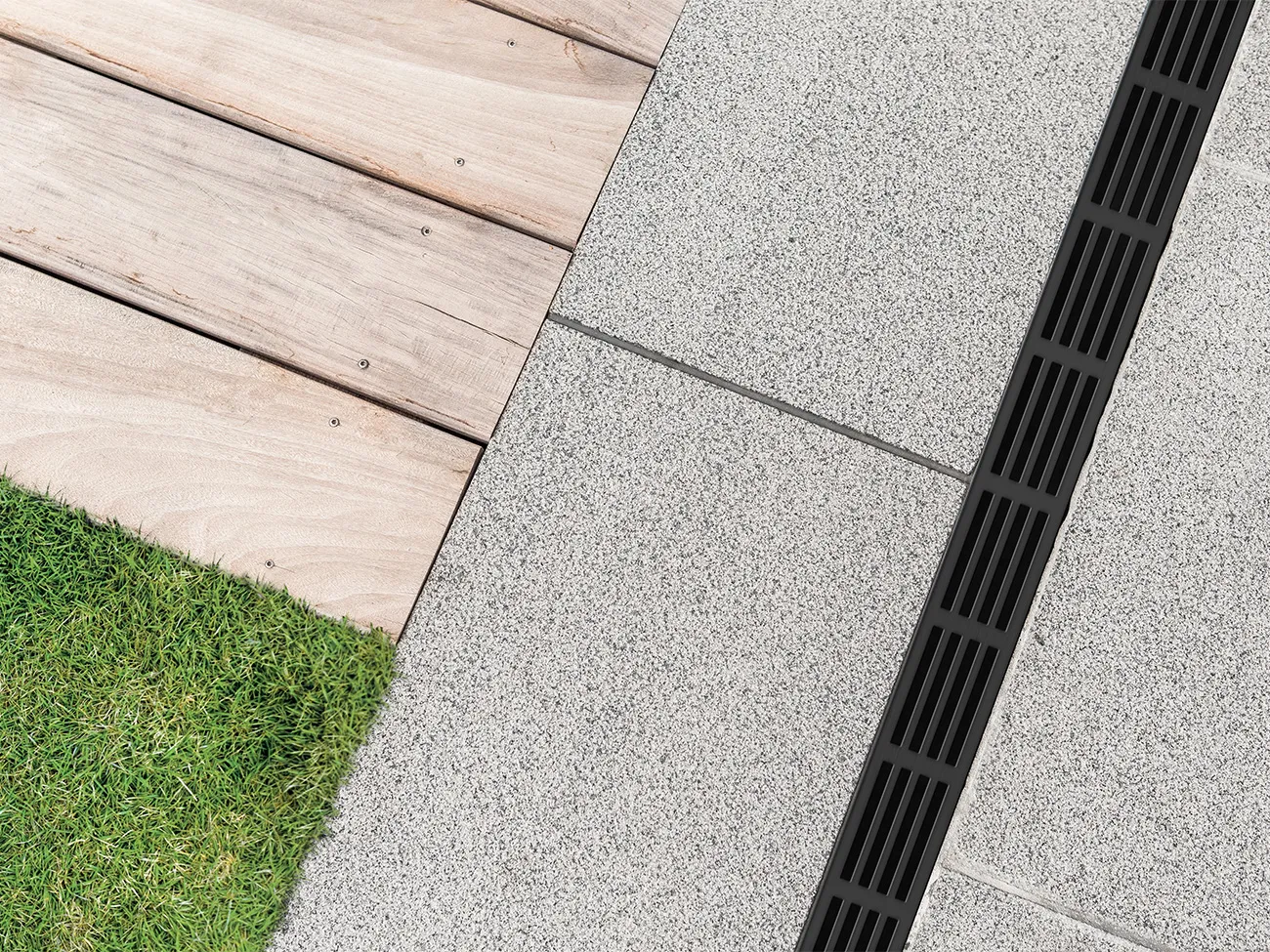
False. “Of course, a drainage channel has to be functional. It must be able to carry water away properly and efficiently. But that doesn’t mean it has to be an eyesore for the homeowner. Our range is so extensive that even the most discerning designer will find something to suit.”
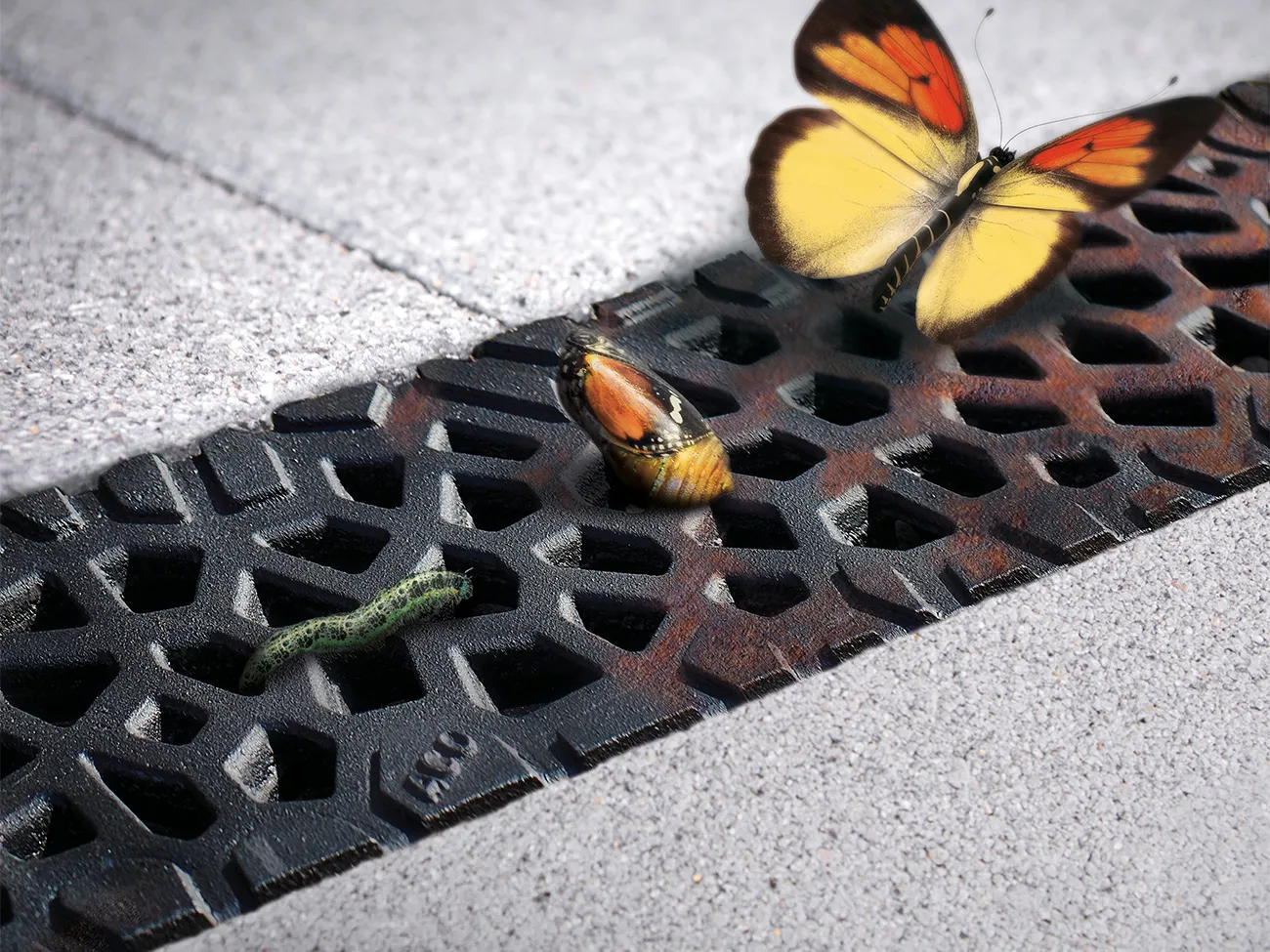
For example, channels with a traditional grate are available in a range of colours and materials. “Options include galvanised steel, cast iron and stainless steel. Different finishes also make it easy to match the grate’s colour to the terrace paving or joinery, for instance. There are also narrower channels, just 6 cm rather than 10 cm wide, as well as design options such as the cast-iron Euroline Voronoï grate.”
There are also discreet slot channels, which are almost invisible. “Although the channel itself is still 10 cm wide, only a 1.6 cm slot is visible in the terrace.”
Slot channels are difficult to maintain
False. “Compared with a channel with a grate, which you can clean simply by lifting the grate, a slot channel does require a little more preparation. You need to fit an access point at each end of the channel, and, for longer channels, possibly in between as well. We supply the necessary materials, which can be finished to match the terrace paving. You then simply open the access cover, remove any debris and rinse out the channel with a garden hose.”
Question about this story? Ask your question
Companies in this story

Keep following this
Get an email when a new story is published. No account needed.
- ThemeManaging rainwater
- SubjectNews
- CompanyACO