Give stressed trees a new lease of life
A targeted approach for long-term results
We have long known that ancient forests, such as the Amazon rainforest, are the lungs of our planet. But did you know that every individual tree in our small country of Belgium also plays a central role in mitigating global warming and all its harmful effects? Most people have only become aware of this over the past few decades. Yet the contract horticulture company De Ceuster found a solution 20 years ago to preserve our green capital, much of it centuries old.
“It is mainly old trees that make an important contribution to, for example, carbon storage, cooling, air quality and the soil’s drainage capacity,” explains Andreas Popelier, bio-engineer and technical adviser at De Ceuster. “In the past, people would think nothing of felling an old tree and planting a new one elsewhere. Today, however, we are more aware that we must first and foremost protect existing specimens, some of them centuries old. Like other plants, these trees are increasingly suffering from extreme weather conditions caused by climate change, as well as the impact of human activities such as soil compaction, root damage and excess road salt. So they need a little help.”
Pioneer
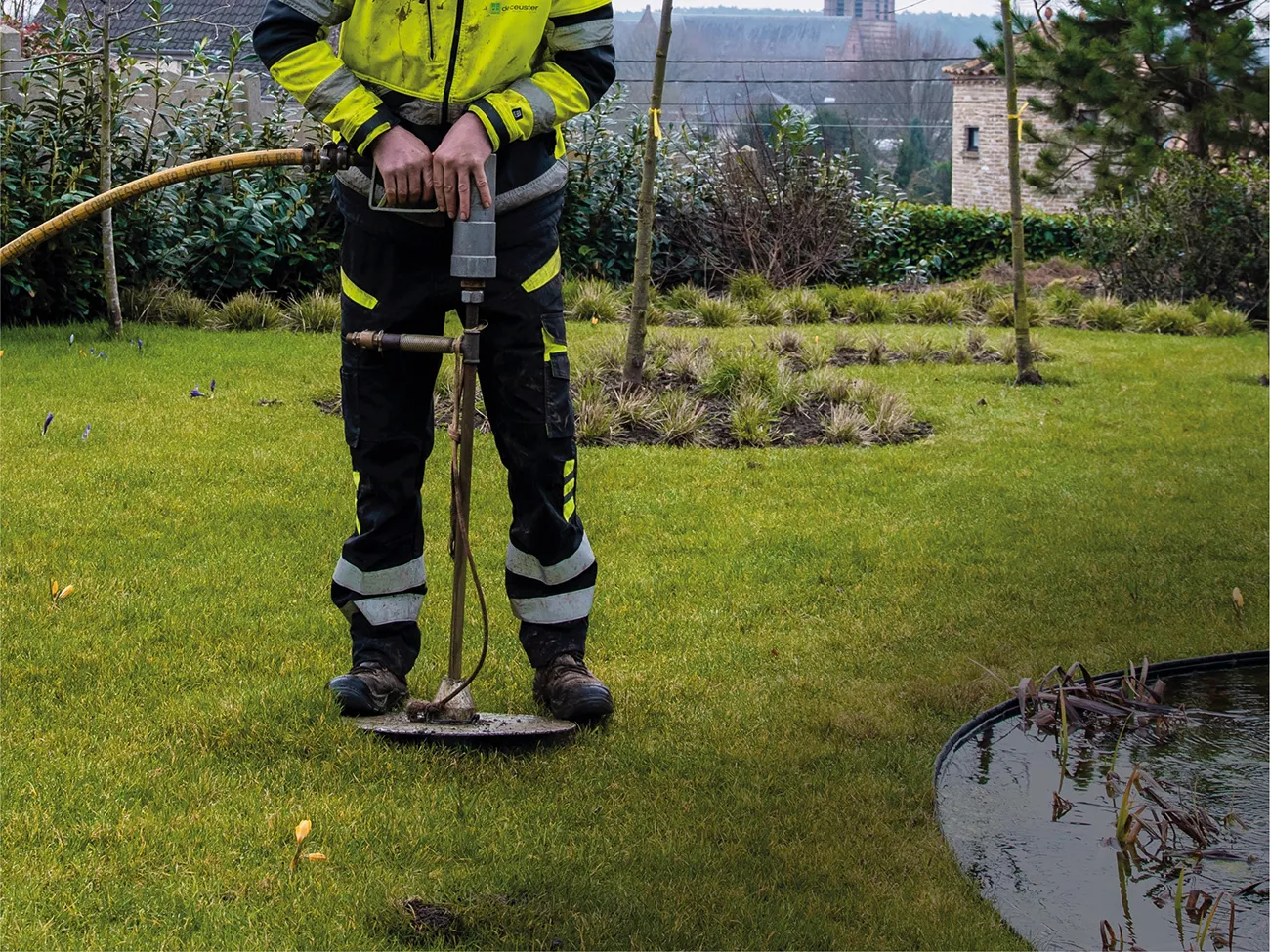
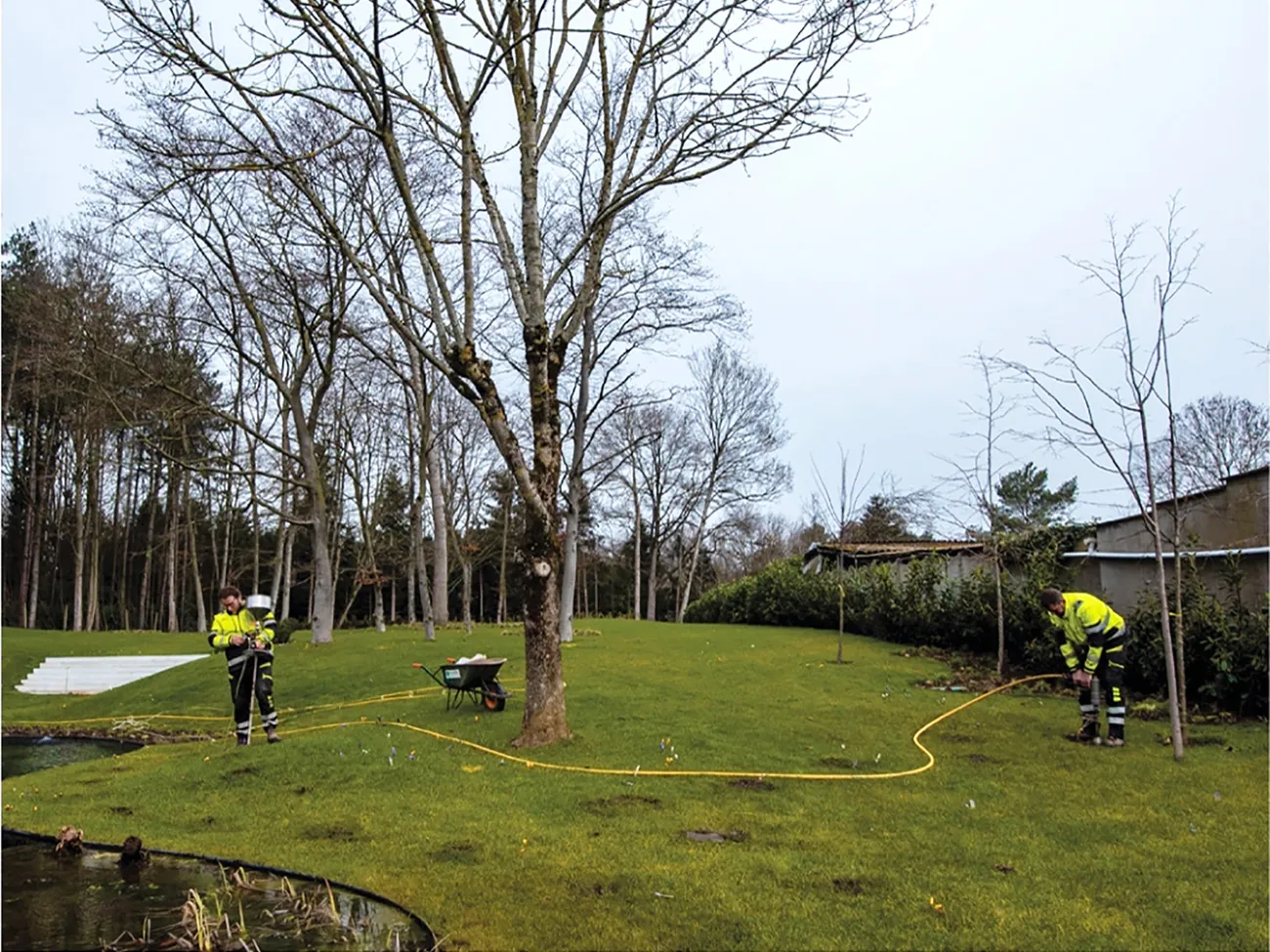
Although De Ceuster is primarily a contract horticulture company, specialising in horticulture, parks, infrastructure, and sports and leisure grounds, it has also developed Oxyjet: a machine that aerates the soil beneath the tree’s canopy to improve its structure and, in the same operation, injects the root zone with the necessary nutrients and a soil conditioner.
“When we come up against a problem in the course of our work for which there is no suitable solution available on the market, we get the professionals in our own workshop to work on it,” explains Andreas Popelier. “That is what we did with Oxyjet 20 years ago. Back then, only a small minority understood the importance of our trees and, therefore, the value of treating them. Today, it is a hot topic.”
Complete treatment
The machine and the working method itself have changed very little over the past 20 years, but the treatment programme has since been optimised.
“Today, we offer a complete treatment comprising three products: a soil conditioner containing biostimulants based on beneficial soil organisms, organic nutrients rich in trace elements, and a solution that neutralises harmful salts so they can no longer be absorbed by the tree.”
In addition, the highly branched network of channels created during soil aeration improves air and water management in the soil. To maintain this drainage effect, the channels can be filled with lava. “We mainly do this for heavily compacted soils, such as those in a car park. But the technique is also an excellent drainage solution where there are no trees at all, such as at the Racing Genk site.”
University research highlights the positive effect
With Oxyjet, De Ceuster aims to provide a long-term solution and protection that can be applied not only as a treatment but also preventively.
“The challenge, however, is to prove this positive effect scientifically, which is sometimes difficult,” admits Andreas Popelier. “That is why last year we launched a research project at De Tuinen van Adegem with the Plant Ecology Laboratory of the Faculty of Bioscience Engineering at Ghent University.”
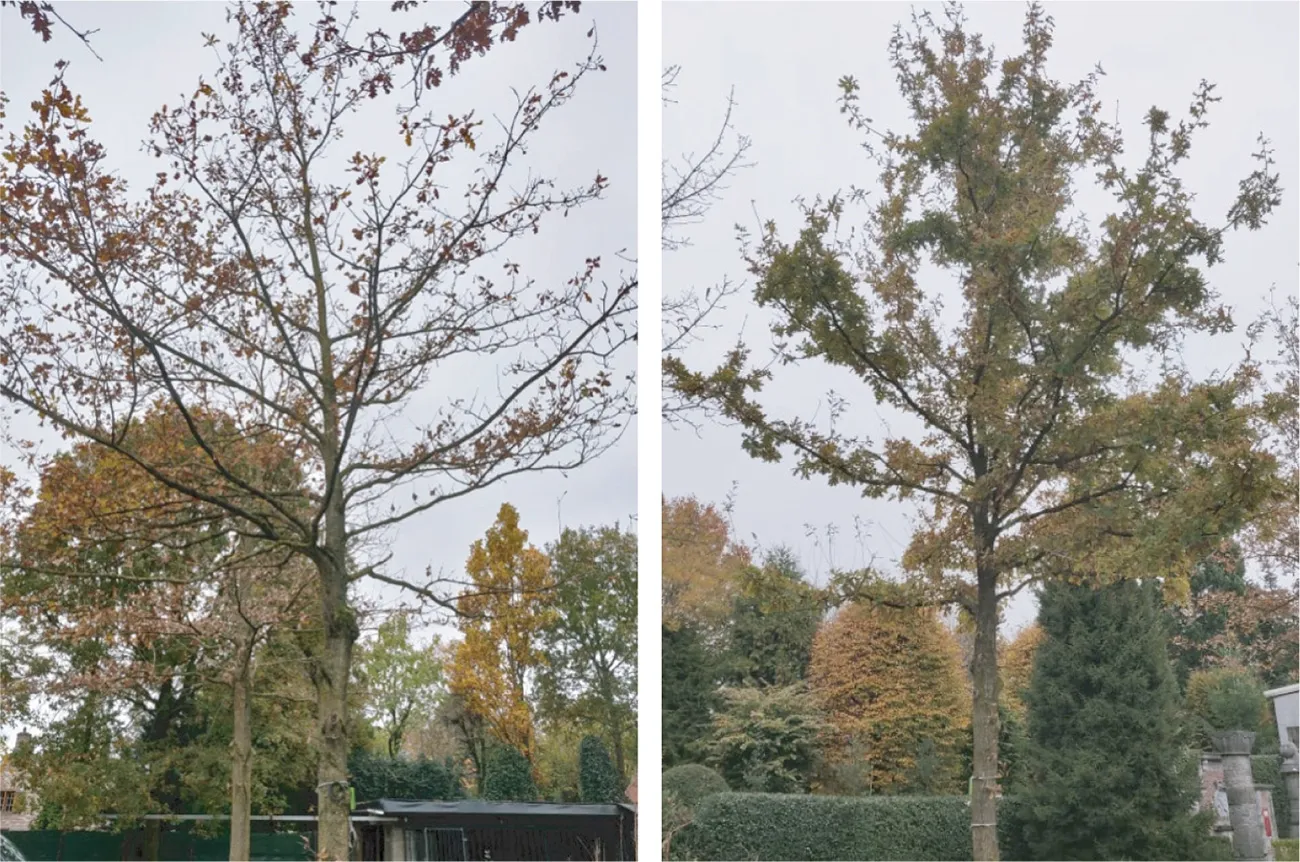
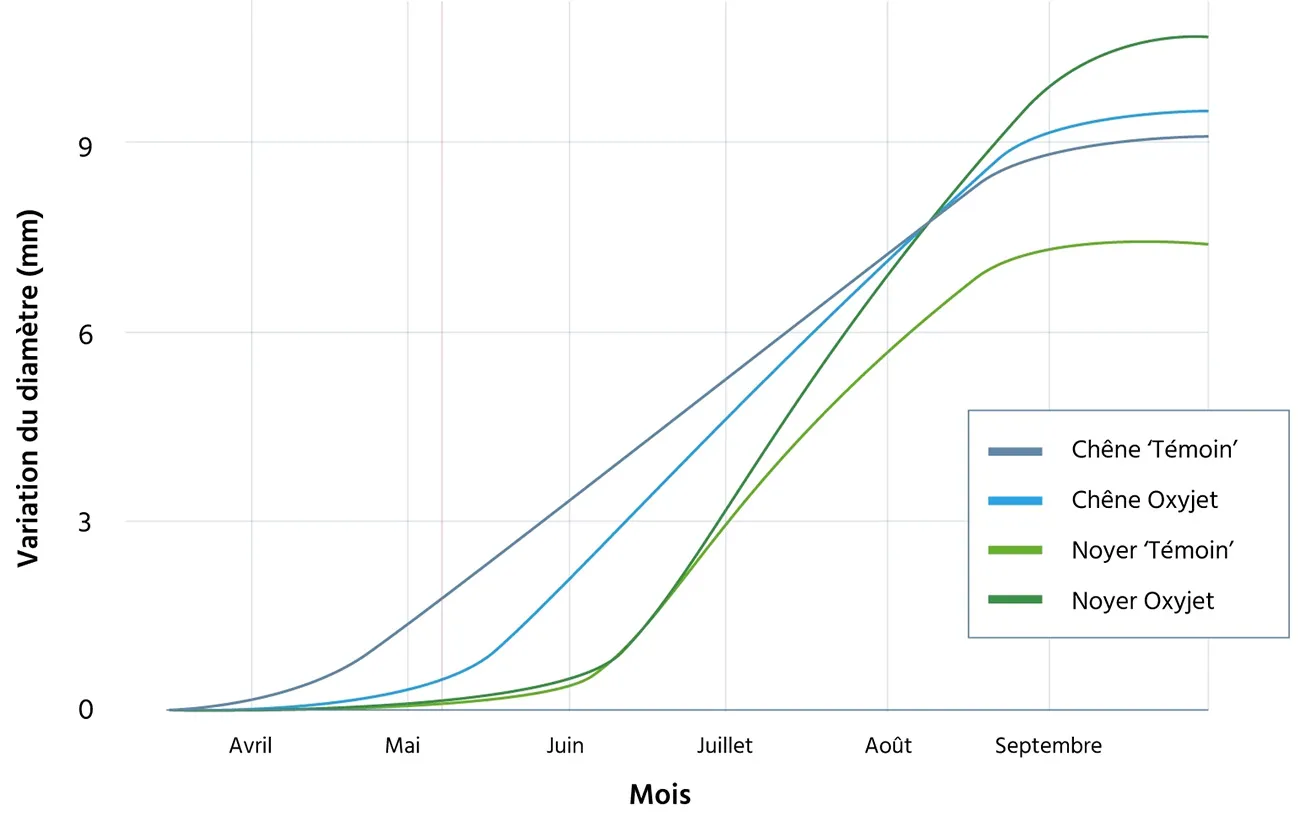
More specifically, the project involves monitoring the growth and health of two oak trees and two walnut trees. One of each species has been treated with Oxyjet, while the other serves as a control. Monitoring is carried out not only through visual assessments, including the length of the growing season, leaf growth, colour and the number of new shoots, but also using specialised sensors to measure diameter growth and sap flow.
“In summer 2021, we had already recorded striking differences in diameter growth. In July, for example, the treated oak’s diameter growth was 33% greater than that of the untreated oak. For the walnut, the difference was as much as 41%. And it is worth noting that it was a wet summer with moderate temperatures. We are therefore looking forward to the results from the hot, dry summer of 2022. They will be available soon.”
Question about this story? Ask your question
Companies in this story

Keep following this
Get an email when a new story is published. No account needed.
- SubjectNews
- CompanyDe Ceuster NV