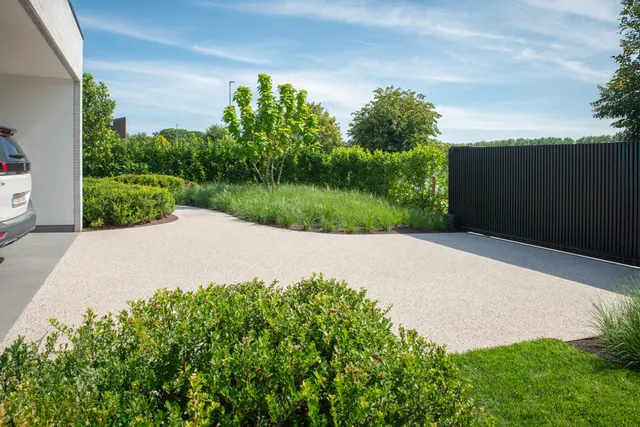
Maintain as much as necessary, but as little as possible
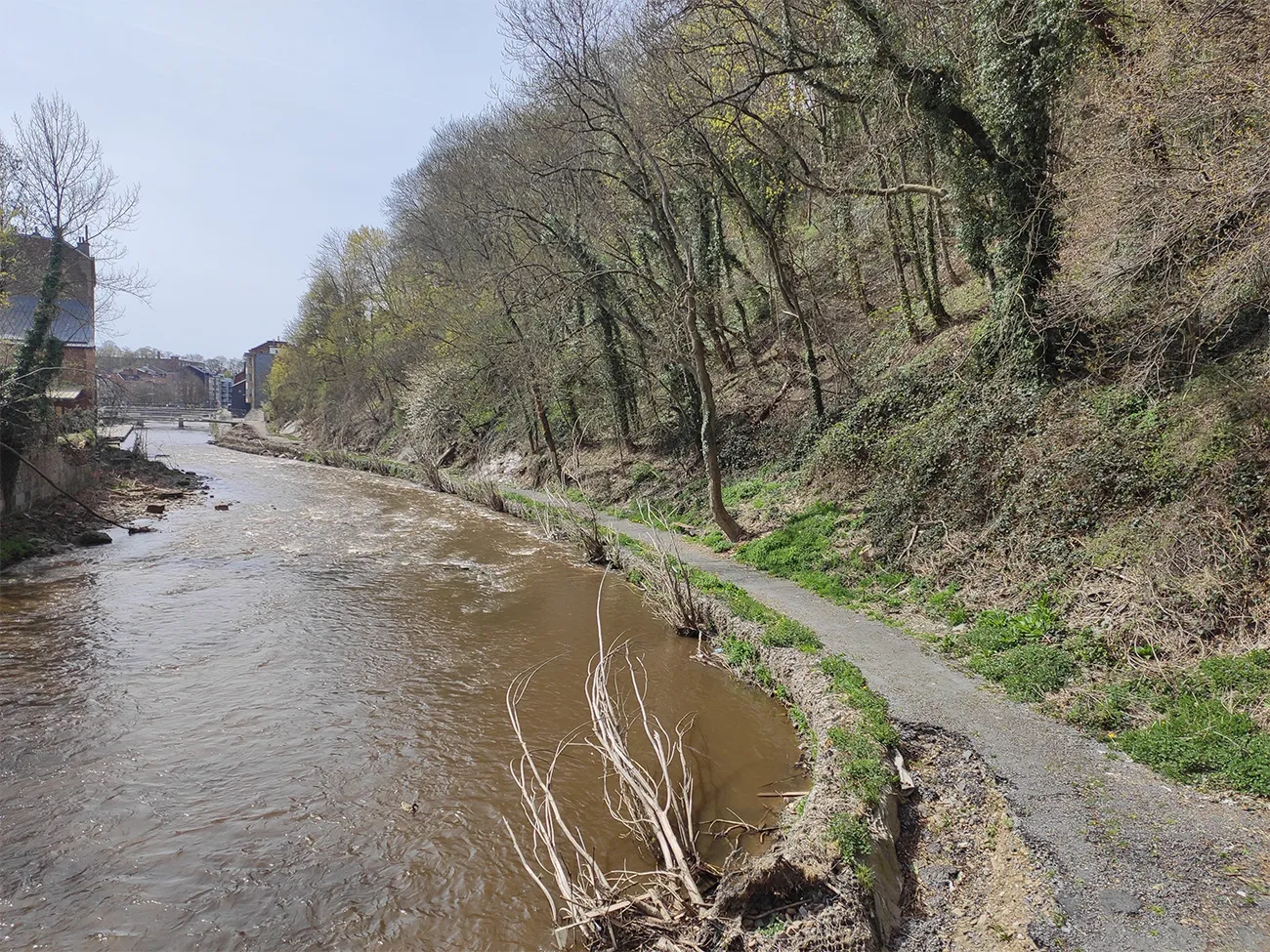
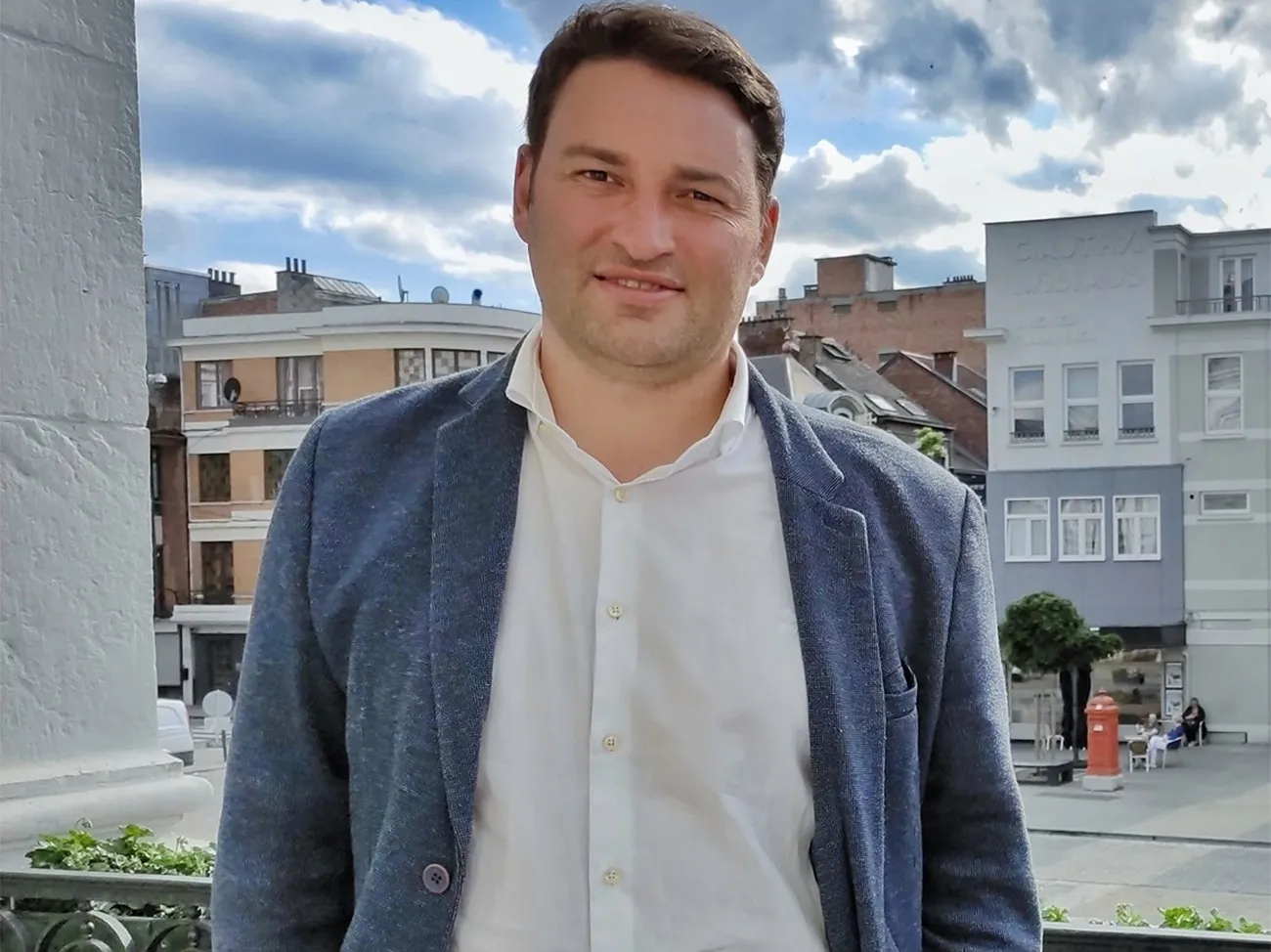
The city of Verviers, the administrative centre of an arrondissement in the province of Liège, is less than 30 km from the German and Dutch borders and lies at the crossroads of Liège, Aix-La-Chapelle and Maastricht. Not far from the Gileppe dam and the High Fens, this densely populated city, with a relatively small area, has adopted the principle of differentiated management for its green spaces, with the aim of promoting biodiversity and diversifying these spaces. Maxime Degey, alderman for urban planning, spatial planning and public works, outlines the key principles underpinning green-space management in the municipality of Verviers.
A brief history
The present-day municipality of Verviers was formed on 1 January 1977 through the merger of the former municipalities of Verviers, Ensival, Heusy, Lambermont, Petit-Rechain and Stembert. Although Verviers covers just 33.07 km2, it has a high population density of 1,681 inhabitants/km2, with a total of 55,592 residents recorded in 2019. Close to the densely populated city centre lie attractive countryside and more rural villages, offering a wealth of locations that could appeal to prospective property investors. The city of Verviers’ motto says it all: “Green and Old”. It is one of the oldest cities in the Kingdom, surrounded by attractive countryside.
The shift to differentiated green-space management
Differentiated management is a considered approach to managing urban green spaces that is more respectful of the environment and protects biodiversity by limiting artificialisation and encouraging greater diversity of species and habitats. The principle is to apply the most appropriate management regime to each space, taking its use and location into account. In short, green spaces are divided into different management classes according to their maintenance requirements: more intensively used areas receive more intensive maintenance, while less-used areas benefit from a “softer” approach that makes room for nature. To implement this transition, the city is drawing on a study by the Apitrees consultancy, completed in 2019, which includes a green-space inventory, a survey of invasive species and the classification of areas into different management categories. Needless to say, differentiated management rules out the use of pesticides.
In practice, this involves using alternative techniques (mechanical, thermal or manual weed control, and delayed mowing), encouraging spontaneous vegetation wherever possible, and promoting grass cover, for example in municipal cemeteries.
Practical initiatives
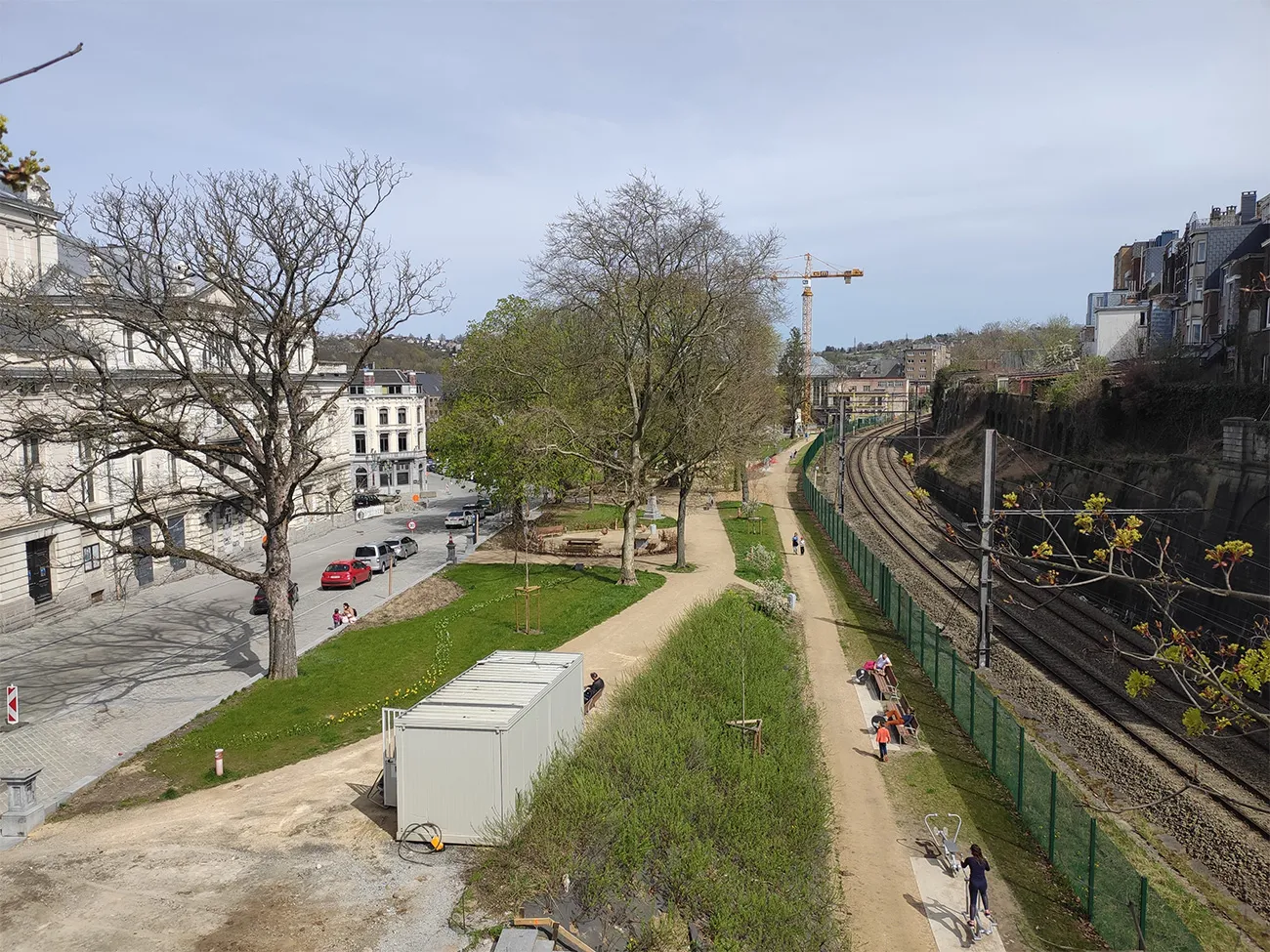
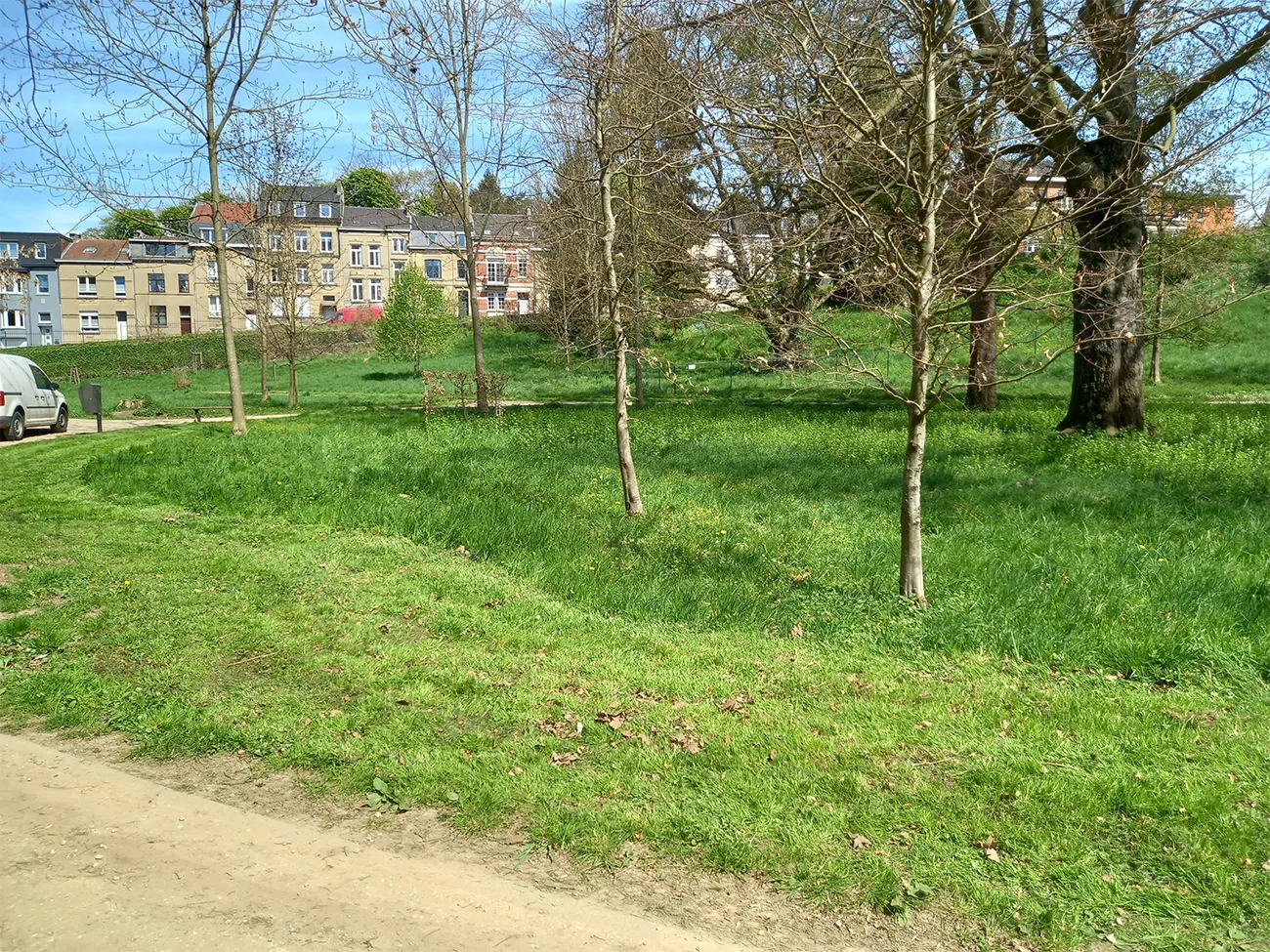
Alongside this, a second strand of green-space policy is to prioritise planting in the heart of the city, for example in urban parks. Parc Fabiola, in the city centre, is undergoing a major transformation, with trees and shrubs being planted and a play area, picnic spots, rest areas and sports facilities being created. In the same vein, the green lung of Promenade des Récollets, also in the city centre and badly affected by the July 2021 floods, will benefit from a five-year redevelopment plan. This represents an annual investment of no less than €1 million and will include major stabilisation and safety works along the banks. At Parc du château des Moines, in the village of Stembert, the project includes removing dead trees, creating an educational arboretum and resurfacing the pétanque courts.
Roads and active travel
As we know, asphalt is widespread in city centres. The artificialisation of the environment has shown its harmful effects during the recent floods. The city of Verviers has therefore set itself the goal of reviewing all its roads, with the help of an architectural firm, to incorporate active travel and green spaces. However, putting this approach into practice will take months, if not years. In the meantime, every new property development should, of course, include at least a terrace and offer the best possible response to the challenge of water drainage.
However, as Maxime Degey points out, action cannot be considered solely at municipal or local level. The issue of flood prevention affects the entire Walloon Region. The various studies commissioned by the region have not yet led to clear policy and strategic guidelines. As a result, the city remains somewhat in limbo. This is all the more damaging given the competition that can arise between municipalities approached by one property investor or another. Can a city or municipality afford to impose significantly stricter planning requirements than neighbouring cities and municipalities, at the risk of seeing prospective investors head for more accommodating locations? Only time will tell!
Question about this story? Ask your question
Keep following this
Get an email when a new story is published. No account needed.
- ThemeDesigning living landscapes
- SubjectNews