Can a swimming pond replace a swimming pool?
Texte Guido Lurquin | Photos Guido Lurquin, SealEco et Distripond
A swimming pool is a place to swim, and so is a swimming pond. They have similarities, but also differences.
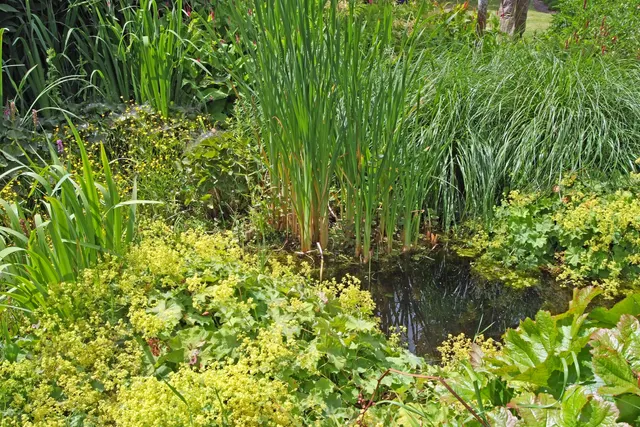
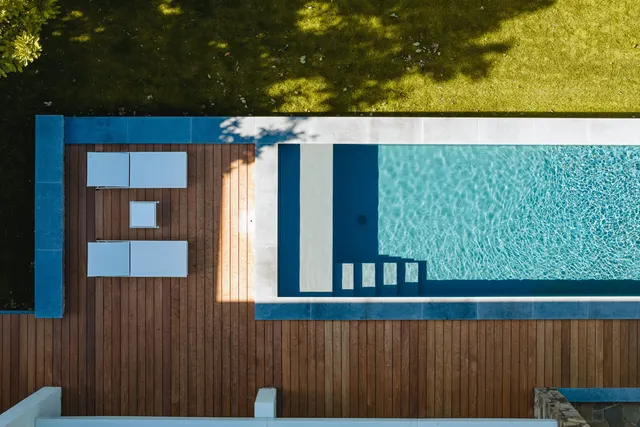
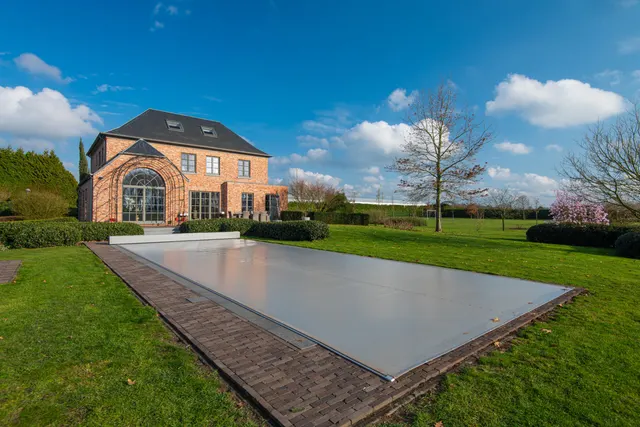
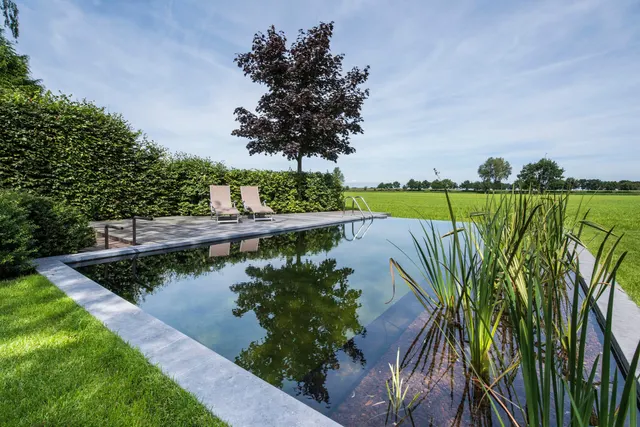
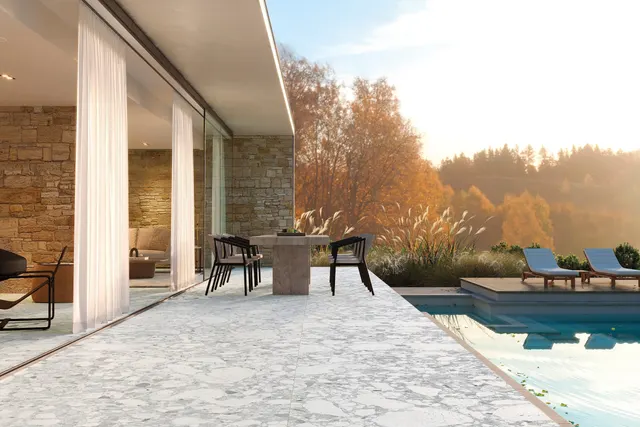
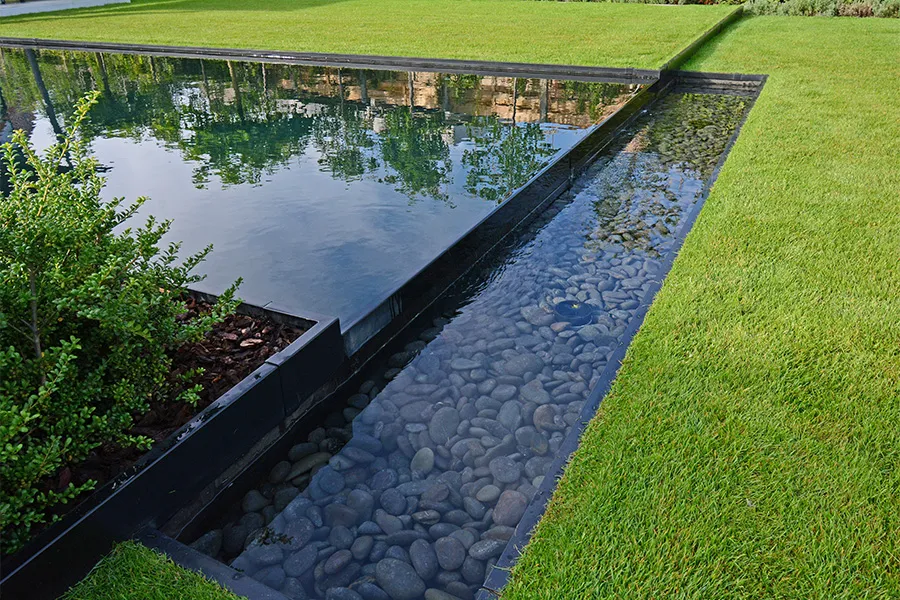
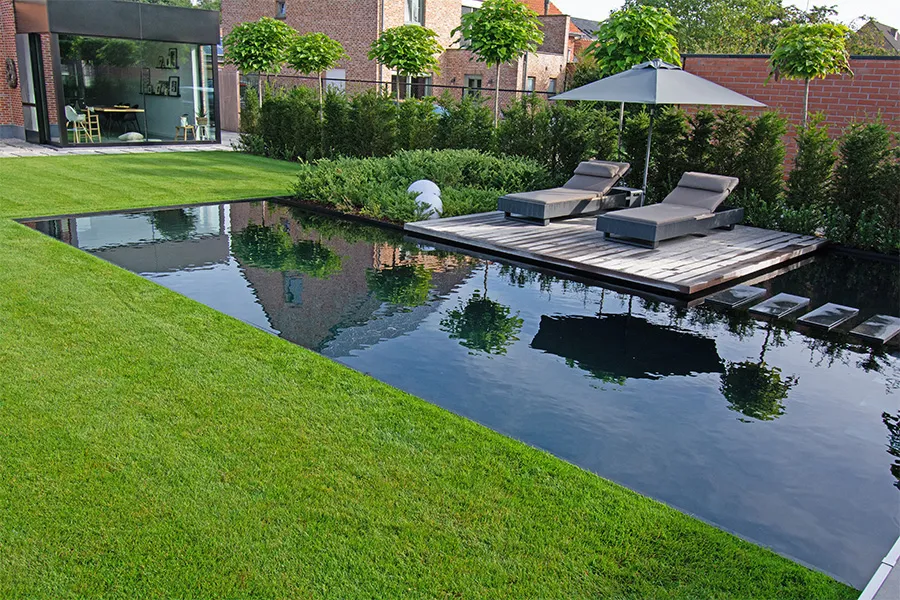
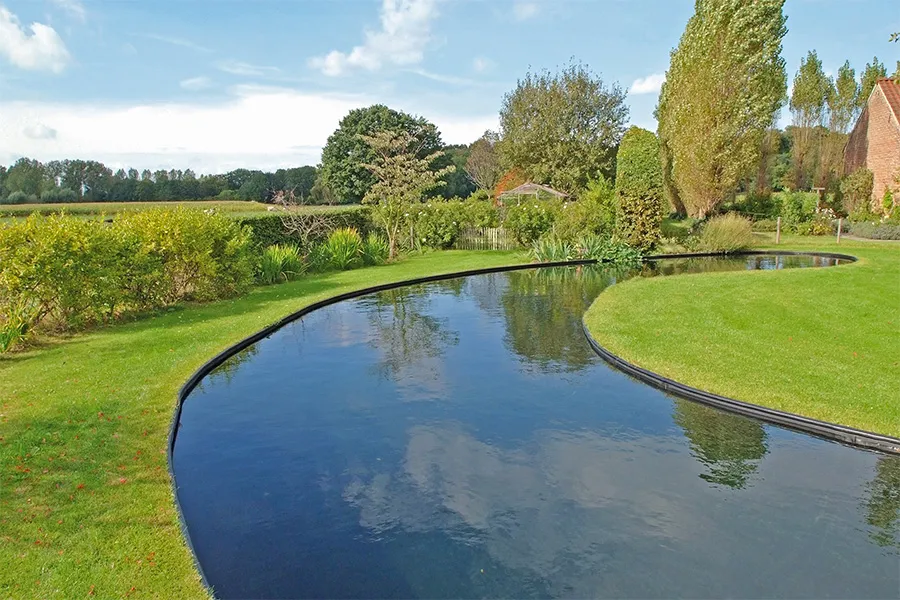
Visually, the two types of swimming facility can sometimes be hard to tell apart. A swimming pond can look just like a swimming pool, and vice versa. But they can also look completely different. Swimming pools are almost always geometric in shape, whereas swimming ponds offer more possibilities. They are ornamental ponds that blend seamlessly into a landscaped garden. Informal shapes are back in fashion and, in recent years, combinations of straight-edged shapes, such as the swimming area, with curved shapes, such as the marsh-bed areas, have also become popular. A swimming pool’s main purpose is to provide a place to swim, whereas a swimming pond is first and foremost a water feature that fits well into the garden design. Plants can grow around and in the swimming pond, making it look even more natural.
One major advantage over a conventional swimming pool is that you can enjoy the swimming pond visually all year round, whatever the weather.
Waterproofing
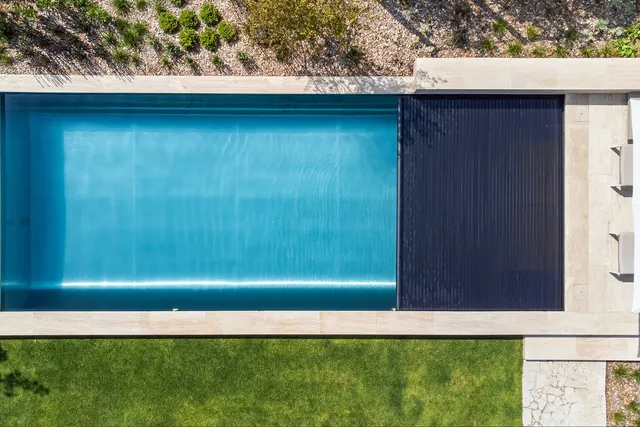
When building swimming pools, materials must be chosen that can withstand the disinfectants used, usually chlorine derivatives. Historically, and still today, PVC liners have therefore been the material of choice. They are available in all kinds of colours and are easy to install. They can be bonded or heat-welded. A major environmental drawback is PVC’s very negative impact on the environment. That is why environmentally conscious clients and installers are more likely to opt for a PE-based FPO liner, which is less harmful to the environment. FPO liners can only be joined by heat welding, are available in a limited range of colours, and are most commonly grey.
For swimming ponds, people almost always choose a black or near-black EPDM membrane for environmental reasons. This makes good sense. This rubber membrane has been the most widely used waterproofing material in the professional pond sector for more than 25 years. Its exceptionally long service life, over 70 years according to a recent SKZ study, and recommendations from environmental organisations certainly play an important role. The black colour has three significant effects on a swimming pond. First, the mirror effect is much more pleasing with dark waterproofing. The surroundings and plants are reflected clearly and playfully on the rippling water surface. It is also easy to see why a black membrane is easier to maintain: deposits are less visible, or barely visible at all. Most importantly, the swimming water warms up by 4 to 6 °C in summer, free of charge. Black surfaces absorb the sun’s rays, and the carbon black in EPDM ensures that UV light is converted into infrared heat. The difference is substantial. Even without additional heating, temperatures of 26°C, and sometimes even 28°C, are often recorded in EPDM swimming ponds in summer… yes, in Belgium.
Please note: high-quality EPDM membranes generally have a specific weight of no more than 1.25 kg/dm³. Higher densities usually indicate the addition of cheap fillers, which can adversely affect the ageing of EPDM rubber membranes. Elevate’s PondGard membrane, formerly Firestone, has proven its quality over many years.
Filtration
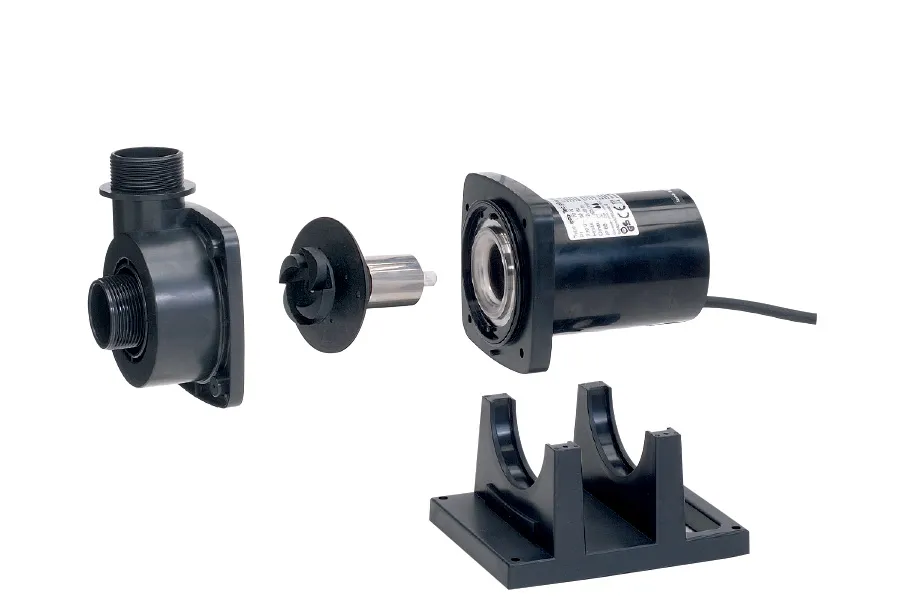
In swimming pools, water treatment relies on a combination of mechanical filtration and disinfection. The equipment is often installed above ground, for example in a garden shed. This is where you will find a powerful swimming pool pump that draws in the water and then pushes it through a filter, often a sand or bead filter, followed by measuring equipment and systems for adding acid and disinfectants. The above-ground layout and often long, narrow pipes, frequently 50 mm in diameter with an internal diameter of 47 mm, considerably slow the flow of water. The swimming pool pump therefore needs to be powerful, which means high electricity consumption. Be sure to check the power input, which is much higher than the output power.
In swimming ponds, healthy swimming water is achieved through slow mechanical and biological filtration. The main filter usually consists of a marsh bed filled with substrate. The filtering bacteria do their purifying work here. An important “final stage” is the growth of aquatic plants, which consume the residual nutrients. They do this free of charge. The equipment is usually positioned right next to the swimming area, often in a pump chamber or cellar. Energy efficiency has been a focus in the swimming pond sector for many years. As a result, the pipes are generally short and wide, and the required flow rates are low. Water can therefore be circulated using energy-efficient pond pumps with a low head.
Running costs
Since there are no disinfectants to buy and energy consumption is significantly lower, the running costs of a swimming pond are low to very low. But beware, energy consumption and costs can vary considerably. So-called “hybrid” systems based on hydrolysis and other processes have an installation very similar to that of conventional swimming pools: installation in a garden shed, numerous bends and T-junctions, the addition of water-treatment products, periodic calibration, and so on. These are the most technical swimming ponds and have the highest running costs.
Swimming ponds with a “downflow” marsh bed are clearly the cheapest, see Distripond concepts. This applies to both construction and operation. Very little equipment is needed. Construction is not very complex, and maintenance is minimal and very straightforward. Experienced installers generally use a low-consumption Messner Eco-Tec2 pump. Energy consumption is then around 5 times lower than that of a swimming pool pump for a pool of similar dimensions. Where the pipes are short and wide, a Messner Eco-Tec2 Plus pump, which uses even less energy, may be sufficient.
A special swimming experience
In true swimming ponds, the water contains no additives, chlorinated compounds, acids or salt. People swim in soft, natural water that does not sting their eyes. It is like a balm for swimmers’ skin. It is like swimming in a lake, with complete freedom. A swimming pond lets you enjoy the great outdoors. Fish can live in the water if you want them to, but they do not have to. In any case, you can imagine yourself in paradise, the paradise of Tarzan and Jane. Children’s health benefits too, not only physically but also mentally. Connecting more closely with nature feels good.
Question about this story? Ask your question
Keep following this
Get an email when a new story is published. No account needed.
- ThemeBuilding swimming pools and ponds
- SubjectSwimming pools and ponds