Meticulous installation down to the last detail
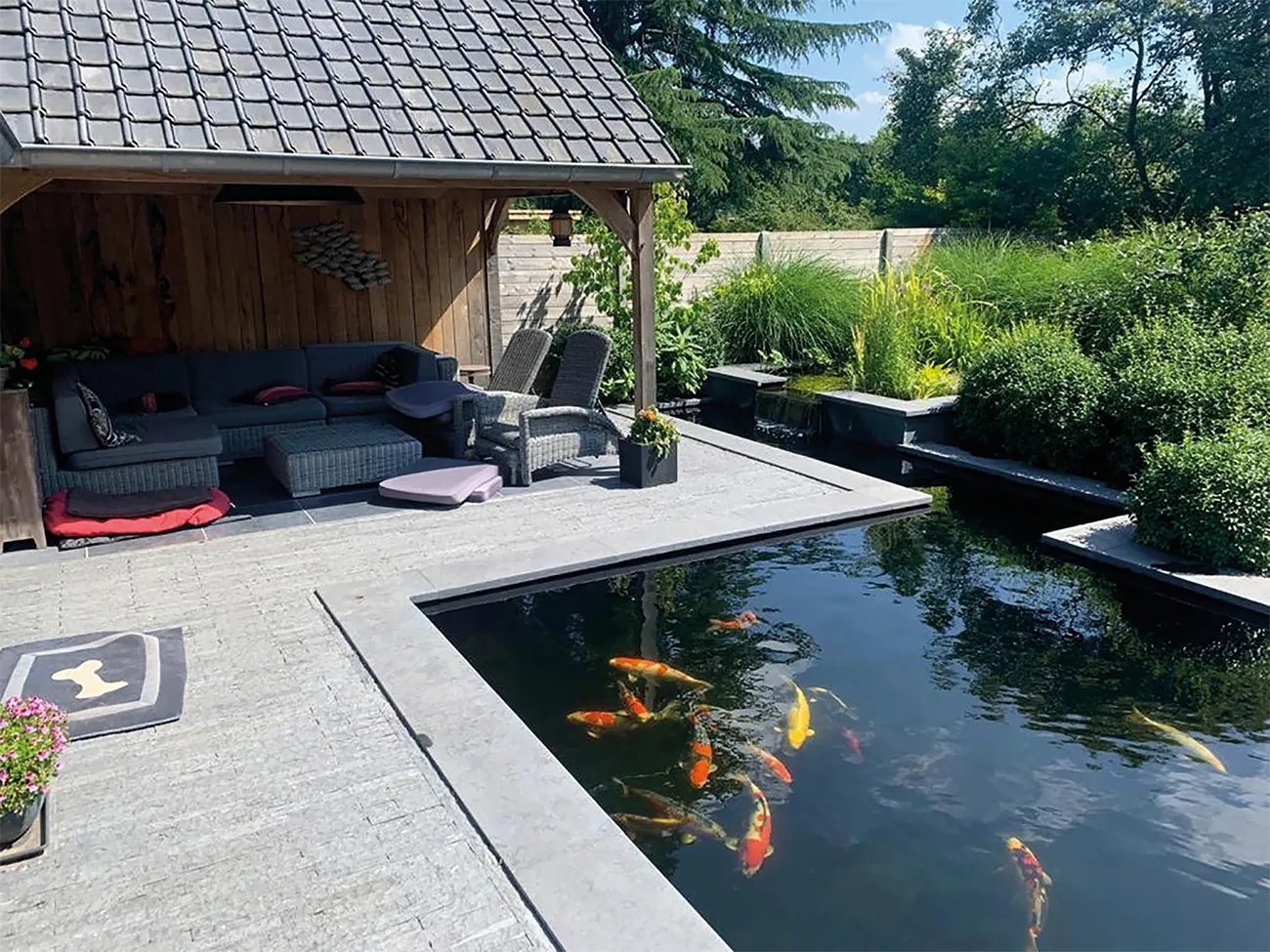
Materials used in and around swimming pools often have to meet specific requirements, some more obvious than others. We all know that pool copings and steps need to be sufficiently slip-resistant, but not everyone is aware, for example, of the impact that electrolysis-based water treatment systems can have on limestone.
“There are still a number of hidden or at least underreported points to consider,” says Els Meynen of garden materials supplier E.L.S. Garden. “We or our customers have had to discover some of them through trial and error, but in most cases, you can work out a lot if you have the necessary knowledge of the products and materials. When we supply products for the inside or outside of a pool, we are very happy to share that knowledge.”
Measuring and adapting
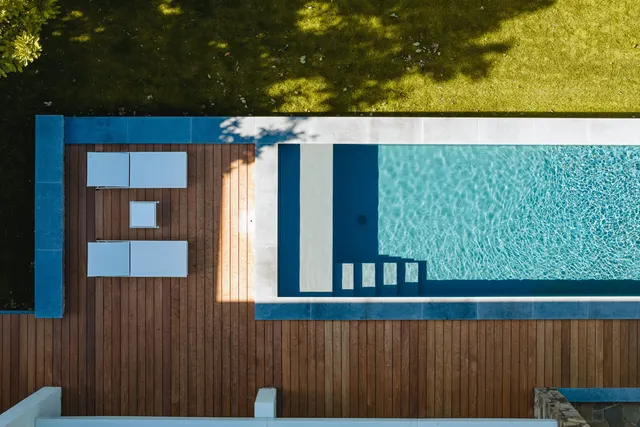
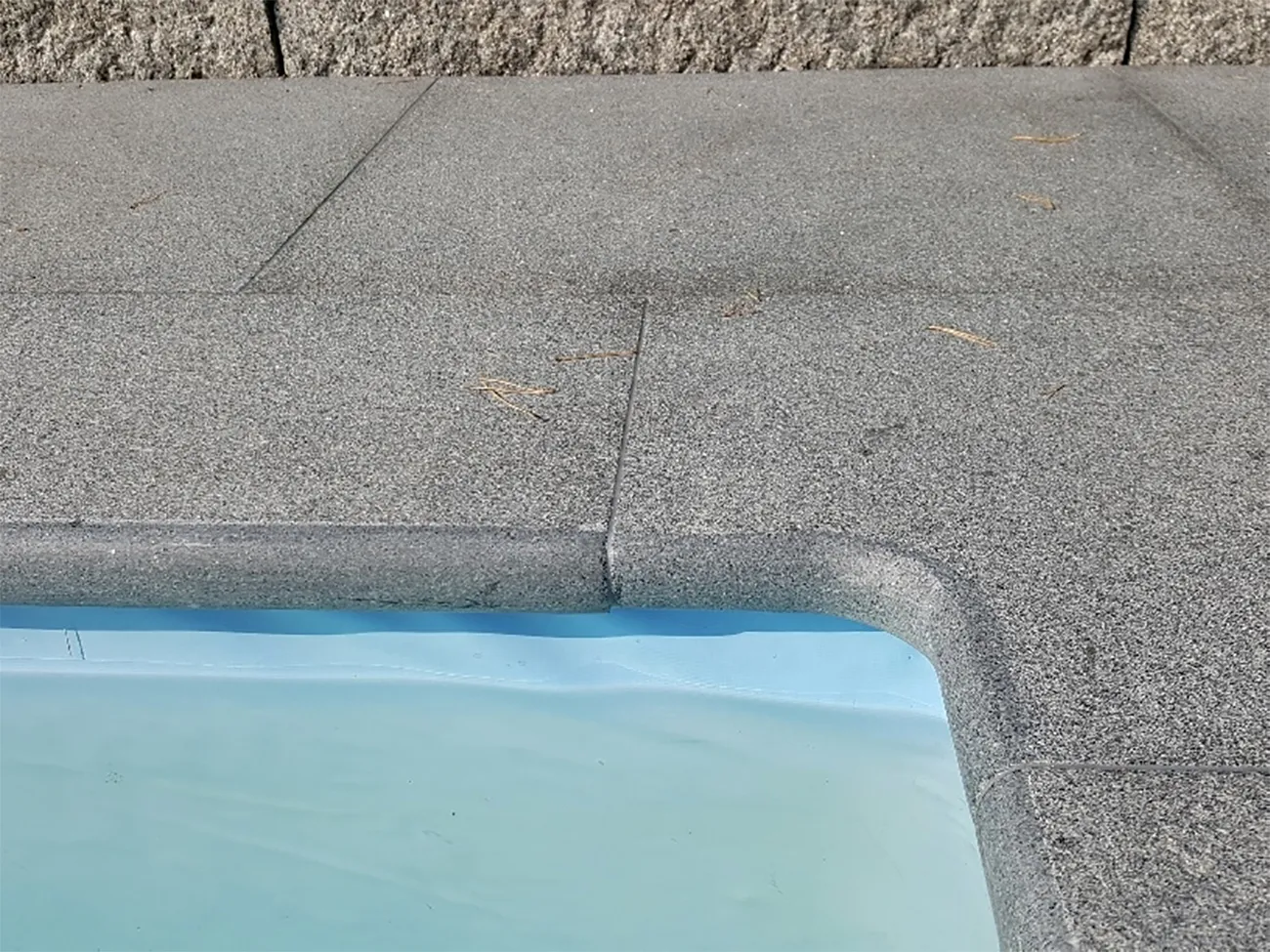
There is certainly no shortage of materials for pool copings. Granite, limestone or ceramic: all can be used to finish the pool edge attractively and safely, with a straight or rounded nosing. “The material itself is not the most important consideration for a pool coping; the geometry is. A pool is not designed around the available coping sizes. The copings have to be adapted to the dimensions of the pool. This sometimes calls for careful thought, adjustments and possibly cutting.”
“For example, to achieve an attractive, uniform finish, you want to avoid having to insert a small 20-centimetre section between every 100-centimetre coping stone. To make things easier, as well as standard sizes we also stock a wide range of corner pieces and adaptors in all materials. This allows you to match your selection more closely to the pool’s specific dimensions. You may still have to cut a piece here and there, but a 112-centimetre section between 100-centimetre copings will always look better than an extra 12-centimetre piece.”
Underwater
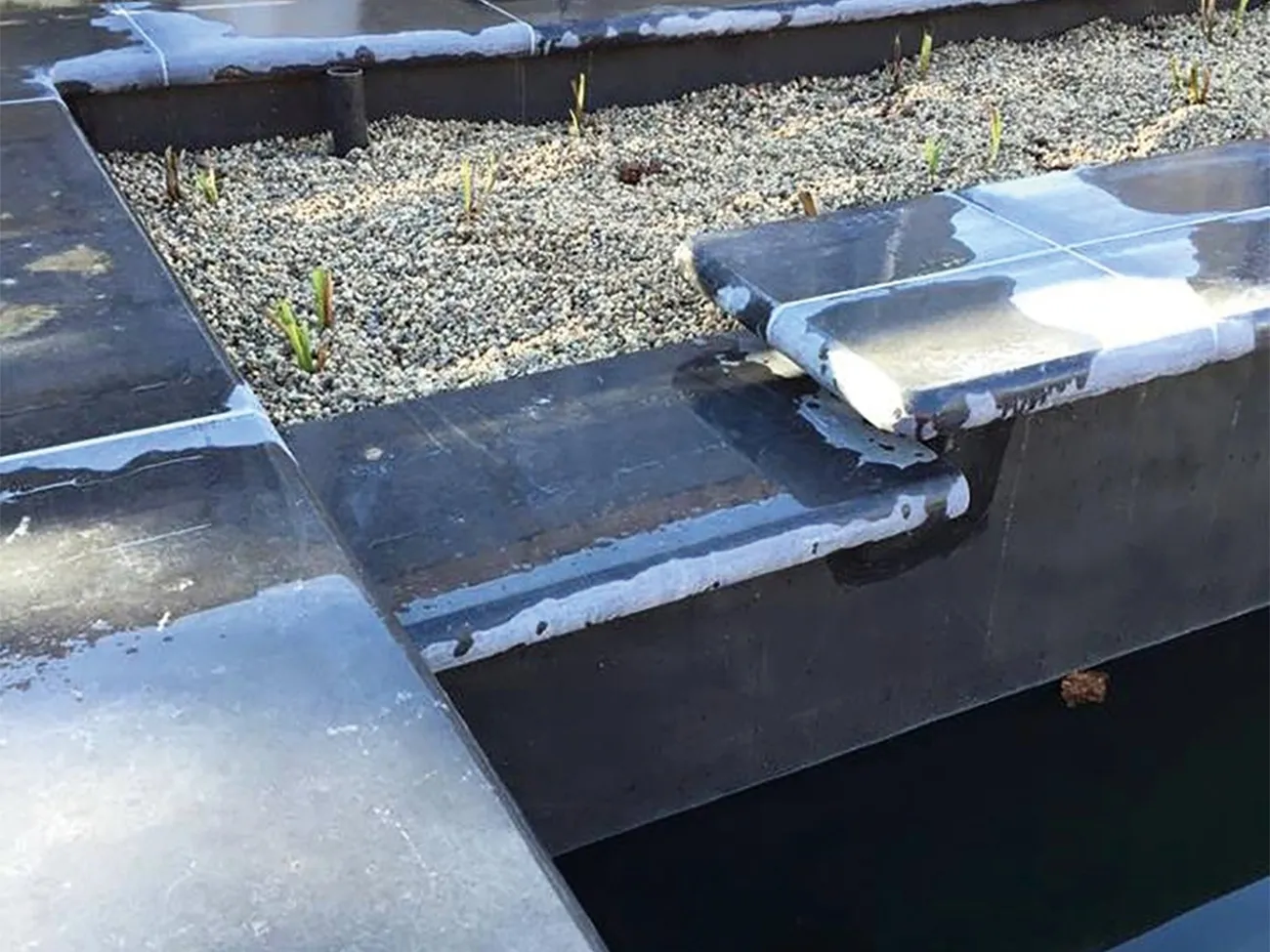
As well as pool copings, E.L.S. Garden also supplies the necessary coverings for pool steps and resting areas. For steps, these are standard elements available with a rounded or straight nosing; resting areas are generally made to measure. In both cases, they are made from flamed or brushed G54 granite.
“There is a very specific reason for this,” explains Els Meynen. “These elements are constantly immersed in water that undergoes a certain amount of treatment in a swimming pool. In the past, this meant conventional chlorine dosing, but electrolysis is now being used increasingly often. However, these systems also affect the water’s acidity, which can have a particularly negative impact on limestone. It deteriorates more quickly in this kind of environment. Granite is less susceptible and therefore offers greater security for underwater applications.”
Grouting and bonding
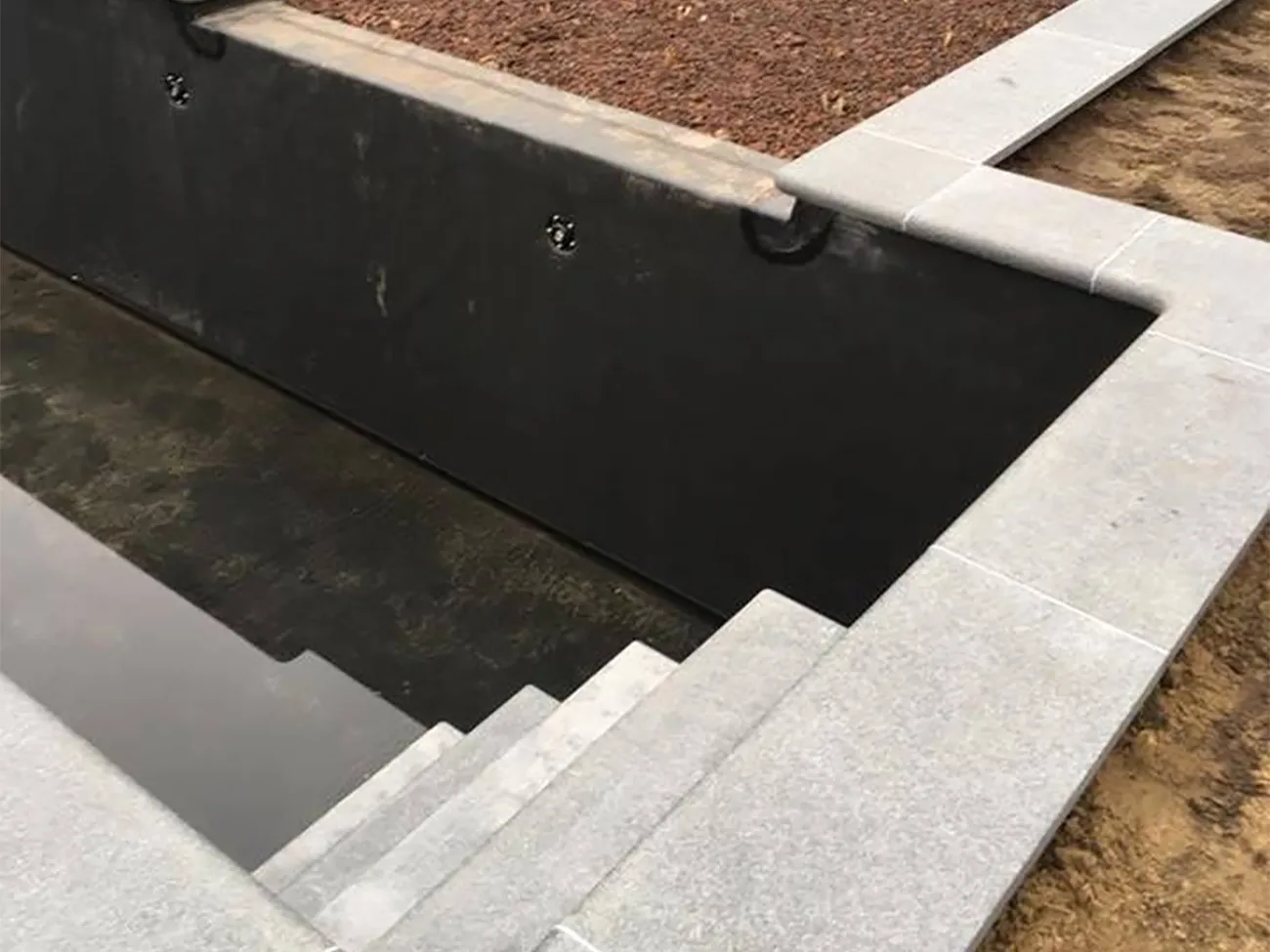
The granite steps are made to measure for standard polyester pool stairs. They are installed using adhesive. “Cement simply will not adhere to a polyester staircase, because the substrate does not absorb moisture. So you have no choice but to bond the steps in place. The same applies, incidentally, when you need to install coping stones or other stones on a pool liner.”
A common point to watch when grouting pool copings, Els Meynen notes, is the nosing. “Granite and natural stone are traditionally grouted with cement, but repeated exposure to water will eventually cause it to crumble at the nosing. Ceramic copings are even more challenging, because the edges of these stones are generally untreated, so the cement has nothing to grip onto. The alternative, using jointing sand, is no solution for an open detail such as a nosing.”
Regardless of the material, E.L.S. Garden therefore recommends a siloxane-based grout for finishing pool edges. “It bonds well to different materials, does not shrink but has plenty of elasticity, and stands up well to the effects of water. This keeps pool copings durable and meticulously finished down to the last detail.”
Question about this story? Ask your question
Keep following this
Get an email when a new story is published. No account needed.
- ThemeBuilding swimming pools and ponds
- SubjectSwimming pools and ponds