Swimming ponds: take care and give accurate information
Swimming ponds are in high demand, but there is also a great deal of confusion. Terms such as “ecological”, “natural”, “biological” and “hybrid” are often mentioned, but also confused and misused. End customers are entitled to accurate information. They do not want to feel “cheated” by all kinds of promises that have not been kept.
Do not promise the impossible
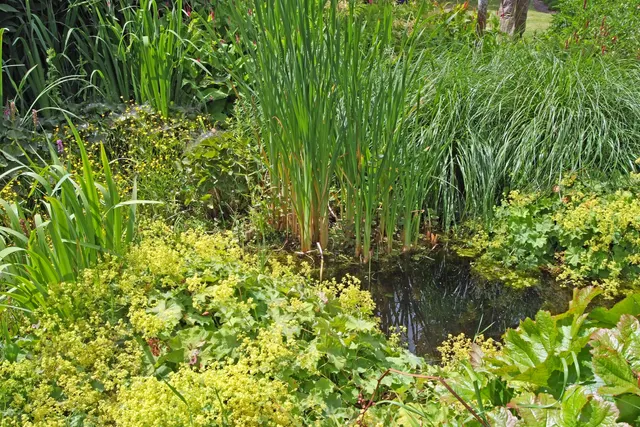
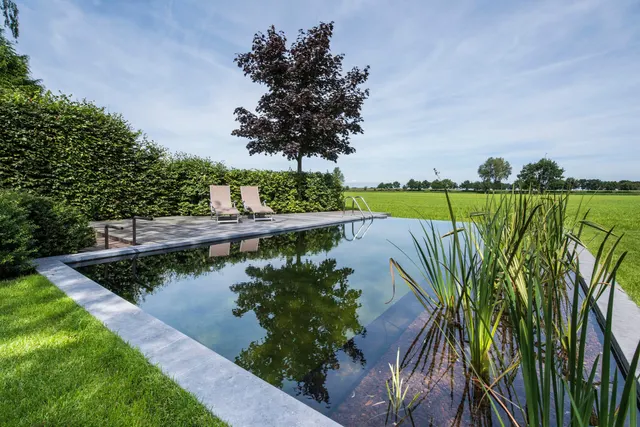
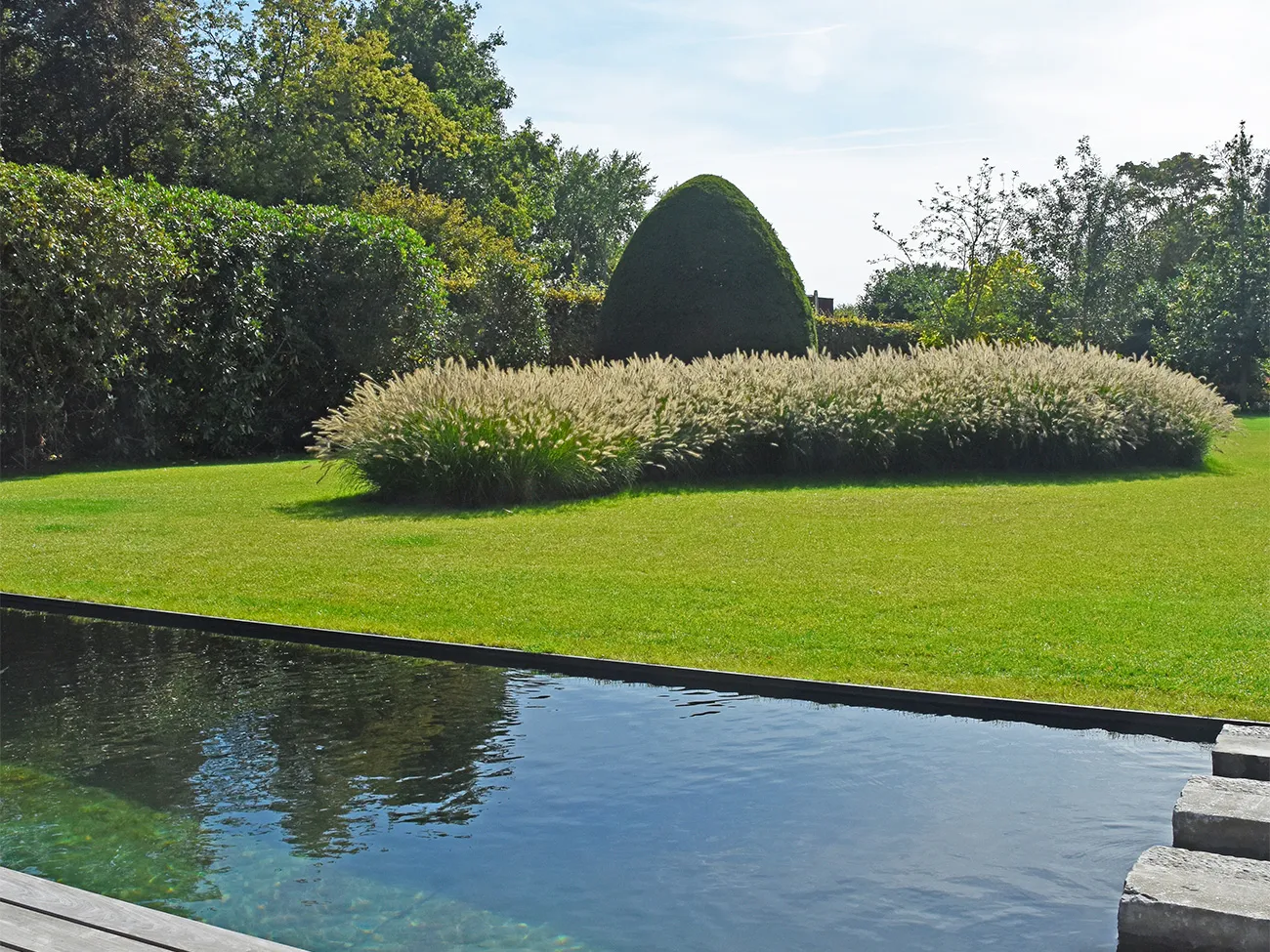
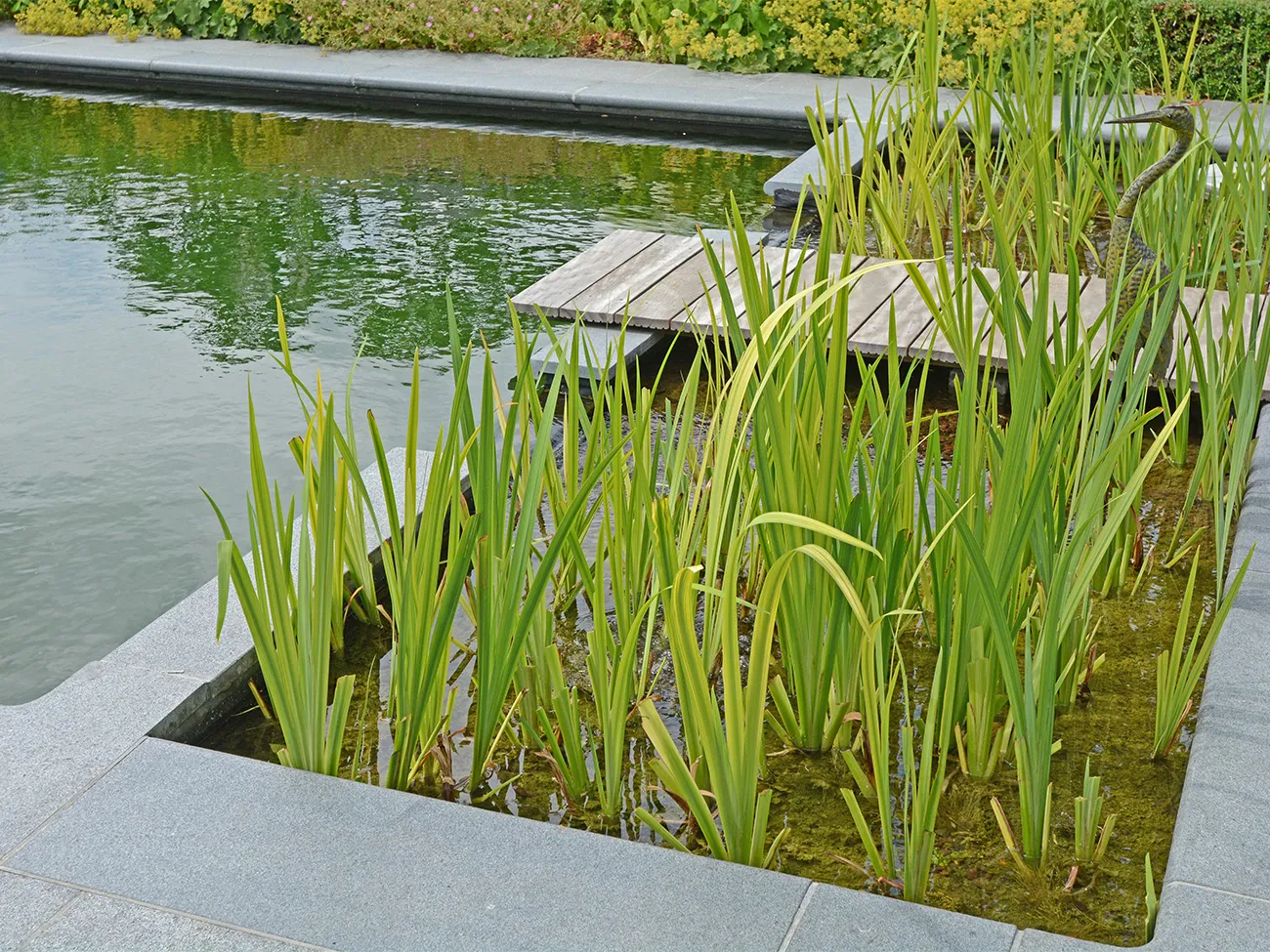
A natural swimming pool is an alternative to a traditionally built swimming pool. And although some swimming ponds look almost like swimming pools, there are differences. Swimming ponds involve a “close partnership” with nature, which is subject to all kinds of fluctuations. Seasonal and weather conditions influence water clarity and algae growth, for example.
Building a swimming pond with a white (or other light-coloured) liner and promising that the water will always be crystal clear, that the walls and steps will never discolour, and that virtually no maintenance will be needed… is not very wise. Maintaining a pond takes a lot of effort, more than a swimming pool, where aggressive acids are often used.
Water clarity is not a problem on most days of the year in well-designed swimming ponds. On the contrary, it is generally possible to see a small coin placed on the bottom of the pond through the water. This is because, in a natural swimming pool, dirt particles are processed and removed by nature.
Stains and algae growth on the walls, steps and bottom are another matter. This is linked to the biofilm that develops there. Limescale particles can settle on and between this film of micro-organisms, and algae can grow. This creates a “marble effect” that can also be found in nature, for example on rocks in the Mediterranean Sea. Obviously, it is much less visible, and can even look beautiful, on a dark liner. End customers can either accept this “growth” or remove it regularly using a brush and vacuum cleaner.
Black is warmer
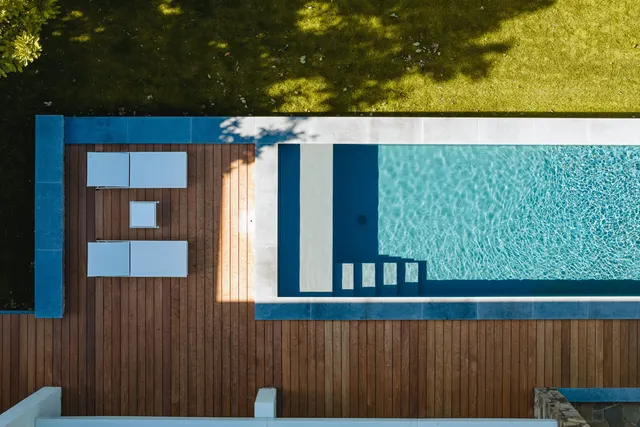
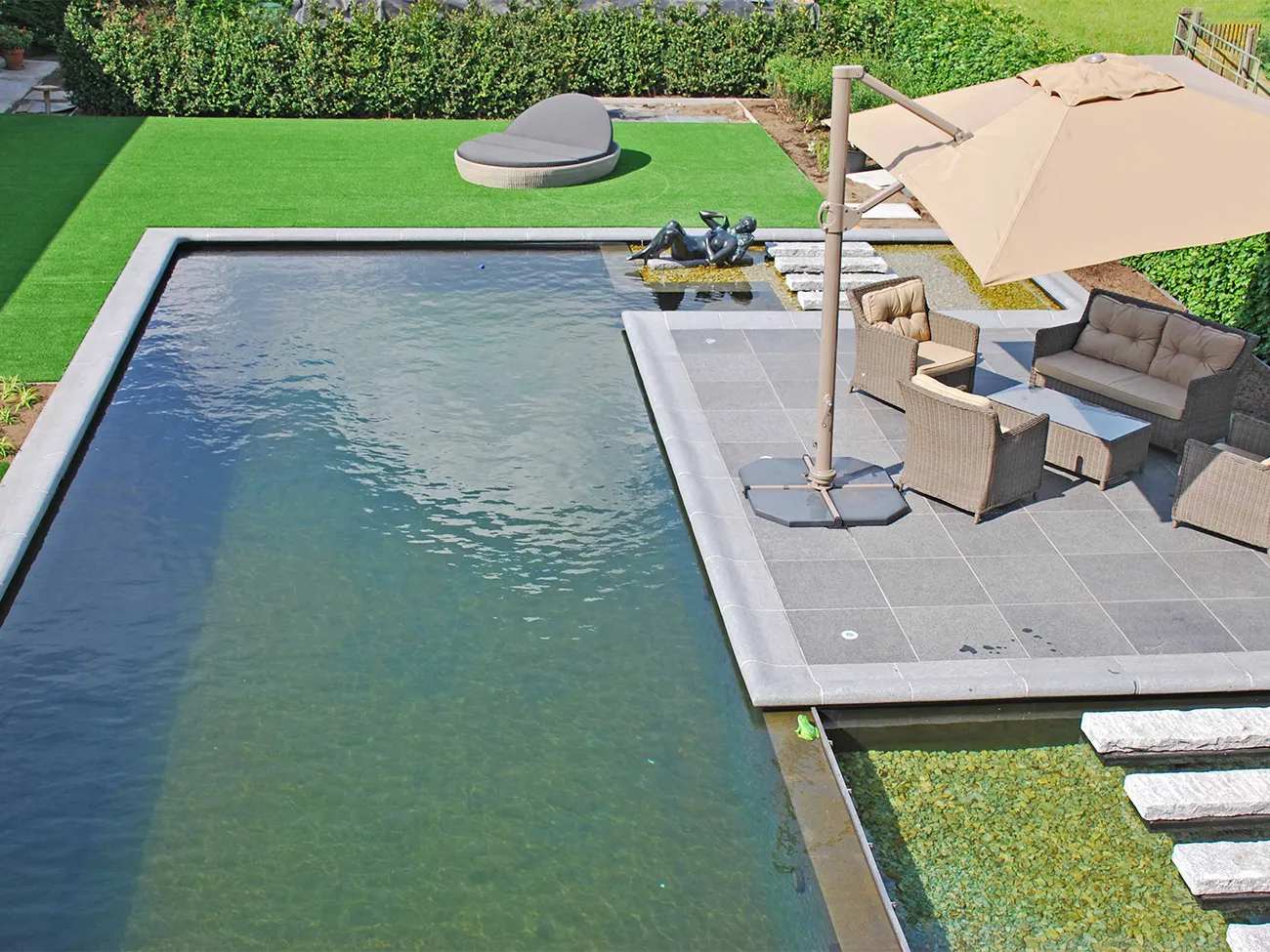
Black absorbs more heat from the sun than any other colour. This means swimming ponds with a black liner benefit from free solar heating. And it really makes a difference. In summer, the water temperature is 4 to 6 degrees higher than in a pool with a light-coloured liner. Even if the end user decides to heat the water with a heat pump, for example, this will make a big difference to energy consumption. And we all know that energy is very expensive at the moment.
Not everything is ecological
Swimming areas are often built with concrete or concrete-block walls. In swimming ponds, we often see complicated designs with numerous walls, lounging areas, steps… Concrete structures represent a major intervention in the garden and have a high environmental impact. A double-reinforced concrete pool base… probably good and sturdy, but is it necessary?
A basic design consisting of a swimming pond simply excavated in the garden, with sloping sides, a coping above ground and a folded liner for waterproofing, has the advantage of the least negative environmental impact.
When testing swimming-pond systems and ranking them from “most ecological” to “least ecological”, the list is as follows: downflow regeneration, upflow regeneration, regeneration + multi-chamber filter, drum filter, regeneration + salt-free hydrolysis. One step further is hydrolysis with the addition of salt. But… this is no longer a swimming pond, because chlorine is produced, so it is a swimming pool. What is more, the combination of salt and chlorine has a significant negative impact on the lifespan of many materials, such as metals and waterproofing.
And what about “switchable systems”? People mistakenly compare them to hybrid cars, which run on petrol or an electric battery depending on driving conditions. But it is not that simple. It takes several weeks to switch from disinfected bathing water to a biological filtration system. Conversely, switching from a biological system to disinfection requires high doses of disinfectant. So you cannot change systems at the press of a button.

Major differences in running costs
Conventional filtration systems for swimming ponds operate both mechanically and biologically. The biofilm (= beneficial micro-organisms) does much of the useful work. This means that the water has to circulate continuously and the pumps have to run day and night, all year round. An energy-efficient pond pump or an energy-hungry swimming pool pump… this makes a big difference over a year, often amounting to a factor of 4.
In the most natural swimming ponds, only the pump uses energy. More complex systems require additional energy for hydrolysis, UV treatment, electrolysis, etc. In addition to energy, the costs of treatment and replacement parts such as electrodes, measuring probes, lamps, … need to be taken into account. The more “technical” the system, the higher the running costs. It is important to be honest with the customer.
Question about this story? Ask your question
Keep following this
Get an email when a new story is published. No account needed.
- ThemeBuilding swimming pools and ponds
- SubjectSwimming pools and ponds