TPO is durable and versatile
There are various options for waterproofing swimming pools and natural swimming ponds. Films made from thermoplastic polyolefins, or TPO, may be less well known, but they are every bit as good. On the contrary, this material has proven itself in many applications over several decades, including under conditions far more extreme than those found in a swimming pool or pond.
Polyolefins are plastics made from carbon and hydrogen. The best-known polyolefins are polyethylene (PE) and polypropylene (PP). They are available as sheets and films, a few millimetres thick. “Sheet material is used, among other things, to manufacture tanks and storage vessels, for example for storing harsh chemicals,” explains Stijn Frooninckx of Sealtec. “That alone shows how highly chemically resistant the material is.”
Thinner TPO films, meanwhile, have been used for decades as roofing membranes and for buffer tanks. “In these applications, they are often dry and exposed to sometimes extremely harsh weather conditions. Yet studies by the German Institute for Building Protection, Baustoffe und Bauphysik, show that their service life quickly exceeds 55 years.”

Suitable for every water treatment system
Films and sheets now have a firm place in the swimming pool and natural swimming pond market. “Many well-known prefabricated pool shells are made from polypropylene,” says Frooninckx. “In addition, polyethylene or polypropylene films are ideal for lining almost any type of water feature and are available in a range of colours.”
Responding to the suggestion that TPO films are less suitable for use in high-chlorine environments, Frooninckx is unequivocal: “As mentioned, these materials are highly chemically resistant. This applies to both sheets and films. In German-speaking regions, these films have been used in public swimming pools for more than twenty years, applications involving very high chlorine doses, and to date there has been no deterioration or discolouration. That said, in such situations it is better to use PE film. It is more resistant and therefore retains its original colour, even with intensive chlorine use and high temperatures.”
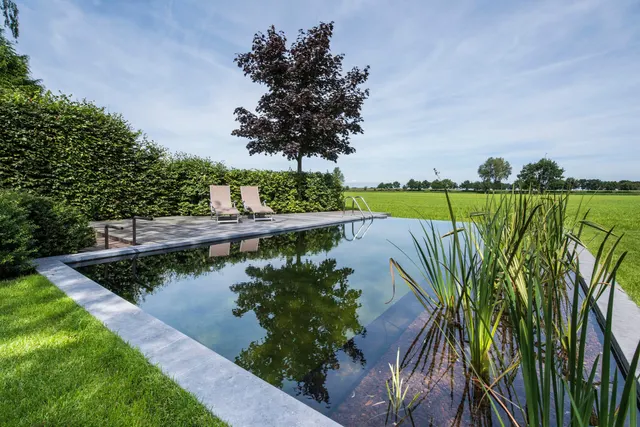
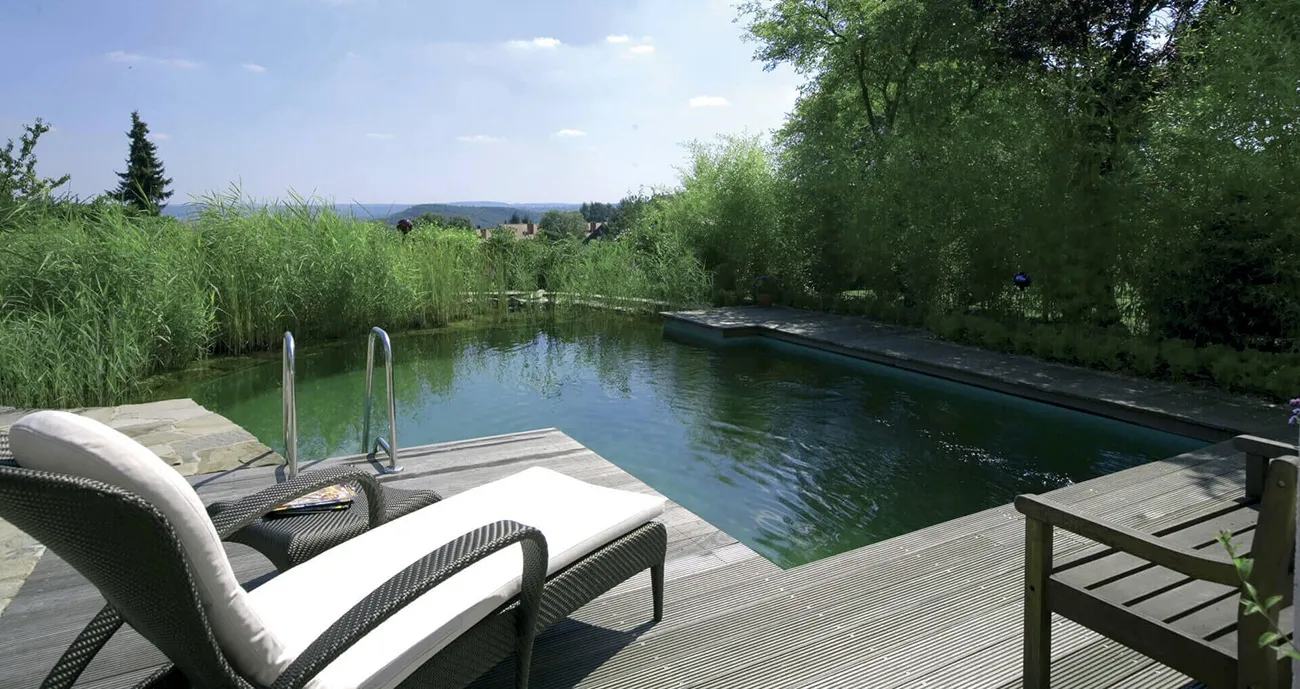
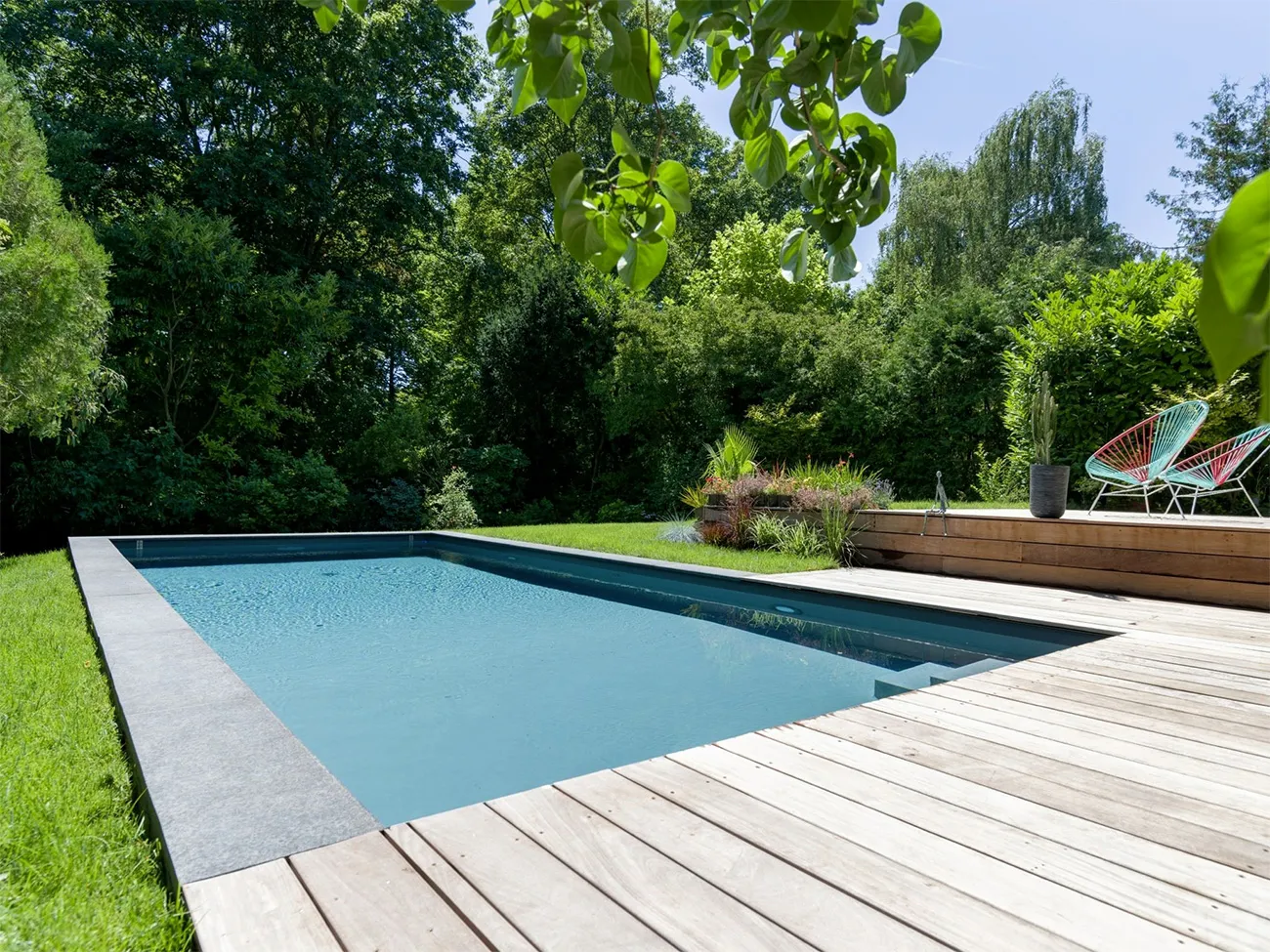
Frooninckx also recommends using PE films for water treatment based on electrolysis (salt). “Biopools and hybrid pools with a low chemical load, such as those using hydrolysis, can be made perfectly well with PP films, with or without fibreglass reinforcement. Of course, you need to consider the available colour range. PE films, for example, are mainly available in light shades such as white and blue, which create the look of a beautiful tropical pool. Darker PP films, available in various shades of grey, green and blue, generally create more reflections on the water’s surface.”
No plasticisers or additives
According to Frooninckx, another factor contributing to the service life and durability of TPO films is the complete absence of plasticisers and additives. “This means the material does not degrade in an aquatic environment and releases no carcinogenic substances, either during welding or throughout the project’s entire service life. That should reassure both the installer and the user!”
As a distributor of the Agru and Sika brands, Sealtec offers a complete range of TPO films for swimming pools and natural swimming ponds. “Even amid the current shortage of raw materials, our products remain available,” assures Frooninckx. “For those who are not yet sufficiently familiar with TPO, we are happy to provide support with product selection and installation. This ensures a durable and reliable result every time.”
Question about this story? Ask your question
Keep following this
Get an email when a new story is published. No account needed.
- ThemeBuilding swimming pools and ponds
- SubjectSwimming pools and ponds