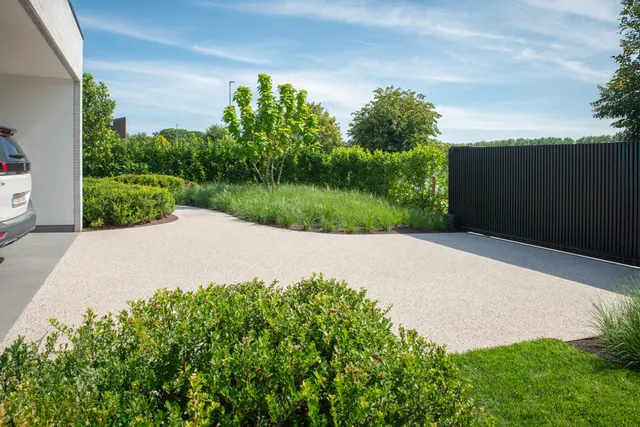
The construction sector gets creative
Our urban model needs to evolve, and so does the construction industry, from the design of development projects to the technical solutions available. Indeed, no company or professional involved in concreting and paving can ignore the increasingly insistent call for greater environmental responsibility. Citizens are making their voices heard, demanding more green space in the places where they live. The consequences of increased urbanisation, the paving over of land and other hard, impermeable surfaces cannot be ignored: they disrupt water flows, leaving water with nowhere to go. The result is a shortage of groundwater. Fortunately, the sector has recognised the problem and developed suitable solutions.
Preserving the soil’s natural functions
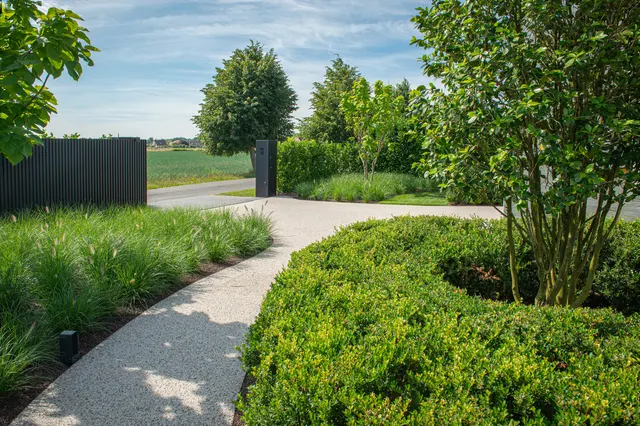
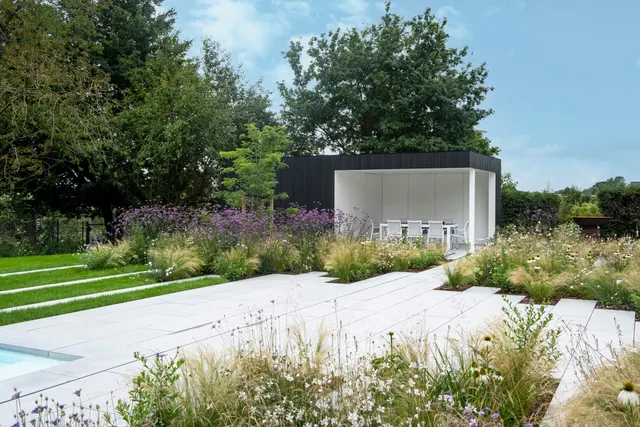
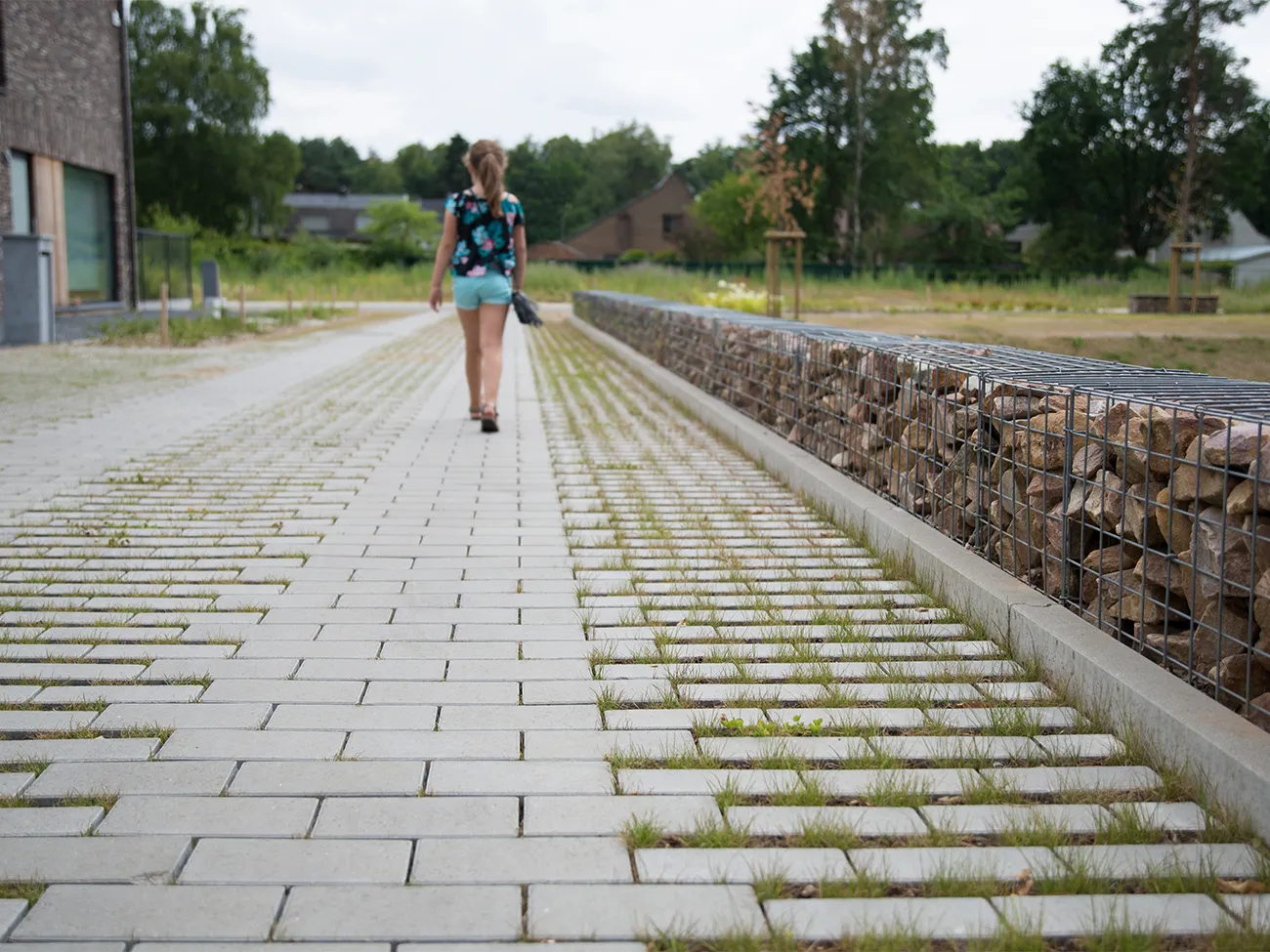
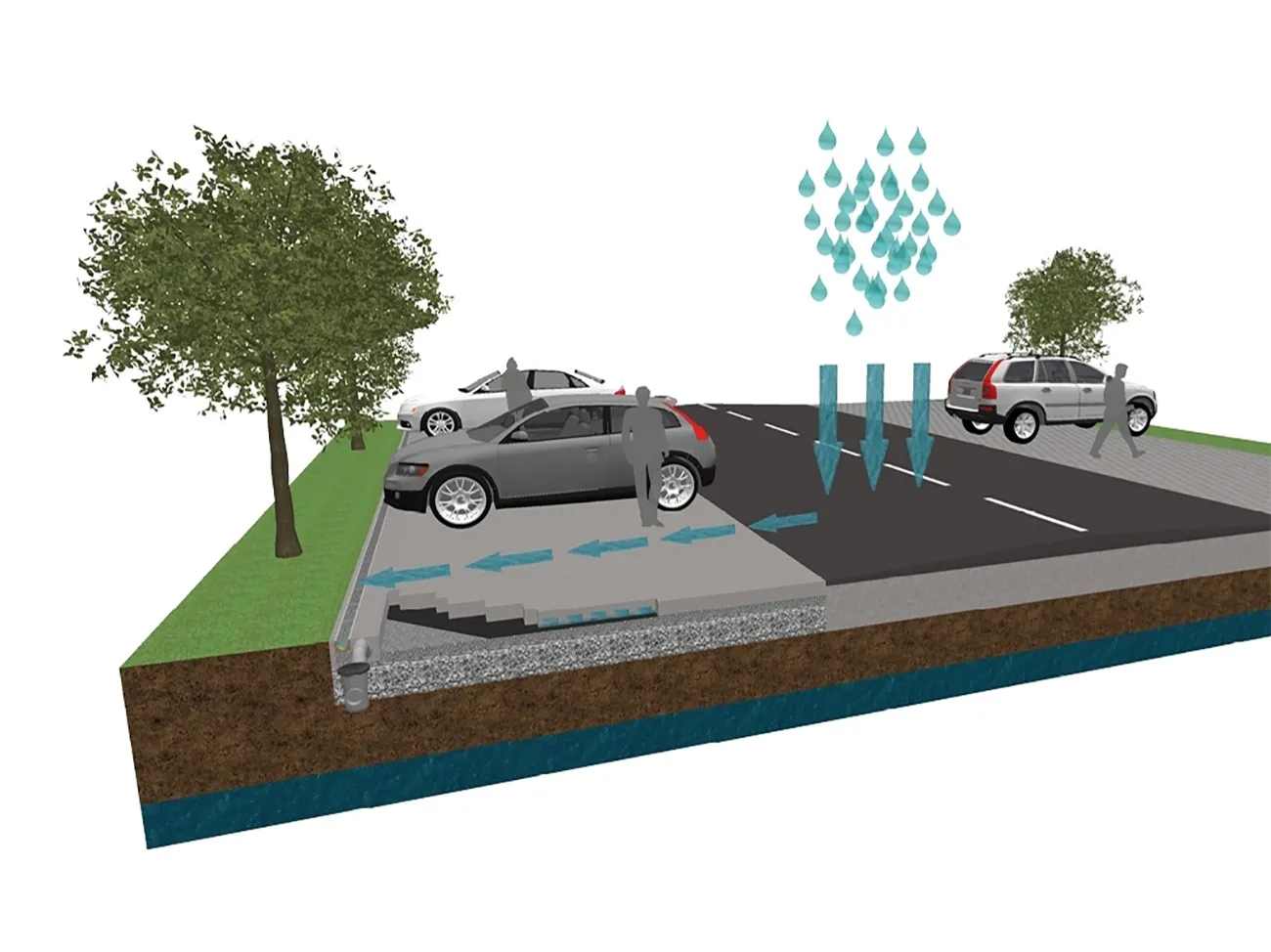
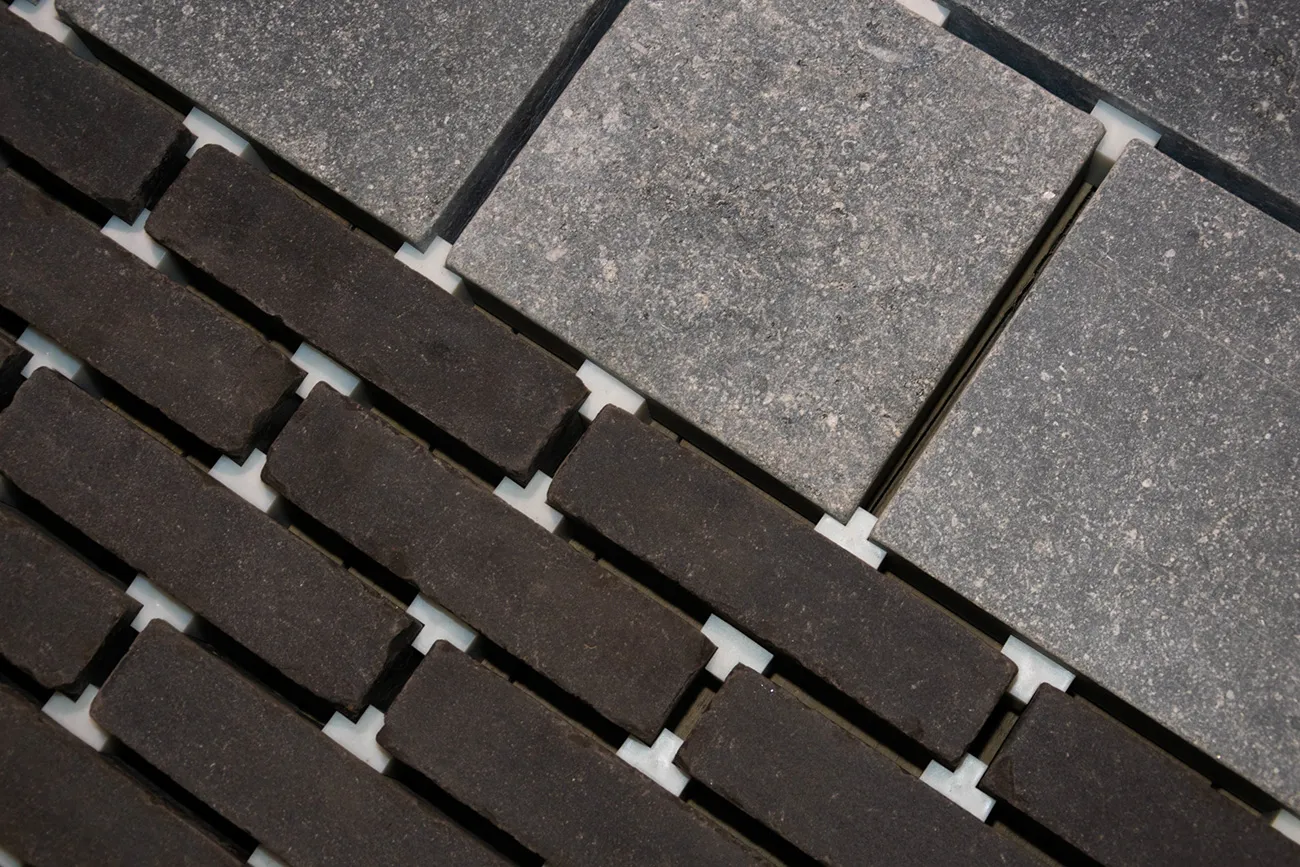
To boost biodiversity and restore the link between water, soil and plants, paving has been redesigned and diversified. Permeable surfaces, for example, allow rainwater to infiltrate locally and percolate down into the subsoil and groundwater. This helps ease the burden on sewers and maintain groundwater levels. The permeable solutions available range from perforated paving slabs, which allow trees and shrubs to be planted, to small-format paving materials (clinkers, clay clinkers, etc.) and unbound joints. They also include every possible combination of creative laying patterns, as well as permeable sub-base systems offering great flexibility in the choice of infill.
Working towards circularity
It is common knowledge that only a limited proportion of construction materials are currently reused. Tighter insulation regulations and the emergence of new, faster and more cost-effective methods of joining bricks and other materials are major barriers to reuse. The result is a growing volume of insulation materials, adhesives and microplastics that ultimately end up in the environment, including in groundwater.
Yet many products are perfectly suited to a circular construction process. This requires the whole construction team, architect, manufacturer, contractor and client, to think in terms of the circular economy. This still happens far too rarely, often because of budget and time constraints. We therefore need to abandon short-term thinking and take a long-term view, because our future depends on it.
Price rises and delivery times
Energy prices have soared in recent months. Add shortages of certain raw materials and the devastating economic consequences of the conflict in Ukraine, and it goes without saying that the final bill for end users is steep. Companies are managing the problem in different ways. Some pass these price increases directly on to their customers. Others only enter into short-term contracts. A third group is waiting to see which way the wind blows and trying to ride out this turbulent period.
One thing is certain, however: the sector is doing its best to prepare. It is advocating shorter supply chains to bring raw materials closer, exploring the use of alternative materials, and encouraging the reuse and recovery of construction waste. In other words, it is striving to be creative and adaptable.
Question about this story? Ask your question
Keep following this
Get an email when a new story is published. No account needed.
- SubjectNews