The logic of lines and simplicity in harmonious design
Texte Luc Ophals | Photos Benoît Saint Amand
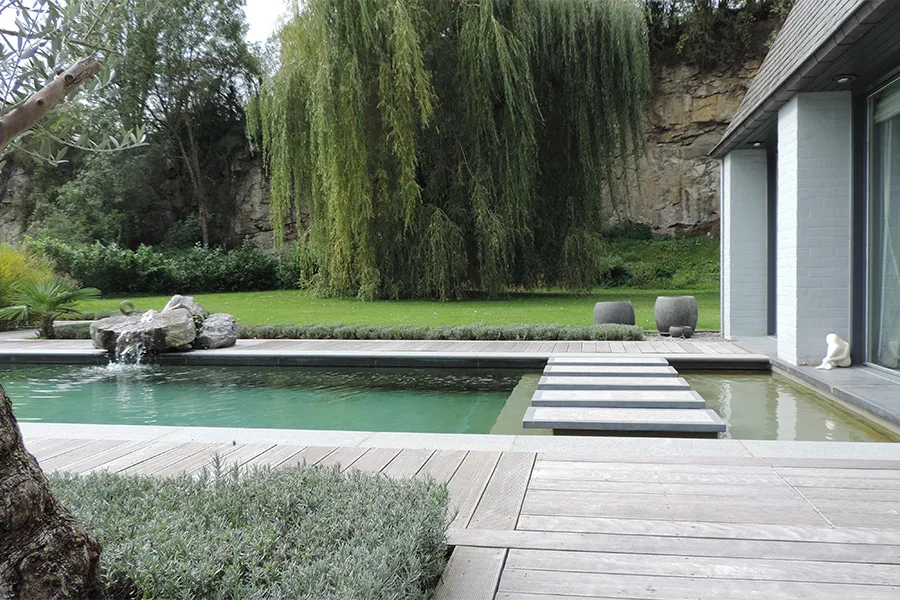
Putting nature first, without seeking to dominate it
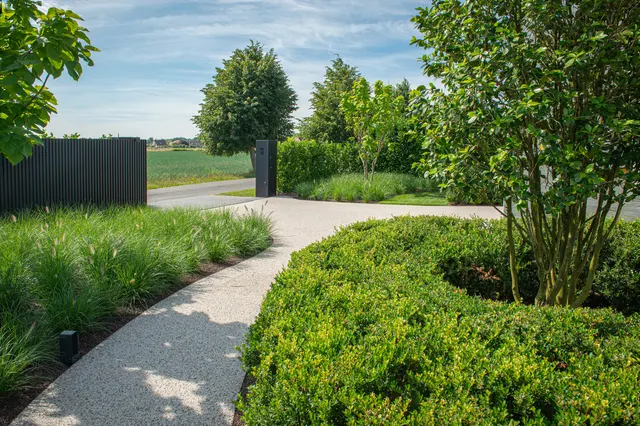
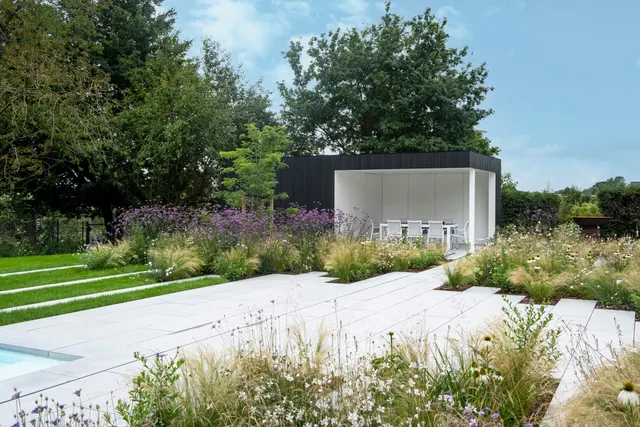
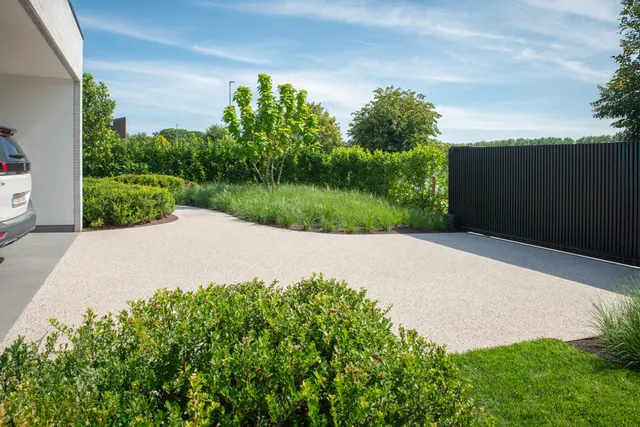
From his earliest childhood, Benoît Saint Amand has always been guided by his love of nature. And that passion has never left him. His professional career, which began in 1986, naturally led him towards the overall design of projects, where his creativity, free from any dogma, is entirely devoted to harmony and the well-being of the client. We meet a passionate designer who enjoys creating natural, contemporary, no-nonsense gardens that are seamlessly integrated into their surroundings with simplicity and coherence.
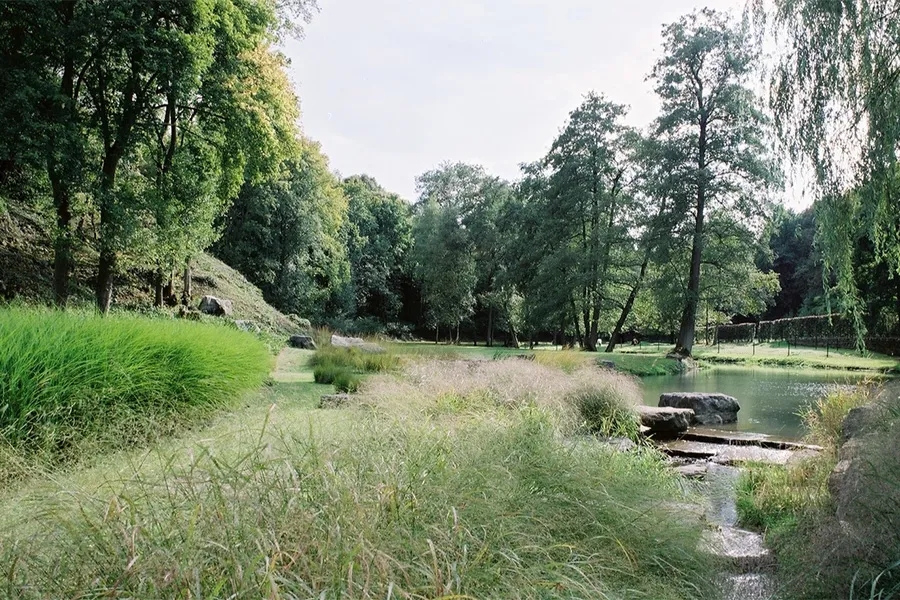
At the age of 16, Benoît Saint Amand began technical studies in horticulture, which prepared him perfectly for further studies in garden and landscape architecture, completed in 1986. His first professional experiences soon led him towards working as an independent landscape architect, a role better suited to his creative instincts. He took the plunge in 1988. In his early years, he designed numerous projects for landscaping companies in Walloon Brabant, but the « turnkey » approach and the commercial side of this formula held little appeal for him. Benoît Saint Amand explains: « At that stage in my career, I needed to be able to design with complete freedom and integrity. I wanted an overview of the project, and to consider aspects such as safety, automatic gates, earthworks, drainage and the search for technical solutions to ensure compliance with planning regulations, while avoiding absurdities and unnecessary expense. Ultimately, a garden is designed for the client, not for the designer or the contractor. ».
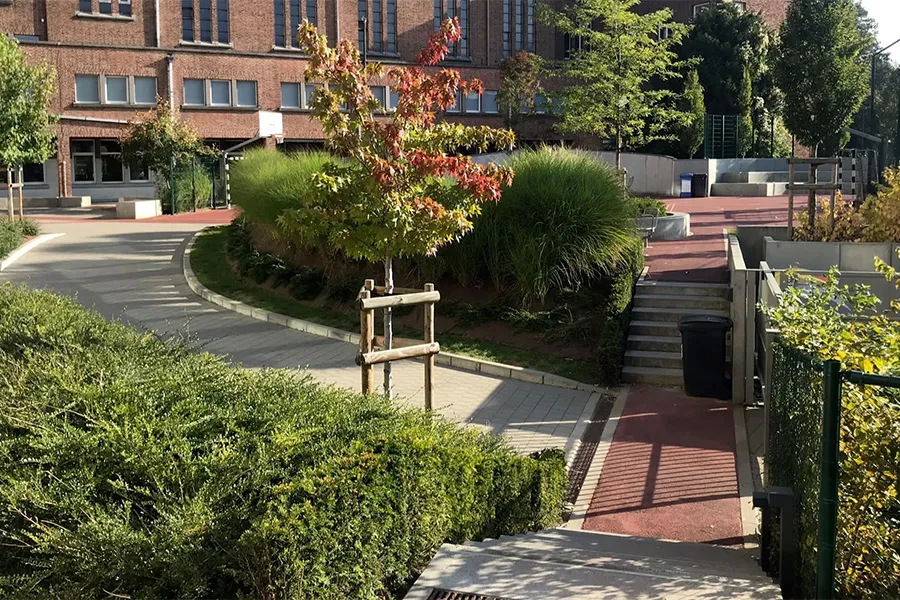
Clarity and coherence
Also aware that costs must be kept under control to avoid any unpleasant surprises, Benoît Saint Amand recommends drawing up specifications and overseeing the project on site. This makes it possible to finalise detailed plans and carefully check the finishes delivered by the various contractors who have agreed to the terms of the specifications. « I am convinced that a landscape architect should be involved early in a project, to consider, for example, the siting of a new building in light of the planning regulations in force, as well as topographical, geological, hydrographic, climatic and other constraints. This helps prevent mistakes and minimise the risk of flooding caused by inappropriate regulations or incorrect execution of the work, » he explains.
From 1998, Benoît Saint Amand also turned his attention to the public sector. After collaborating for several years with a landscape architect from the Malmédy region, he founded his own multidisciplinary team. « For twenty years, I was able to rely on a strong, close-knit team in which each landscape architect built and retained their own private client base, while also working together on public projects and larger private commissions. Over those 20 years, I can say that the most beautiful gardens and public spaces do not necessarily require substantial financial resources. To me, the logic of lines and simplicity are key to creating harmony, » says Benoît Saint Amand. He adds: « The slow pace and lack of rigour in public administrations did, however, convince us to focus most of our efforts on the private sector. » His passion for passing on his experience to future generations also remains undiminished. Since 2002, he has worked as a Maître-Assistant and coordinator at Haute Ecole Charlemagne of the Wallonia-Brussels Federation in Gembloux.
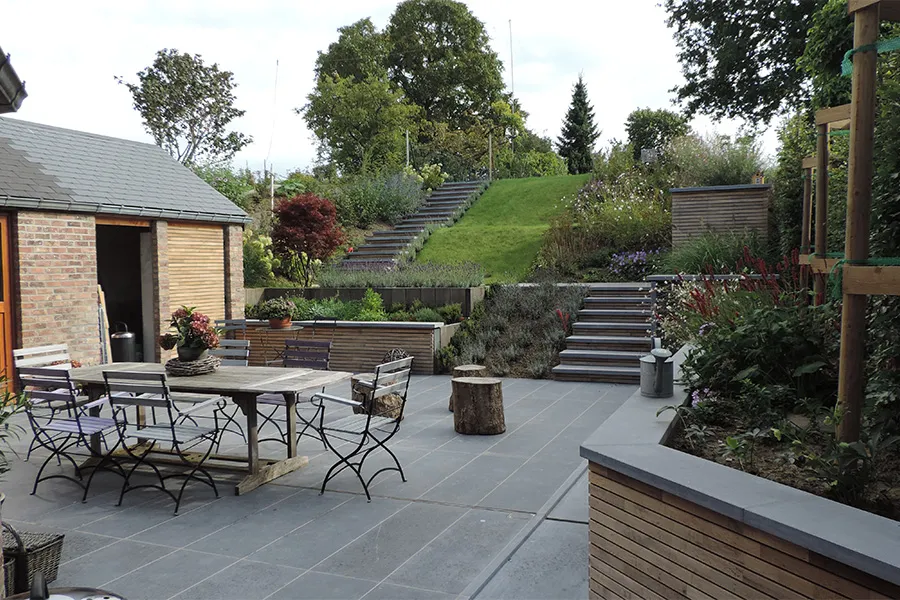
A landscape architect is not a decorator
Benoît Saint Amand admits that he does not have a style of his own. He even believes that a landscape architect should not impose a style, as the priority should be to integrate the project into its surroundings, taking into account the soil type (acidic or alkaline), sunlight, moisture and other key factors. Benoît Saint Amand elaborates: « Wood, stone, concrete: each material has its advantages and disadvantages. Price is also a factor to consider. When it comes to plants, I may have an unconscious tendency to avoid « artificial » plants and thorny plants, to make maintenance as easy as possible and avoid heightening contrasts. I admit I favour shades of green and am not drawn to an abundance of colour. Weeds don’t bother me. I could very well design a « punk » garden if asked. Let nature take its course, and simply manage it. Yew beds that need trimming five times a year are not what I’m looking for either. I prefer lighter plants, grasses and plenty of plants that do not need annual pruning and have pleasant scents, such as viburnums and lilacs. The garden should remain natural, without following fashion. »
Question about this story? Ask your question
Keep following this
Get an email when a new story is published. No account needed.
- ThemeDesigning living landscapes
- SubjectNews