Tips and advice for a bee-friendly garden
In the run-up to the 10th edition of Bee Week (28 May to 4 June 2023)
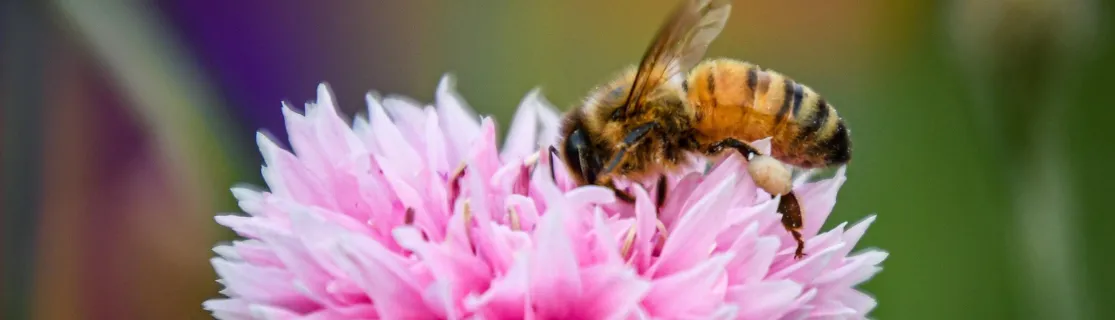
Pollinating insects, including bees, are increasingly under pressure. Populations of honeybees and wild bees are declining in our country. Yet they play an essential role in biodiversity, the economy and health. The 10th edition of Bee Week invites every gardener to make their garden a haven for bees. With the tips and advice from Husqvarna below, anyone can transform their garden, terrace or even balcony into a bee-friendly habitat.
Provide enough food throughout the four seasons
Climate change is causing widespread disruption to the seasons. As a result, bees become disorientated and look for food at the wrong times of year. It is therefore advisable to provide plenty of nectar- and pollen-producing plants throughout the year. In many gardens, flowers and plants bloom only from May to June. How can this problem be solved? By applying the principle of continuous flowering, plants can produce flowers throughout the year, giving flowering plants a source of food from late winter to late autumn. This approach can be used with different types of plants, including trees, shrubs, perennials and bulbs. Thanks to this system, bees can enjoy an abundance of food from February to November.
Spiral beds, herb gardens or bee hotels
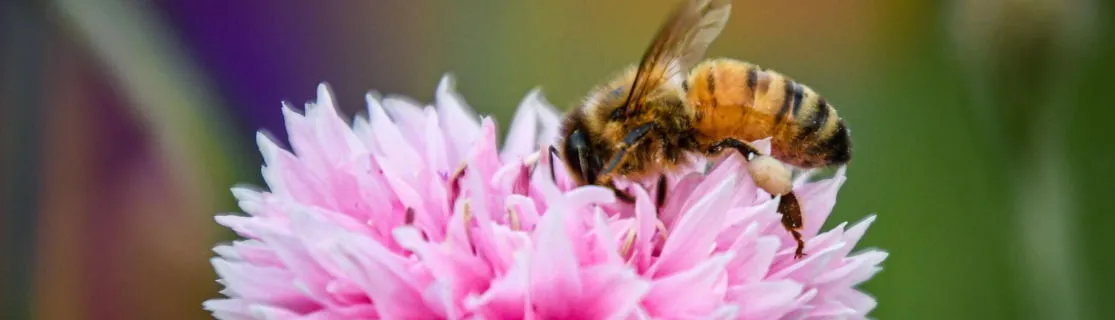
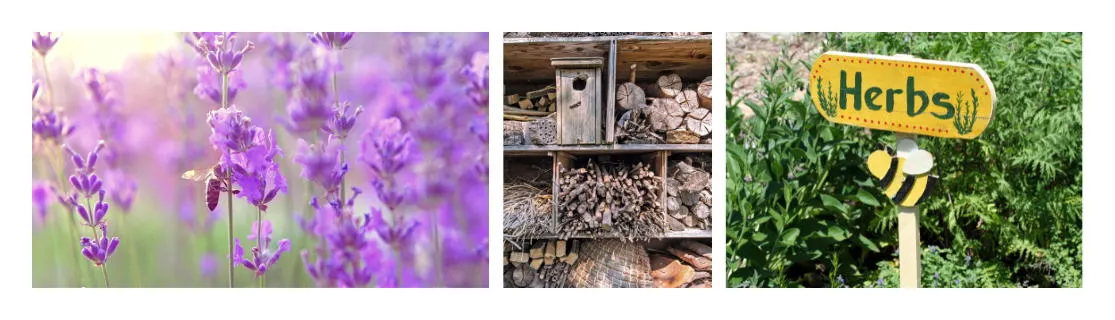
Spiral beds, brimming with herbs such as sage, oregano and thyme, are an invaluable source of food for bees throughout the year. In addition, providing a drinking trough is essential for their survival. Small hollows in large stones or water-filled bowls provide ideal sources of water for bees on hot summer days. Small garden ponds are also an excellent source of water for these precious pollinators.
As well as food and water, bees need places to rest, and often find what they need in a bee hotel. Wild corners, old walls, cavities and piles of dead wood are all suitable places for them to thrive. Even without a garden, terraces and balconies can easily be transformed into a true haven for bees by adding planters or plant pots. Bluebeard, an unusual shrub, is particularly well suited to this setting, as are herb planters.
Fence arches to the rescue
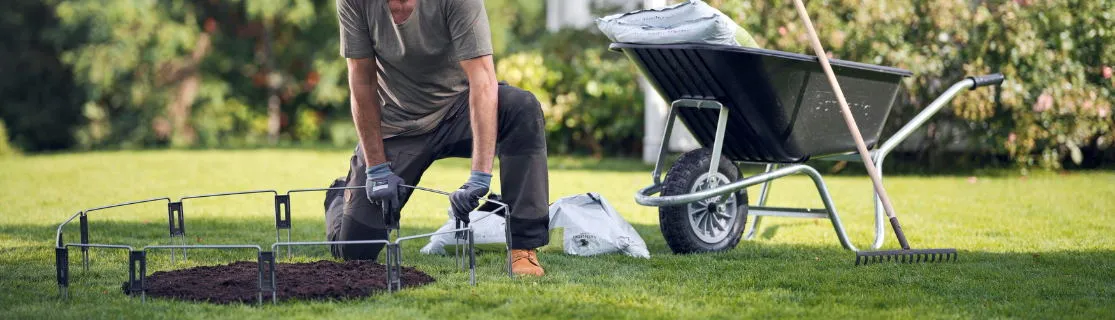
Husqvarna also recommends leaving an area of the garden unmown. For owners of robotic lawn mowers, fence arches are a simple, low-cost solution. These metal frames allow grass and spring flowers to grow, while protecting an inflatable pool or preventing newly sown grass from being trampled. Fence arches are reliable and easy to maintain. There is no need to change the robotic lawn mower’s boundary wire, either.
Gardens in full bloom
Gardeners with a robotic lawn mower have plenty of options for helping bees find food. To meet this need, Husqvarna has developed a special feature called “Rewilding”, which allows part of the garden to be left wild. This feature makes things easier by automatically leaving at least 5% of the garden unmown, creating a wild area for bees, butterflies and other pollinating insects. The Automower® 405X, 415X and 435X AWD robotic lawn mower models, as well as the NERA 430X and 450X NERA models, offer this feature.
By combining Husqvarna robotic lawn mowers with fence arches, gardeners can turn their gardens into a true haven for bees.
Question about this story? Ask your question
Keep following this
Get an email when a new story is published. No account needed.
- ThemeDesigning living landscapes
- SubjectNews