War in Ukraine: the impact of the war in Ukraine on the day-to-day operations of a JOSKIN dealer
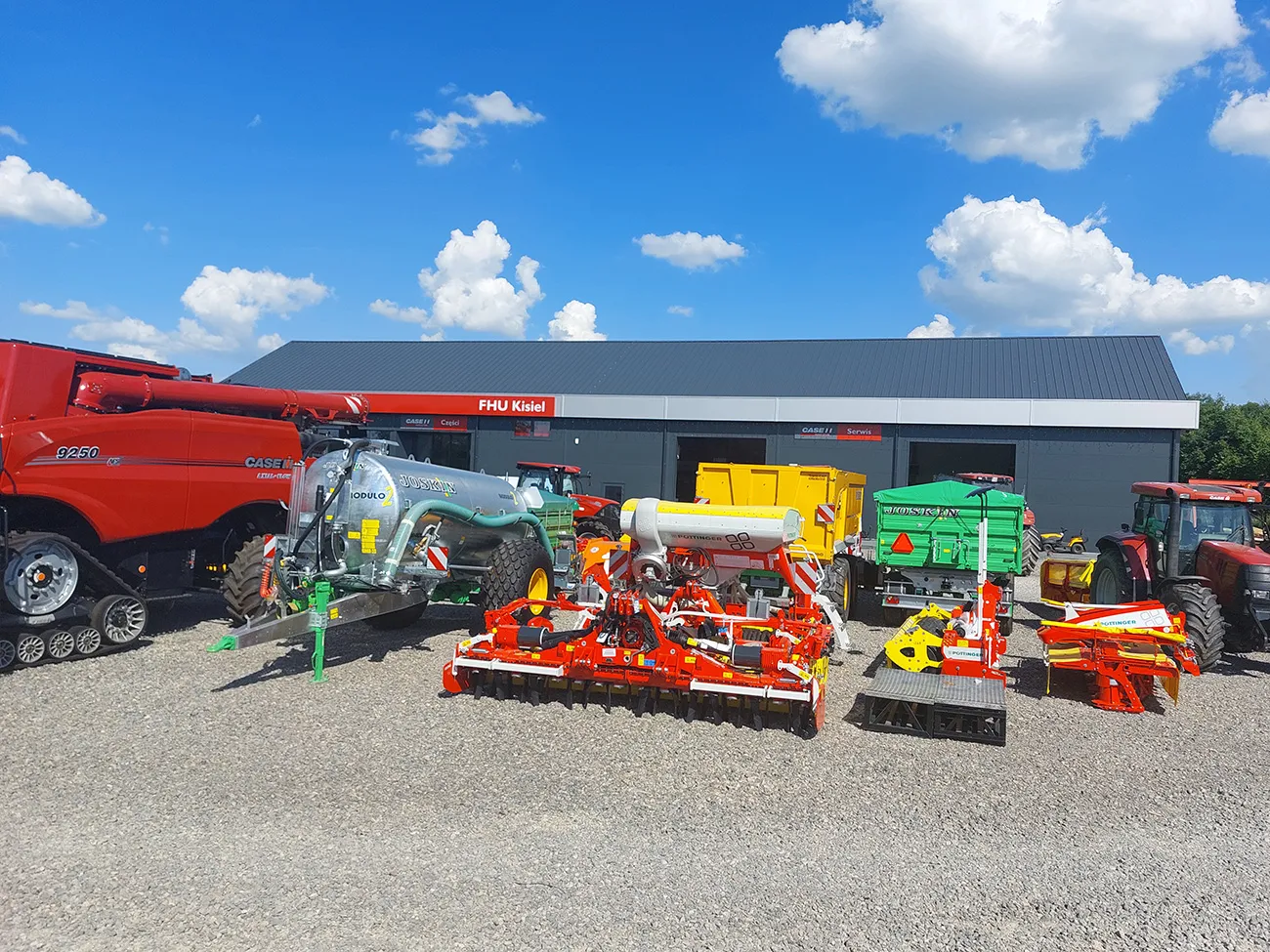
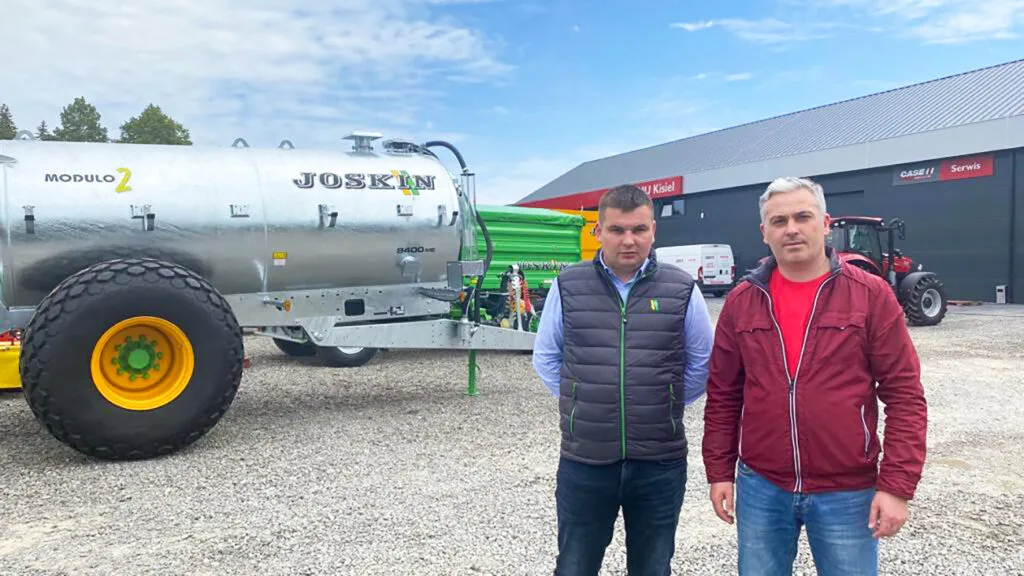
To find out more, JOSKIN spoke to one of its dealers based near the border. The interview was conducted with Michał Stachlewski, sales director at Kisiel, at the company’s branch in Niedrzwica.
What does your company do, and how long has it been operating in the market?
We are authorised dealers for CASEiH and Steyr tractor brands in the Świętokrzyskie, Subcarpathian, Lesser Poland and Lublin voivodeships. We have been selling agricultural machinery since 1992. We work only with brands that offer customers high quality and, as a result, the value they need to grow.
How far are you from the nearest point on the Ukrainian border?
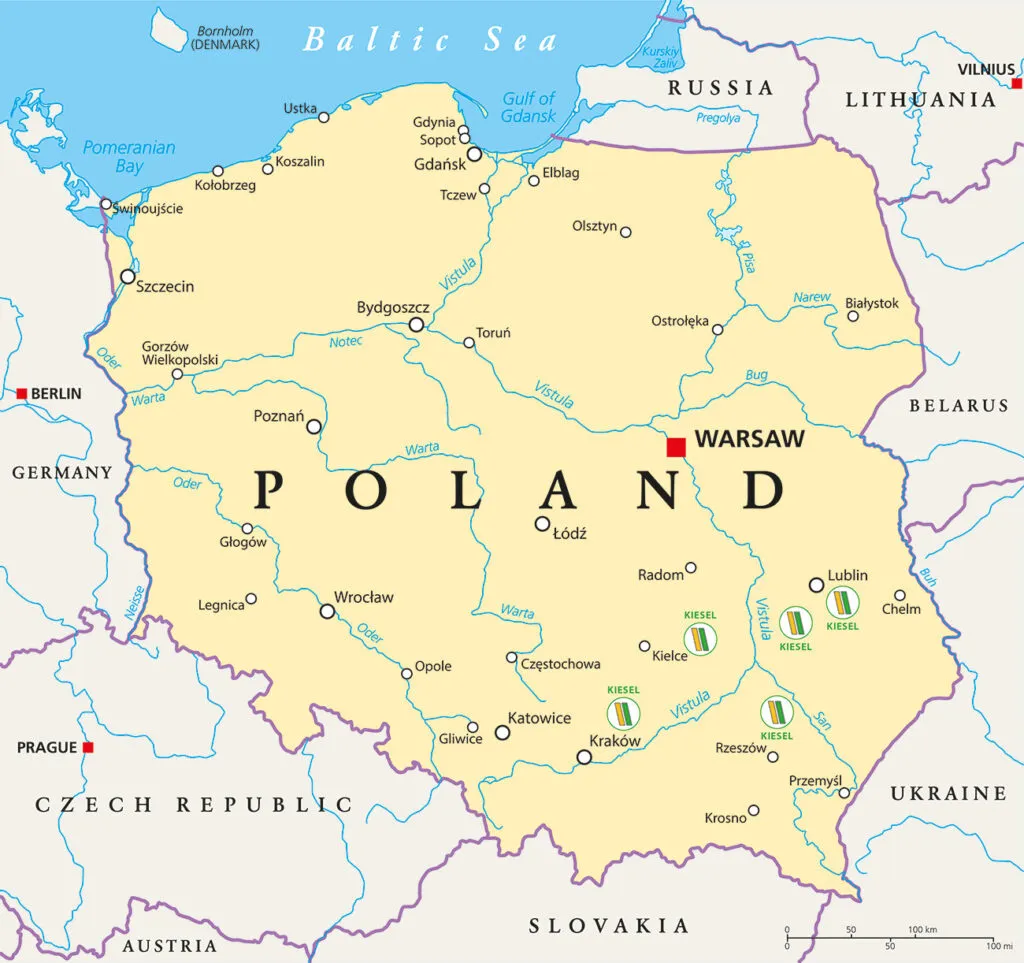
As a company operating in the Lublin and Subcarpathian voivodeships, we border Ukraine along the entire stretch of the Polish-Ukrainian border. The nearest border points are between 80 and 100 km from our branches.
Is your company feeling the effects of the war taking place just across the border? If so, what are they?
Like everyone else in Poland, we are feeling the effects of the war. There are financial impacts related to energy costs, rising prices for goods and higher borrowing costs. But above all, there is a widespread awareness that, at little cost to ourselves, we can help our neighbours and show them they are not alone, that there is hope for better days ahead, and that the state is not some kind of monster but has a duty to protect its citizens and help others in need.
How has this affected machinery sales?
This whole situation has had a huge impact on farmers’ attitude to investment. Should they buy, or put money aside to prepare for the worst? In the face of such aggressive actions, it would be naive not to see the risks threatening all of Europe. We cannot say, “It doesn’t concern me, it’s not my problem.”
Have you noticed any reluctance among your customers to buy the JOSKIN brand because of the situation in Ukraine? If so, what kind?
Yes, customers consider not only the price but sometimes also their suppliers’ approach. Do they support freedom, not just in words but through the actions of politicians and European organisations, or are they only interested in making money and therefore fail to regard life as the highest value? All this brings out the deepest aspects of human nature and reveals the difference between “brutes” on the one hand and rational people on the other.
Seeing the tragedy unfolding right next door, have you made any efforts to help? If so, what have you done?
As well as purely symbolic acts of support, such as flying the Ukrainian flag at our premises so that people from that country do not feel alone, we are trying to think long term. Each of our employees has probably contributed to supporting the people arriving here, and we are also ready to help. The government’s actions are the best example. In wartime, action is needed.
Has accommodation been made available for Ukrainians in your town?
Accommodation has been made available for Ukrainian families in the towns where all our employees live, and there are 80 of us. We believe that when this period is over, they will return to their homeland and continue to rebuild it.
Have you hired Ukrainian workers? If so, what kind of roles do they fill?
No, we have never hired any, because our business requires specific expertise as well as knowledge of the language and our customers. These criteria mean we cannot hire just anyone. Naturally, the same applies to Polish workers. Without this difficulty, things would be different. That said, we know that many of our farming customers employ people from Ukraine.
Has the wartime situation led to organisational changes at your company, such as staff cuts or the introduction of hybrid working?
Fortunately, it has not, but we are all aware that we could all be placed on emergency footing overnight.
Have you exported machinery to Ukraine? If so, how much and what kinds of machinery?
Our main business is selling machinery in Poland. We specialise in selling to farmers, who, despite being highly modern in their production technology, tend to be traditional in their choices. JOSKIN places great demands on its after-sales service, which is why we only sell within Poland. Given the distance, we would not be able to provide Ukrainian customers with proper service.
Have you imported machinery from Ukraine? If so, how much and what kinds of machinery?
No, we mainly work with European suppliers.
Do you also have Ukrainian customers in your farming customer database?
If so, what about the after-sales service issue?
We mainly sold parts from our existing stock. Ukrainian farmers used to buy production materials from us in emergencies or when their local supplier did not have them in stock.
Have the local authorities introduced security measures for the community?
Have these measures affected your day-to-day work, or will they do so?
Every region has begun securing its borders, which means more troops and unprecedented air-defence, defence and anti-missile installations. Younger men and women have also been called up for military training.
How would you assess your cooperation with JOSKIN over the past few years?
JOSKIN embodies 100% the idea that a brand is first and foremost a commitment to the customer, one that lasts for many years and makes them proud of their choice. For us as a dealer, it is a guarantee of cooperation and an opportunity to increase our financial resources through the sale and servicing of machinery. A machine bearing the JOSKIN brand is undoubtedly an asset that guarantees a return.
How do you see your future cooperation with the JOSKIN brand?
For us, JOSKIN is a key brand among our five suppliers. We do everything we can to maximise sales while adhering to sound business principles and providing good customer service. We aim to display products effectively and manage orders well to ensure continuity and shorten delivery times. We therefore work closely with the JOSKIN regional manager to plan purchases, product presentation in the market and contact with key customers. Cooperation is going very well, all the more so because we receive strong support from the production, after-sales service, logistics and administration departments.
Given rising inflation, component prices, oil price fluctuations and higher transport costs, what do you think the outlook is for the coming years?
The current wartime situation is a far greater threat than price rises, which can come and go according to market needs. It is better to have higher prices and higher wages than a war that will destroy everything. Poland, freed from the Russian yoke 30 years ago, has shown what can be built through hard work and a desire to create. It should therefore come as no surprise that Ukrainians, who have tried to live alongside Russia but have been met with nothing but dictatorship in return, have taken this stance. Freedom is the highest value for every human being.
How has the landscape changed in Poland, in the towns and villages around the border, since Russia invaded its neighbour?
The whole environment has changed: Ukrainian is heard in the media; Ukrainian customers are visiting service offices, and information is provided in both languages. There are many cars with Ukrainian number plates on the roads. Churches are making their facilities available so that people can pray according to the religious rites in which they grew up, and so on. This is happening not only in the big cities but also in villages.
During a recent visit to your Jasionka branch, right next to the airport, I saw military troops stationed there. I would like to know why they have been deployed there. Do you feel safe?
We know that Poland is a member of global organisations that are obliged to protect their members, namely the EU and NATO, and we are trying to think about how this situation might end. In that sense, we feel safe. But on a human level, none of us can say that we do not see the human tragedy unfolding in Ukraine. The Jasionka branch near the airport makes us aware of how serious the situation is and of the strength needed to protect values such as freedom, tolerance and the economy.
Question about this story? Ask your question
Keep following this
Get an email when a new story is published. No account needed.
- SubjectNews