Competition for the wooden carport?
No one would deny that wood is an exceptional material. Thanks to its technical performance, natural appearance and versatile design possibilities, it has always been one of the most widely used materials for garden structures such as garden sheds and carports. There is just one catch: wood requires regular maintenance. And for an increasing number of consumers, that is a drawback.
It is all about enjoying life. As life becomes increasingly hectic and working days get longer, Belgians are less and less willing to spend their precious free time on odd jobs and maintenance. Exterior Living has not overlooked this trend. Although the company has specialised in wooden garden structures for three generations, its in-house R&D department has spent the past few years seeking alternative materials that perform just as well in terms of strength, quality and design, but require less maintenance. Alongside its regular range of wooden carports, the company has been developing a range of aluminium models since 2018.
The benefits of aluminium
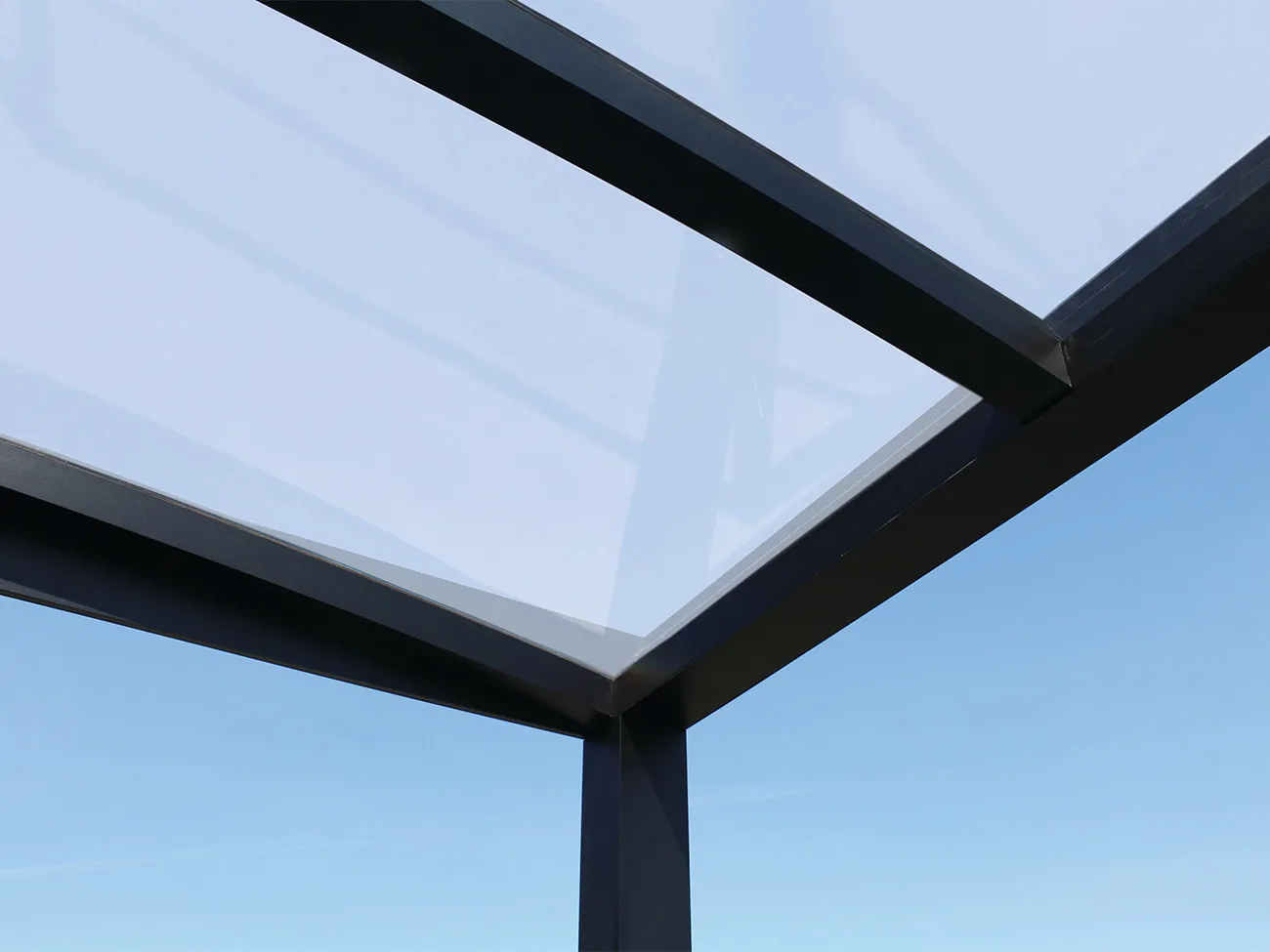
The choice of powder-coated aluminium is no coincidence. The material is strong, durable and requires little maintenance. It neither rots nor rusts, and protective pre-treatment compliant with Qualicoat Seaside standards ensures a long service life, even in the most demanding conditions. No repeated treatment is needed to preserve the material’s strength. Occasional cleaning is sufficient.
Aluminium is also very lightweight, making transport and installation considerably easier. The structural components can generally be moved and positioned by hand. No crane or other equipment is needed.
Simplicity pays
Exterior Living has already demonstrated the benefits of aluminium with its modular Maluwi concept. This gives customers considerable scope to design the structure themselves, choosing from different sizes for the basic aluminium frame and a whole range of wooden or glass walls, as well as doors.
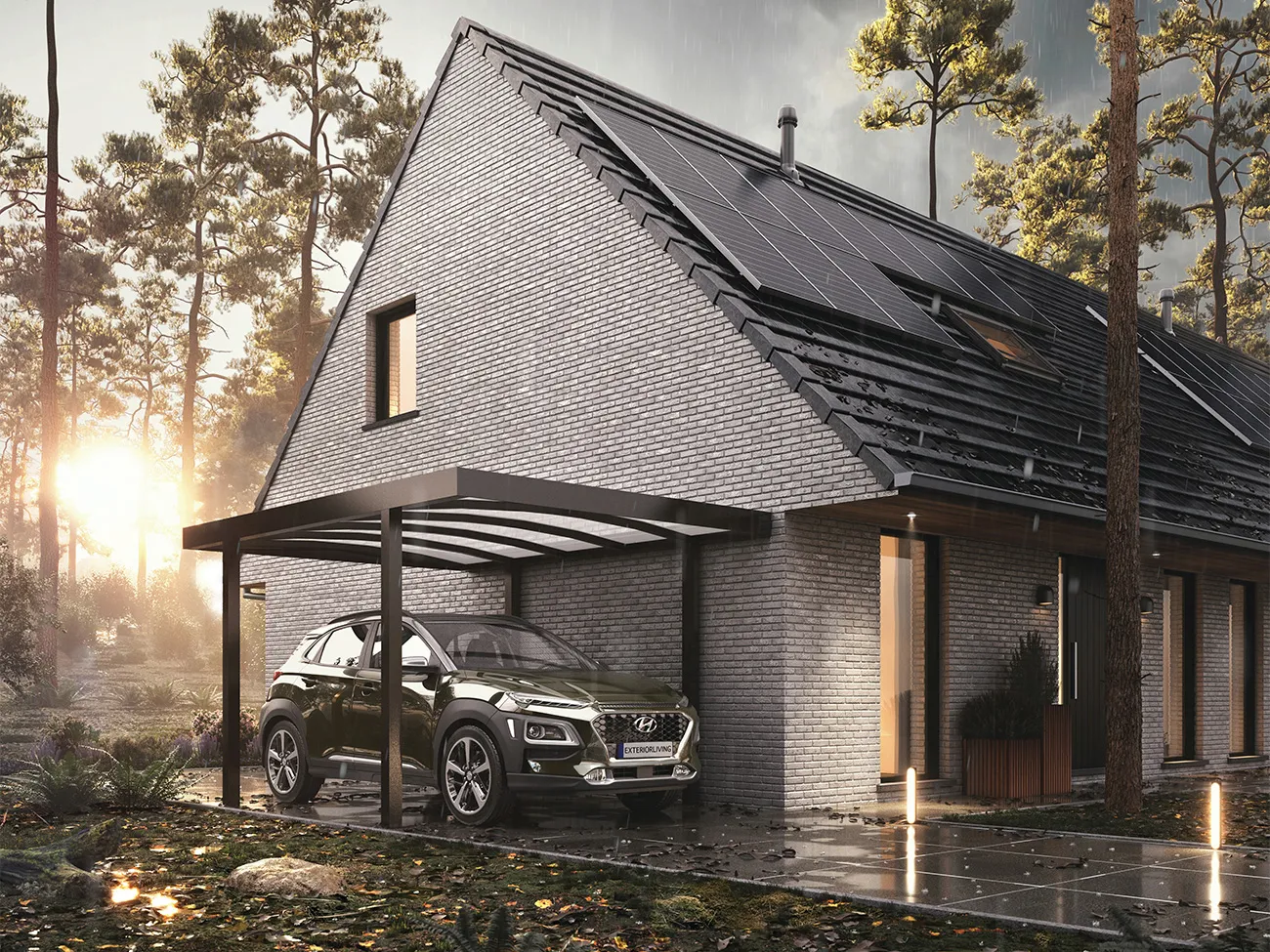
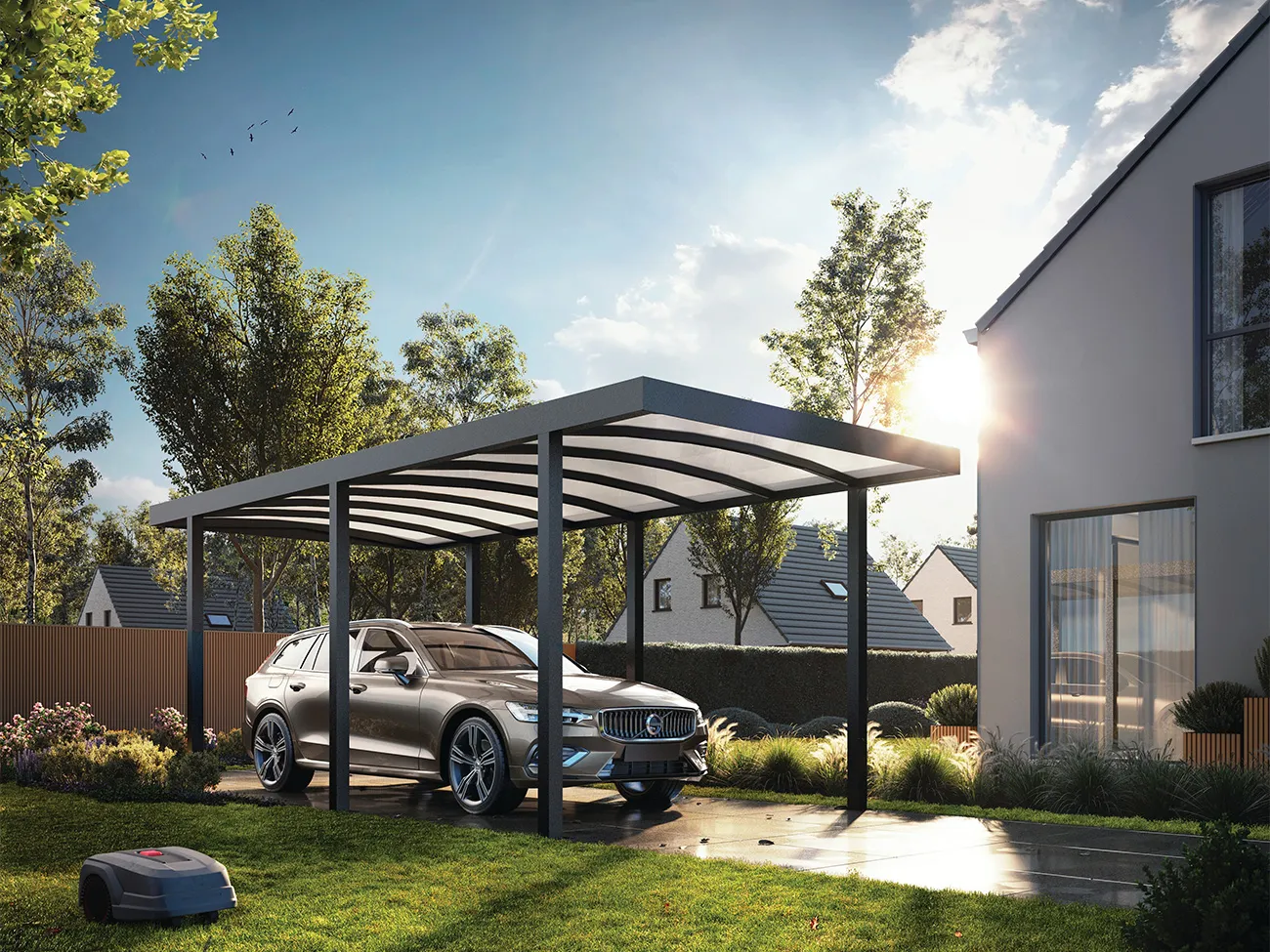
This year sees the launch of Lumo, a fairly simple and, above all, affordable model consisting of a black aluminium frame and a polycarbonate roof. It can be freestanding or attached to an existing building. The carport has a fixed width of 293 centimetres and comes in five different lengths, giving customers considerable choice over the positioning of the posts. The roof can be made from clear or opal polycarbonate, providing light transmission of 80 to 90% or 20 to 30%, respectively.
The understated yet elegant black frame of the Lumo is clean-lined and modern, while the carport’s simplicity allows it to suit a wide range of architectural and garden styles.
Simplicity down to the smallest detail
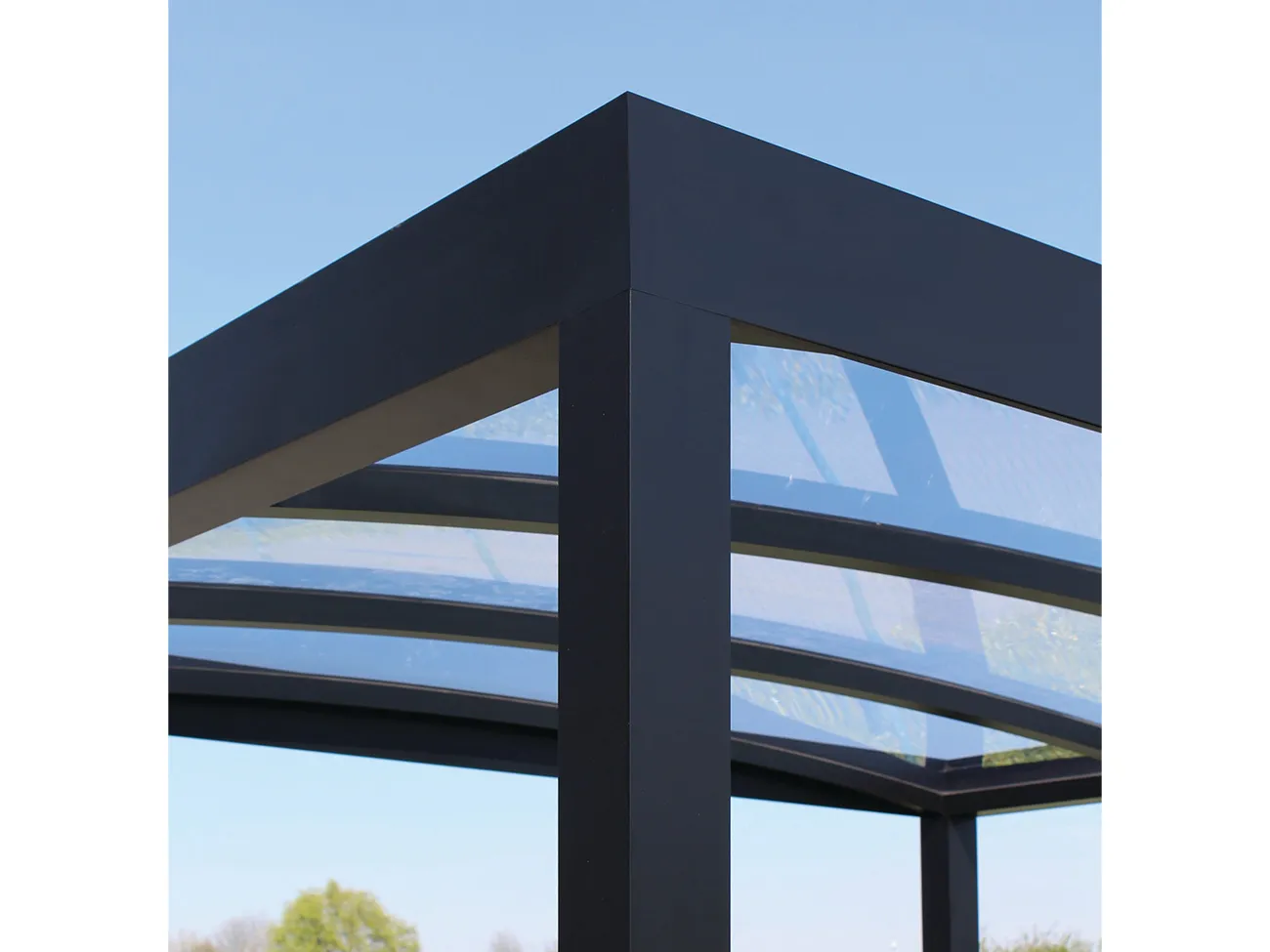
However, the simpler the design, the more important the details. That is why we use square posts and a clean, understated straight fascia around the outside of the roof. This conceals the slight curve of the polycarbonate sheets, creating the illusion of a flat roof. For a flawless finish, both the water drainage and the bolted connections are completely hidden. A UV-protective layer prevents the polycarbonate sheets from yellowing. This allows them to retain their aesthetic and technical qualities for
many years.
Question about this story? Ask your question
Keep following this
Get an email when a new story is published. No account needed.
- SubjectProducts