How can you make your lawn drought-resistant?

In recent years, it has become increasingly difficult to enjoy a beautiful, green ornamental lawn all year round. The seasons are changing, and the weather can shift from a spell that is far too wet to an extreme heatwave and prolonged drought. As a result, the grass in our lawns is under pressure.
Grass struggles to cope with a prolonged period of drought. The simplest solution, watering the lawn, is no longer an option, as irrigation bans are often imposed during prolonged dry spells. Another way must therefore be found to help lawns withstand drought.
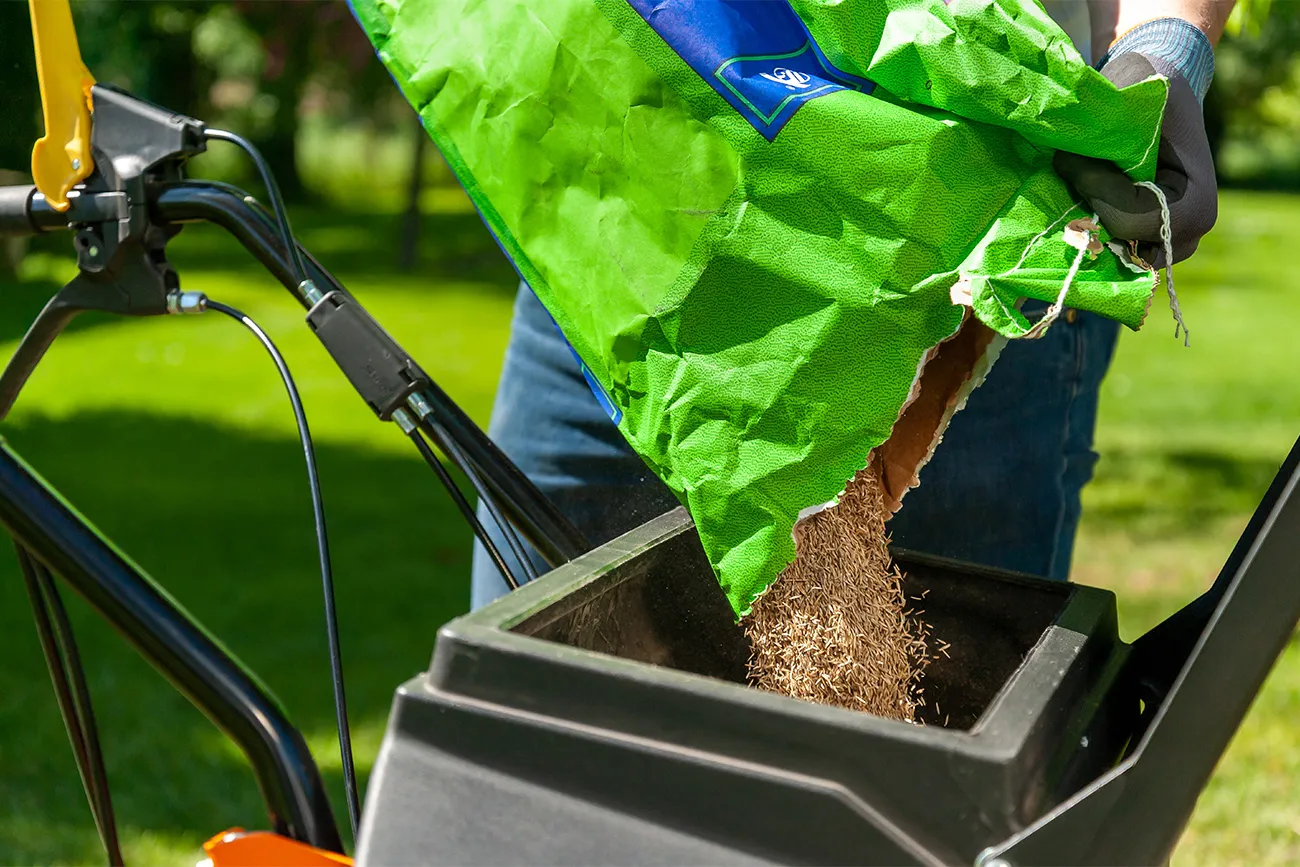
First, it is important to prevent moisture from evaporating from the soil. Lawn density is crucial here. Dense grass growth shades the soil. In addition, the air trapped between the grass blades acts as insulation and can moderate soil temperature. Annual overseeding rejuvenates the grass population, compensating for the natural loss of grass and preventing bare patches from forming. Second, it is important to encourage deep root growth. Applying a suitable fertiliser with a high phosphorus content can promote strong root development. Third, drought resistance depends to a large extent on the grass varieties themselves. Many lawns still contain grasses sown more than 10 years ago, meaning they are no longer suited to the natural conditions we face today. The most effective and economical approach is to sow newer, improved lawn varieties into the existing lawn. This renews the lawn from within and makes it more drought-resistant.
Research centres have shown that tetraploid perennial ryegrass, initially used in agriculture for pastures because of its rapid growth and disease resistance, has also proved highly drought-tolerant. This tetraploid variety was then refined to meet the aesthetic requirements of sports and ornamental grasses, while retaining its beneficial properties. An added advantage of this ryegrass variety is that it can establish at low temperatures and quickly develop a larger root mass.
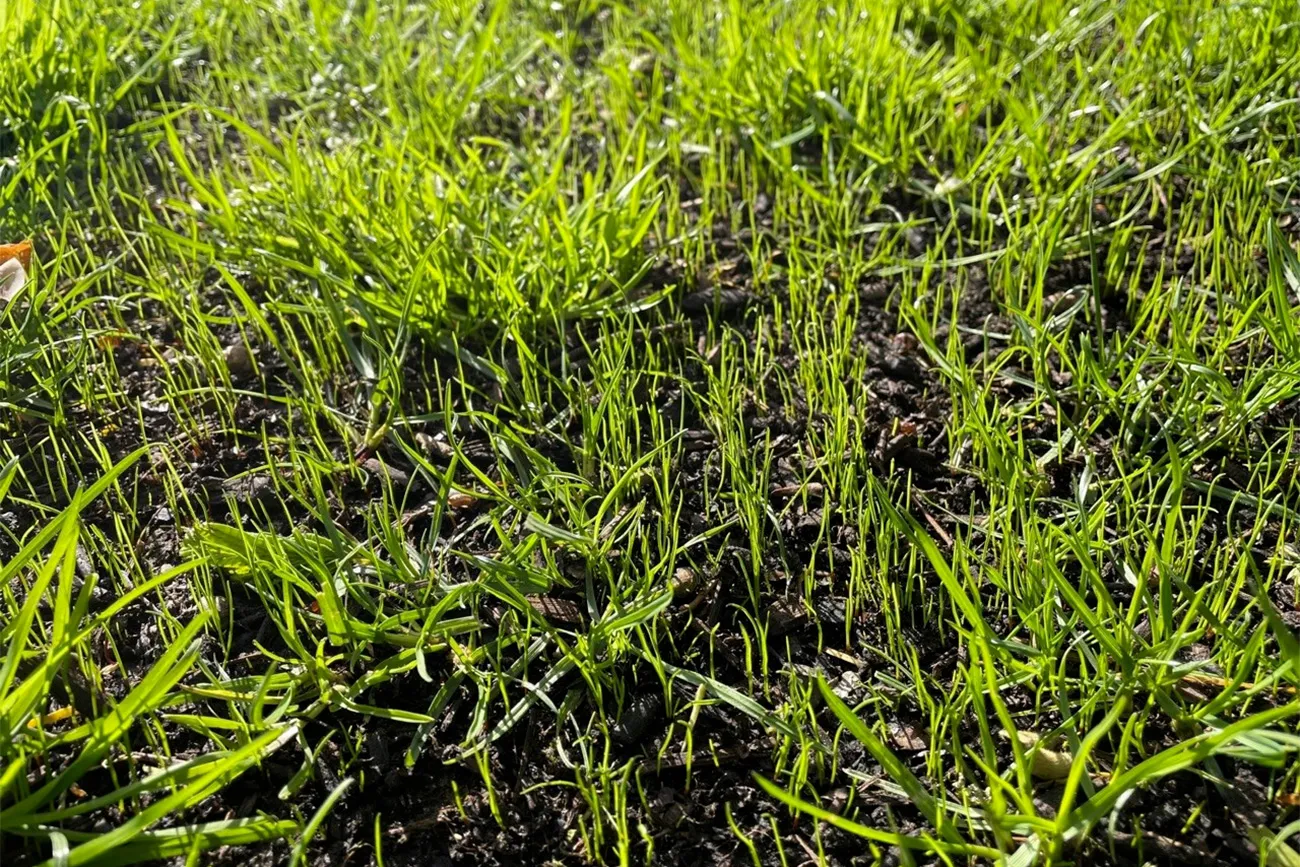
Overseeding with tetraploid mixtures can help a significant proportion of the lawn withstand a drought lasting a month and a half. With severe winters becoming less common, this type of overseeding can also be carried out increasingly early in the year. Its ability to germinate at lower temperatures helps. The extra time available to the grass in spring allows its root system to develop more fully and grow deeper before the dry season arrives.
By repeating the overseeding renovation in autumn, grass losses following the drought can be addressed straight away, while increasing the proportion of drought-resistant species in the lawn. This approach will allow lawn users to enjoy a carefree green lawn all year round once again.
Question about this story? Ask your question
Keep following this
Get an email when a new story is published. No account needed.
- ThemeMaintaining lawns and sports grounds
- SubjectProducts