The how and why of a lighting plan

Although it is often overlooked, a lighting plan is an essential part of garden design. Not only when you are starting from scratch, but also in existing gardens.
To achieve the best results, it is advisable to consider lighting from the outset of a project and record everything in a lighting plan. Paul Vermeulen of Suslight explains how.
Why garden lighting?
“There are four important reasons for choosing garden lighting,” explains Mr Vermeulen. “First of all, it is a matter of safety. Well-lit driveways and garden paths help you avoid slipping in the dark, bumping into an obstacle or straying from the path. What is more, they deter thieves and intruders.”
“Secondly, good lighting creates a particular atmosphere. In practice, that means not too much, but just enough to create a few accents. For example, illuminate a tree, a multi-stemmed shrub or a decorative feature in the garden. This adds character to the garden project.”
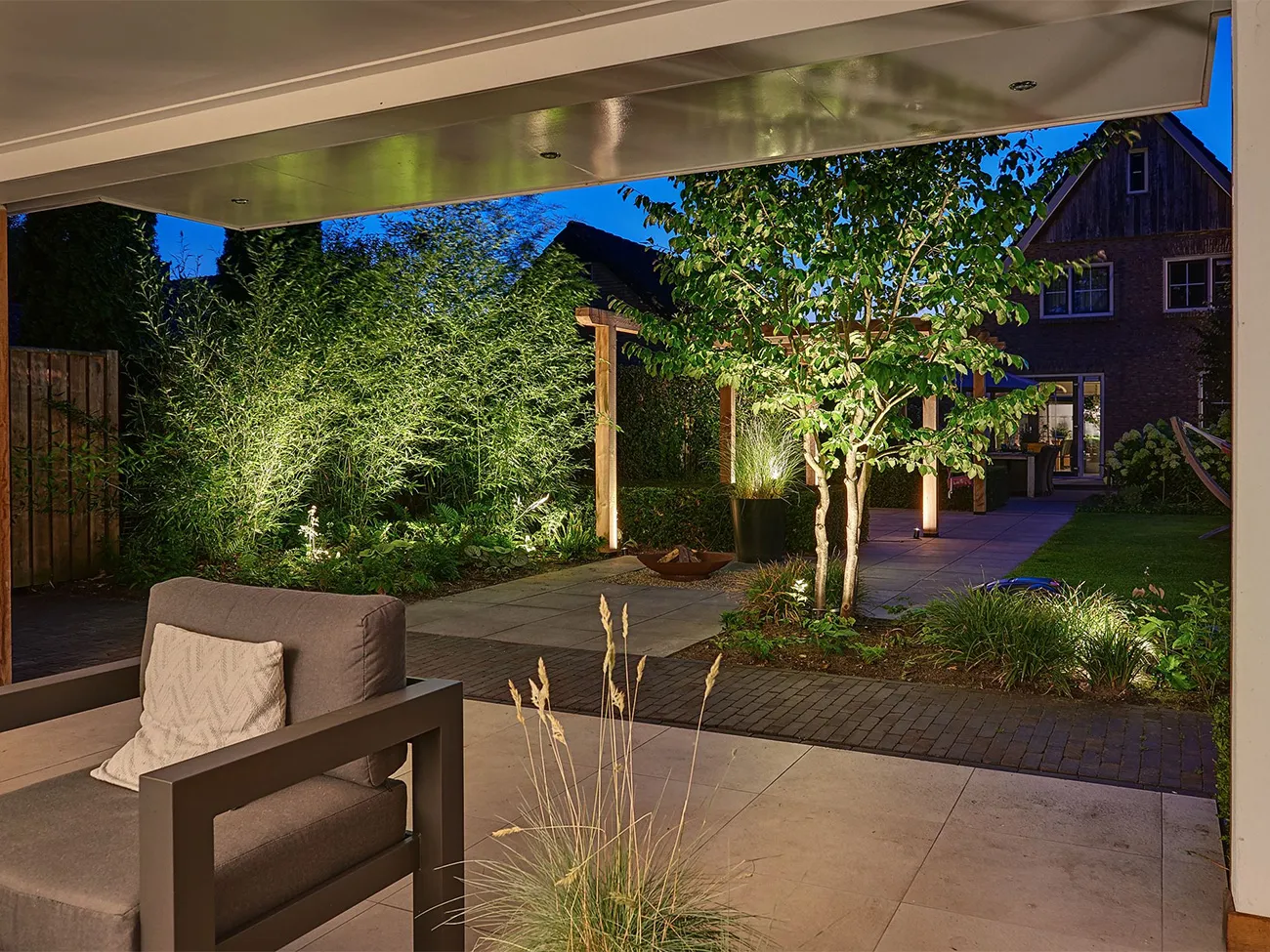
“A third benefit is usability. Installing garden lighting means you can continue to enjoy cosy evenings in the garden long after sunset.”
“Finally, sustainability also plays an important role in the choice of lighting. An energy-efficient lamp is only the beginning. Suslight has deliberately broadened its approach to sustainability and makes sustainable, practical choices throughout the production chain. This means we are not simply ‘shifting’ emissions or waste elsewhere, but aiming for genuine reductions in our production chain.”
Why a lighting plan?
By drawing up a lighting plan in advance, you know exactly what you need and where the necessary provisions must be made. This makes it easy to group the work together and avoids surprises later on.
“It also shows the client that you have considered every aspect of their garden project and how they will experience it. This builds trust and leaves a highly professional impression.”

How do you draw up a lighting plan?
A lighting plan takes into account both visual and technical requirements and constraints. It determines which lights will be placed where and at what brightness.
“From a visual point of view, you need to consider sightlines, contrasts and safety. How will your client see their garden? Which sightlines are most important from inside the house or from the terrace? Are there also any raised areas or other features in the garden that could pose a hazard in the dark? It is important to light these areas properly, as well as the main paths leading to the back door, the bicycle shed, and so on.”.
However, you should also take care not to overdo it. “It is the contrast between light and darkness that makes a lighting plan so fascinating,” says Mr Vermeulen. “So do not include too many light points, and pay attention to their placement and direction. Obviously, the idea is not to dazzle anyone walking past the lights.”
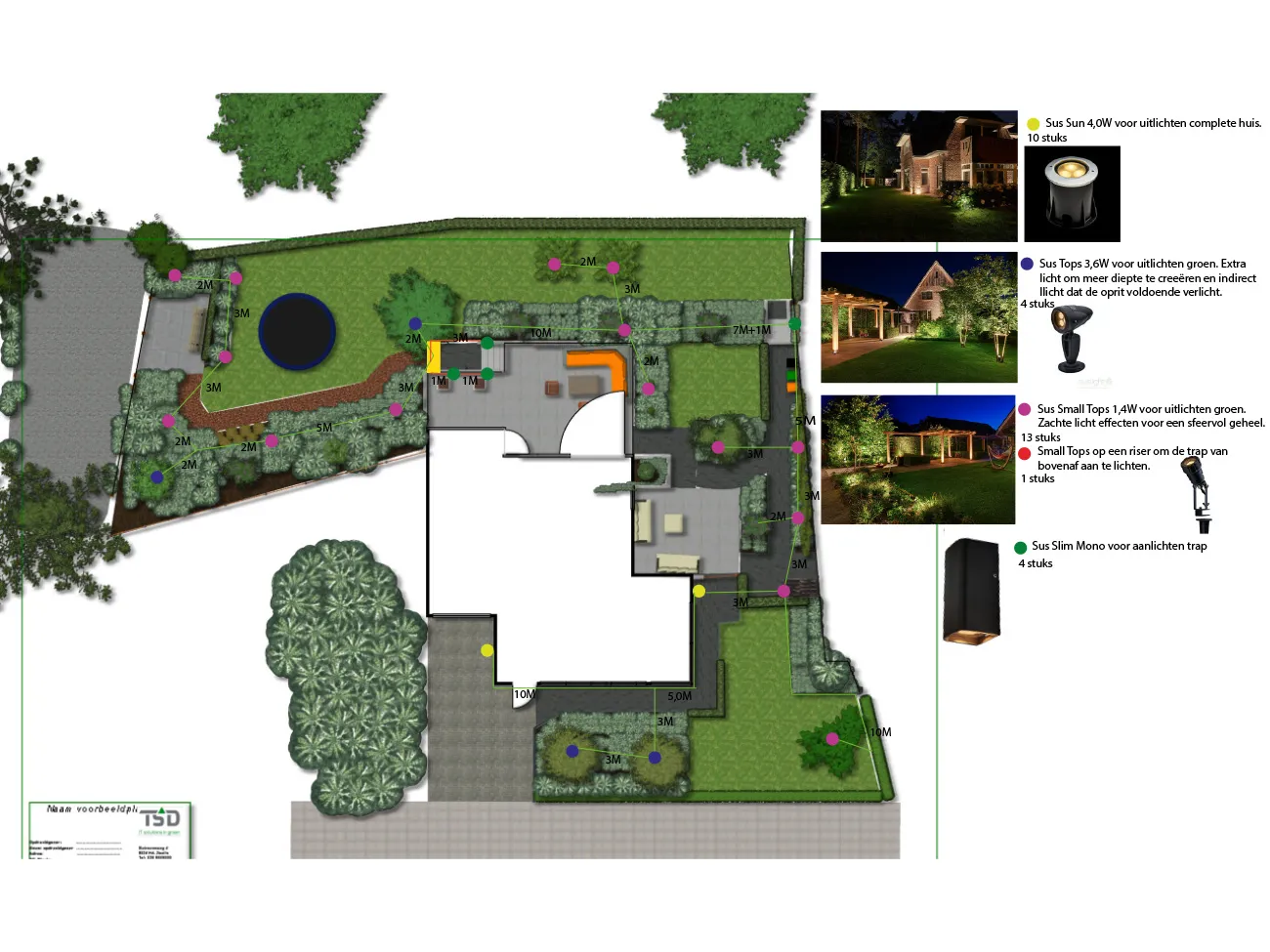
The technical aspects of the lighting plan can then be determined. “The lighting plan allows you to identify which lights and transformers you need. You can calculate how much cable you will need based on the distances between the different light points. Of course, check whether there is already an outdoor connection, and allow for some extra cable in case anything unexpected comes up.”
If the garden has several functions, or if the front and back gardens need to be controlled separately, you will need to provide several circuits. Finally, a light sensor with a timer is a simple way to increase your client's comfort.
Question about this story? Ask your question
Keep following this
Get an email when a new story is published. No account needed.
- ThemeDesigning living landscapes
- SubjectProducts