A LITTLE NATURE IN THE CITY
Texte Solange Berger | Photos EMBUILD
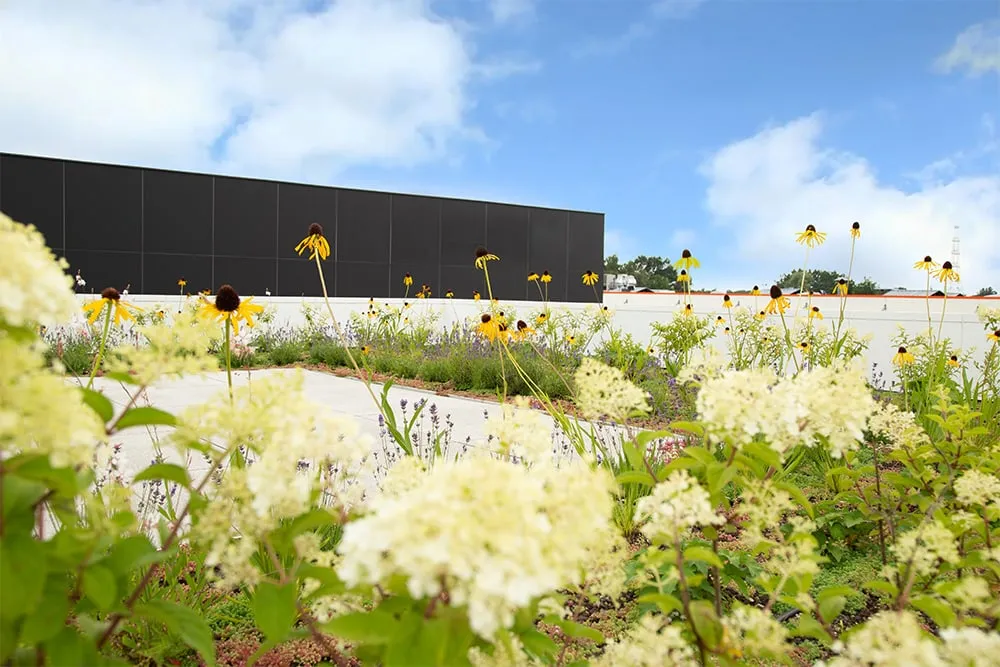
Biodiversity, ecological benefits, rainwater filtration and even well-being: green roofs offer numerous advantages. Although they are nothing new, they are gaining ground.
“It was in the early 2000s that we began to see a certain interest in green roofs in Belgian cities. But the concept is not new. We might think of the Hanging Gardens of Babylon, or the many grass-covered houses in Nordic countries,” says Edwige Noirfalisse, Valorisation Manager and engineer facilitator of the Flat Roof Waterproofing Technical Committee at Buildwise (formerly the Belgian Building Research Institute). “In Brussels, installing a green roof is now even compulsory for flat roofs above a certain size.”
Pros and cons
This growing interest can be explained by the environmental concerns of a large part of the population, the increasing need for nature and, above all, the many benefits offered by green roofs. Edwige Noirfalisse particularly highlights the visual appeal they bring to heavily paved environments and surfaces. “We see that looking at them boosts well-being and concentration, and even aids recovery. This is something we observe in hospital patients whose rooms overlook a green roof.” Their natural, attractive appearance is also an advantage, as the vegetation changes with the seasons. Another benefit is their ecological contribution. Green roofs filter the air and help reduce CO2 emissions. They also promote biodiversity by creating a green network throughout the city. Effective, durable waterproofing is another plus: the vegetation protects the waterproofing membrane, thereby extending the roof’s lifespan.
Edwige Noirfalisse also highlights the capacity of green roofs to absorb and filter rainwater: they efficiently absorb rainwater and release it slowly. The water does not go straight into the sewer, as it is retained by the growing medium. “This is useful, particularly during heavy downpours, although there are limits. To mitigate the flooding we experienced in 2021, we would have needed an enormous number of green roofs,” says the Buildwise expert, adding: “In Flanders, having a green roof exempts you from the requirement to install a rainwater tank.”
Some also point to the acoustic and thermal insulation benefits, noting that green roofs offer better protection against noise and temperature fluctuations. “There have been many studies on thermal insulation, but the effect is still fairly limited, Edwige Noirfalisse observes. In summer, temperatures in rooms directly below the roof may be 1°C lower, because less solar heat is absorbed and the plants retain moisture. But if a large part of the city is covered with vegetation, the impact during heatwaves will be significant.” Those are the benefits.
But there are also some drawbacks, which depend on the type of roof: weeds may grow, the roofs may attract birds and other animals looking for food, and they may require maintenance. Leaks are also harder to detect and repair. Finally, weight can be an issue. “For the roof to function properly, a series of layers must be provided: the waterproofing, of course, but also protection for the waterproofing, a drainage and water filtration system, followed by the growing medium and plants. It is not simply a matter of rolling out a mat of plants.”
Intensive or extensive
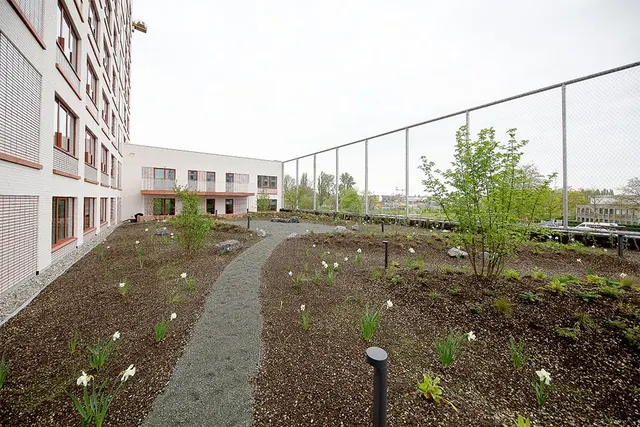
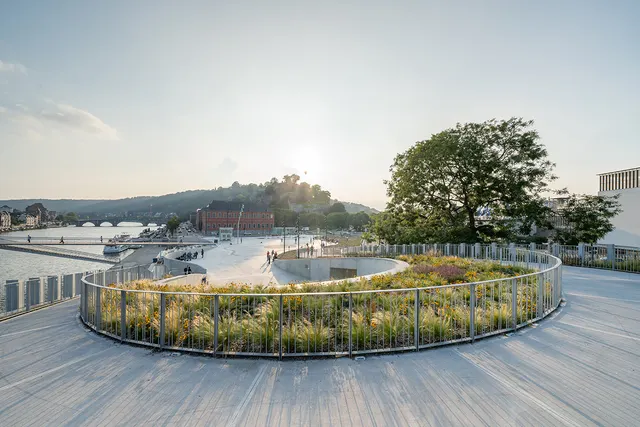
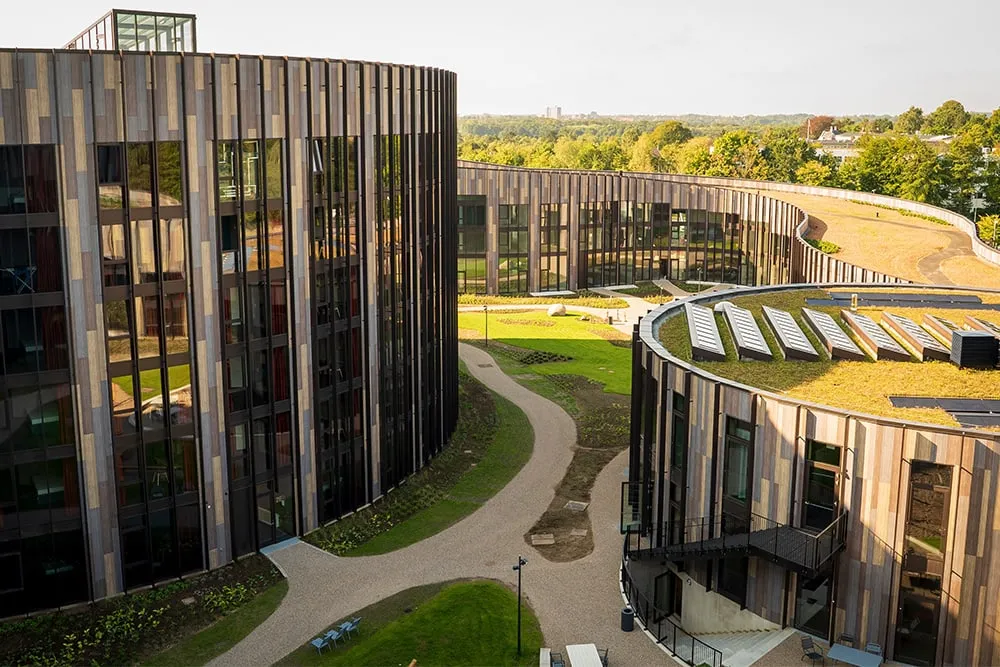
Green roofs can be intensive or extensive. Intensive roofs have a garden like those found at ground level. They can be planted with shrubs, herbs and even certain types of trees. The roof structure must be strong enough, as such a garden is very heavy (more than 300 kilos per m²). “That is why they cannot be installed on every building. They are rarely found in renovation projects. In addition, they require more maintenance than an extensive roof and need to be accessible. But they are much more effective,” notes the Buildwise expert.
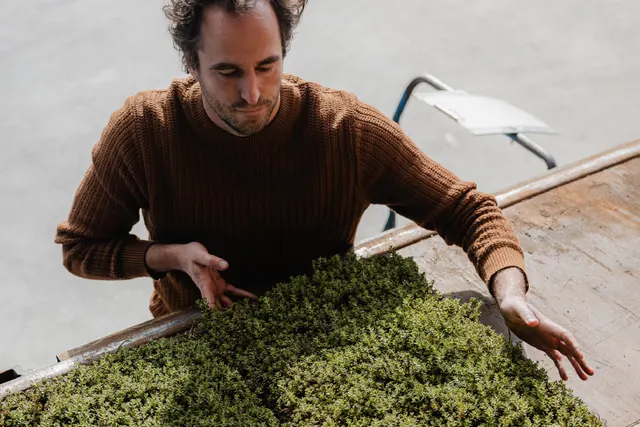
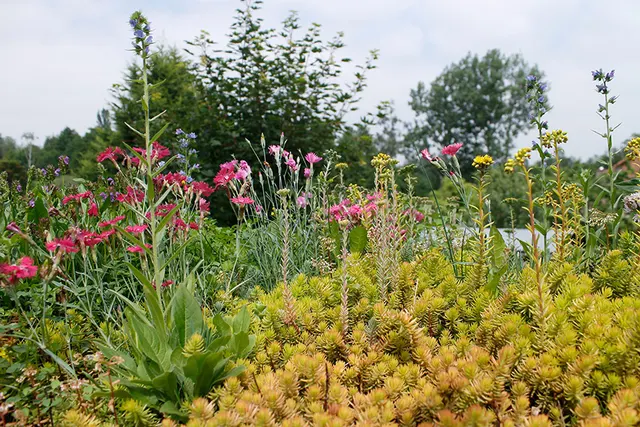
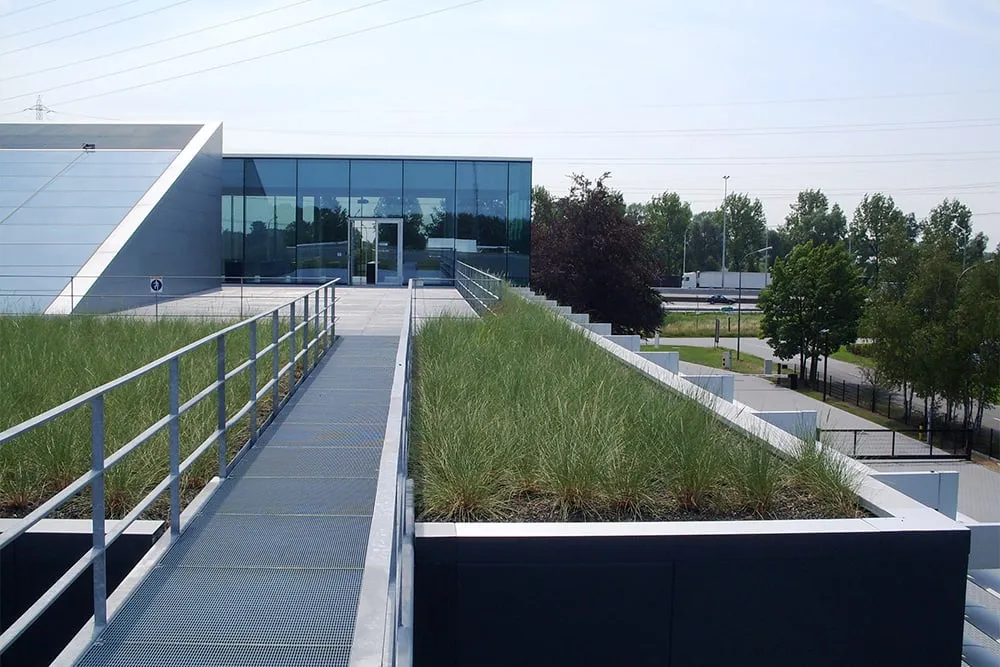
Extensive green roofs, by contrast, are planted with mosses, succulents and herbs that require little maintenance. They are lighter (100 kilos per m²) and easier to install. “Extensive roofs are also much more common,” says Edwige Noirfalisse, who highlights a few points to bear in mind, particularly regarding the waterproofing. “It requires careful attention because it is beneath several layers, so it is not easy to see when and where a leak has occurred,” says the expert, who recommends taking great care when installing the waterproofing. “It is better to use two layers rather than one, and to check carefully that the waterproofing is effective before installing the green roof. You should also avoid certain species with roots that grow too deep and could damage the waterproofing.” Maintenance should not be overlooked, as with any roof. “It is generally carried out by the client. But I recommend having it done by the contractor who installed the roof. If, for example, a birch appears, you cannot just pull it out any old way. Some expertise is needed.”
Regional grants
Cost can also be a barrier. That is why the Regions and some municipalities offer grants, subject to certain conditions. In the Brussels-Capital Region, for example, roof insulation work qualifies for a grant ranging from 20 to 50 euros per square metre. A 15% bonus applies if more than 85% of the insulation material is made from natural materials. Some municipalities offer additional energy grants, including grants specifically for green roofs. The City of Brussels, for example, offers 20 euros/m2 for extensive green roofs and 30 euros/m2 for intensive ones.
In Wallonia, grants are available, including for replacing the roof covering, installing a rainwater collection and drainage system, or insulating the roof and attic. Several municipalities provide additional grants for energy improvements. Flanders, meanwhile, offers a roof insulation grant of 4 euros/m². This can be combined with a “total renovation” bonus if other works are carried out, and with a building energy performance (PEB) grant based on the home’s future PEB rating.
Question about this story? Ask your question
Keep following this
Get an email when a new story is published. No account needed.
- ThemeDesigning living landscapes
- SubjectGreen roofs