The future is on the roof
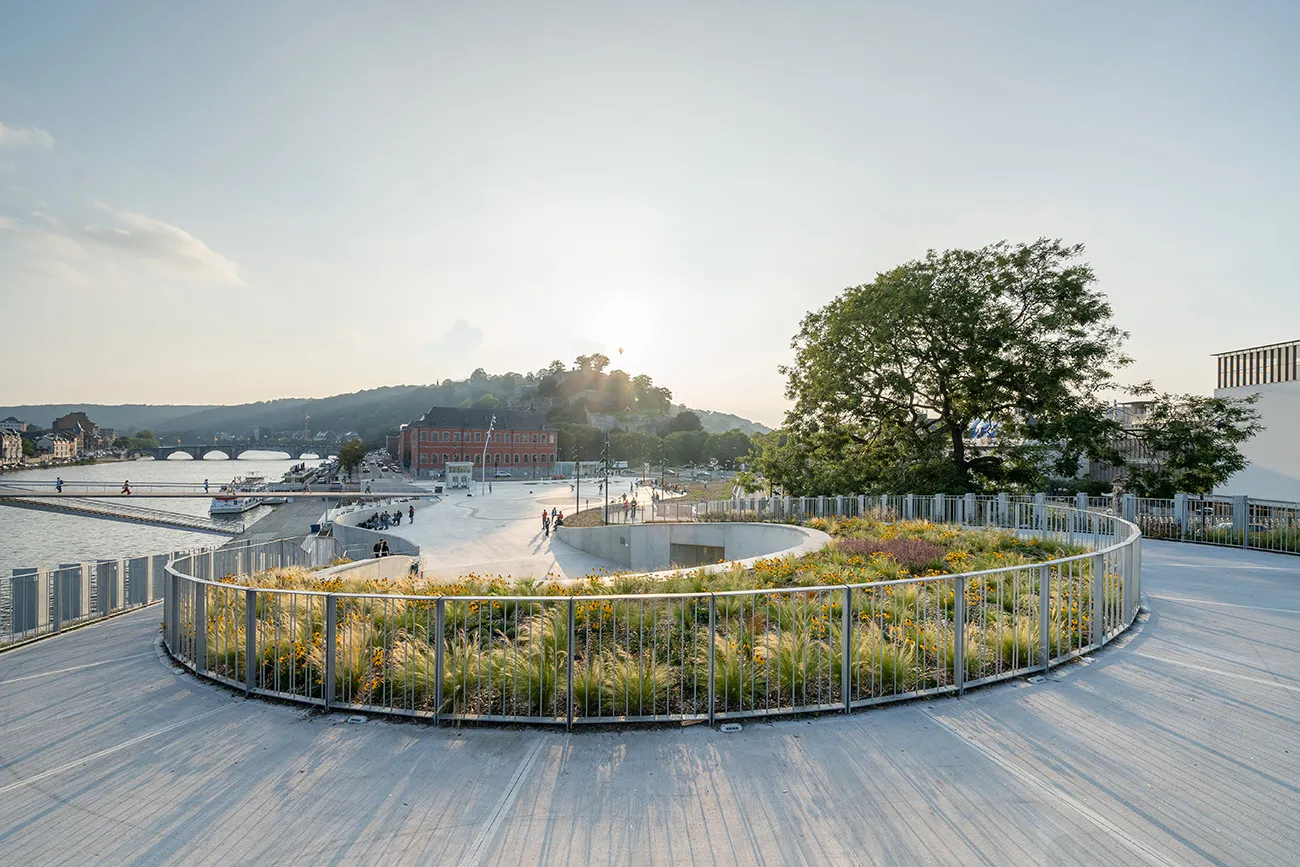
Green roofs or blue roofs…
Roof terraces and roof gardens are springing up ever more frequently on our urban (flat) roofs. It is very much of the moment. Municipal authorities are encouraging, or even requiring, the greening of flat roofs in our towns and cities. And a greening project of this kind is unquestionably a job for specialists. Floratoit, in Namur, is one such specialist. The company offers all its private, professional and institutional clients in Wallonia, the Brussels-Capital Region and the Grand Duchy of Luxembourg solutions tailored to each roof greening project. Sophie Bourmanne, co-manager, tells us more.
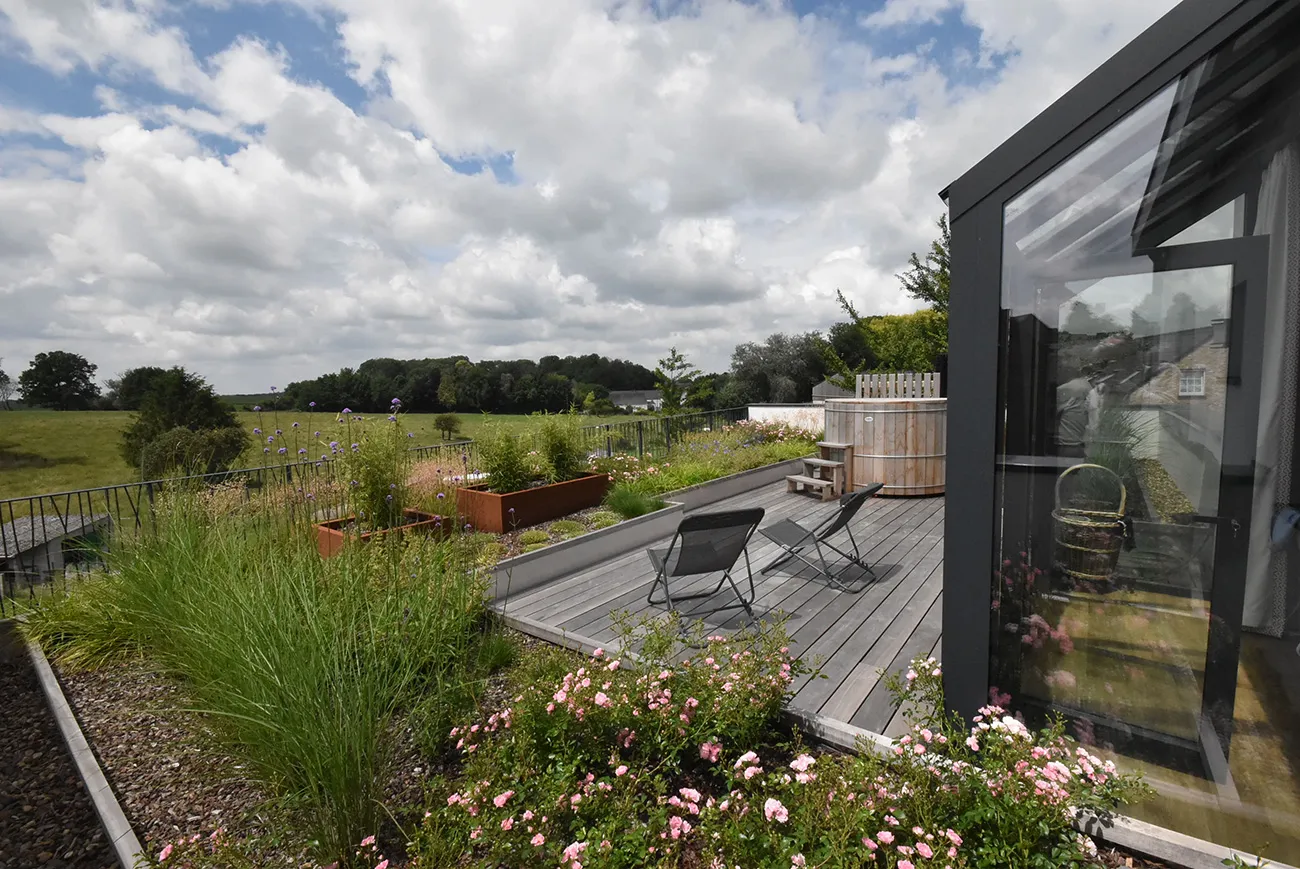
A touch of chance, and a great deal of passion
Floratoit is run by Sophie Bourmanne and her husband, Olivier Fernandez. He ran a roofing materials trading company in the Namur area and in Bertrix, selling roofing products to trade professionals, including pre-grown trays. By chance, one day a loyal client, who was seriously ill, approached him and offered to sell him his company, Floratoit. Events then moved quickly. That was five years ago. Sophie Bourmanne took the reins of the company. Given her professional background, Sophie Bourmanne, who spent twenty years working as an analyst for a multinational, took a closer look at the green roofing market and analysed it in greater detail, so she could learn more and build the right network around her. “I actually started from scratch. And very quickly, I was put in touch with ZinCo, a leading name in the sector,” she says.
As her passion for the sector grew, the managing director wanted to take things further. And, unafraid of a challenge, she gradually moved on to more complex, more technical projects. She also deepened her knowledge of extensive, semi-intensive and intensive green roofs.
The solutions on offer
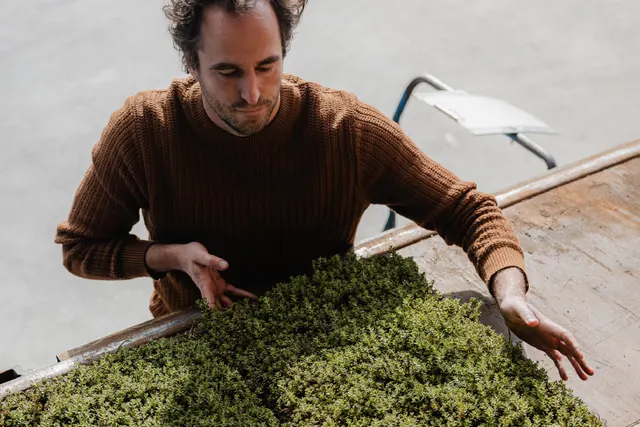
Floratoit offers solutions for extensive green roofs. This first product category covers green roofs that are generally inaccessible, with a height of 10 cm excluding vegetation and a saturated weight of 100 kg per m2.
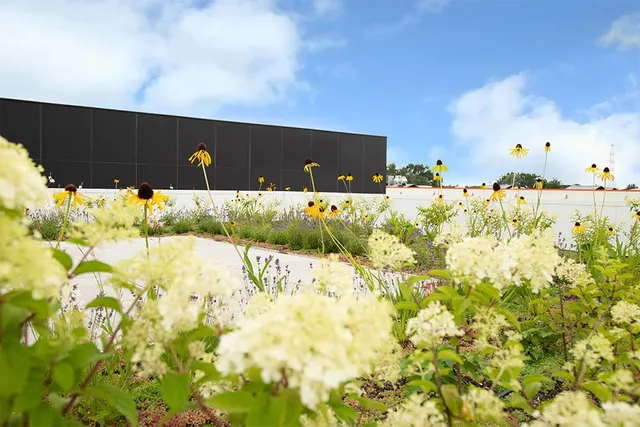
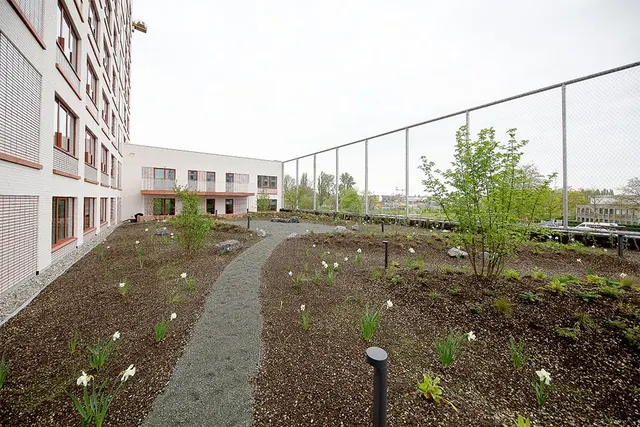
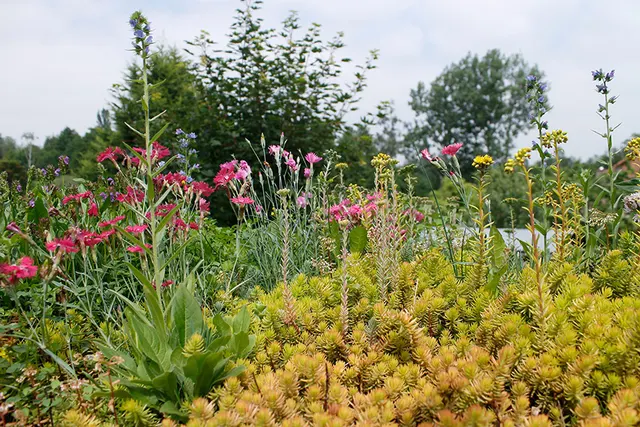
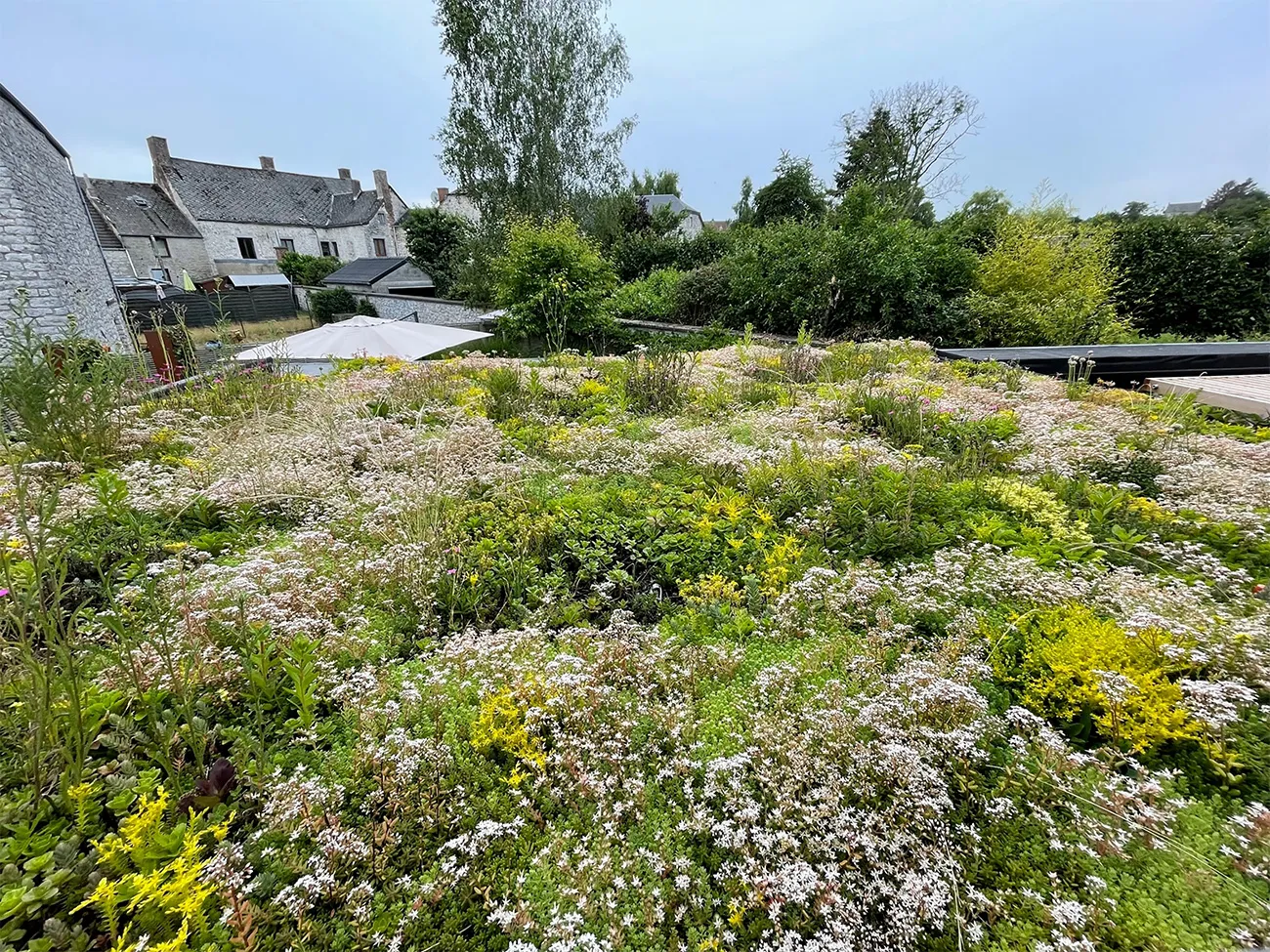
The vegetation is fairly simple, consisting mainly of succulents, and requires minimal maintenance. The green roof is self-sufficient in terms of water. The second product category covers semi-intensive roofs. Here, the substrate is 20 to 30 cm deep, allowing grasses and perennial flowers to be planted. These require a little more maintenance, but offer greater variety. The saturated weight here is 300 to 400 kg per m2. If shrubs and trees are to be included, the roof becomes intensive, with a substrate depth of 40 to 60 cm, or even 80 cm for trees. Blue roofs can be installed beneath the four fundamental layers of a green roof, allowing rainwater to be stored, used for irrigation and regulated on the roof.
The specifics of the trade and a glimpse of what the future holds
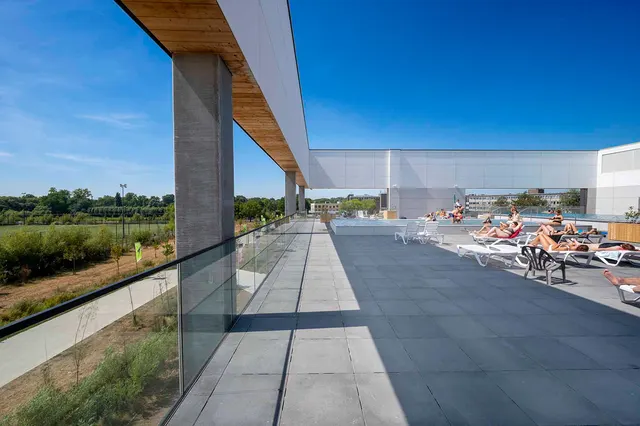
“Today, we are receiving more and more enquiries for landscaped roof gardens designed as living or growing spaces, such as urban vegetable gardens. This increasingly involves collaboration between the landscape architect, our technical team, the botanist and our partner ZinCo’s technical team. It is important to know that designing and installing a green roof really is a specialist trade, particularly for semi-intensive or intensive roof projects, which require a thorough knowledge of above-ground planting. We still work for private clients keen to create a roof terrace, but we are increasingly being asked to work on larger-scale projects, mainly new-build projects that are more likely to support the additional weight of green roof systems. As a result, Floratoit is becoming increasingly visible. It is also worth pointing out that green roofs are compulsory in Brussels for buildings with roofs exceeding 100 square metres. Some Walloon municipalities are following suit and encouraging greening initiatives. This is a good thing, as it helps prevent sewers from becoming overwhelmed during heavy rainfall, protects the waterproofing membrane, improves the building’s thermal and acoustic insulation, and promotes biodiversity on the roof,” explains Sophie Bourmanne. Projects are also coming in from hospitals, nurseries, care homes and sports centres, among others.
The future?
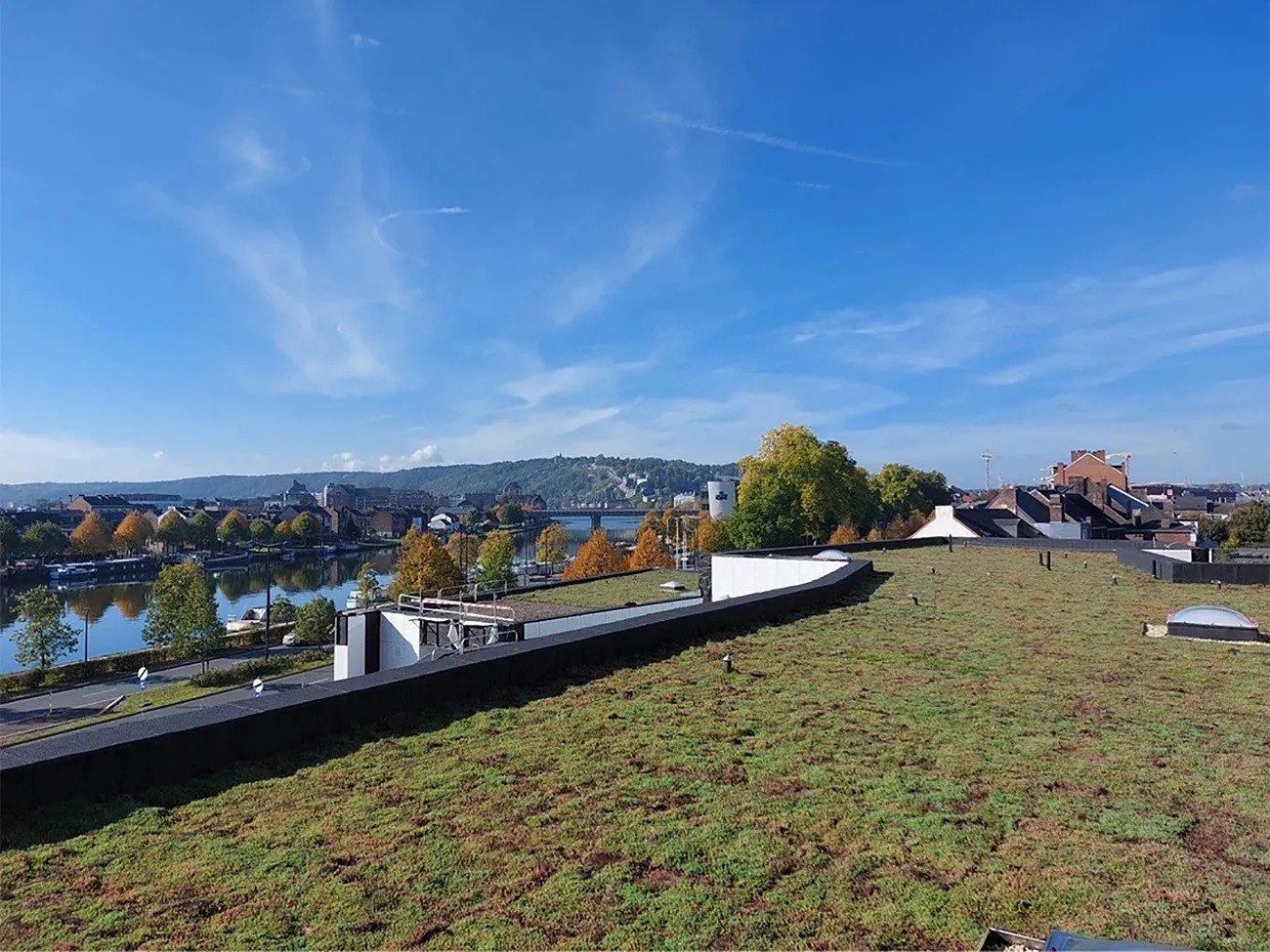
The percentage increase in the number of projects is clear. In Wallonia alone, Sophie Bourmanne cites a few notable projects, without claiming to be exhaustive: the intensive green roof on the new parliamentary building, the planned green roofs for the extension to the Namur casino, comprising a brasserie and hotel, and, in the private sector, the “Your Nature” Eco-resort, a 700 m2 private roof garden project for the Wespelaer arboretum, and an urban vegetable garden on the roofs of the Trianon project in Liège…
“But the future, the ultimate solution, is undoubtedly the blue roof, in other words, a green roof over a water storage tank. This is already compulsory in Ghent and Antwerp, for example. As cities are heavily built up, the roof can act as a buffer, slowing and regulating the flow of water into the sewer network during severe storms. It is worth knowing that one cubic metre of substrate retains 450 litres of water,” Sophie Bourmanne explains..
Question about this story? Ask your question
Keep following this
Get an email when a new story is published. No account needed.
- ThemeDesigning living landscapes
- SubjectGreen roofs