Do UV units really wipe out all life in your pond?
Texte Guido Lurquin MSc | Photos Guido Lurquin MSc ; dessins techniques Messner Allemagne

UV units have their supporters and their critics. Their use in swimming ponds in particular is controversial, because UV is seen as a technological tool that is unnatural and not very ecological. According to a stubborn myth, it eliminates all life in the pond. Nothing could be further from the truth.
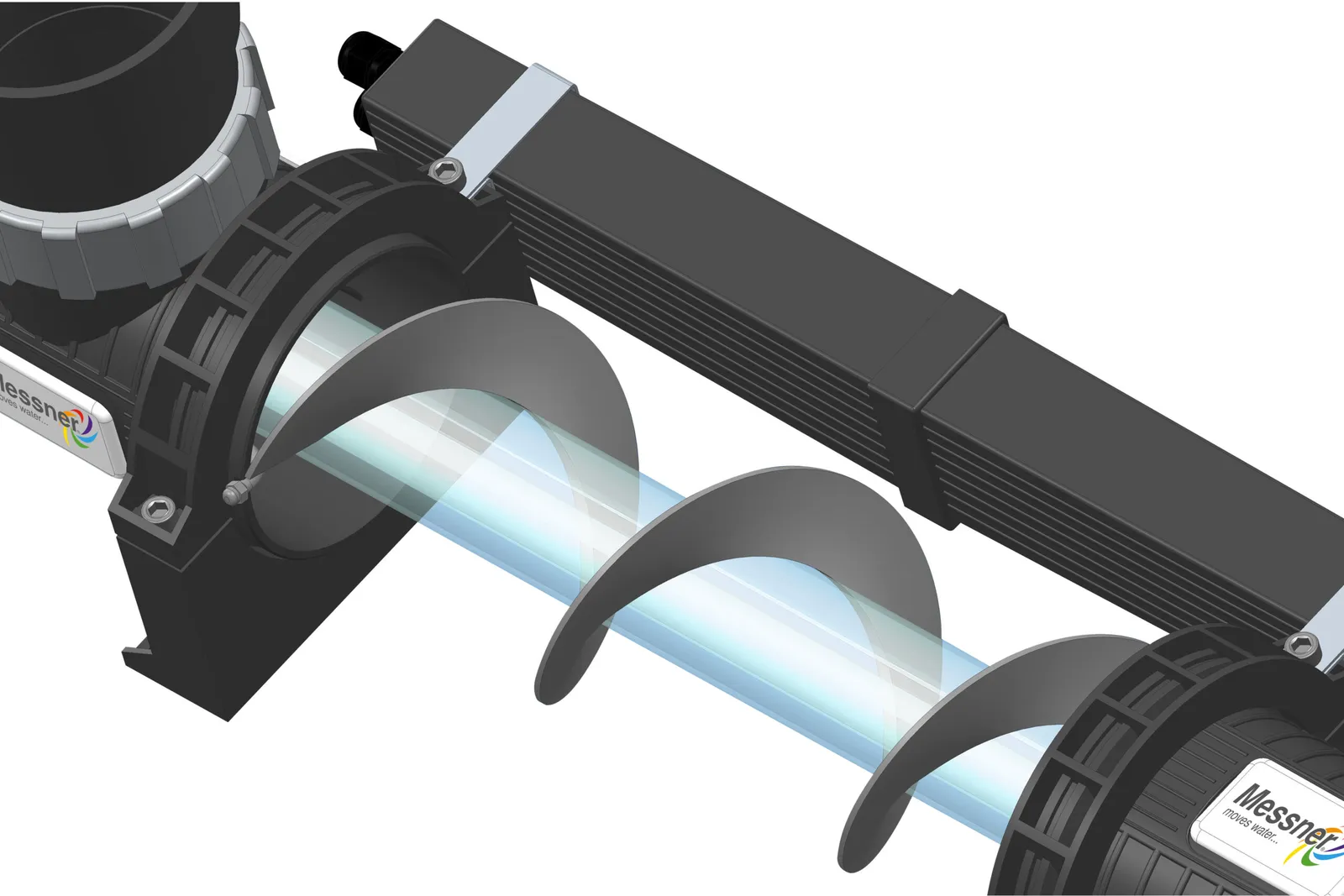
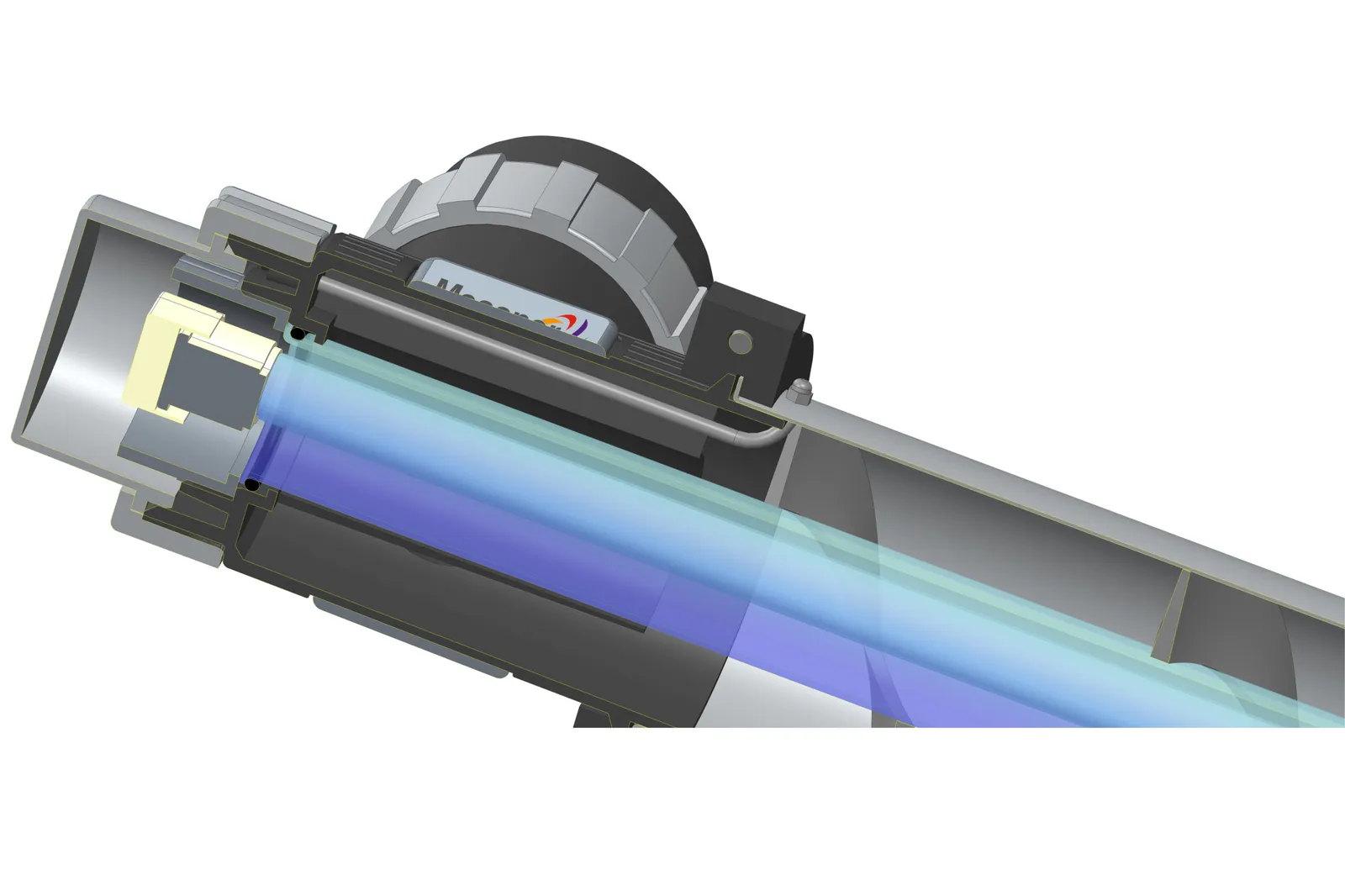
UV consists of light rays that come from the sun, although only a small proportion of them reach the earth. A UV lamp produces the same rays, specifically UVc, as these are the most effective. UVc rays damage the DNA of micro-organisms with a transparent cell wall, which are then no longer able to multiply and eventually die.
UV systems only act on organisms that the water carries past the lamp. Moreover, these must be microscopic and have a transparent cell wall. Filamentous algae, for example, cling to the pond bottom and to plants, and therefore never come within the lamp's range of action. The same applies to purifying bacteria: attached to the filter biofilm, they do not drift in the water and so are not affected either.
Limiting pathogens
In garden ponds and koi ponds, UV systems have been used for decades to combat floating algae and therefore green water. In swimming ponds, this problem rarely occurs, but UVc can play another role, namely limiting pathogens. These are generally far more sensitive to UV than the bacteria naturally present in the water.
Other advantages of UV
In a well-balanced biological swimming pond, UVc is not a necessity, but it is nevertheless recommended in certain situations, for example if the water is heated or if a large number of swimmers are present at the same time. A UV system is advisable if the water is kept at a temperature above 28°C. Likewise, when occupancy exceeds three bathers per 10,000 litres of water, UVc is useful for preventing cross-contamination. In public or semi-public pools, such as those in wellness centres, UVc is commonly used to prevent the proliferation of bacteria such as Pseudomonas aeruginosa.
Question about this story? Ask your question
Keep following this
Get an email when a new story is published. No account needed.
- ThemeBuilding swimming pools and ponds
- SubjectSwimming pools and ponds