Two thousand bathtubs of collected rainwater
Texte Geert Van Cauwenberge | Photos ZinCo Benelux
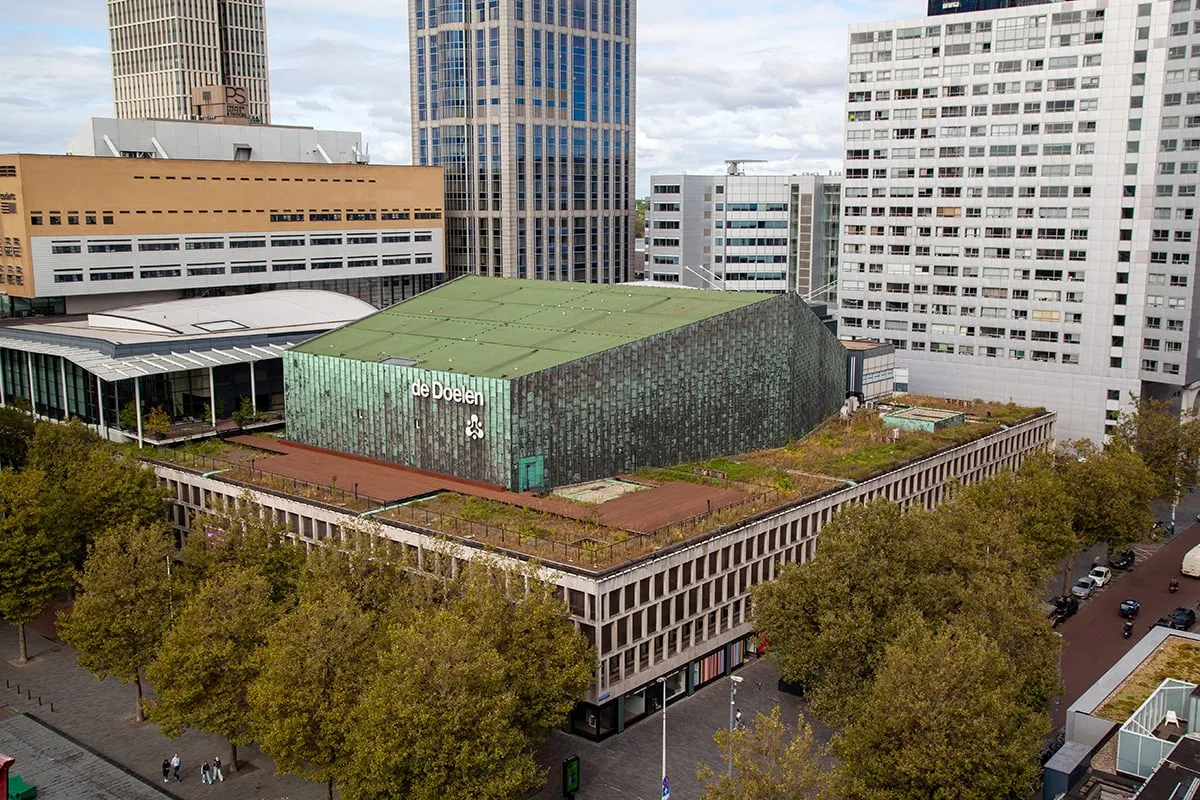
A retention roof for the De Doelen concert hall in Rotterdam
A retention roof means efficient rainwater harvesting, ecology and biodiversity. More and more companies and local authorities are opting for this sustainable, multifunctional solution. The city of Rotterdam offers an inspiring example of this trend, with the retention roof of more than 2,500 square metres installed on the De Doelen congress and concert hall. The structure can collect the equivalent of no fewer than 2,000 bathtubs of rainwater, thanks in part to the ZinCo experts who supplied this innovative roof solution.
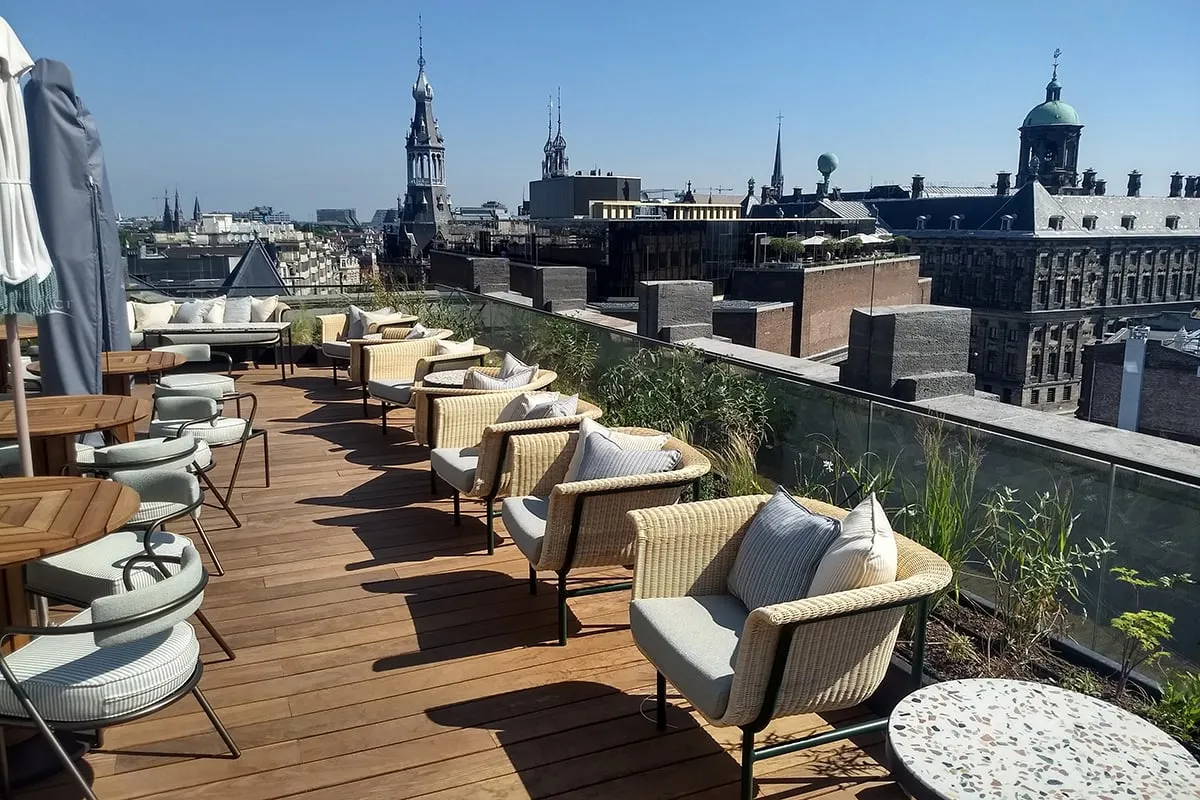
Torrential rain, soil sealing and the warming of urban environments are causing ever more flooding. Installing blue-green roofs, known as retention roofs, makes it possible to collect large quantities of rainwater. This water can then be discharged once conditions return to normal, or reused intelligently.
An extensive green roof can retain around 30 litres of water per square metre. If the sky delivers larger quantities, the excess has no option but to run off the roof. It is like a vase that is already full but keeps being filled: it will inevitably overflow. But if you combine a green roof with retention elements, you can quickly store a further 60 litres on top of those 30, and so retain 90 litres of rainwater per square metre. This roof system is comparable to a bathtub that empties at either a constant or a variable rate, depending on the objective.
Build-up
The basic build-up of a retention roof is always the same, consisting of, from bottom to top, a root-resistant, flat roof system, a protection mat, a retention element, a filter, an extensive substrate and planting. During a downpour, the water is first collected in the vegetation and substrate layer. It then percolates into the retention element, where it is temporarily stored. Finally, the water is discharged in a controlled manner to the sewers or to a rainwater harvesting system, which limits excessive run-off.
Design considerations
When designing and building a retention roof, a few points need attention. First, you must determine the roof's ultimate purpose. Is your priority to slow the flow of water to the sewers, or do you also want to retain rainwater for irrigation, heat production or reuse for toilet flushing? You must also take into account the requirements of your city or municipality's rainwater regulations, in particular the minimum quantity of water your roof must be able to retain. A third point concerns the load-bearing capacity of the roof, since a saturated retention roof can quickly reach a weight of 150 kilos per square metre. The waterproofing also deserves close attention: is it fully bonded and root-resistant? And which type of planting should you choose for an attractive, modern look? Finally, the drainage system is equally important: with a passive system, water is discharged at a constant rate, while an active system gives you greater control over the outflow.
Case study: De Doelen in Rotterdam
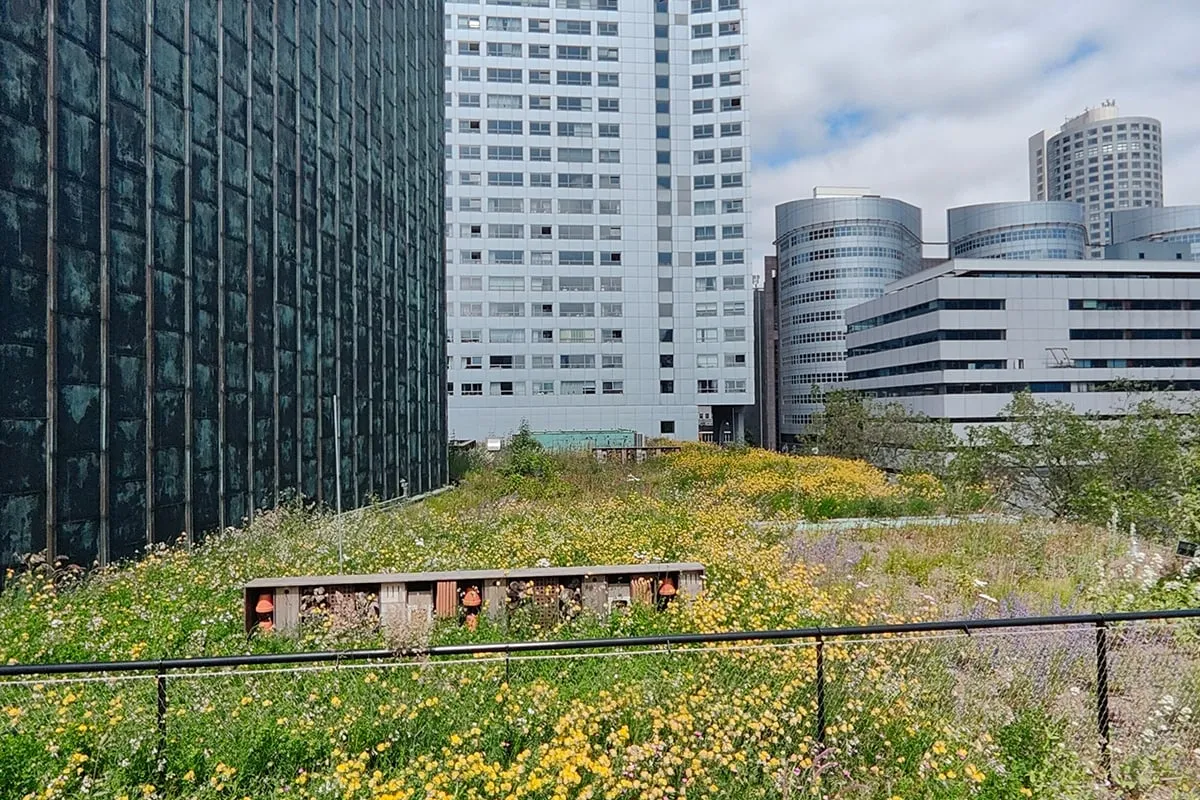
What does a retention roof look like in practice? To find out, we take you to the De Doelen concert and congress hall in Rotterdam. It hosts 600 concerts a year, attracting more than 450,000 visitors, which makes it the second most visited concert hall in the Netherlands. Construction of the building was completed in 1966 and it has been a listed national monument since December 2015. Two years ago, the flat roof, with an area of 2,581 square metres, was covered with highly varied vegetation. A water retention system with a capacity of 300 cubic metres was also installed. ZinCo was one of the suppliers on this ambitious project, delivering the materials and substrates and providing planting such as flower bulbs, grasses, perennials and native shrubs. The use of new technology on this project is equally striking: the collected rainwater is managed by ten ZinCo Meteo Active units on the basis of weather forecasts. ZinCo Meteo Active is an active water management system that anticipates forecasts and the water level on the roof. In short, De Doelen is a fine example of symbiosis between ecology, biodiversity and modern technology.
A business enquiry for ZinCo Benelux? Get in touch
Companies in this story

Keep following this
Get an email when a new story is published. No account needed.
- ThemeGreening dense urban areas
- SubjectNews
- CompanyZinCo Benelux