Precision under pressure: managing Manchester City’s first-team pitches
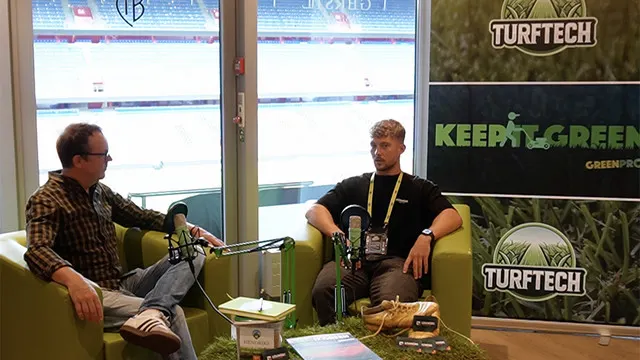
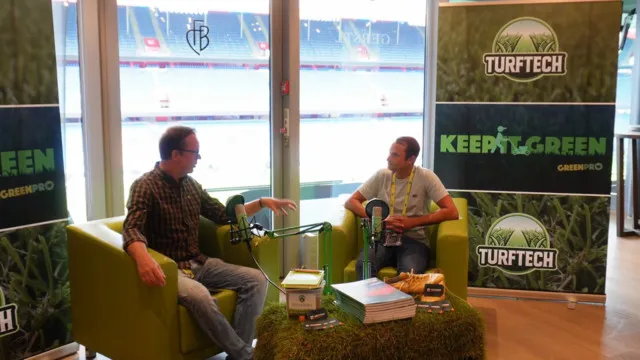
At TurfTech 2025, we sat down with Robert Davidson, 1st Team Grounds Supervisor at Manchester City Football Club, who is responsible for maintaining the first-team training pitches at the Etihad Campus.
Working at one of the world’s most demanding football clubs means operating in a high-performance environment where pitches are used intensively, often seven days a week. With 17.5 grass pitches across the site and constant pressure from training schedules, rehabilitation sessions and match preparation, maintaining the highest standards requires precision, planning and adaptability.
In this episode, we discuss:
- The difference between maintaining an event stadium and a high-intensity training complex;
- Managing pitch quality during Manchester’s brutal, rain-soaked winters;
- The challenge of scheduling maintenance around unpredictable training requirements;
- Leadership, team motivation and the pressures of day-to-day operations;
- The importance of networking, sharing knowledge and supporting young professionals in the industry.
An open conversation about passion, resilience and what it really takes to maintain world-class natural grass pitches in one of football’s most competitive environments.
Full transcript
All chapters (15)
- Introducing Robert Davidson
- Role at Manchester City
- The difference between training-complex and stadium maintenance
- Training pitches in constant use
- The toughest period: winter
- Rainfall and team motivation
- Team structure and responsibilities
- Communication with management and planning under pressure
- Passion for the profession
- Interaction with Pep and changes to the coaching staff
- Kevin De Bruyne
- Attending TurfTech
- Sharing knowledge within the industry
- Sustainability and mentoring young professionals
- Closing remarks
Introducing Robert Davidson
Kris Vandekerckhove We’re talking to the mighty, the Manchester City legend, Robert Davidson. Rob to his friends. Am I your friend, Rob?
Robert Davidson You’re my friend. You’re my friend.
Kris Vandekerckhove Okay, now. Definitely. Okay.
Robert Davidson I also visit such a wonderful place.
Kris Vandekerckhove Yeah, man. We’re at TurfTech in Basel. A great event. I hear it’ll be in England next year.
Role at Manchester City
Robert Davidson So we’re the groundsmen for Manchester City’s training pitches. Yeah, so basically my role is more on the first-team side than the academy side. So basically, I’m the ground supervisor for the first team at Manchester City’s training complex. So yeah, I’m more first team than academy, because at City we have zones, since we have multiple pitches: 17.5 grass pitches, I think it’s 17.5, but correct me if I’m wrong. Obviously, we need people managing specific zones, because if you had one person running something on that scale, you wouldn’t be very specific about what you wanted done. You’d get a bit lost in it. So yeah, we have sector managers.
The difference between training-complex and stadium maintenance
Kris Vandekerckhove Yeah, okay. So the first question is an easy one, I think. What’s the difference between maintaining training pitches and maintaining the first-team pitch?
Robert Davidson Well, I think that training pitches, compared with the Etihad, are different because the stadium is obviously an event stadium. So you’ll have things like football matches on a Saturday, you might have things leading up to a concert in the summer, and you can have several different things taking place there. It’s basically an event stadium. Obviously, the first team will only use that venue specifically for a match. They do have general training sessions, but maybe for Champions League matches, the night before, the away team will use the stadium. So the away team will travel and train at the stadium the day before most matches. But at the training complex, obviously, the intensity of the sessions, multiple sessions, multiple age groups, you know, the pitches really take a heavy load every day. There might only be one day off, of course, and some weeks that one day turns into no days off because they have rehabilitation or other things that mean they actually need the pitch. So it can be seven days a week on those pitches, or on the selected pitches at the training complex.
Read the full transcriptCollapse transcript12 more chapters
Training pitches in constant use
Other speaker: And they get a real hammering.
Kris Vandekerckhove So lots of hours. Yeah. While you were talking, I was thinking this is like a 24/7 job. Because your work starts and finishes between all the events and matches and so on.
Robert Davidson Definitely, definitely. So when do you do that, then? What do we do in terms of?
Kris Vandekerckhove In between, when are those gaps?
Robert Davidson Well, there aren’t really any. I think we usually have between six and ten weeks. Six is really the minimum, maybe five weeks. You wouldn’t want to try to grow in pitches or carry out renovation work in the summer in less than a month. You’d really struggle, unless you did something very expensive, which could mean laying turf or something like that. But generally speaking, when we’re talking about the training complex, you might have a ten-week growing period when the players aren’t there. But just because the players aren’t there doesn’t mean it’s quiet for us, because we have to get everything ready. So it’s non-stop. That’s why we love our job so much.
The toughest period: winter
Kris Vandekerckhove So what’s the hardest thing about maintaining the quality of all the pitches?
Robert Davidson I think this is a bit of an obvious answer, but just winter. Winter itself is hard. It’s brutal. It’s tough in Manchester.
Rainfall and team motivation
Kris Vandekerckhove Are the winters like that there?
Robert Davidson Well, brutal. I’ll tell you a fact. Manchester actually gets the most rainfall in England. So it can be very overcast, very wet. The challenge for us is trying to maintain that standard during those months. Some days you get home and you’re tired or soaked through, and not motivated. And that’s the difficult part for me, as a leader within that first-team sector at the training complex: keeping the staff I work with motivated every day. That’s really difficult.
Team structure and responsibilities
Kris Vandekerckhove How big is your team?
Robert Davidson There are seven of us, including me. Obviously, I have my boss, who oversees the training complex and the stadium. He isn’t really out on the pitch much, he’s indoors. Obviously, I run the day-to-day operation, but there are six of us, including me, handling the daily work across five pitches. So it’s basically one man per pitch.
Communication with management and planning under pressure
Kris Vandekerckhove And what’s that like? I can imagine communication between the team, management and the groundsmen isn’t always easy, because management wants more events, the team wants more training, or wants to train on days when you don’t want them to because the grass is going through something it needs to go through. How does that work in a team like Manchester City?
Robert Davidson That’s the thing, it’s difficult. It’s very, very difficult. And I think that’s what makes our job very difficult: having to carry out certain operations or certain management strategies for pitch maintenance on days when we perhaps shouldn’t, because, for example, the weather is wrong.
Kris Vandekerckhove Yeah, yeah.
Robert Davidson The intensity of training sessions and things is relentless, really. At a club of that size, there aren’t really any days off. And as I said earlier, when we were talking, some days you come in and they say, “We’re here, we’re training.” And then you think, I’d just planned to do this today. But you have to stay on your feet and work around them. So planning with weather stations, keeping an eye on the weather, carrying out certain tasks in short windows, can make all the difference to maintaining pitches. So it’s a very good job. It’s good. Very good.
Passion for the profession
Kris Vandekerckhove Everyone I speak to here says the same thing. You’re passionate.
Robert Davidson Yeah, yeah.
Kris Vandekerckhove You have to be. When you see how you have to fit your job in around everything else and do better, and this and that.
Robert Davidson So, what’s Pep like?
Interaction with Pep and changes to the coaching staff
Kris Vandekerckhove So, what’s Pep like?
Robert Davidson Pep is good. He’s good. Pep is good. To be honest, we don’t really have much interaction, but the first team are great. They’re very, very good. We’ve had a few changes on the management side of the club this year. A few new coaches have come in. I’ll drop a name, like Kolo Touré , you probably don’t know him, but Yaya Touré, his brother, who used to play for Arsenal. He’s now joined the team and there’s a buzz, things are happening. It’s good. But it’s a shame about the last two results, because they lost them.
Other speaker: Yeah.
Kris Vandekerckhove I support City.
Robert Davidson Yeah, City. I’ve always loved them.
Kevin De Bruyne
Kris Vandekerckhove You had Kevin De Bruyne.
Robert Davidson I had Kevin De Bruyne. Great.
Kris Vandekerckhove Great.
Robert Davidson He’s at Napoli. He’s at Napoli. He’s gone to Napoli.
Other speaker: Yeah, yeah, yeah.
Kris Vandekerckhove Ten years. It’s great to see how a boy like that, from a humble, working-class background, reached that level of play.
Robert Davidson But they have the best pitches there. They have the best pitches, the best ground staff. It’s perfect.
Attending TurfTech
Kris Vandekerckhove So you’re here at TurfTech. One last question, by the way. You’re here at TurfTech. What brings you here? I know you were invited, but what brings you here? Because it’s a long way. It’s a long way. And what would you like to take home with you?
Robert Davidson The thing is, when I personally go to these kinds of events, it’s huge for networking. Meeting people, because I think in our industry, as I said earlier, there’s always someone you can call. People to ask for advice. It might be advice about pitches, it might be personal advice, it could be anything. We’re a very good community in the grounds sector. And I feel that coming to these events, going back to when I was at Morecambe, for example, as head groundsman, I was keen to get out there as a young groundsman. So I’m only 29. I’ve only been in the industry for a short time. So what I’d call networking, as well as, obviously, education: listening to speakers, understanding the new emerging technologies out there, and meeting people bringing new products to market.
Sharing knowledge within the industry
Kris Vandekerckhove What’s it like between the groundsmen? Do you keep secrets from each other?
Robert Davidson I don’t think so, no. I don’t think so. And I think if you do, you’re a bit paranoid. People don’t look favourably on that. You’re afraid to give people information. But I’ve never really been like that. I think it’s good to talk and to share, because if you give, they give back. It’s the kind of thing that helps you.
Sustainability and mentoring young professionals
Kris Vandekerckhove In your job, I speak to a lot of people from many different sectors. Is sustainability and ecology and that sort of thing also an issue in your industry?
Robert Davidson Yes, I would say so. I would say so. But as I keep saying, I think the groundskeeping industry as a whole is a very special place. I think once you’re in it, and you do well for yourself, communicate, share your advice, and have a good foundation and network behind you, you’ll do very well. There are a few young lads, apprentices, young lads I’ve tried to bring in because I can see their potential. I bring them in and train them. I’m still young myself, too.
Kris Vandekerckhove Exactly, yes.
Robert Davidson So I feel that offering that kind of support, feedback and resources to young people is such an important tool, not just for me but also as a boss.
Closing remarks
Kris Vandekerckhove You’re really making a name for yourself. Thank you. Congratulations, Rob.
Robert Davidson Thank you for having me.
Kris Vandekerckhove It’s been great talking to you.
Robert Davidson Thank you for having me.
Kris Vandekerckhove Yes. Thanks, man. Thanks very much.
Keep following this
Get an email when a new story is published. No account needed.
- Subject2025