









Living soil as the basis for a healthy roof garden
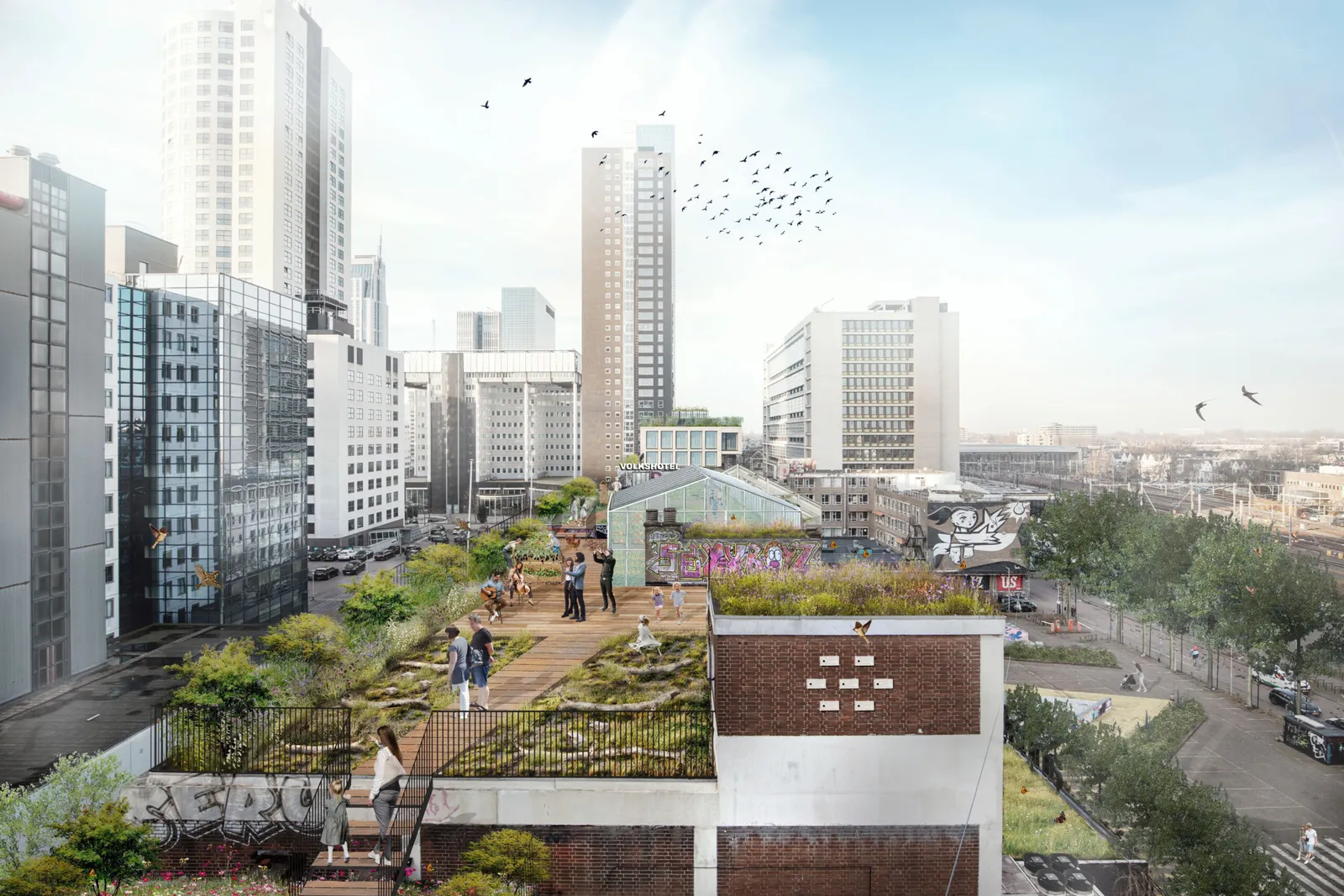
For more than 50 years, the roof garden industry has worked with “volcanic substrates”. The main ingredients in these substrates are lava, pumice and clay pellets. With our current knowledge, it is no longer a given, let alone responsible, to extract raw materials in volcanic regions to “green” Belgian roofs.
Optigrün Benelux has been working for some time with substrate specialist Acterra in Deinze to develop specialist local substrates, with a particular focus on “retention roof substrate” for water-retention roofs.
This substrate contains living organisms that accelerate symbiosis with the planting. It can draw up and retain water by capillary action, while also quickly draining and discharging any excess water. This prevents the substrate from becoming acidic.
The substrate contains sufficient nutrients for healthy plant growth, and the presence of organic matter means these can be retained in the future too.
These substrates are made largely from various grades of sustainably sourced sand and organic matter. The proportion of lava, pumice and/or fired clay pellets is eliminated entirely or kept to an absolute minimum.
This gives us a roof garden substrate that can simply be recycled and fully reused when required. Acterra is therefore committed to taking back the substrate at the end of the roof garden’s life.
The major advantage of these substrates is that they restore soil life and give plants a significant boost, resulting in fewer diseases and pests and less need for fertiliser. Water-retention roofs also benefit from a much lower need for watering and irrigation.
Initially, these substrates were slightly heavier than conventional lava substrates. As lava has to be mined ever deeper within the volcano, the proportion of basalt increases, making lava substrates heavier too. As a result, the difference in weight is now virtually negligible.
In addition to retention roof substrate, Optigrün and Acterra are now also looking to develop a number of so-called “native substrates”. These can typically be used when creating biodiverse roofs. They are also looking forward to working with Natuurpro.
These substrates will be inspired by Belgium’s most common landscape types and developed using specific, locally sourced sands. They are therefore entirely suited to the local soil, suitable for reuse, have a very low carbon footprint and are ideal for creating truly living nature on roofs!
With this new type of sustainable, living substrate, we are taking a revolutionary step forward and making a clear choice for a healthy basis for genuine nature, rather than dead volcanic substrate that does little to support nature, biodiversity or people’s experience of nature.
Find out more: on 17 June, Acterra, Natuurpro and Optigrün Benelux are holding a masterclass, “Living substrate as the basis for a healthy and natural roof garden”.
It will take place at Acterra’s site in Deinze, Vaart Rechteroever 59 Industriezone 8.
Welcome with refreshments from 16.00. The masterclass starts at 16.30.
Geert de Bruijne of Optigrün will talk about biodiverse roofs and water-retention roofs as drivers of biodiversity and intelligent water management.
Bart Kersschot of Natuurpro will provide an update on Natuurpro’s objectives and ambitions.
Bart Geerts of Acterra will reveal the secrets behind circular and local substrates.
Register via [email protected] or [email protected].
Question about this story? Ask your question
Keep following this
Get an email when a new story is published. No account needed.
- ThemeHealthy soil and smart water management
- SubjectGeneral







