Using substrates as a landscape contractor: a good idea?
Text Trees AccouImage Acterra
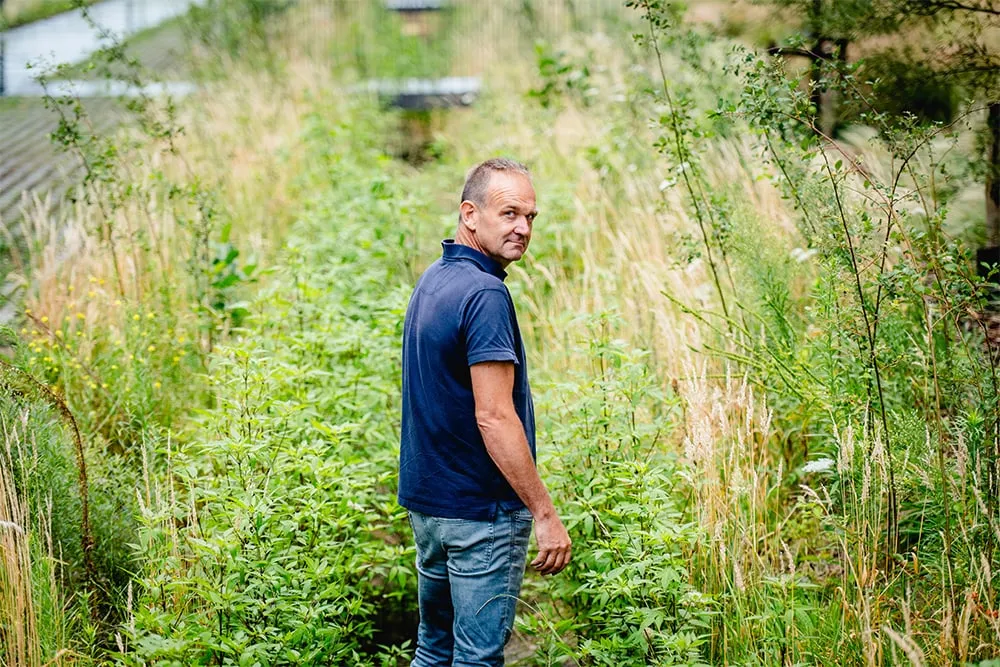
‘To substraat or not to substraat?’ It’s an important question when creating a garden, park or green roof. Our editorial team spoke to several experts and asked them about the composition, use and sustainability of substrates. For anyone wondering what on earth we’re talking about, we begin with the question: “What exactly is a substrate?”
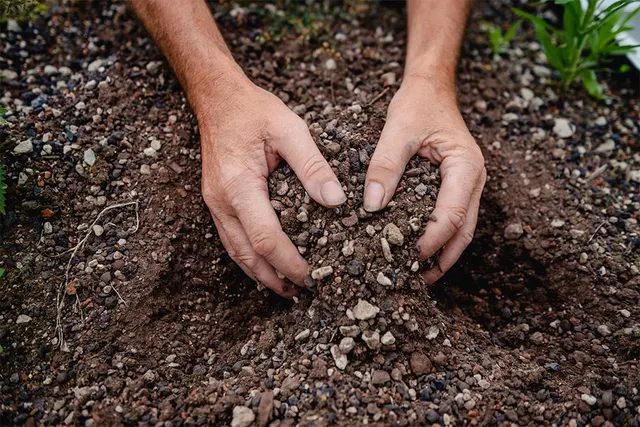
“In principle, substrates aren’t needed anywhere in nature,” begins Bart Geerts, managing director of Acterra. “Today, we don’t give plants the time to develop their own ideal environment. If you build a roof and leave it alone for forty years, plants will create their own ideal soil and, over time, you’ll end up with a green roof. Sand settles on the surface, pioneer vegetation takes hold and decays into organic matter, and together they form a soil in which other plants can feel at home and thrive. By using a substrate, you’re essentially buying that time and giving the planting what it needs straight away.” Alongside substrates that you spread over the ground and can plant or sow into immediately, you can also use a soil improver to bring poor or even dead soil back to life. You mix it into the existing soil before planting. Both have the same aim: to provide a welcoming home for your planting.
The green solution
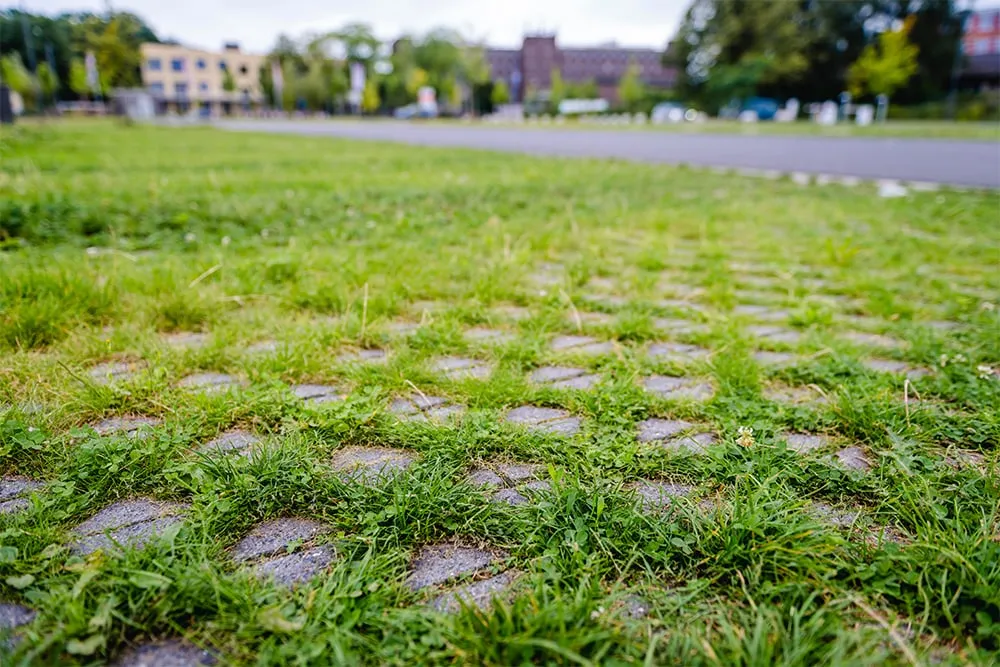
Why are substrates so important today? You can’t expect customers to be patient for several years when you create a garden, public green space or other green environment. According to Bart, there’s a second reason: “In Flanders, a garden is becoming an all-in-one solution to various problems that we’ve paid too little attention to over the past few decades. A front garden, for example, isn’t just a path from the street to your front door. It also needs diverse planting to support birds and insects. At the same time, it’s important that water can infiltrate during (heavy) rainfall. If it looks good too, the picture is complete. The right mix is needed to fulfil these different functions. Flanders also has a range of soil types, from sandy soil to heavy clay, so finding substrates that work is a challenge. Only by testing can a plant tell you whether it’s happy. At Acterra, we do that very actively.”
The right mix
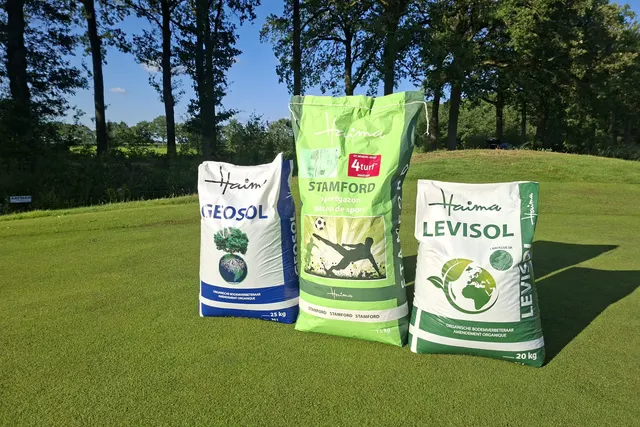
Acterra develops TerraViva plant substrates and soil improvers to help landscapers and road contractors work as efficiently as possible. Their various mixes mimic living soil and are used for roof gardens, tree planting, vegetable gardens, (driveable) lawns and sports fields. “Different types of vegetation and different environments also call for different substrates. Are you dealing with open or compacted ground? Poor or fertile soil? The poorer your soil or substrate, the more abundant and diverse the flowers will be. The richer your soil or substrate, the more uniform your planting. Think of a lawn: that needs a rich mix. Making a good substrate requires in-depth plant knowledge. That’s why landscapers rely on experts like us,” Bart says with a wink.
Water, water everywhere
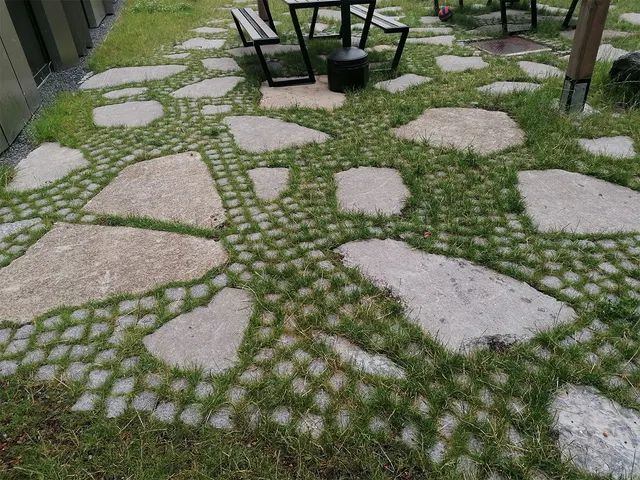
Alongside the amount of organic matter, or lack of it, a substrate’s permeability is particularly important. A substrate must retain enough water to hydrate plants, even during long dry spells, while also draining and shedding water sufficiently. Otherwise, your roof will be carrying too much weight. Simon Perneel of Green Building Projects says: “Lava and substrates definitely play an important role in reducing hard surfacing. They’re an excellent alternative to ‘stabilisé’ and bring more greenery to places where that used to be impossible.”
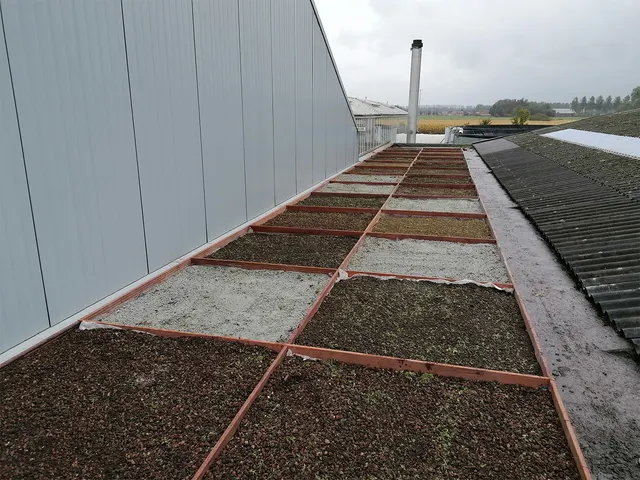
And to places where it is now mandatory. Several municipalities, for example, require flat roofs to be converted into functional roofs, whether with solar panels, a green roof or a terrace. This is receiving increasing attention, particularly in the context of water management, although it also benefits biodiversity. As a roof-garden installer, Simon still sees plenty of mistakes. Topsoil is sometimes still used on green roofs, for example. “The danger is that topsoil drains much less effectively. The water can’t escape, so you end up with a swamp effect on your roof. That’s a problem because topsoil is already heavier than substrate.”
Preparation and installation
If you opt for a soil improver for a project, clear the ground or lay the drainage on your roof in advance. That way, the material can be delivered straight away. Bart says: “A soil improver needs to be spread as evenly as possible. Otherwise, you’ll see the difference later in how the plants grow: lush in one place and rather sparse in another. There are plenty of machines available today to spread it uniformly.” If you choose a substrate, apply it in layers and compact each layer before adding the next.
Otherwise, too much air will get into the substrate, which means the soil absorbs too much water during wet periods. To make things as easy as possible for landscape contractors, Acterra produces ready-to-use mixes that need no additions. “There’s a labour shortage at the moment. Any time you can save in your processes is a bonus when you work in landscaping.”
The sustainability question
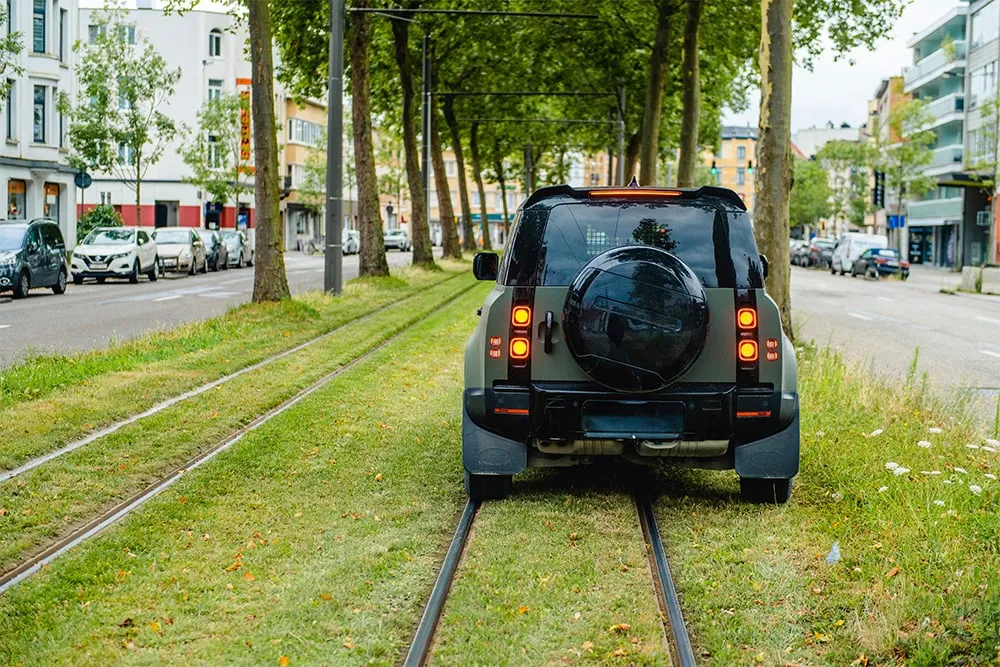
Water infiltration and more planting are undoubtedly important benefits of using substrates. But is bringing in soil to create a garden really sustainable? Bart from Acterra explains how his company works: “When producing our substrates, we bear in mind that what we put into the ground today will still be there a hundred years from now. That’s why we work only with traceable raw materials that we know are sustainable and recyclable, and won’t contaminate groundwater. For example, if we get substrate back from a roof garden, we can reuse it rather than simply sending it to landfill.”
Another important trend Simon has spotted is that Belgian producers are increasingly switching to circular components. “Lava from Germany is increasingly being replaced by other materials, such as crushed clay pavers. This makes our producers less dependent on substrate supplies from abroad, which don’t always comply with Belgian regulations. As an installer, I’m very interested to see how this develops.”
Question about this story? Ask your question
Keep following this
Get an email when a new story is published. No account needed.
- ThemeHealthy soil and smart water management
- SubjectGrowing media