KRC Genk versus Gray Leaf Spot: 1-0
Text Elise NoyezImage DLF & KRC Genk
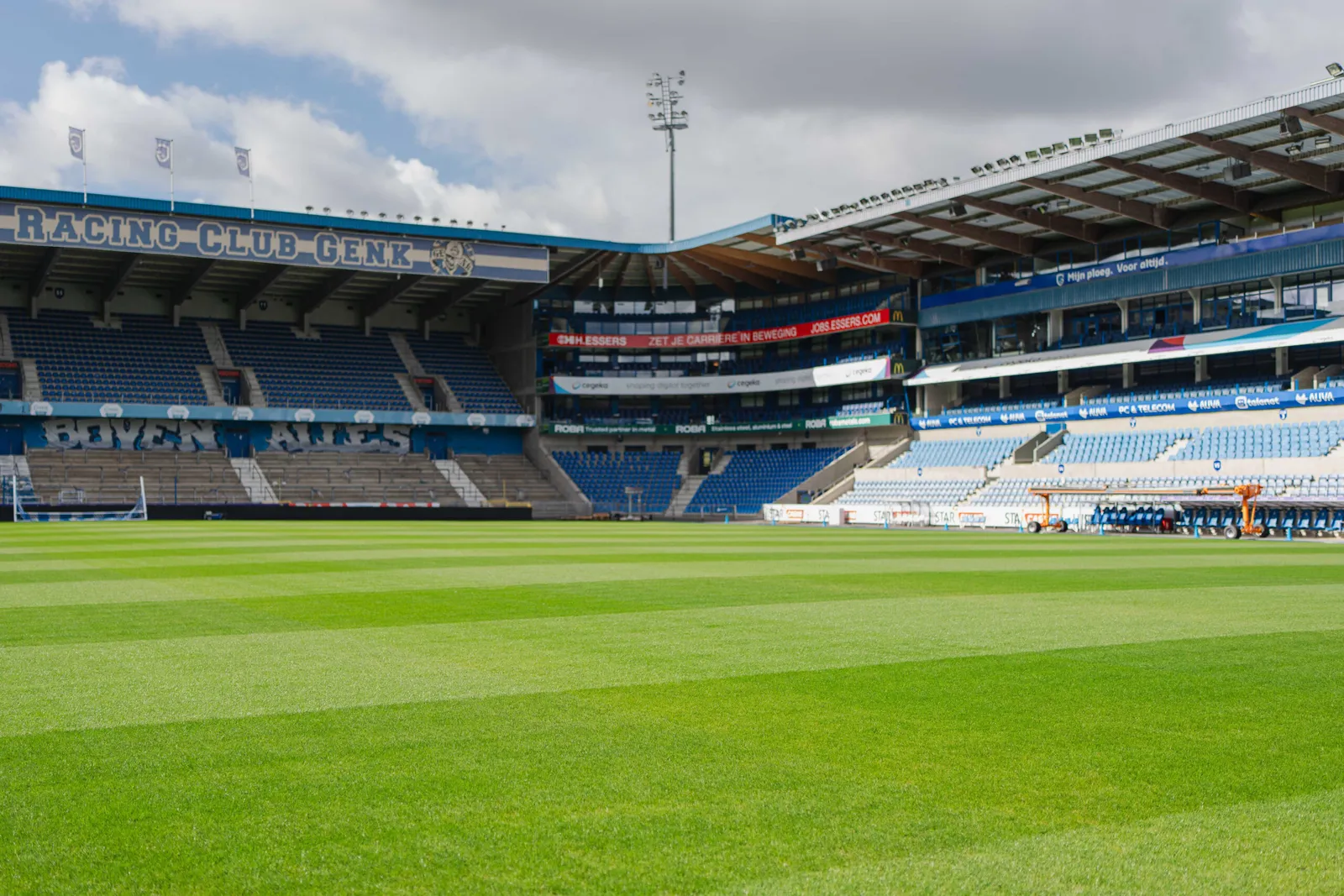
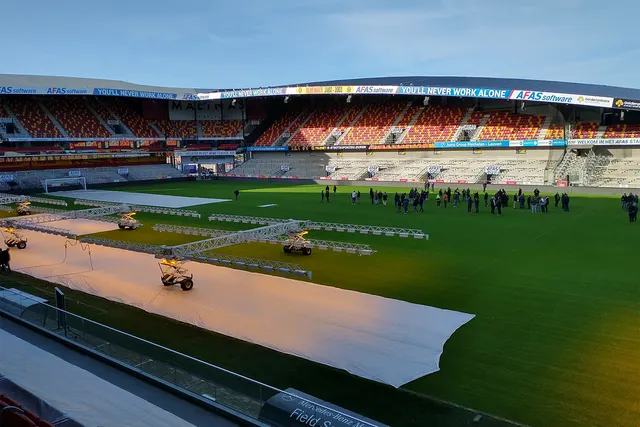
With the pressure from heat, drought, pests and diseases increasing, keeping a sports pitch in good condition is more than ever a matter of continual optimisation. For Eddy van Endert, grounds manager at top-flight club KRC Genk, that means evaluating and adjusting both the maintenance programme and the grass seed mixtures used year after year. This year, however, van Endert has found some stability. Together with grass seed breeder DLF, he wants to prepare the club’s eight natural grass pitches and four hybrid pitches for the future.
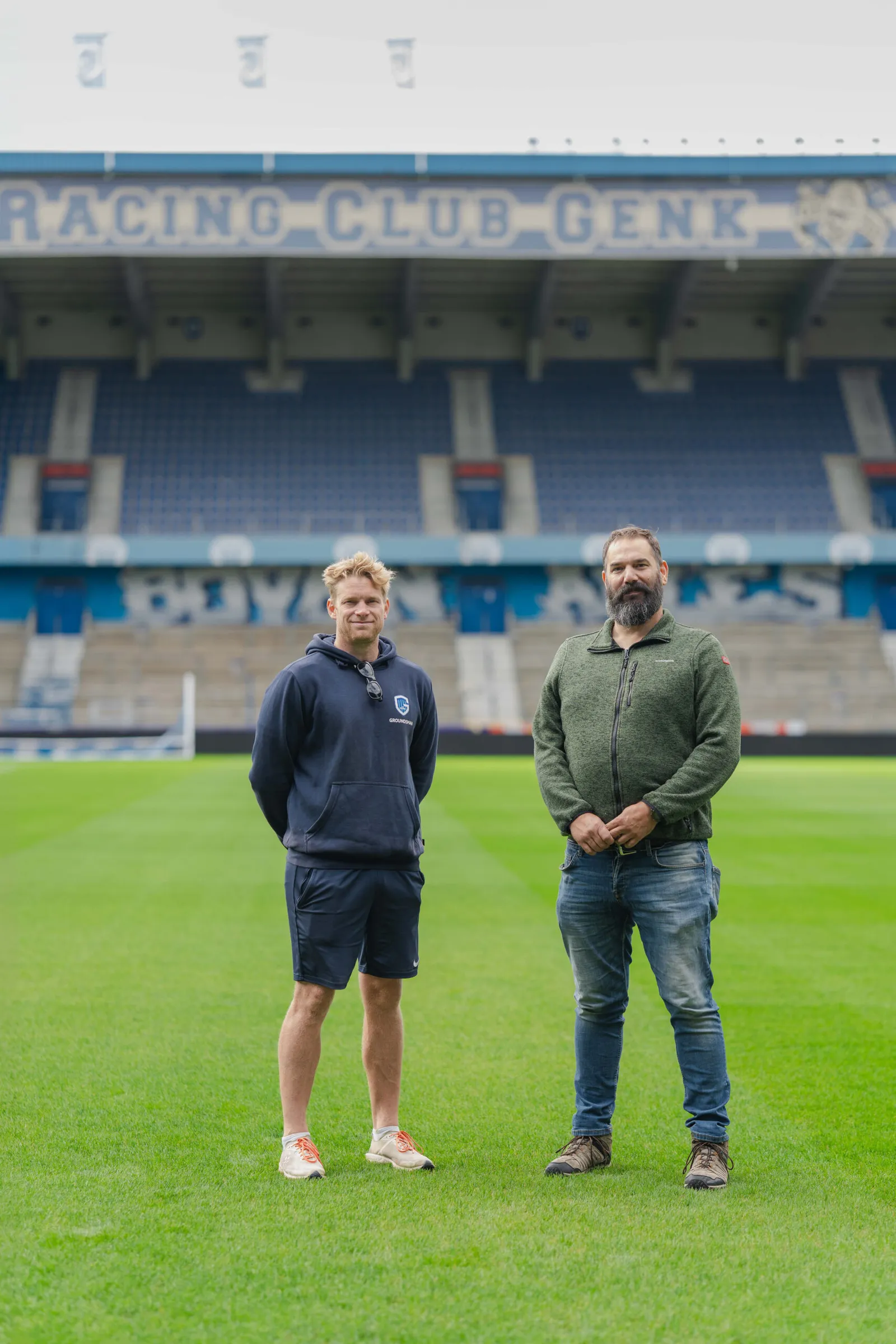
Eddy van Endert has been looking after the pitches at KRC Genk for seven years. Every year, he has the pitches completely stripped and everything is reseeded. “To respond as effectively as possible to the challenges we face, we change the grass seed mixture almost every year. Especially in recent years, since Gray Leaf Spot has plagued us, we have tried out a great many mixtures. We have never achieved results as good as those of the past year.”
Gray Leaf Spot
A few years ago, KRC Genk was one of the first football clubs to be hit by Gray Leaf Spot, but by now almost every grounds manager is familiar with the problem. “It is a major challenge, especially on stadium pitches, where there is a lot of shade and usually little air circulation,” says van Endert. “Six years ago, for example, we lost around fifty per cent of our turf to the disease. Since then, we have been trying to optimise our approach year after year.”
When it comes to maintenance, van Endert takes a considered approach to water, air and fertilisation. The stadium pitch has been fitted with fans, while irrigation is strictly timed and carefully controlled. Since last year, the pitch has also been sown with a combination of DLF Masterline grass seed mixtures, specifically eighty per cent 4-4-2 Master, containing two 4turf varieties, and twenty per cent TripleFineMaster. “Of course, everyone is developing resistant varieties, but since switching to Masterline grass seeds, we have seen fungal pressure fall by another ten per cent. That is remarkable. We have not got rid of the disease entirely, but unlike a few years ago, it now affects no more than five per cent of our turf.”
The growing importance of smooth-stalked meadow grass
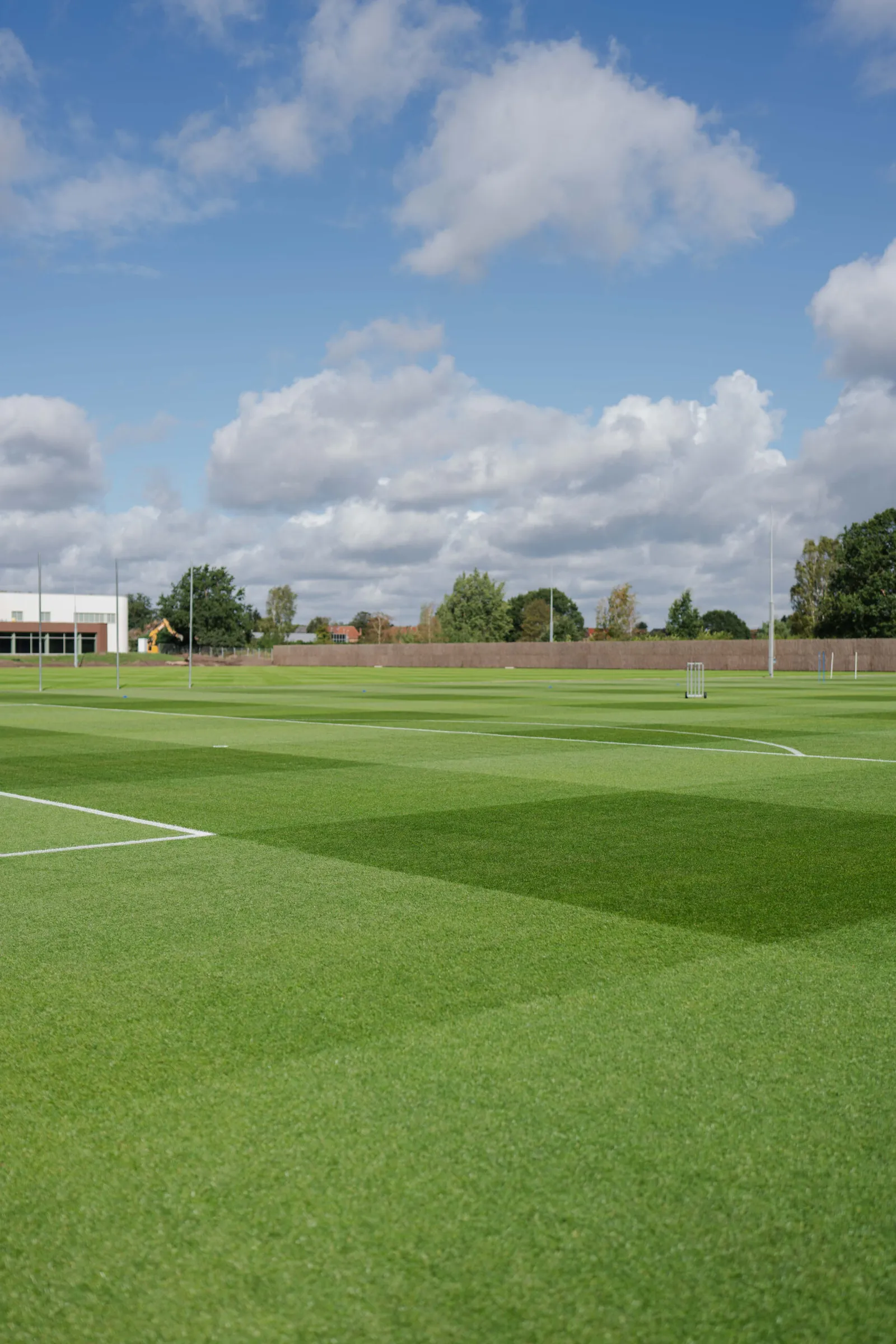
The brand-new training pitches for the first team were also sown with 4-4-2 Master, although van Endert added around 25 per cent BalanceMaster from Masterline. As well as perennial ryegrass, it contains 25 per cent smooth-stalked meadow grass with the ProNitro® seed coating. “As these were completely new pitches, there were no established roots beneath the surface. The horizontal root growth of the smooth-stalked meadow grass therefore provides the stability needed.”
On the youth team’s training pitches, durability was the top priority. They were therefore sown entirely with BalanceMaster ProNitro®. “We were surprised by how quickly the grass came through here. Smooth-stalked meadow grass traditionally takes a long time to establish, but with BalanceMaster ProNitro® the pitches were ready for play more than ten days earlier than expected.”
A reassuring finding, says van Endert, as the grounds manager expects smooth-stalked meadow grass to play an increasingly important role in the future. “For now, we still overseed our stadium pitch with 100 per cent perennial ryegrass, but under current climate conditions it is becoming increasingly difficult to keep that sward in good condition. To get through the hot, dry summers, we will probably have no choice in the long term but to add a proportion of smooth-stalked meadow grass. The great thing about DLF is that their turf specialist Erik Dolstra actively thinks along with us about these challenges. They also visit a wide range of sports pitches, so during their monthly visits they are always able to offer interesting insights. That means we can continue fine-tuning together over the coming years.”
Een zakelijke vraag aan DLF BV? Get in touch
Companies in this story

Keep following this
Get an email when a new story is published. No account needed.
- ThemeHard-wearing turf
- SubjectSports grounds & golf courses
- CompanyDLF BV