Green roof substrates under the microscope
VIVES University of Applied Sciences conducts comparative study
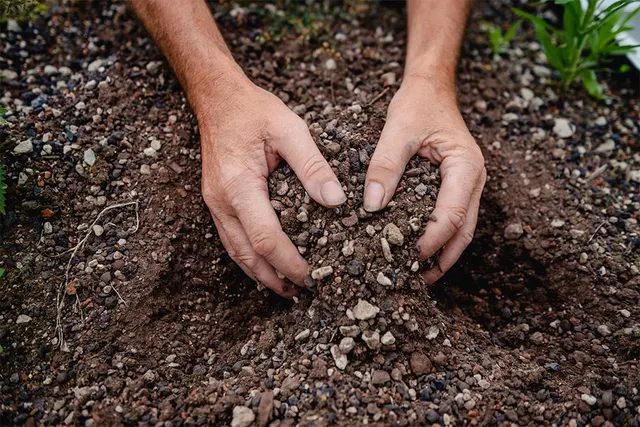
Lava, pumice, more or less organic matter… There is much discussion about the composition of green roof substrates, but what is the ideal formula? After all, almost every manufacturer or supplier has its own approach and recipe. To understand what works and what does not, the Green Management research group at VIVES University of Applied Sciences in Roeselare is conducting a comparative study, with support from, among others, the Belgian Federation for Roof and Façade Greenery. The study should ultimately lead to objective quality parameters.
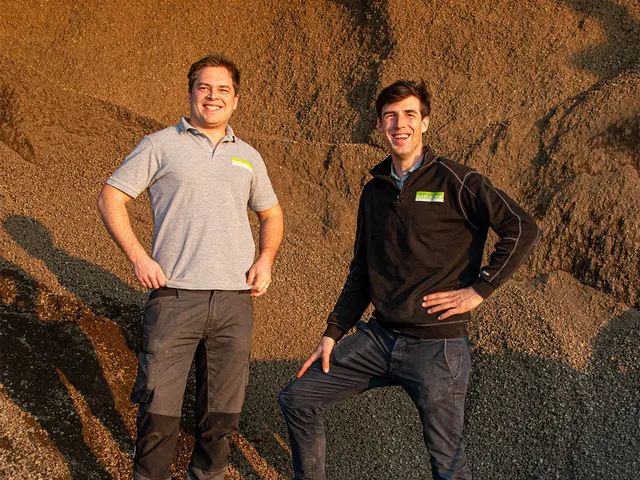
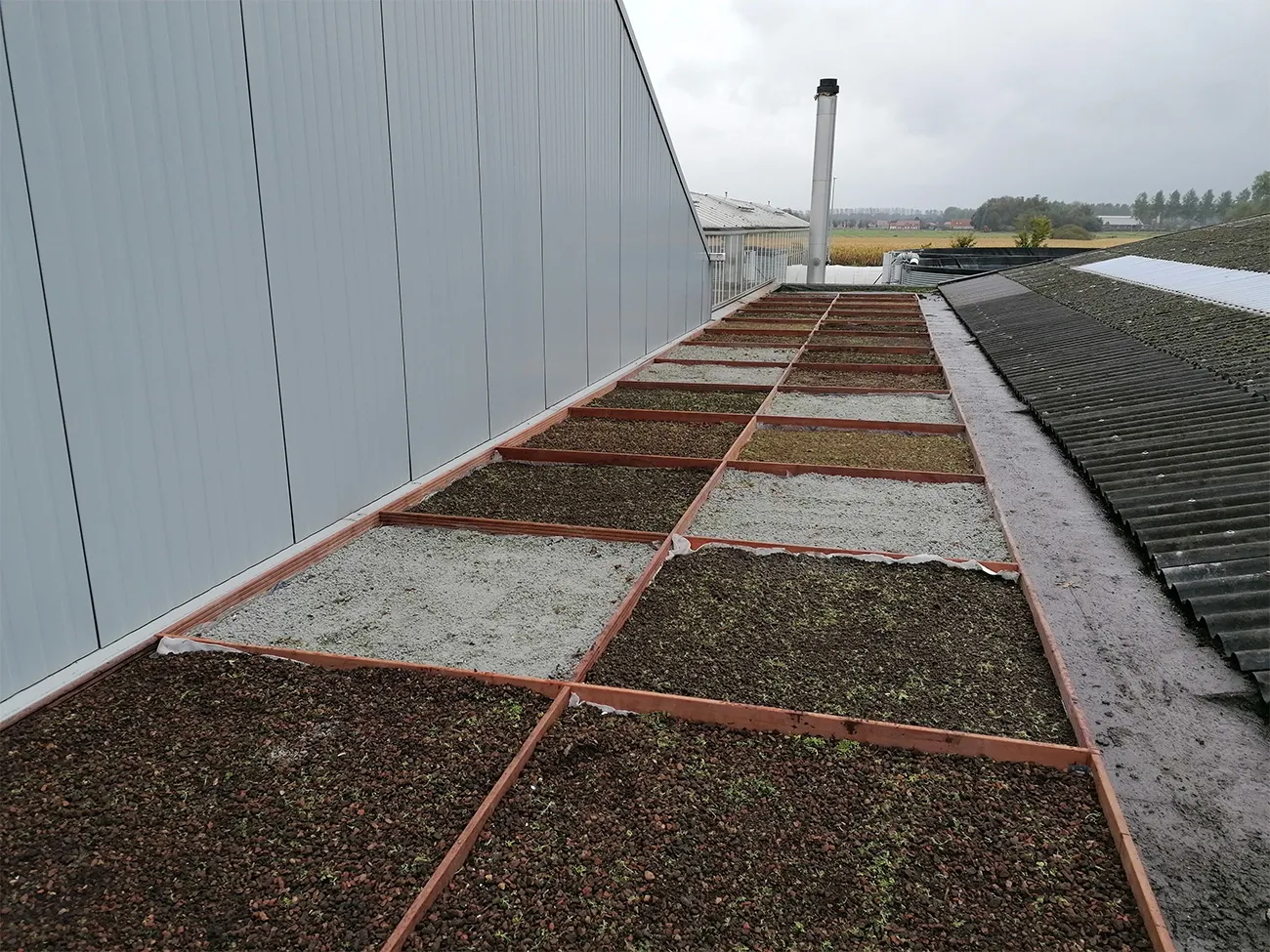
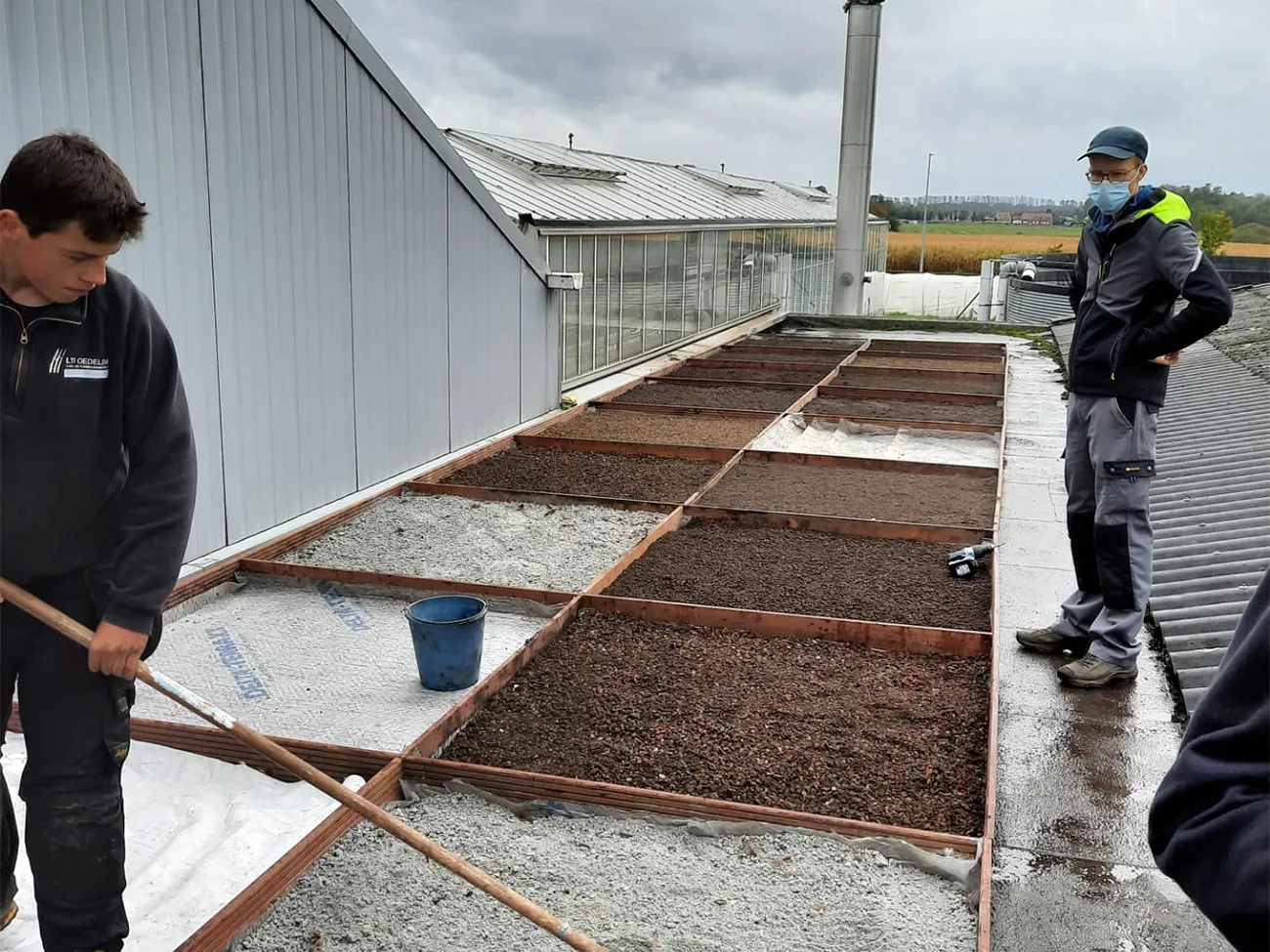
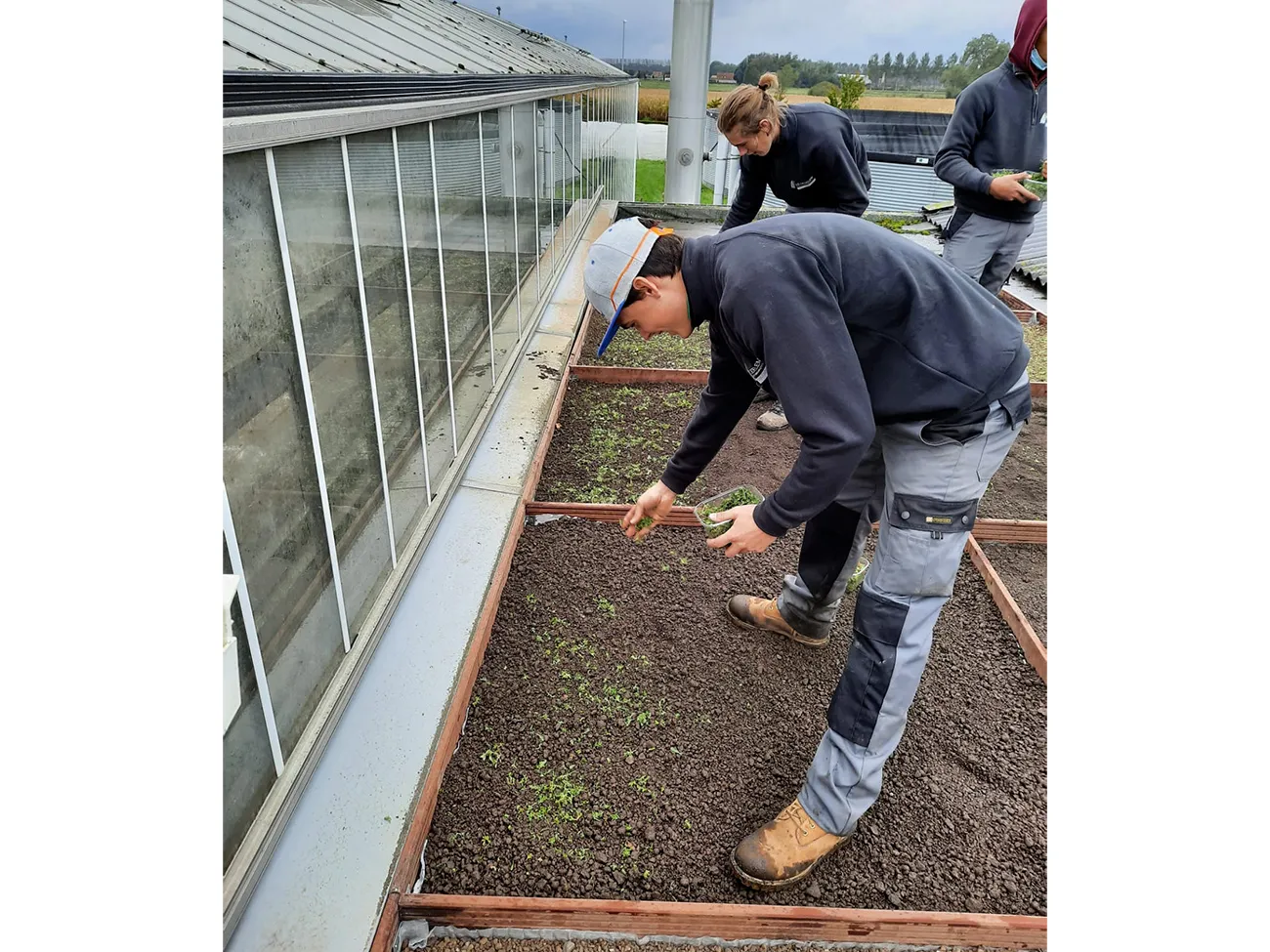
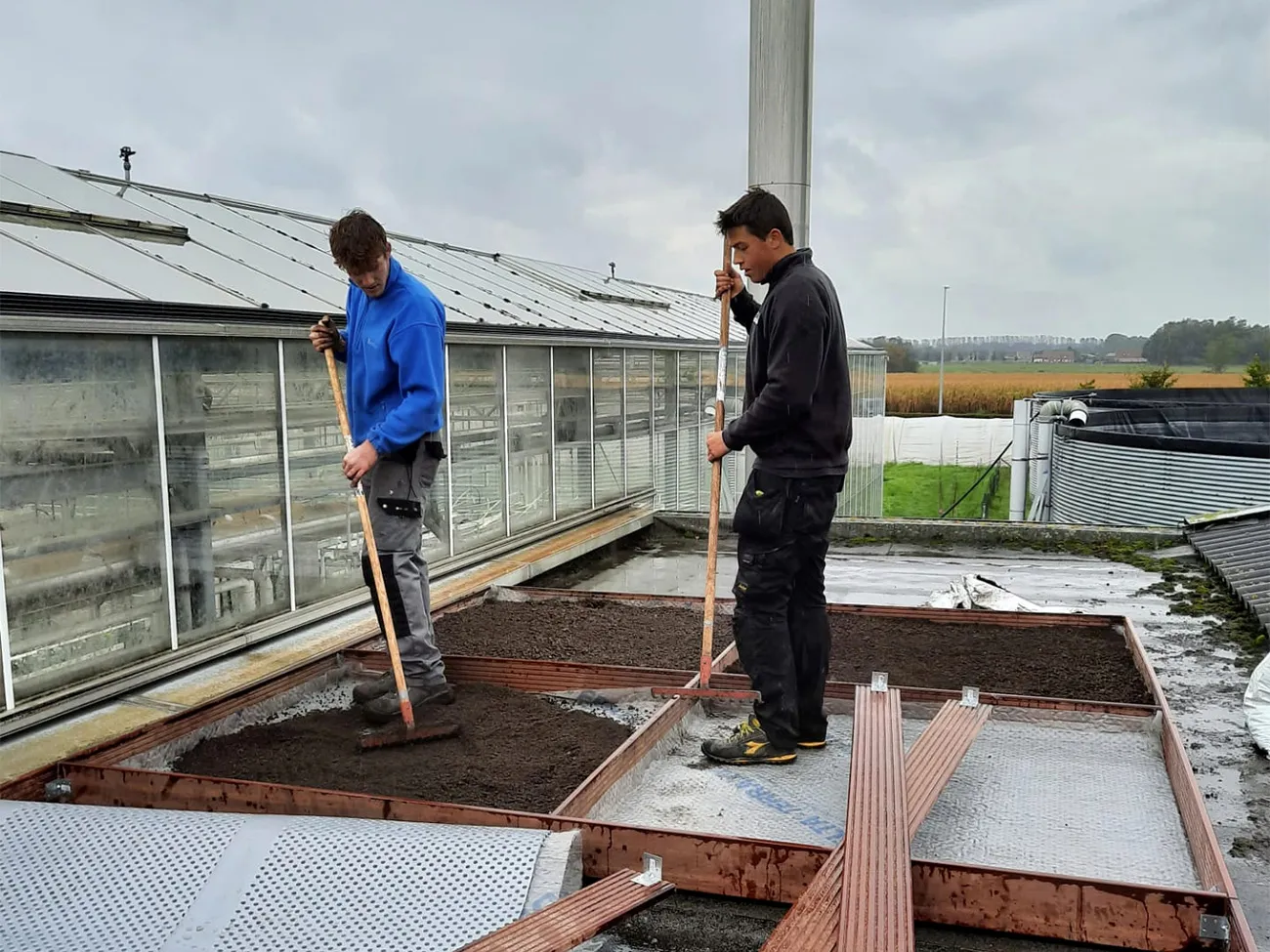
“We are investigating a total of six commercially available substrates for extensive green roofs, as well as two of our own experimental mixes using alternative mineral raw materials,” says project officer Yves Dehondt. “In the first phase, the substrates were characterised in the laboratory according to a number of physical parameters, before being tested in vivo. This is taking place on a test roof with trial plots measuring 150x150x10 cm. Three plots have been set up for each substrate, and sedum cuttings were planted in October 2020. Since then, bachelor’s students have been monitoring the growth of the plants.”
Plant growth
Guillaume Martens is one of the students involved. He visited the site in early April 2021, late May 2021 and early May 2022 to assess the percentage cover of the different trial plots.
There were clear differences from the outset: “Some substrates had a high percentage cover of more than 70% right away, while others made a very modest start. However, a strong or weak start is not necessarily an indicator of the final result. Some substrates showed good growth straight away, but then stagnated, while the opposite was also true. One test tray even went from an initial cover of around 30% to as much as 95% a year later. Unfortunately, there are also substrates where cover has never exceeded 30% over the past two growing seasons.”
Plant stress
The research project is also monitoring plant stress during periods of drought, alongside plant growth.
“This is done using chlorophyll spectrometry,” says Dehondt. “However, measurements have been delayed somewhat due to last year’s rather wet season. Conditions are more suitable this season, so we hope to share our initial findings on this aspect next year.”
The results for both plant growth and plant stress will ultimately be assessed against the previously established characteristics of the different substrate mixes, particularly their pF curves.
“We expect substrates with a large amount of plant-available water to perform best. What matters is not the total moisture content of a substrate, but the proportion of water available to plants. Once these figures are available, it will also be possible to make objective recommendations on substrate selection. These will not be tied to a particular brand or manufacturer, but based purely on moisture retention and particle size distribution.”
Alternative composition
The study includes not only commercial substrates. Six trial plots have been set aside for experimental mixes based on foamed glass aggregate.
Dehondt: “This is a by-product of the glass industry, which we are using here as an alternative to lava. It is much lighter, so could add significant value to the construction of a green roof system. As part of the study, we are therefore examining whether, when combined with two different amounts of organic matter, it can deliver equally good results in terms of growth and plant stress.”
“At the moment, unfortunately, only one test tray containing foamed glass aggregate is performing really well,” says Martens, based on the available measurements. “Overall, neither 5 vol% nor 10 vol% organic matter is producing the results we want for a fully functioning green roof.”
Dehondt: “The particle size distribution is probably the cause, but the pF characterisation will help clarify this. In any case, the results will be announced at the Belgian Federation for Roof and Façade Greenery’s members’ meeting in September.”
Simon Perneel, chair of the Belgian Federation for Roof and Façade Greenery, is already pleased with the collaboration: “Our federation was established to provide a neutral sounding board on green roofs and green façades. An independent study such as VIVES’s is therefore an important tool for us in providing evidence-based advice to designers and policymakers, and there are more interesting trials and collaborations in the pipeline.”
Question about this story? Ask your question
Keep following this
Get an email when a new story is published. No account needed.
- ThemeGreen roofs and buildings
- SubjectGrowing media