Agricultural & horticultural machinery
Automatic mowing: a major advantage for every turf producer
Text Luc OphalsImage Yamabiko
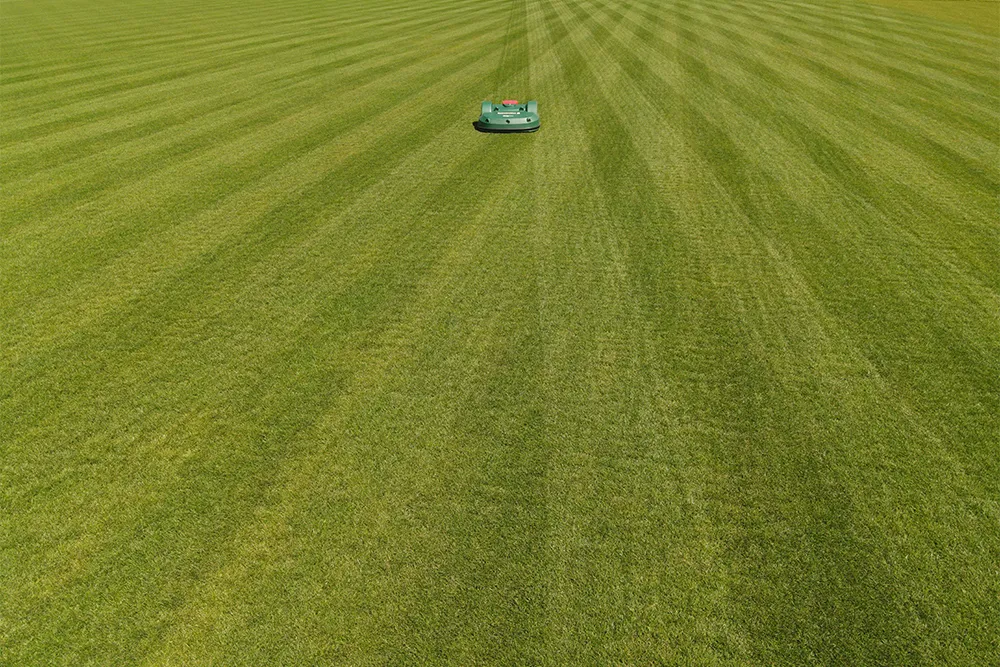
Better and faster production quality
Growing turf and cutting it into rolls requires precision and discipline. This guarantees a superior-quality end product that is ready to lay and free from fungal diseases. At the same time, production time must be kept to a minimum. There is no shortage of challenges. At the initiative of Belrobotics, a manufacturer of robotic mowers, a large-scale real-world trial has revealed a new, more efficient and effective way of working.
Before turf can form a quality, weed-free lawn, professionals maintain it with great care for several months after sowing. It is then lifted using specialist machinery, rolled up and packed on pallets for easy transport and laying. This allows private gardens, sports grounds and public spaces to have a beautiful lawn in record time.
In practice, however, this is far from as simple as it sounds. Turf growers have to contend with the challenges of the climate, water the grass in the right quantities, and ensure they can supply ready-to-lay turf of consistent quality in the shortest possible time.
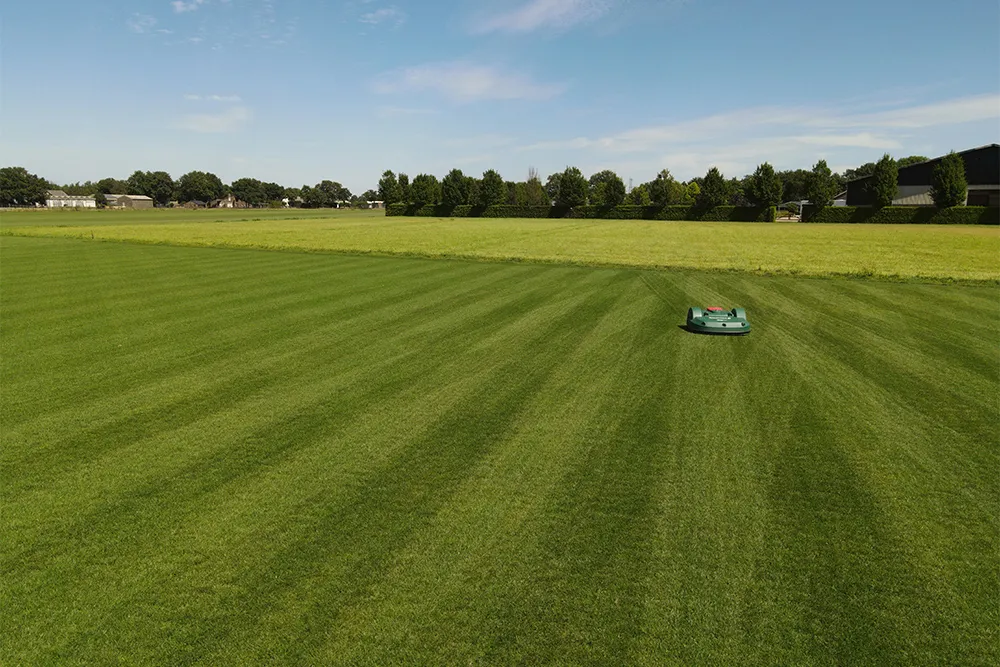
Real-world trial
To help turf producers improve the quality of the grass they grow and stand out from their competitors, Belrobotics organised a real-world mowing trial with the well-known Dutch producer Direct Gazon. The trial had several specific objectives: to compare the cost efficiency of automatic mowing with that of traditional mowing; to assess the flexibility of the robotic solution when the site layout changed; and to determine its impact and analyse the results in terms of irrigation and fertilisation.
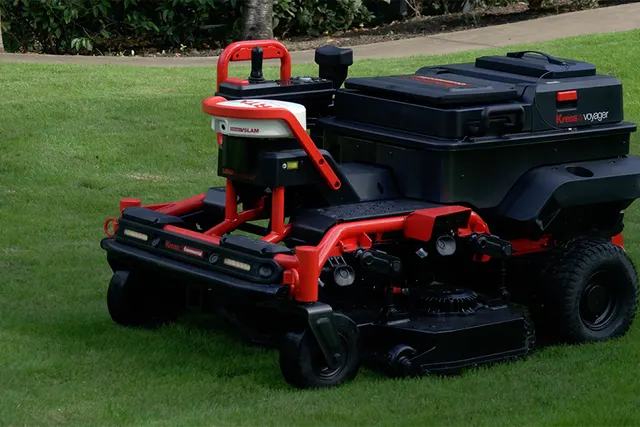
For the trial, two TM-2050 robotic mowers were paired with WiseNav® GPS-RTK technology. They mowed three reference plots. The trial was carried out alongside the conventional mowing methods used by the producers. Mowing took place twice, once after five months and once after eight months, so the results could be assessed and any necessary adjustments made.
‘Live’ adjustments for a perfect cut
The main challenges of automatic mowing soon became clear, but solutions were not far behind. Diederick Geerinck, sales & marketing manager at Belrobotics: “We looked for the best balance between the required mowing capacity and the expected mowing quality. To achieve this, we made three adjustments: we optimised the position of the charging station, used different GPS zones so that the robot could even mow while irrigation was taking place, and fine-tuned the mowing directions.”
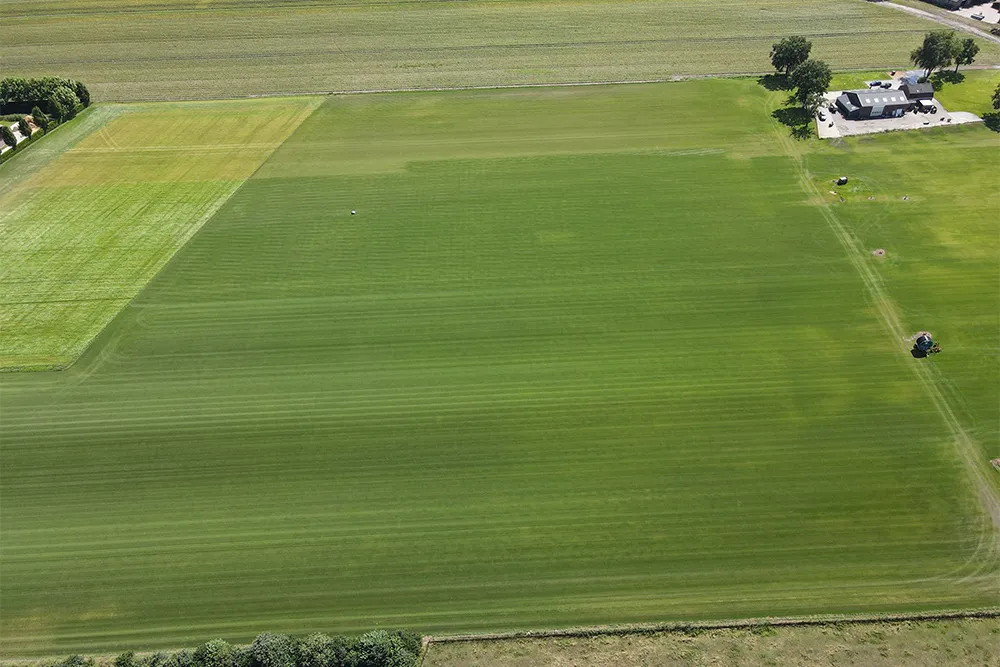
Traditional mowing versus automatic mowing
At the end of the first phase, after 5 months, the weight of the grass mown by the robot was higher (1,8 kg compared with 1,1 kg), and the roots were considerably better developed. The grass quality was identical. However, it was not until the second mowing, after 8 months, that the grass characteristics became comparable with those achieved using traditional mowing. The conclusion: using robotic mowers makes turf ready for sale three months earlier.
This real-world trial also showed that up to 68.000 m2 of grass can be mown every two or three days at 30 mm, that rooting is visibly faster, that the risk of weeds and fungal diseases is much lower, and that automatic mowing can be carried out continuously by defining working zones or no-go zones for irrigating or harvesting specific areas.
Although these initial results are encouraging, it is clear that further analysis will focus more on fine-tuning. It is equally clear, however, that Belrobotics’ technology and expertise are now available to turf producers to optimise their production and make it as efficient as possible.
Have a business enquiry for Yamabiko? Get in touch
Companies in this story

Keep following this
Get an email when a new story is published. No account needed.
- ThemeHard-wearing turf
- SubjectAgricultural & horticultural machinery
- CompanyYamabiko