Agricultural & horticultural machinery
Battery or fuel? How to work more cleanly with your existing machinery
Text Trees AccouImage Gelders, Aspen
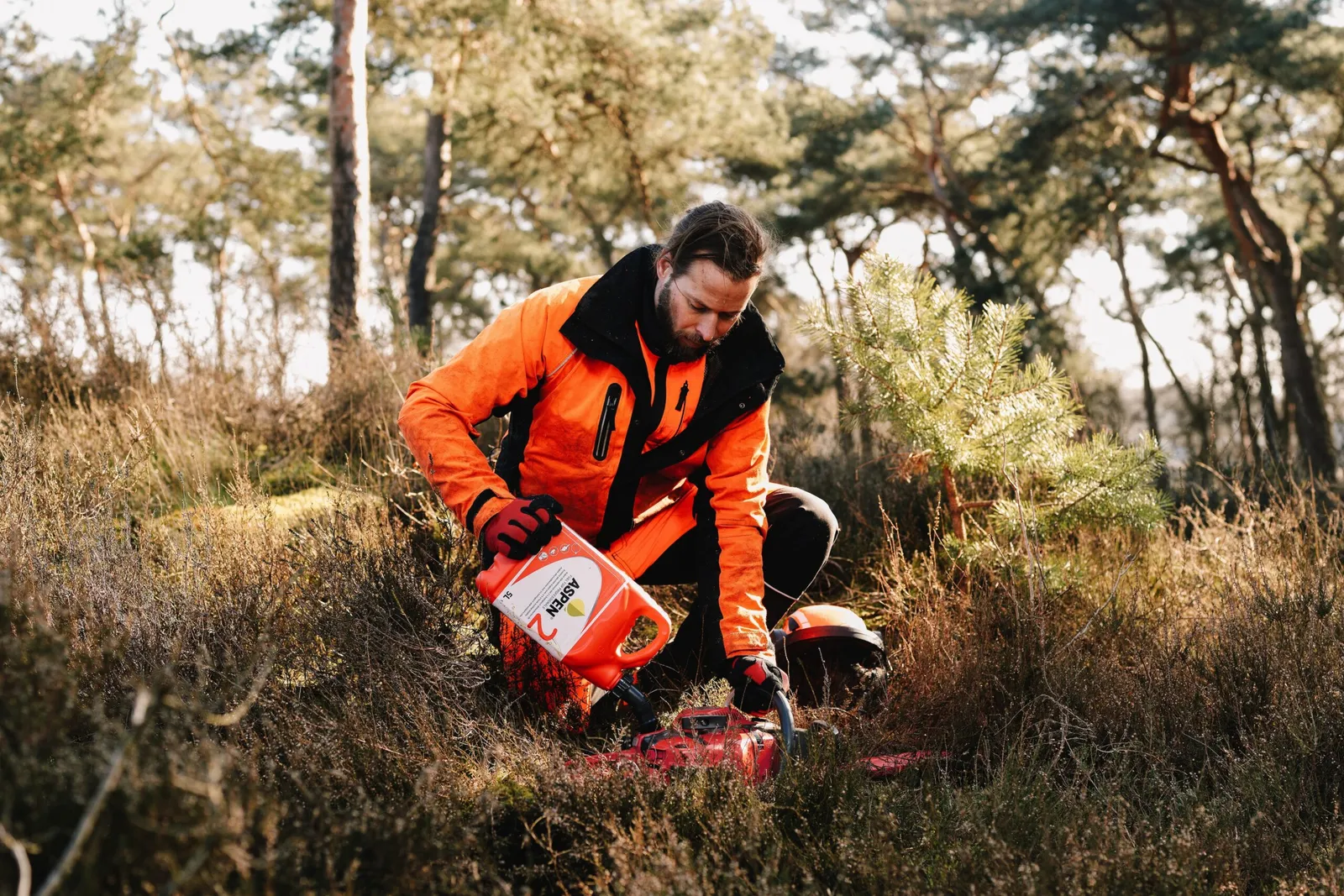
Choosing the right machine is important, but what is the best way to power it? Despite the rise of battery-powered machines, (bio)fuels still have their place. Jan Maes of Gelders explains how to work more cleanly with your existing machinery, why batteries are not always the answer, and how much oil we can keep out of the environment by choosing biological chain oil.
When people think of fuel, they think of Gelders, formerly GVG. “Since 1 January 2025, we’ve been called Gelders,” says Jan Maes, sales representative at the fuel and lubricant specialist. “Where others stop, we go further. And in that spirit, we’re pleased to introduce Aspen.” As an importer, the family business Gelders is strongly committed to ecological solutions that can be used in your existing machinery.
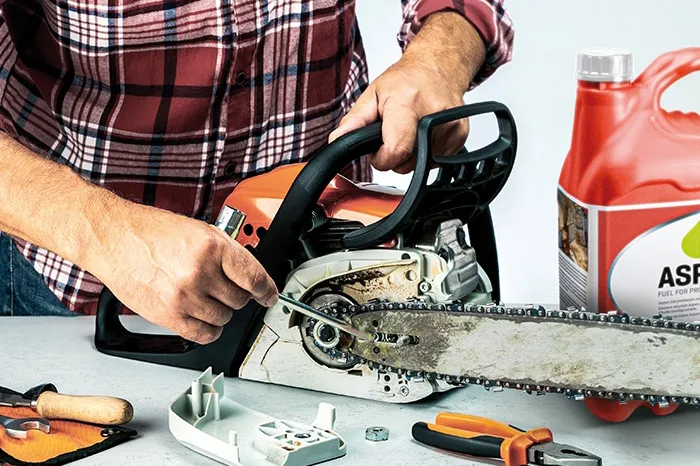
Battery power is not always the best option
“There’s a trend towards battery-powered garden tools, but not everyone wants to, or can, invest in expensive new machines,” Maes explains. “Besides, battery power isn’t the answer for everything. You always have to recharge before you can continue, even if you have several batteries. On hot days, batteries overheat more quickly. And for machines you only use for a few months a year, such as leaf blowers, it’s a very large investment. Switching to Aspen BIO is often more sustainable and cheaper than replacing machines that work perfectly well.”
Aspen BIO: healthier for people and machinery
Aspen BIO is the world market leader in clean petrol and is made from up to 80% biobased feedstocks. “These are produced when green waste is composted. This releases methane gas, which we filter and convert into CNG. That is the basis for alkylate petrol,” Maes explains. Aspen BIO can be used in your existing 2-stroke and 4-stroke machines, regardless of make or origin. The 2-stroke version comes ready-mixed in the correct ratio, and the 5-litre jerrycans are easy to use.
This brings a range of benefits, including cleaner combustion, less maintenance and machines that start easily, even after being left unused for a year. “It’s much healthier for the user, too: you inhale up to 99% fewer carcinogenic substances,” Maes stresses.
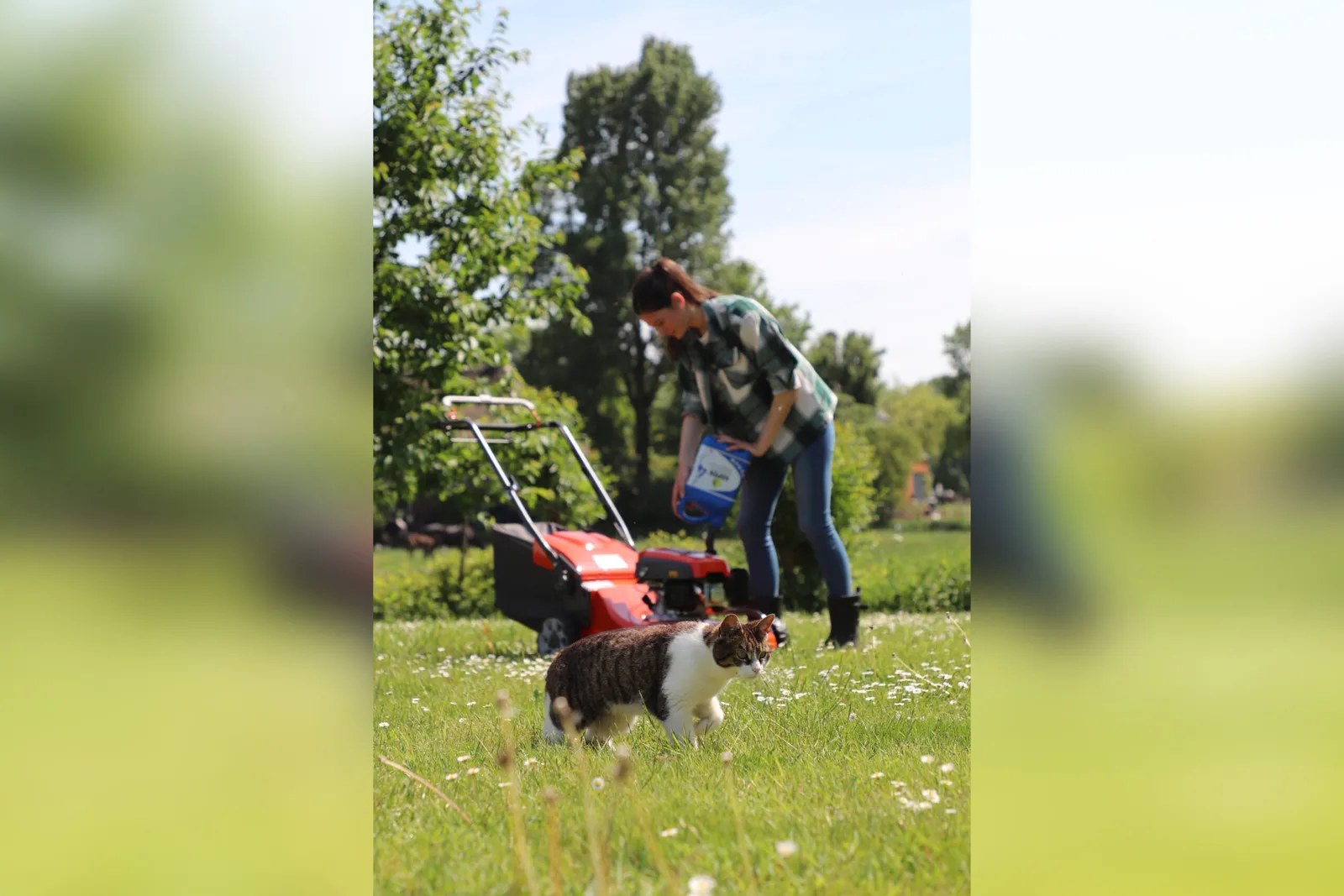
How does it work?
Alkylate petrol is refined from gas and provides the cleanest combustion. “Aspen uses a mass balance approach. This involves gradually replacing fossil feedstocks with certified biobased alternatives. Because everything is mixed during the production process, it’s not possible to specify the exact amount in each jerrycan. However, an ISCC-certified system keeps accurate records of how much biobased material is used,” Maes explains.
Biological chain oil
As well as fuels, Gelders also distributes lubricants, including biological chain oil. “Biological oil used to have a bad reputation because it broke down and dried out too quickly,” Maes acknowledges. “As a result, a lot of mineral chain oil, a waste product, was used. A few years ago, it was calculated that ten million litres of chain oil end up in the environment in the Benelux every year. That’s bad for the environment and for the health of the people who use it. We further refined our bio-oil and added extra antioxidants. The result is an equally effective but much more environmentally friendly alternative.”
Een zakelijke vraag aan Aspen Benelux? Get in touch
Companies in this story
Keep following this
Get an email when a new story is published. No account needed.
- SubjectAgricultural & horticultural machinery
- CompanyAspen Benelux