Agricultural & horticultural machinery
ELIET Jetzer® opens up new possibilities for lawn care
Text and images Eliet Europe NV
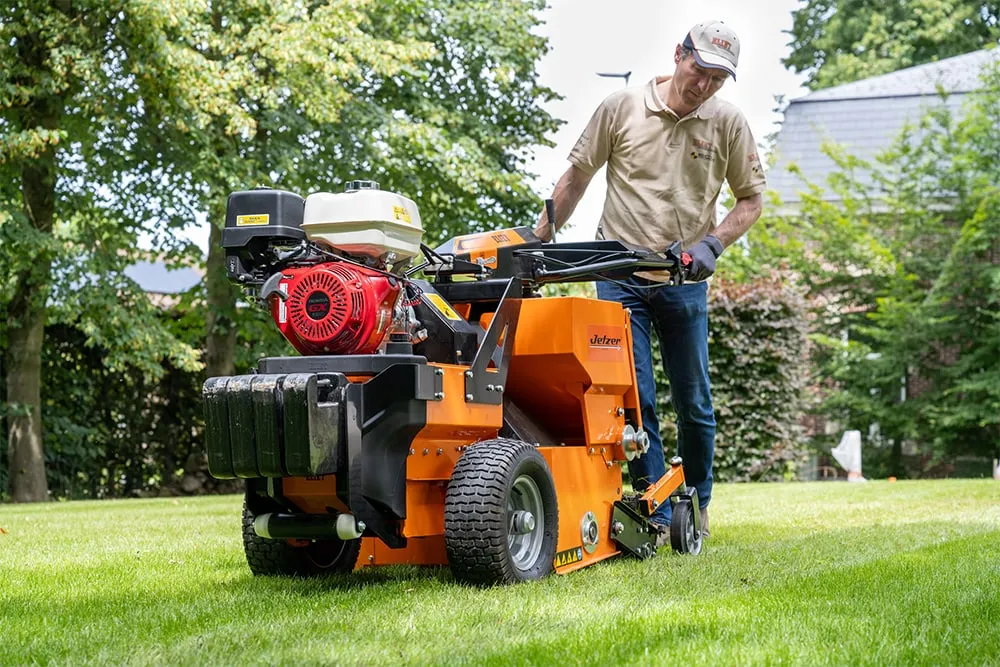
Climate change poses major challenges for landscape contractors. Extreme weather disrupts plant growth, and lawns are particularly badly affected. Lawn care specialists are powerless and today focus mainly on repairing the damage caused to lawns. There are few, if any, ways to protect lawns against extreme weather as a preventive measure. ELIET, a specialist in lawn care machinery, is known for its innovations and has taken on this problem to come up with solutions.
Extreme weather is mainly characterised by two phenomena: periods of heat combined with prolonged drought, and periods of prolonged or exceptionally heavy rainfall. One way to make a lawn resilient to both is to choose a suitable grass cultivar. So-called “warm-season” grasses (e.g. Cynodon and Zoysia grass), normally found in southern regions, are more drought-tolerant. As our climate warms and severe winters become less common, some of these grasses are gradually able to thrive in our regions too. Meanwhile, breeding has brought more drought-resistant varieties of traditional grass cultivars (Lolium perenne, Festuca rubra, Poa pratensis) to market. Landscape contractors can overseed existing lawns with these varieties, gradually converting the sward into climate-resilient vegetation.
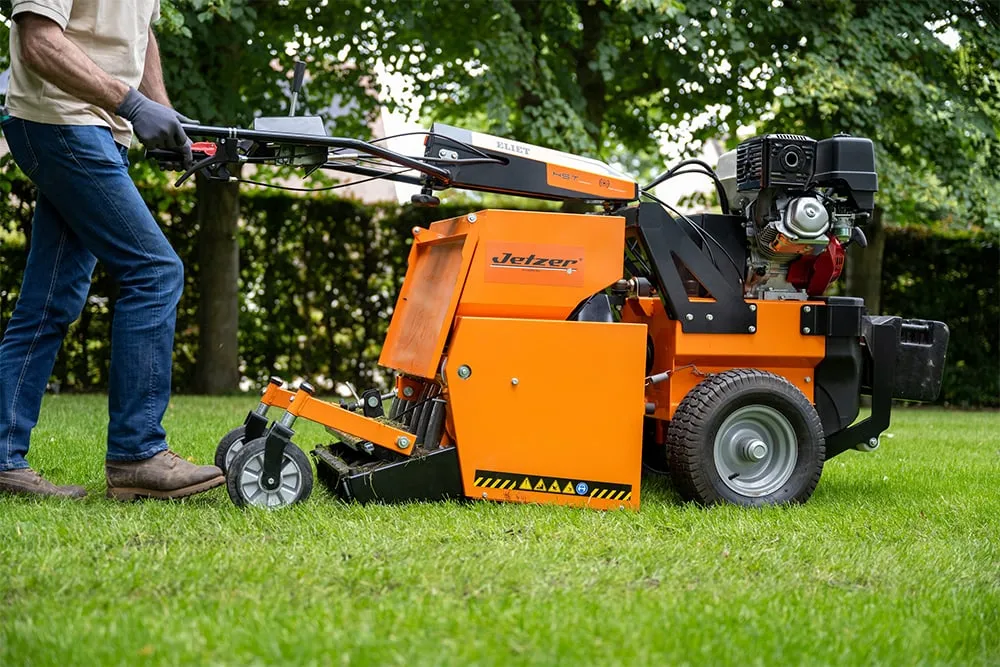
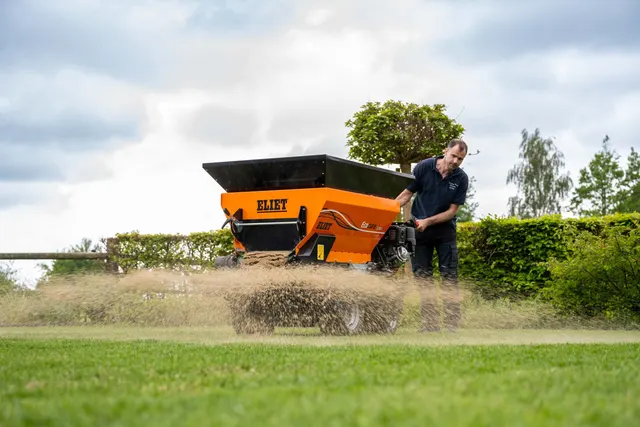
But the key to making a lawn climate-resilient lies in the soil. Its permeability and organic matter content determine how much rainwater the lawn soil can absorb and retain. It is difficult for landscape contractors to work on the soil beneath an existing lawn without carrying out major, and therefore expensive, lawn renovation. ELIET is now changing that. It has developed the Jetzer®. This machine cuts slits up to 10 centimetres deep into the lawn soil and can immediately apply a measured quantity of filler into them. The filler can be in powder or granule form. The slits are cut 8 cm apart, meaning the Jetzer® can treat the soil beneath an existing lawn quite intensively. By choosing the filler, lawn care specialists can address the specific needs of the soil. For example, to promote strong vertical root growth or the formation of fine roots, fertiliser containing root stimulants can be applied directly to the root zone. Organic matter can be used as a filler to stimulate soil life and improve moisture retention. To store water in the soil, the Jetzer® can place absorbent water polymers in the root zone. The water reserve created by these polymers enables the grass to withstand a longer period of drought.
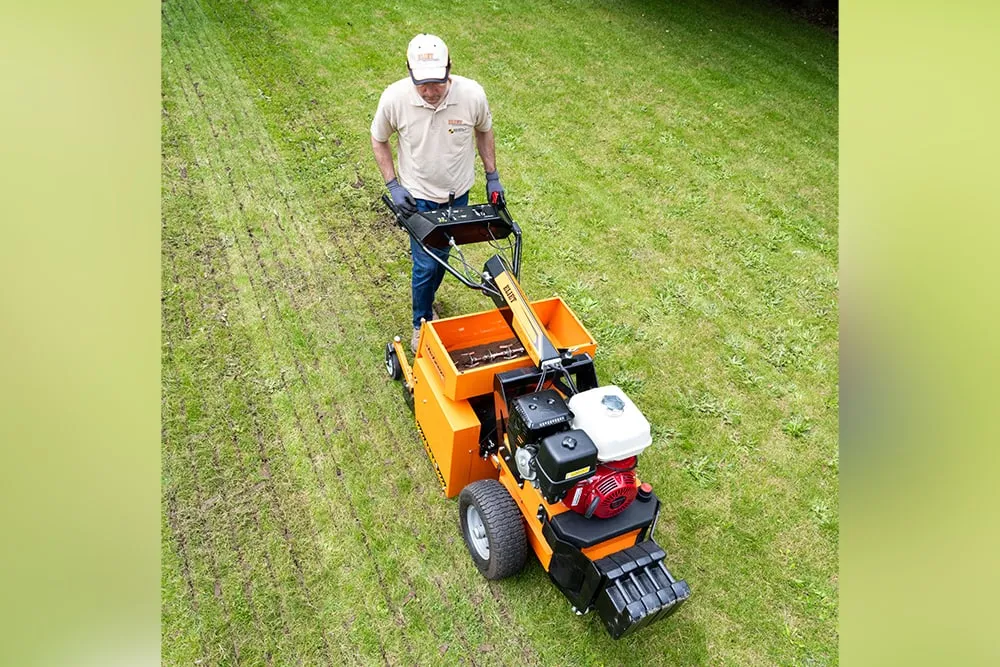
Many applications for the Jetzer® remain unexplored
The Jetzer® blades cut through the soil quite intensively, breaking up compaction or surface sealing. The rotating blades lift the soil slightly, creating air pockets below the surface. When it rains, water can easily enter the soil through the slits, helping to prevent runoff and puddling. The close pattern of slits effectively turns the lawn into a sponge for rainwater. The slits cut by the Jetzer® are only 8 millimetres wide and cause no visible damage to the lawn. The marks left by the Jetzer® are barely visible after a few days.
Troubled by leatherjackets or chafer grubs? The Jetzer® can also be used to control these larvae. It can apply the treatment below ground, placing it directly in the larvae’s habitat for highly effective results.
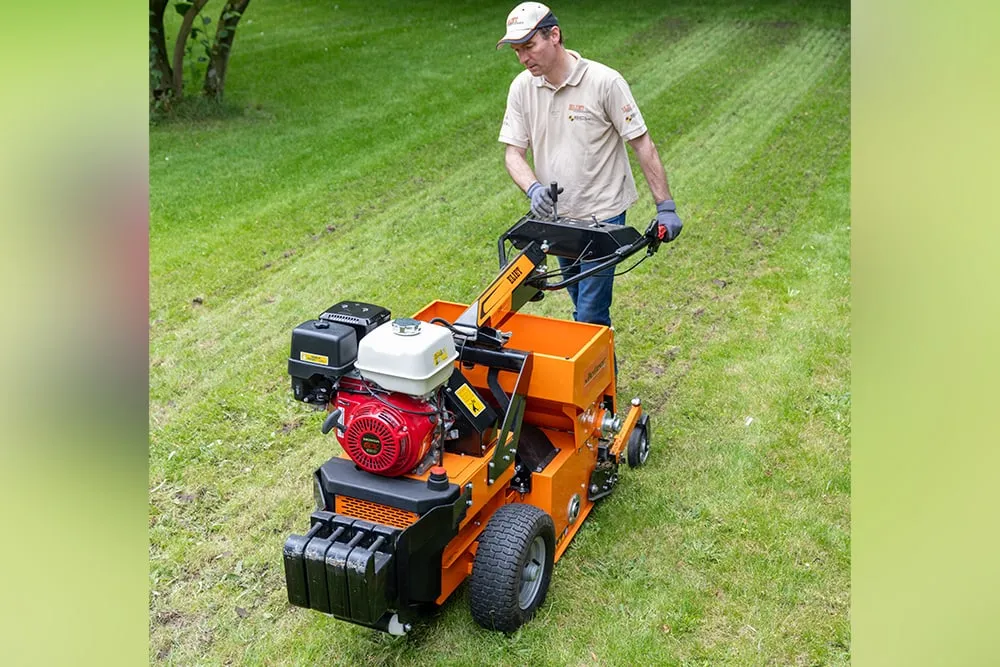
Also suitable for urban gardens
The Jetzer® is a self-propelled machine with hydrostatic drive. This allows the travel speed to be adjusted very precisely to suit the ground. Its articulated chassis enables the operator to steer the machine with great precision while working. The controls are simple and user-friendly, so operators can master the machine very quickly. At just 73 centimetres wide, the Jetzer® is also suitable for smaller urban gardens. On average, the Jetzer® can treat around 400 m² of lawn per hour. ELIET recommends treating lawns in spring, well before dry periods begin, or in autumn, once the risk of dry periods has subsided.
Landscape contractors looking to use the Jetzer® to make their customers’ lawns climate-resilient will soon be able to hire the machines through a number of exclusive partners in Flanders. The booking platform will be available online soon.
Question about this story? Ask your question
Keep following this
Get an email when a new story is published. No account needed.
- ThemeHard-wearing turf
- SubjectAgricultural & horticultural machinery