Agricultural & horticultural machinery
GPS-RTK technology offers even more functionality
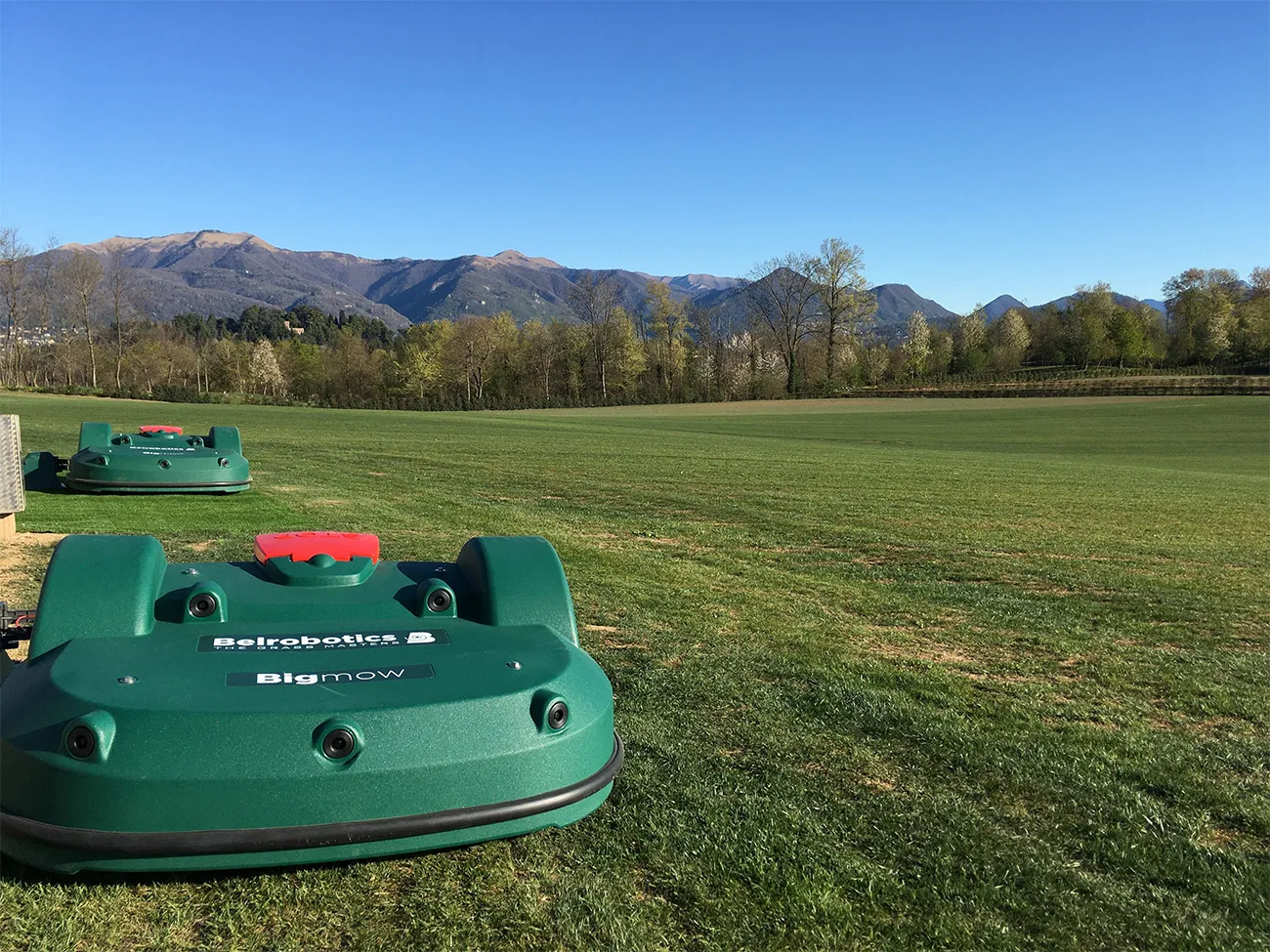
2021 was a major milestone in the evolution and adoption of RTK-guided robotic mowers. Feedback from users of Belrobotics GPS-RTK robotic mowers, manufactured and installed by Yamabiko Europe, has been extremely positive. And for 2022, Yamabiko Europe has already announced the addition of important new features that will further improve performance, and consequently ease of use and user satisfaction.
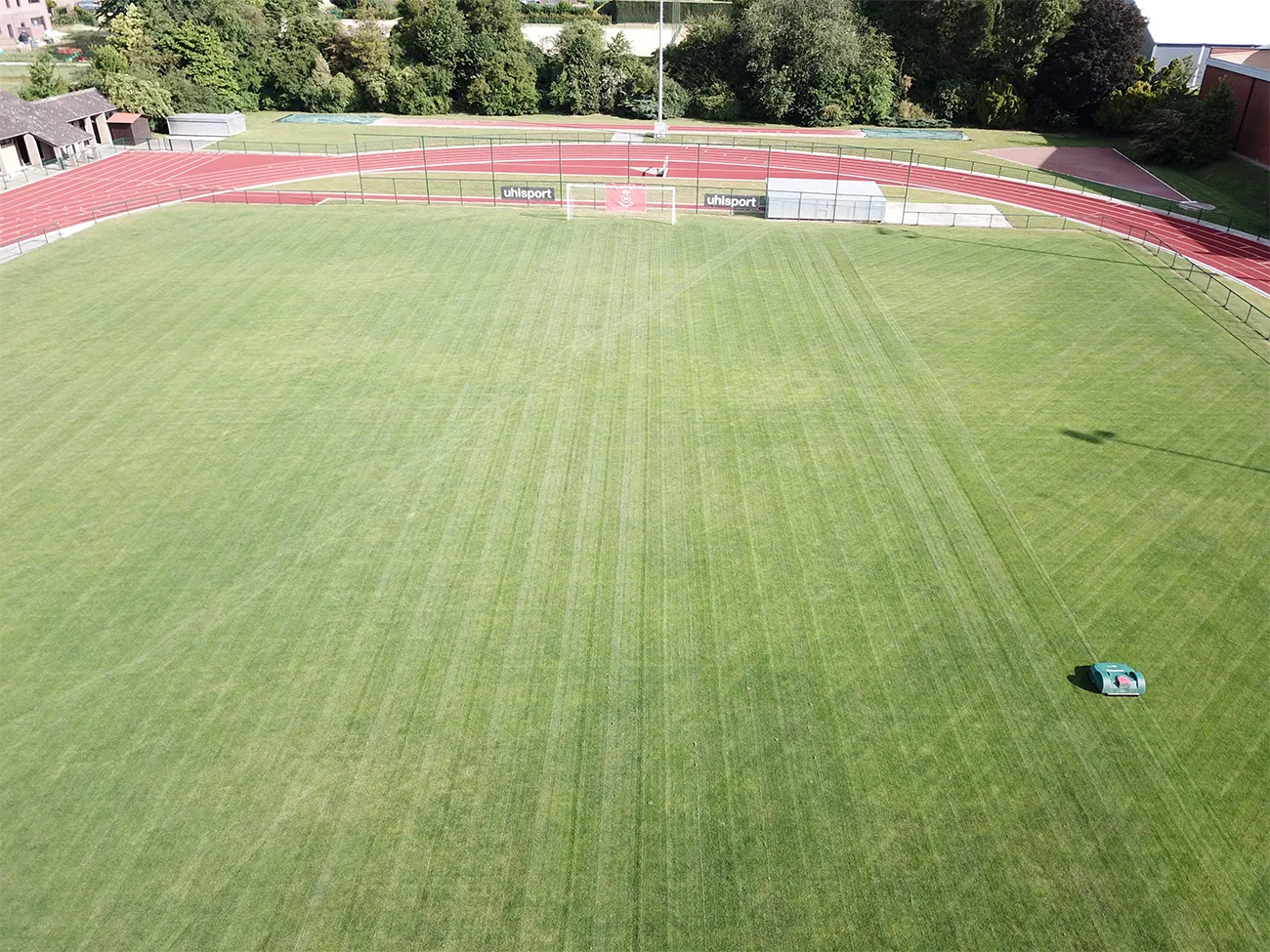
‘Conventional’ robotic mowers work by following the positive magnetic signal emitted by the underground cable that marks out the working area. A robotic mower with RTK technology combines this use of the magnetic field with navigation based on accurate GPS data collected by the RTK base station.
Unlike standard GPS, this accuracy is no longer measured in metres, but is approximately five centimetres. During installation, the robotic mower records the GPS coordinates of the working area. This process consists of three steps. First, the robotic mower follows the boundary wire around the working area in track border mode. Second, it calculates the GPS boundary of the field by filtering the data collected. The third step is verification of the GPS boundary of the working area, approved by the technician.
Once the plot has been defined and recorded, the robotic mower calculates a mowing pattern based on the GPS coordinates and follows it to mow the entire area in straight lines. When the battery runs out, the robotic mower returns to its charging station along the boundary wire. Once charged, it returns to the starting point of the last unfinished strip. After completing a full mowing cycle of the working area, the robotic mower changes the reference point and adjusts the mowing pattern by 45° or 90° to optimise the visual effect.
4G and complex shapes
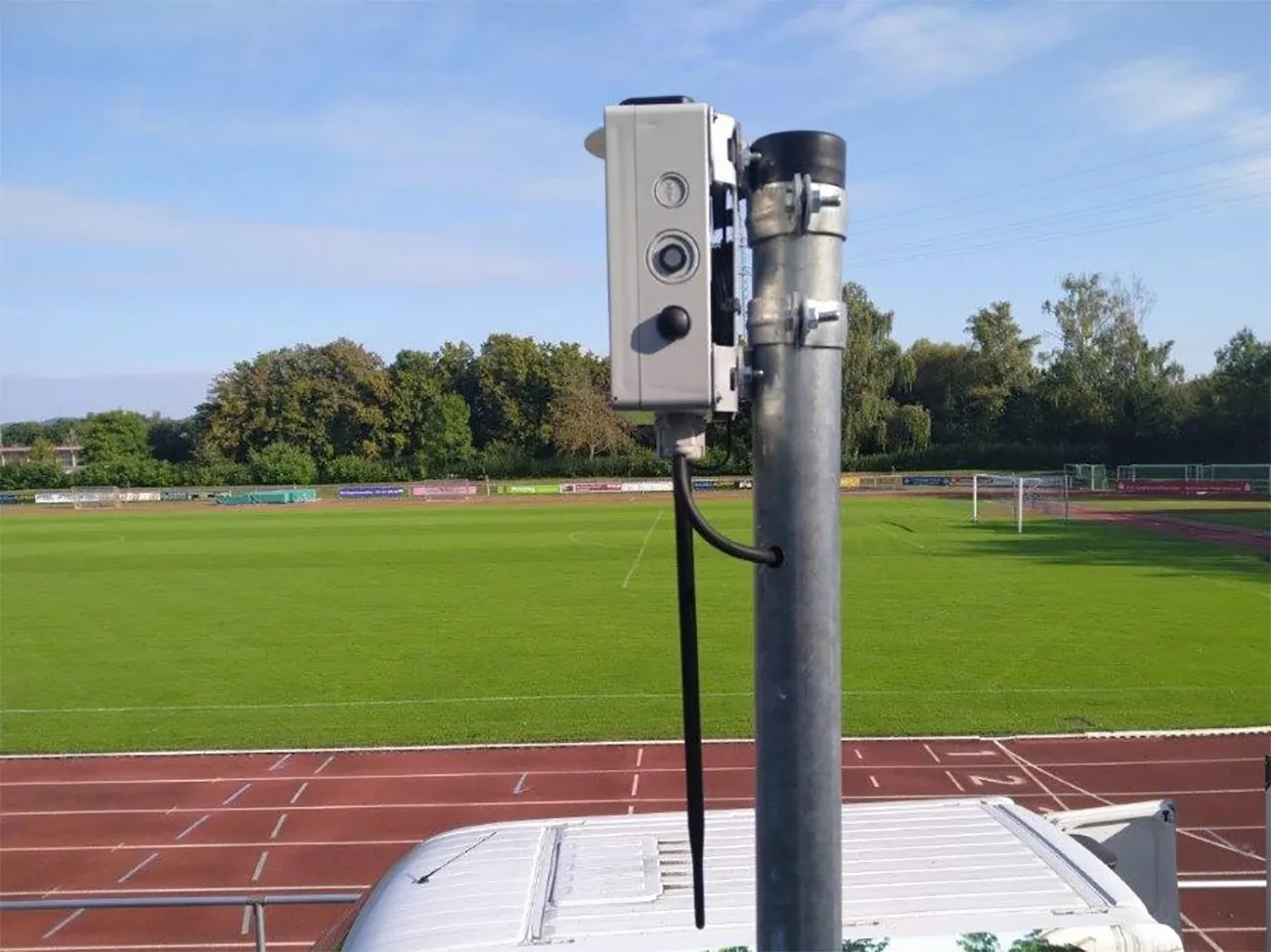
Previously, communication with the robotic mower was only possible via Wi-Fi. Yamabiko Europe has now announced the option of using 4G. This means there is no longer any need to install a base station near the robot to receive GPS corrections. With 4G, corrections can be transmitted over a distance of 10 to 15 kilometres. A local authority with several football pitches can therefore install just one base station and use 4G to receive the necessary corrections on the other pitches.
Another important new feature is the ability to cover more complex shapes, rather than just the rectangular layouts of football pitches or golf course practice areas. Yes, you read that correctly: fairways can also be mown perfectly thanks to RTK technology. And, of course, it will also be possible to configure complex-shaped zones within a large working area.
A third innovative feature is the ability to set ‘no-go zones’ within a working area, programming the robotic mower to avoid obstacles in the area, such as a goalpost, without having to lay a wire around them.
Another new function is the ability to programme the robotic mower via a remote control to move within a specified perimeter. This is both convenient and highly practical.
Value for money
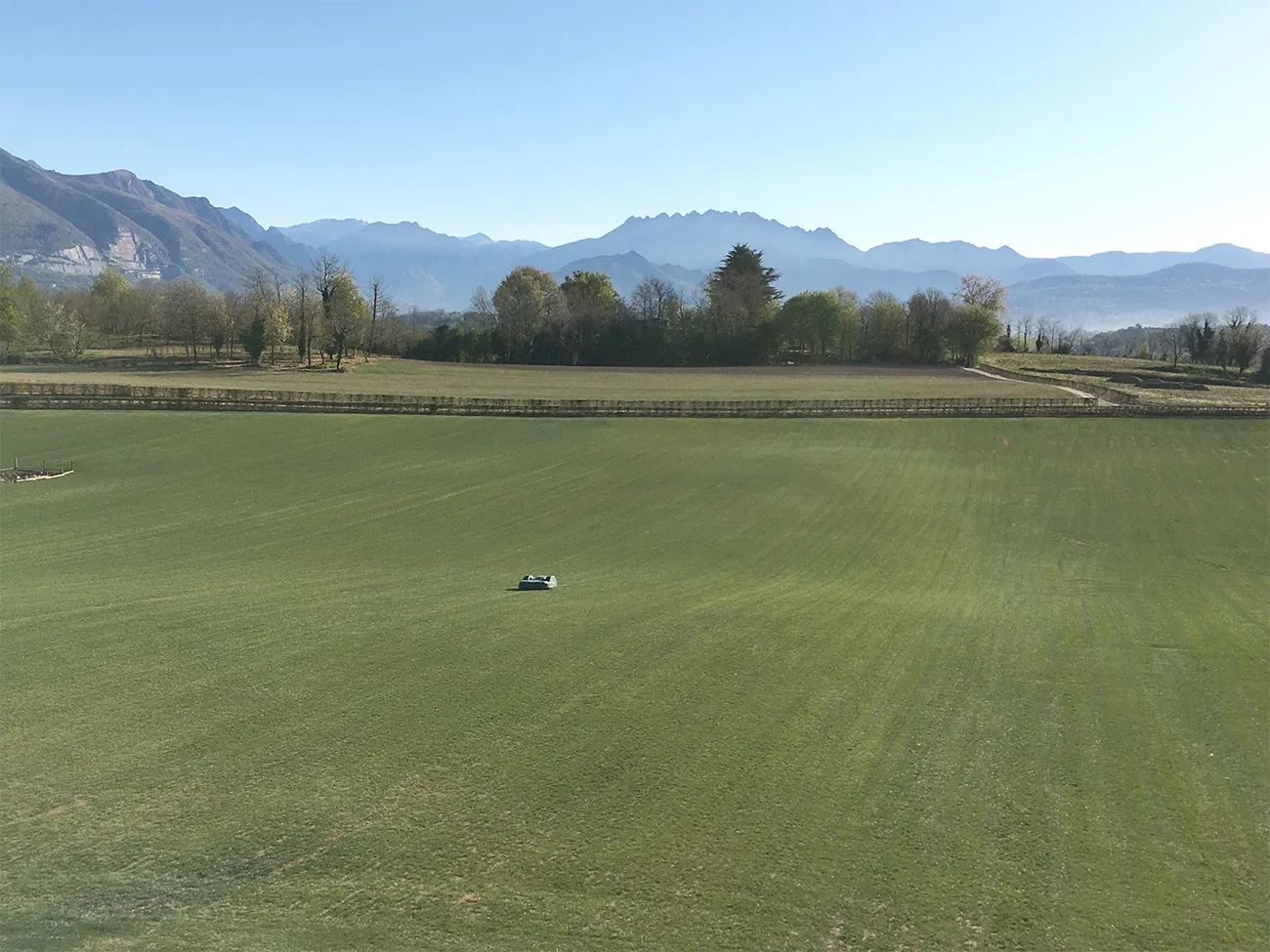
In spring, Yamabiko Europe will install twelve BigMows each in three Dutch municipalities. This is proof of the undeniable success of RTK robotic mowers in the Netherlands, where ‘value for money’ is a key principle in both business and consumer transactions. The two current models, the Bigmow 1050, with a mowing capacity of 30,000 m2 and recommended for two football pitches, and the Bigmow 2050, with a mowing capacity of 60,000 m2 and designed to mow four football pitches or a fairway of 4 to 5 holes, are very popular in the Netherlands and Germany.
Question about this story? Ask your question
Companies in this story
Keep following this
Get an email when a new story is published. No account needed.
- ThemeHard-wearing turf
- SubjectAgricultural & horticultural machinery
- CompanyYamabiko