Agricultural & horticultural machinery
Luc Beeckman Tuinmachines and Machines De Schutter supply NIBBI MAK17s battery-powered two-wheel tractor to social enterprise Aralea
Text Geert Van CauwenbergeImage Aralea / Geert Van Cauwenberge
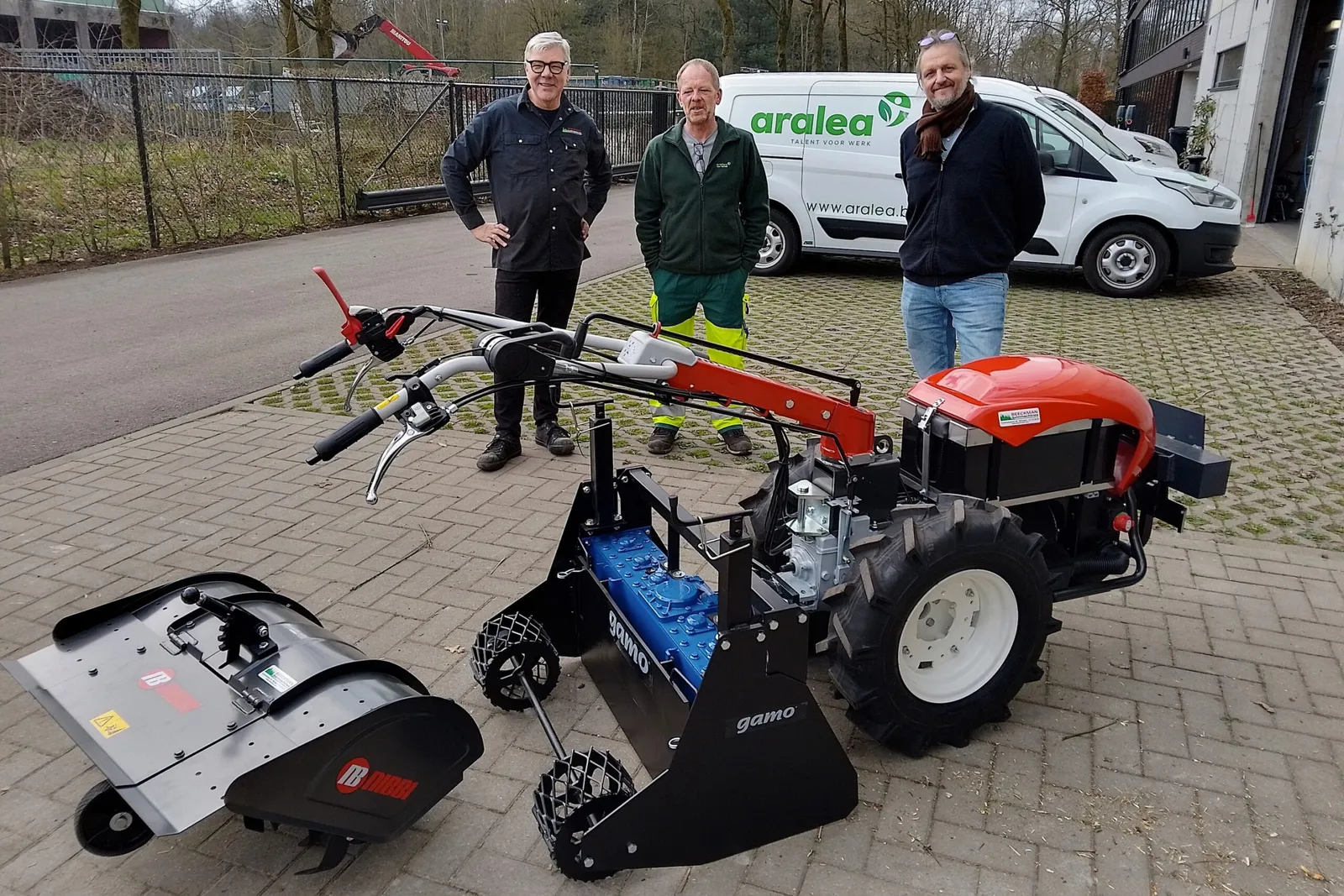
On 13 March 2025, a first was delivered to social enterprise Aralea in Brasschaat: the first Nibbi MAK 17 S battery-powered two-wheel tractor in the province of Antwerp. Supplied by Beeckman Tuinmachines on behalf of Machines De Schutter (MDS), this innovative machine promises to revolutionise grounds maintenance. “We are extremely proud of this delivery,” says Marco Luyten, account manager at MDS. “This is not just a machine, it is an important step towards a more sustainable future.”
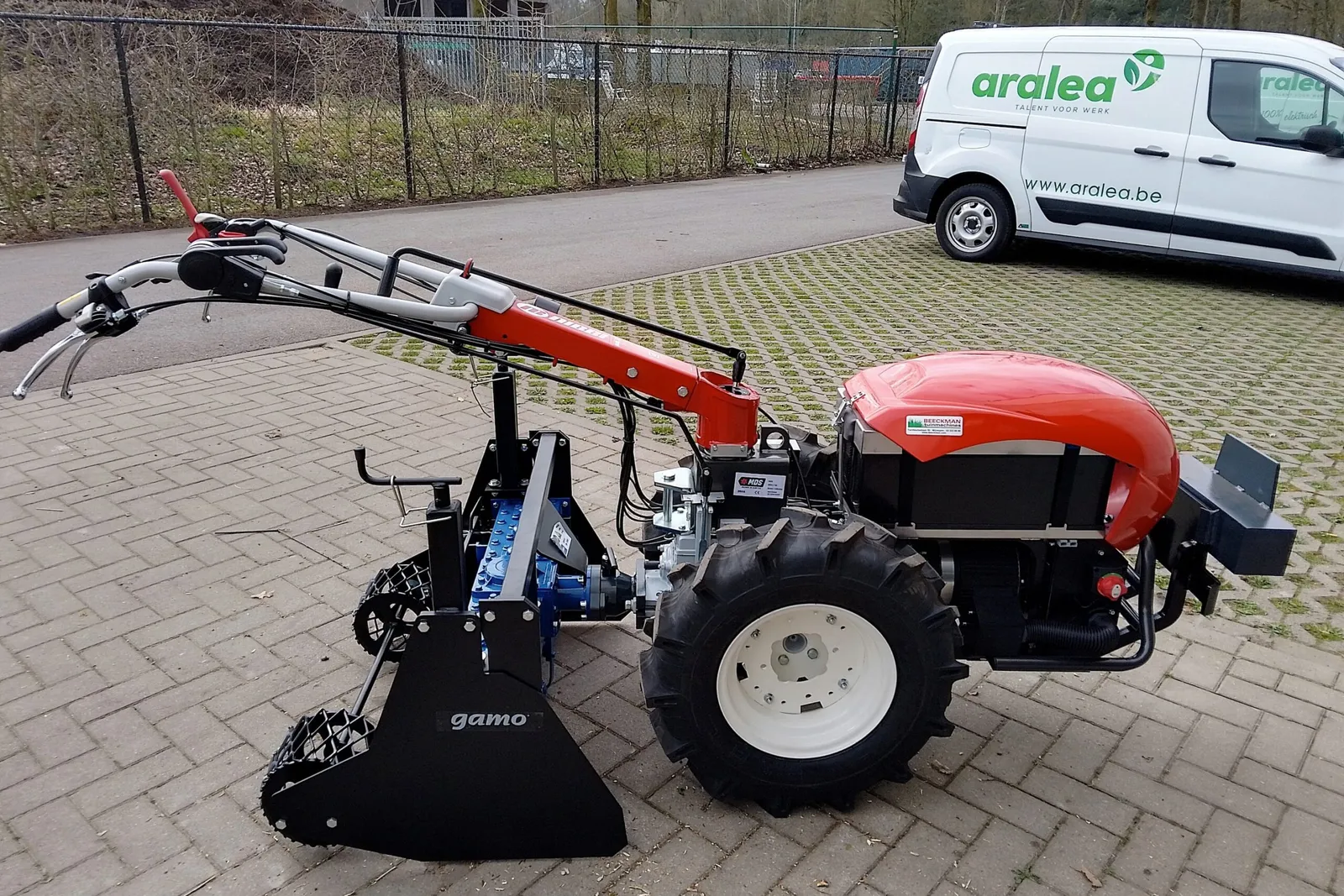
The Nibbi MAK 17 S is the first fully electric two-wheel tractor from Machines De Schutter. Developed as a zero-emission alternative to traditional combustion engines, the machine combines power with environmental benefits. “The Nibbi MAK 17 S performs on a par with a 13.2 kW (18 hp) petrol or diesel engine,” explains Luyten. “Its electric motor delivers a rated output of 10 kW (13.6 hp) and can peak at 20 kW (27.2 hp). This means users do not have to compromise on power.”
Powerful battery, manoeuvrable machine
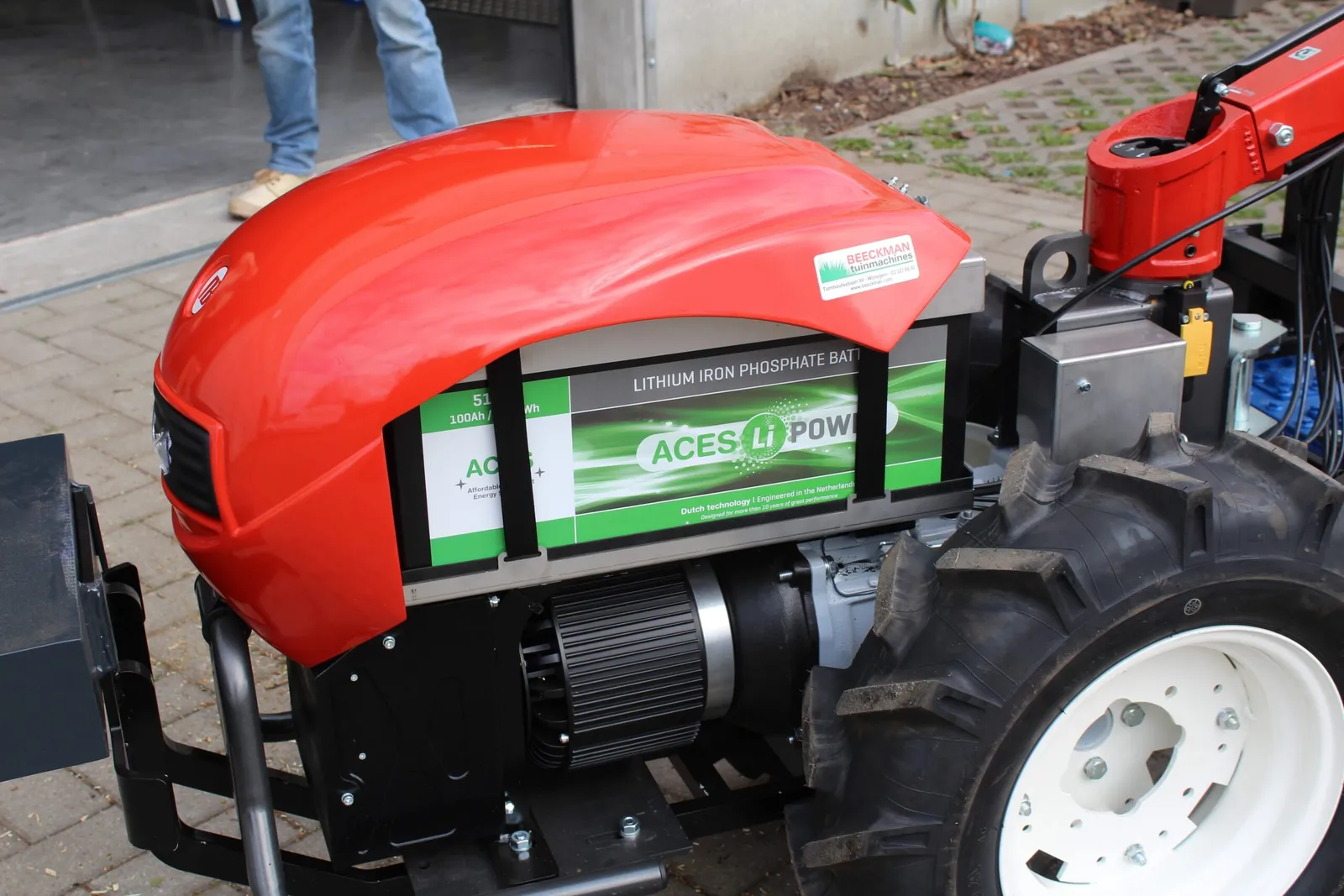
The two-wheel tractor is equipped with a 48V lithium iron phosphate battery, ensuring a long service life and safe operation. “Depending on the application, a full charge provides between two and eight hours of working time,” says Luyten. “This makes the MAK 17 S ideal for a range of tasks, including rotavating and power harrowing, mowing with a flail mower and scarifying.”
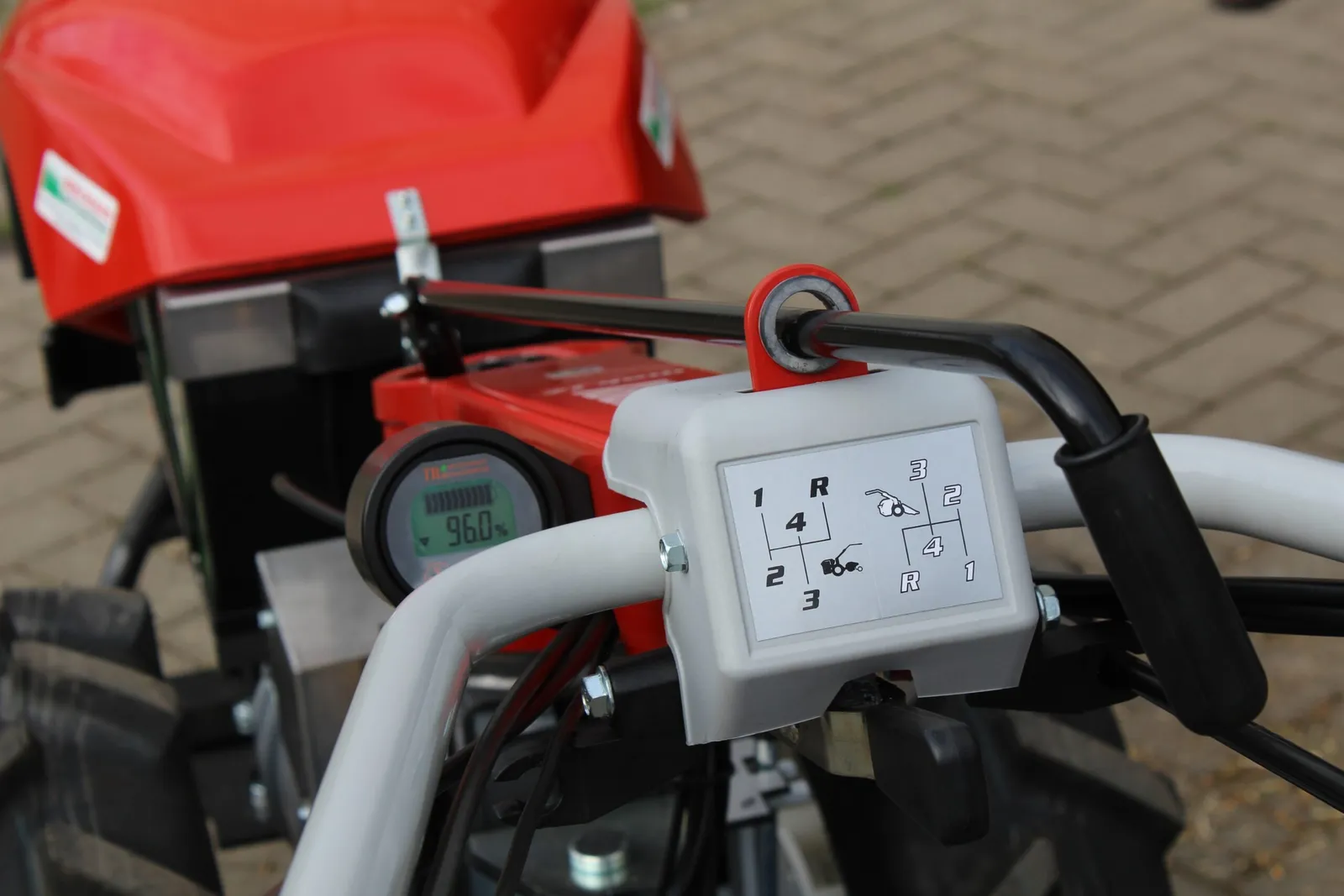
With four forward gears (1.08 to 7.91 km/h) and one reverse gear (2.82 km/h), the machine is highly manoeuvrable. The wheels are independently braked, and the PTO can be set to two speeds (540 or 940 rpm). “These features make the MAK 17 S just as versatile as its conventional counterparts,” Luyten emphasises.
Easy to use and safe
The MAK 17 S deserves praise not only for its performance, but also for its ergonomics. The handlebar is adjustable both in height and sideways, and all drives switch off automatically as soon as the user releases the levers. Luyten says: “Safety comes first. When reversing, for example, the PTO drive switches off automatically to prevent accidents. The machine’s data can also be read easily on a display by the handlebar. A connected app on a smartphone or tablet lets you monitor all battery and performance data in real time. This makes managing and maintaining the machine highly efficient.”
An investment in sustainability
Although the Nibbi MAK 17 S costs more to buy than a conventional two-wheel tractor, €19,200 excluding VAT compared with €7,950 for a petrol-powered model, the investment quickly pays for itself. “Alongside the clear environmental benefits, it requires less maintenance, has lower operating costs and is exceptionally easy to use,” says Luyten. “Users are very enthusiastic about its performance and manoeuvrability.”
Significant added value for Aralea
The first Nibbi MAK 17 S is being used at Aralea, a social enterprise specialising in grounds maintenance and infrastructure works. Ralph Bastiné, Technical Supervisor at the social enterprise, sees many benefits in the new machine: “With the Nibbi MAK 17 S, we can work more sustainably without compromising on efficiency. The machine has enough power to clear weeds from sites when used with the GAMO weed cutter, making our work easier and more effective.”
The electric motor makes the machine quieter, which is a major benefit for both employees and the surrounding area. “We have found that the reduced vibration and noise make work more pleasant for our staff,” says Bastiné.
A healthy and pleasant working environment
Aralea has been operating for more than forty years, with a mission to guide people facing barriers to employment towards sustainable work. “We offer our employees not only work, but also a programme of training and development in a safe environment,” explains André Ernst, Communications & Marketing at Aralea. “Our focus is on social and economic sustainability, and investing in a machine like the MAK 17 S fits perfectly with that.”
By adopting environmentally friendly technologies such as the MAK 17 S, Aralea is contributing to a more sustainable future, both ecologically and socially. “We want a world in which everyone can contribute to society, and that starts with creating a healthy and sustainable working environment,” says Ernst.
The future of electric grounds maintenance
The launch of the Nibbi MAK 17 S marks an important step in the electrification of agricultural and horticultural machinery. Luyten concludes: “This machine shows how innovation and sustainability can go hand in hand. We are convinced that electric-powered machines are the future of professional grounds maintenance. A real game-changer for the sector!”
Have a business enquiry for Machines de Schutter? Get in touch
Companies in this story
Keep following this
Get an email when a new story is published. No account needed.
- ThemeGreen space for everyone
- SubjectAgricultural & horticultural machinery
- CompanyMachines de Schutter