Flagstones make a comeback
Text Anastasia VerleysenImage Stone
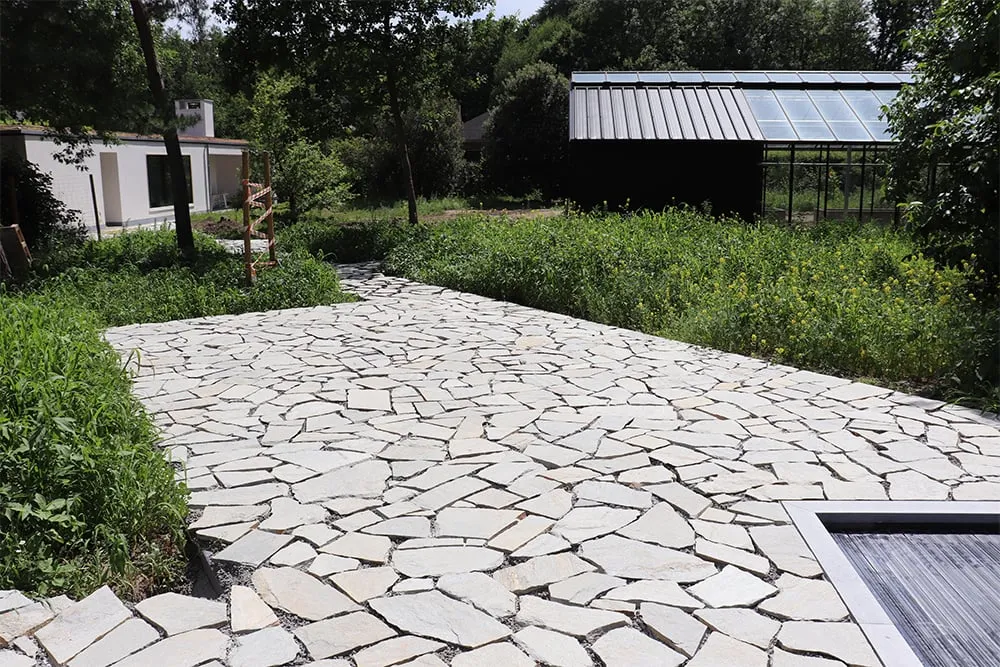
Laying stone fragments, opus incertum, crazy paving or flagstones: all these terms refer to the same laying technique, in which broken natural stone is pieced back together on site to create an attractive whole. At Stone, they have seen a clear rise in demand and are ready to support customers and installers. “It does take a fair amount of craftsmanship and patience,” says sales manager Vincent Vermeire.
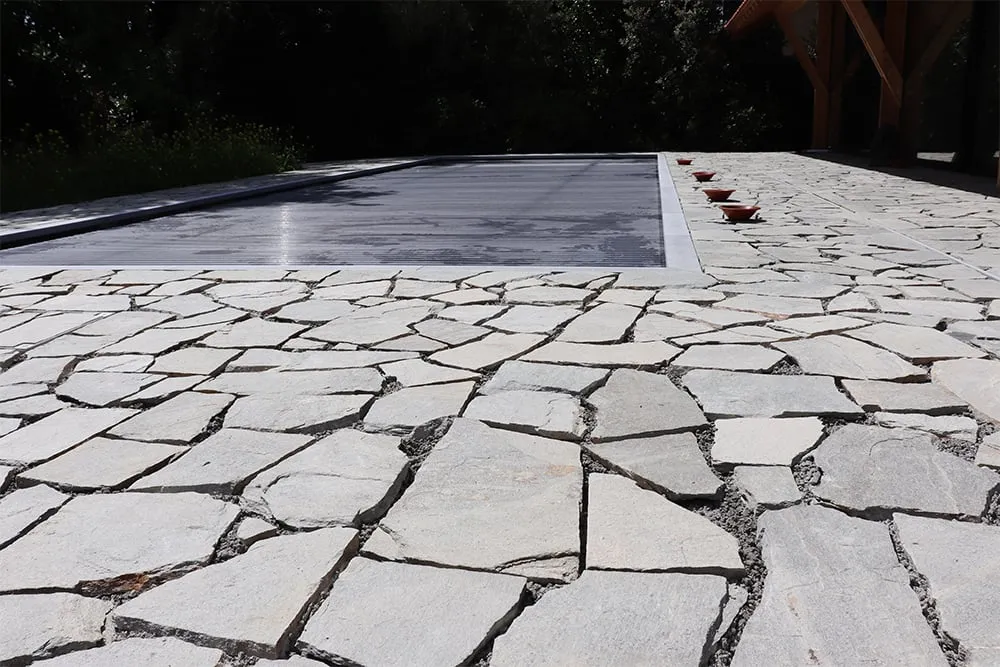
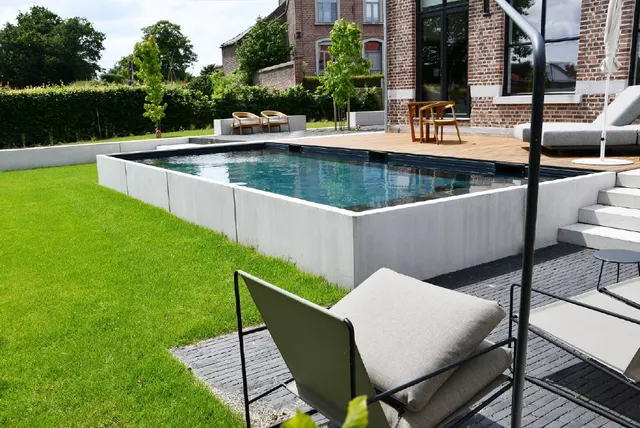
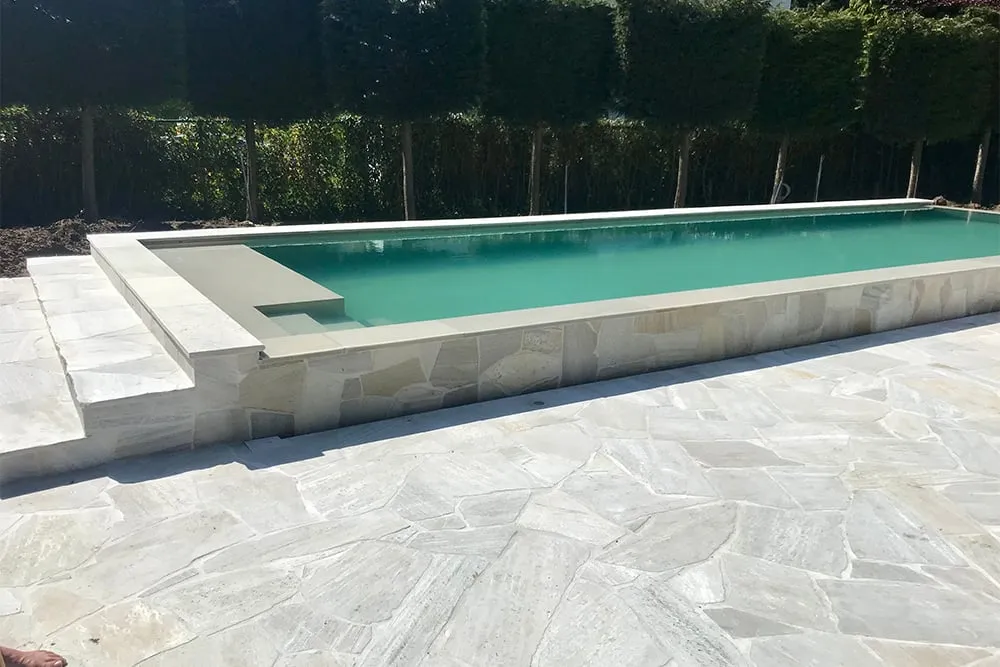
A modern, urban garden or something more rural and cottage-style? No problem: flagstones feel at home in almost any setting and can be laid as a garden path, patio or even as coping around a swimming pond. “Customers choose the material themselves. At Stone, we have an extensive selection of split materials in frost-resistant limestone, sandstone, slate and quartzite,” explains Vincent Vermeire. “Our range also comes in a variety of colours, from soft earth tones to bright, stronger colours. Most of these natural stones have a rougher finish, which gives them natural anti-slip properties. This makes them suitable for laying around a swimming pond or swimming pool, as well as for use on patios.” Flagstones are made partly from natural stone slabs and partly quarried in this form, then neatly sorted and stacked in crates. This cuts down on some of the puzzling on site. Allow for four to eight stone fragments per square metre.
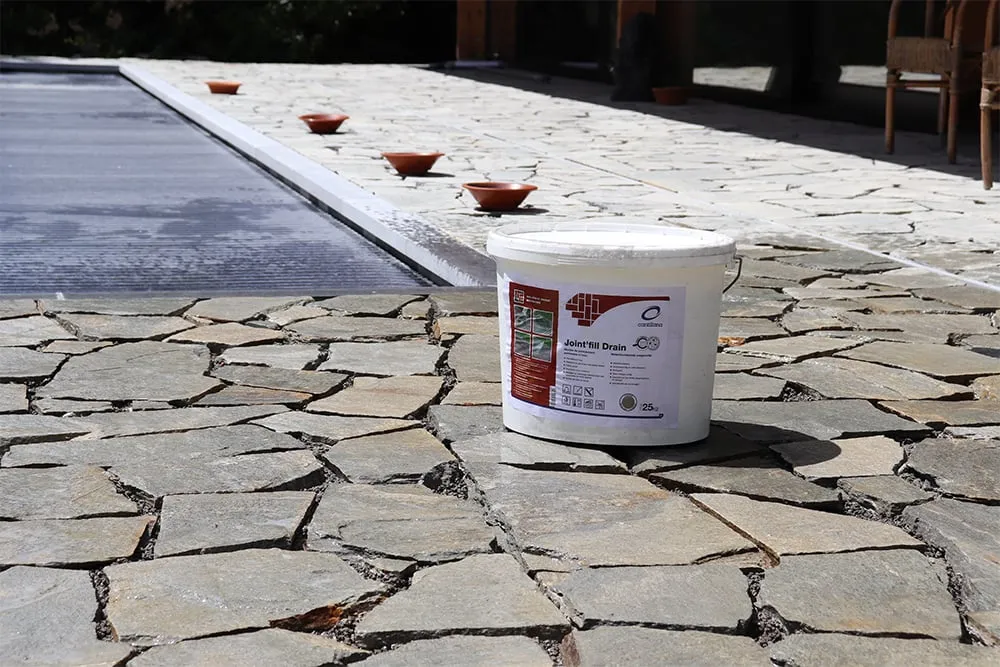
A more cohesive look
Flagstones were hugely popular around twenty years ago. The technique seemed to disappear for the past fifteen years, but Stone is now seeing demand rise sharply again. “We’re seeing them used very often as stepping stones or edging,” says Vincent Vermeire. “Stone can also supply all the materials we sell as flagstones as standard tiles, coping stones or other made-to-measure products. For example, we’ve noticed the laying technique being carried through from interiors to outdoor spaces. That creates a cohesive look. Indoors, of course, the smoother varieties of natural stone are used.”
Knowledge and experience
Albino Light, Albino Yellow, Pirana, Balak, Torro, Travertin Beige, Travertin Silver, Pale Cream, Pietra Cortese, Flamingo, Flammet, … These are just a few examples of the natural stones available as flagstones through Stone. With a wide selection of natural stone, ceramics, marble and quartz composites, and terrazzo, Stone has long been a trusted wholesaler and distributor for trade professionals. “We supply standard tiles and slabs, as well as made-to-measure products for façades, kitchens, bathrooms, stairs, … We also focus on sharing our knowledge and expertise. This is particularly important when working with such a specialised technique as flagstone laying.” Stone therefore worked with Cantillana from Harelbeke to produce a technical document on laying flagstones.
“The substrate must be properly prepared. Among other things, we recommend using Chape Drain 15/25. This permeable screed mortar will prevent water from pooling. Make sure the substrate is firm, stable and load-bearing. For patios, the substrate must be free-draining and consist of a well-compacted base of crushed stone or gravel at least ten centimetres thick. There are several ways to fill the joints, using epoxy or simply allowing grass to grow between the stones for a natural look. If you do fill the joints, they should be as natural and even as possible. Your joints must not be wider than the stones you are laying. This calls for patience and experience on the part of the installer. It is an art in itself, and you should not hesitate to trim a piece from time to time to make the pattern fit.”
Question about this story? Ask your question
Keep following this
Get an email when a new story is published. No account needed.
- ThemeWater and hard landscaping in the garden
- SubjectLandscaping