Precast concrete: Beton de la Lomme invests in innovation and sustainability
Text Björn CrulImage Beton de la Lomme
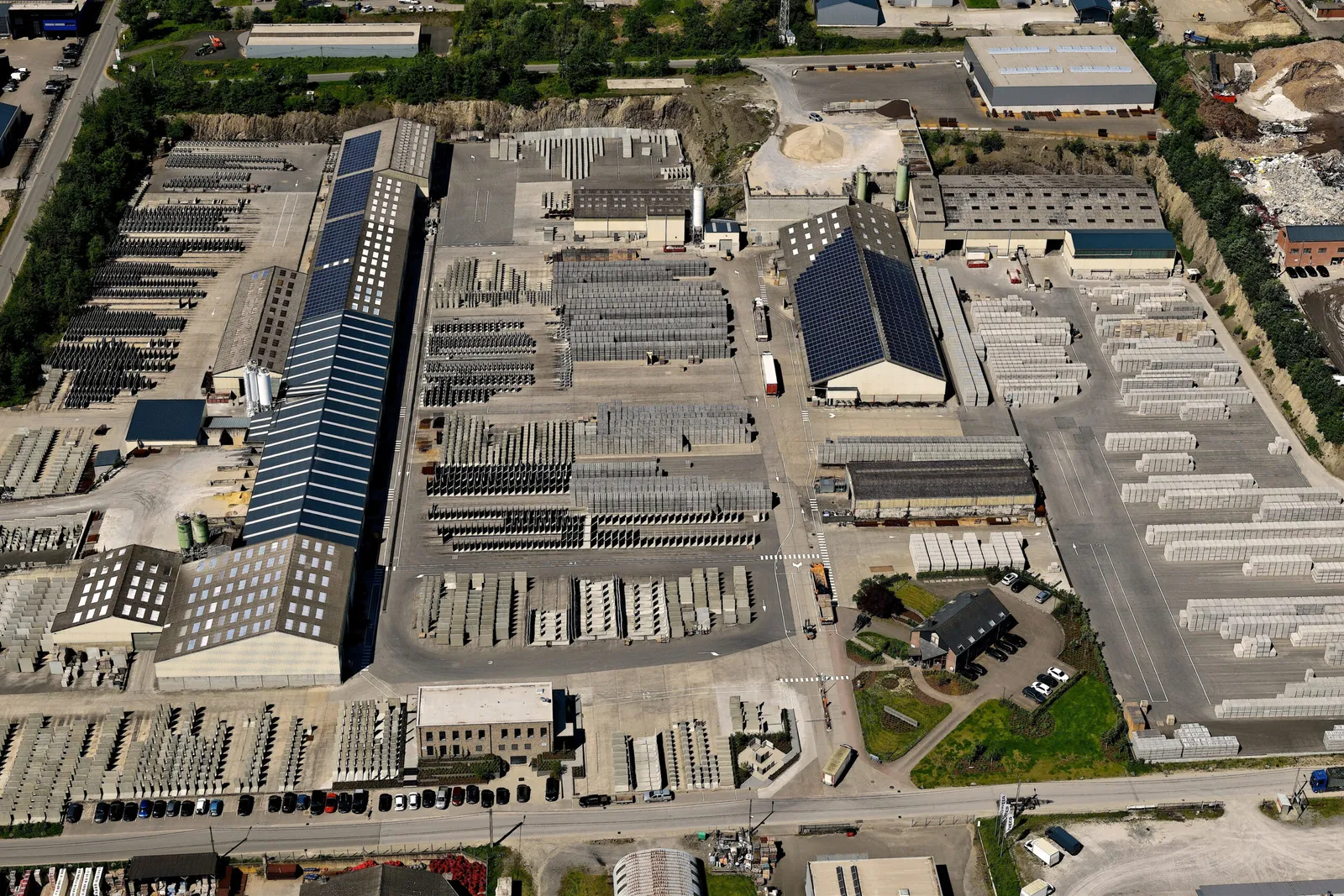
Concrete is the most widely used building material in the world and is responsible for almost 8% of global CO2 emissions. The industry therefore has to reinvent itself. It is taking major steps to reduce its environmental footprint. At Beton de la Lomme in Rochefort, this is being achieved through innovation in production processes and in the technical and aesthetic quality of its products. The company is also strongly committed to involving its employees more closely in its policies. Jacky Chalon, head of the technical department, explains.
There are two types of concrete in the precast sector, based on two different demoulding methods: immediate and delayed demoulding. “Immediate demoulding is possible with relatively dry concrete, which is mechanically pressed into moulds,” explains Jacky Chalon. This highly automated technique is used for large production runs, including concrete blocks, shuttering blocks and adhesive blocks.
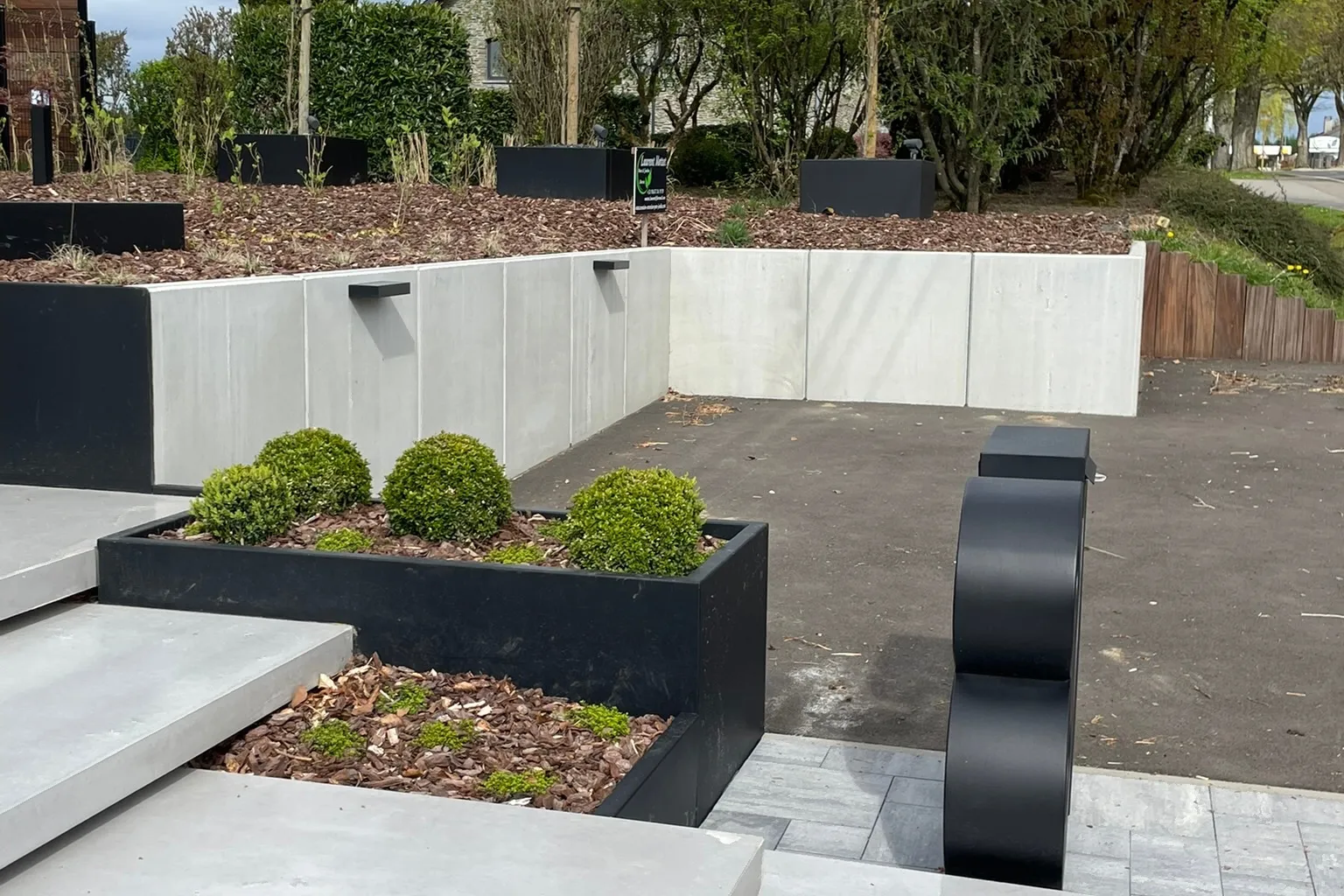
Delayed demoulding uses poured, fluid concrete. “In this case, demoulding can only take place later, once the concrete has fully cured. This means that only one or two production cycles are possible per day, depending on the rate of hardening. This method is mainly used for reinforced concrete elements, such as L-shaped retaining walls, or for bespoke products such as coping stones, bus shelters and made-to-measure components.”
By carefully monitoring the preparation and processing of the concrete, the factory ensures higher quality than with concrete poured on site. “Fluid concrete mixes are now self-compacting and no longer need to be vibrated. They have a very high density, minimal water absorption and greater strength.”
Collective intelligence drives innovation
Sustainability applies not only to products and the techniques used, but also to the way the company operates day to day. Beton de la Lomme has opted for a participatory approach based on ESG criteria. “It is a way of working that is not focused solely on profit. Profit is necessary, but it must not come at the expense of staff wellbeing or the environment,” says Chalon. “We now use a participatory model that gives employees the opportunity to contribute actively. This allows them to help shape management decisions.”
The company has set up three working groups focused on innovation in research and development, sales and production. “This brings together knowledge and ideas from different departments. This cross-fertilisation creates a more innovative, solutions-focused mindset.”
Rethinking aesthetics and ergonomics
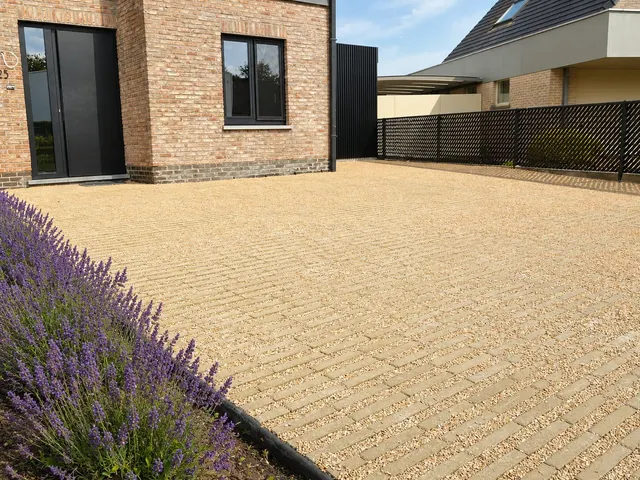
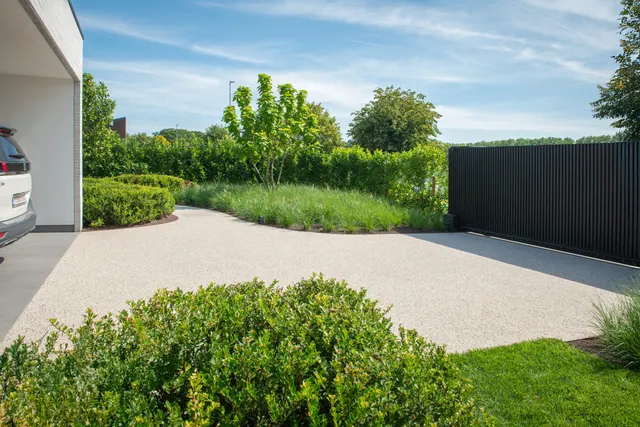
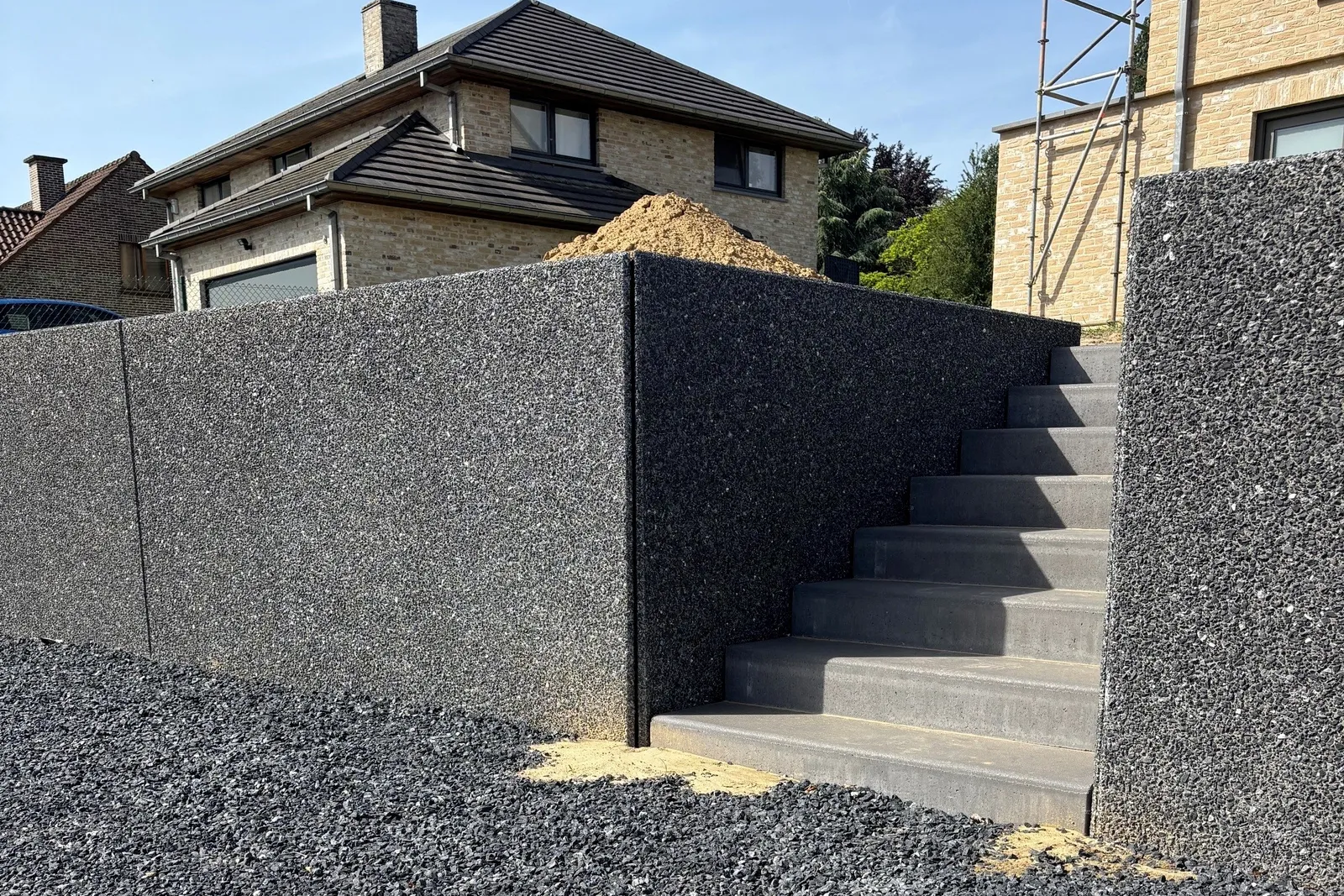
Product innovation is improving quality in several ways. Traditional grey concrete is long-lasting, but tends to turn green over time. Chalon says: “Structurally, concrete is very durable. Aesthetically, it is a different story. To address this issue, the R&D department is developing various finishes. These include exposed aggregate concrete, textured concrete made using moulds, green finishes such as Green Wall, slate cladding and a finish that looks like weathering steel.”
On-site technical performance is also improving, notably with the milled adhesive blocks Rectilom. “A wall built with Rectilom adhesive blocks is stronger than one made using traditional masonry. The main advantage is that adhesive blocks can be laid much faster,” he says. “Ergonomics have also been improved by adding handholds.”
The future is low-carbon and circular
When it comes to its environmental footprint, concrete must be assessed over its entire life cycle. “Over time, concrete undergoes a natural carbonation process. This allows the product to reabsorb some of the CO2 emitted during production. We are talking about 10 to 30 per cent reabsorption,” says Chalon, who regrets that concrete often has a negative image.
He believes the future lies in different formulations. “We are currently testing alternative binders to produce concrete with less cement, or even no cement at all. The raw materials crisis is also driving the industry towards a circular economy. Raw materials such as sand and even stone are becoming increasingly scarce. We will therefore have to recycle more residual materials and turn them into new raw materials.”
The concrete of the future will become increasingly advanced, gradually moving towards low-carbon or even CO2-negative formulations. This means it will absorb more greenhouse gases than it produces. Chalon is convinced that Wallonia can stand out. “We have potential in Wallonia. And we are ambitious about innovating and moving forward.”
Want to find out more about trends and developments in concrete? Listen to the podcast with Jacky Chalon at www.gww-bouw.be
Question about this story? Ask your question
Keep following this
Get an email when a new story is published. No account needed.
- SubjectPaving