Pioneer in permeable and water-infiltrating paving continues to innovate
Text Niels RouvroisImage Bleijko
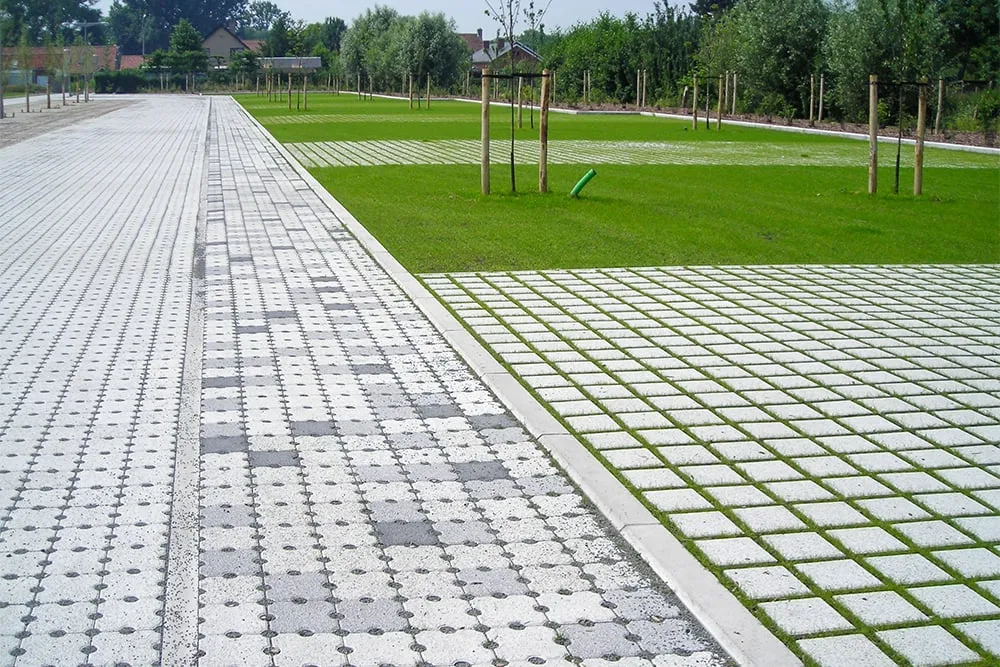
Permeable and water-infiltrating paving products have become increasingly popular in recent years, both on private sites and in public spaces. The importance of rainwater infiltration has now become widely recognised. At Bleijko, a renowned concrete producer with Dutch roots and a production site in Roeselare (Belgium), they saw the potential more than 30 years ago. “We were one of the first to bring permeable and water-infiltrating products to market in Belgium and the Netherlands,” says Frank Mortier of Bleijko, a member of FEBESTRAL, the division within FEBE representing manufacturers of precast concrete products for the paving market.
FEBE is the recognised trade association for manufacturers of precast concrete products and represents the interests of the sector. The Belgian concrete industry produces a wide range of prefabricated elements for construction, from simple, unreinforced products such as masonry blocks and paving stones to large structural elements such as bridge beams. FEBESTRAL operates within FEBE as a division bringing together manufacturers of precast concrete products for the paving market, including concrete paving stones, concrete slabs, linear elements and accessories.
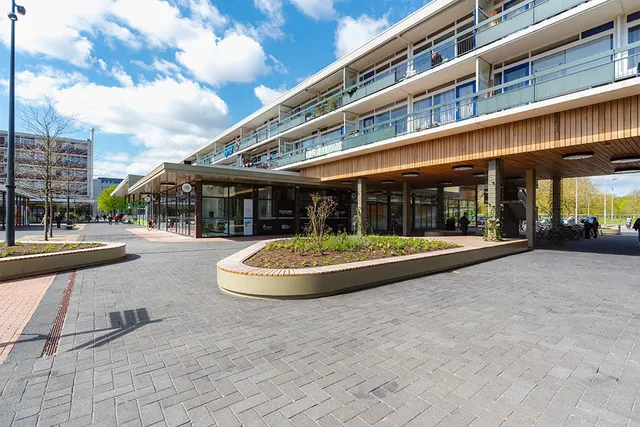
And the paving market is thriving in 2024. From small car parks and sports facilities to shopping-centre car parks, business parks and large public spaces … In recent decades, Bleijko has seen steadily growing interest in permeable and water-infiltrating products. “Initially, these were mainly porous blocks, through which rainwater infiltrates. But their range of applications is limited, given their limited load-bearing capacity and the adverse effects of de-icing salts. That is why we shifted our focus fairly quickly to water-infiltrating products, where rainwater infiltrates through the joints. Back in the 1990s, FEBESTRAL was already advocating the use and importance of permeable and water-infiltrating paving in the Flemish Parliament. It took years for clients, administrations, public authorities, local authorities and designers to fully embrace the concept. Fortunately, that scepticism has now disappeared.”
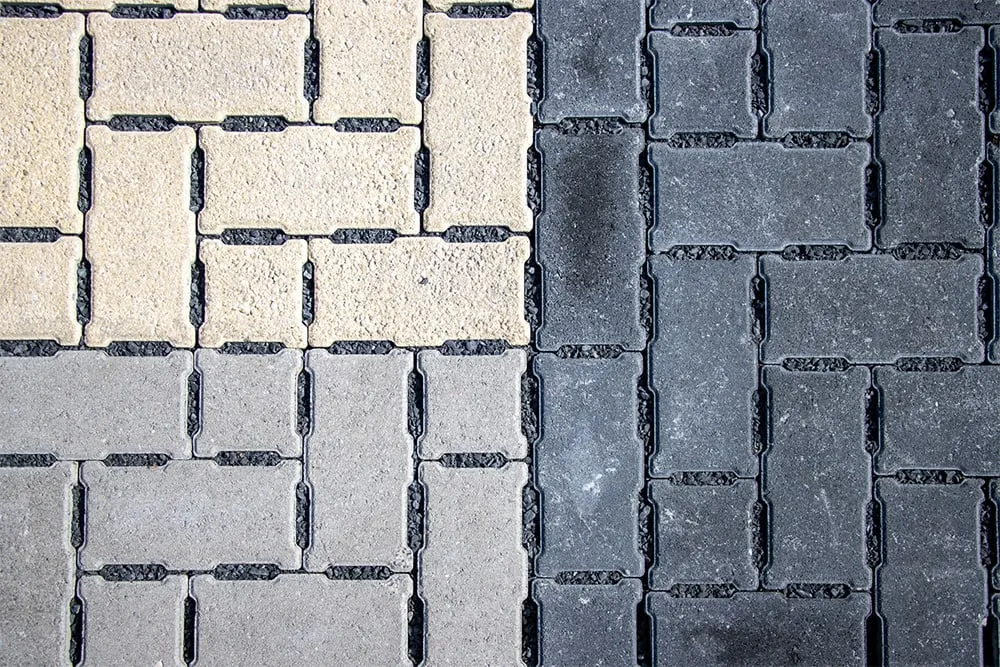
Permeable and water-infiltrating paving
Bleijko’s permeable and water-infiltrating paving, combined with a suitable sub-base system, ensures efficient management of rainwater. These paving systems work in three ways: first, rainwater is collected in the permeable surface and sub-base, where it is temporarily stored. The water then gradually infiltrates into the soil. Finally, excess water that cannot infiltrate the soil immediately is channelled to drainage systems or facilities to prevent waterlogging and flooding. Frank Mortier says: “A large proportion of our permeable and water-infiltrating products are supplied to the public sector, but some of the largest areas we supply are on private sites, such as supermarket car parks and company car parks.”
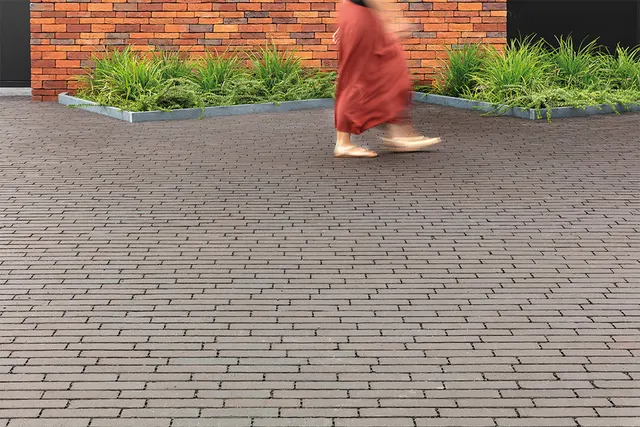
Bleijko now has an extensive range. Perfora® and Percola® paving stones are water-infiltrating products, available in a variety of colours and finishes. Percola® paving stones feature round openings and are available in a standard version, a colourfast version and in A’gora, with a top layer finished by shot blasting. Perfora® paving stones, in turn, are water-infiltrating blocks with spacers, available in a variety of versions, colours and sizes. For permeable paving, there is the Piove® paving stone, made from porous concrete and available in the standard colours grey, black, red and heather purple.
Grass concrete grids
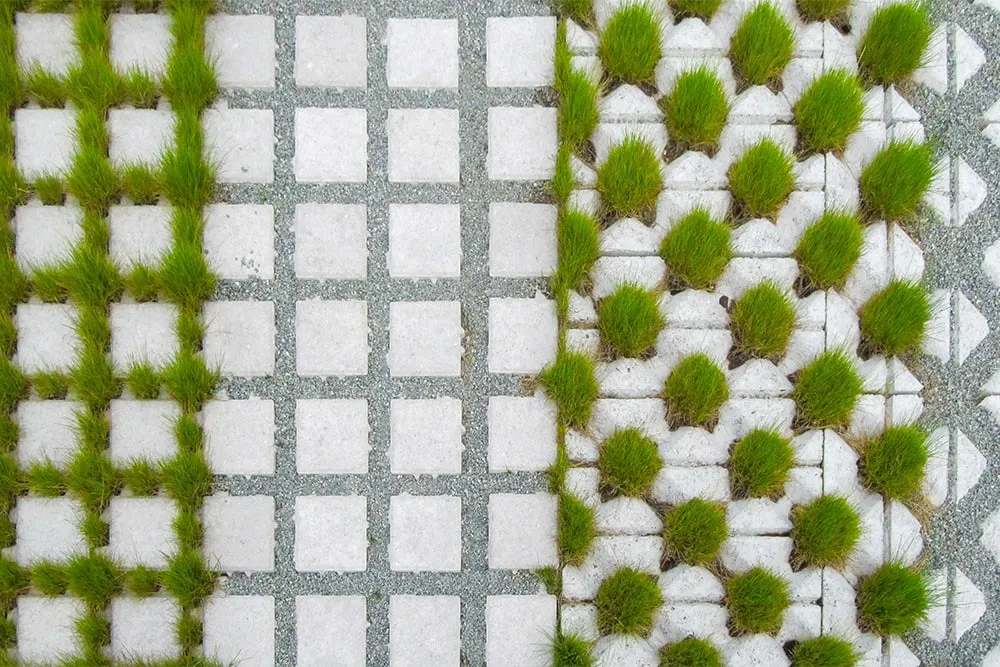
“And of course there are also grass concrete grids, which continue to hold their own in the range,” explains Frank Mortier. Where paving and nature can complement one another, grass concrete grids offer an excellent solution. This product protects the ground against erosion without compromising its natural appearance. Grass can grow through the openings in the grid. Grass concrete grids are therefore particularly suitable for, for example, emergency access routes and road verges, firebreaks, and slope and bank protection. Frank Mortier says: “Grass concrete grids are really an eco-product ahead of their time and have been around for more than 50 years. Choosing between permeable or water-infiltrating paving and grass concrete grids is purely an aesthetic decision. In that respect, paving with concrete blocks is of course more elegant, although Bleijko’s linear grass grids create a very attractive streetscape.”
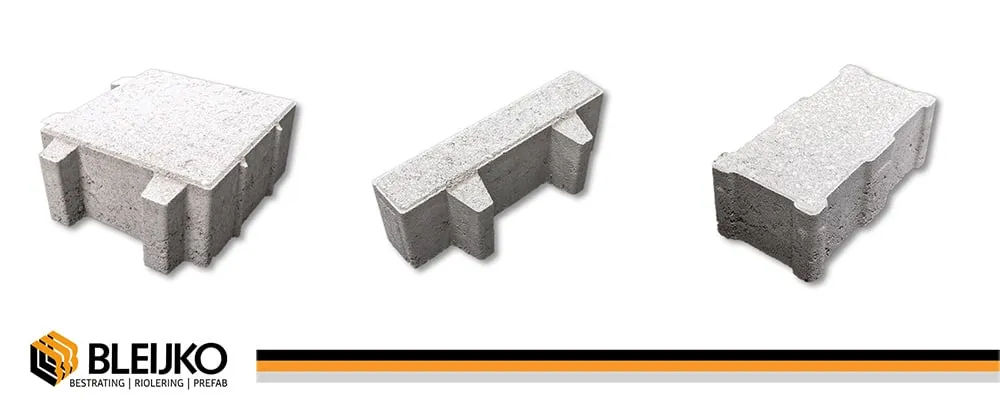
Pioneer
Bleijko is regarded as a pioneer in permeable and water-infiltrating paving, and aims to continue playing that role in the future. “Today, we can make a difference thanks to our many years of experience, not only at product level but also in terms of applications. Where can it be used? What is the condition of the sub-base? Is the groundwater level suitable? We have all that expertise in-house. And the popularity of this paving will only continue to grow. Today, we sell as many eco-products as conventional paving stones, something we would never have predicted a few years ago. That is why we are constantly developing new moulds. Bleijko was originally best known for its decorative paving. These moulds also allow us to offer an eco-friendly version. The possibilities are continuing to expand.
What still holds back clients and private property owners is a lack of knowledge about the cost, even though it is no more expensive. Certainly not when you look at the cost over the entire life cycle. For example, opting for permeable paving in some locations can eliminate the need for sewerage, while using concrete grass grids on verges is much cheaper in the long term than topping up gravel several times a year,” concludes Frank Mortier.
Question about this story? Ask your question
Keep following this
Get an email when a new story is published. No account needed.
- ThemeHealthy soil and smart water management
- SubjectSustainability