









5 things to consider when choosing pool copings
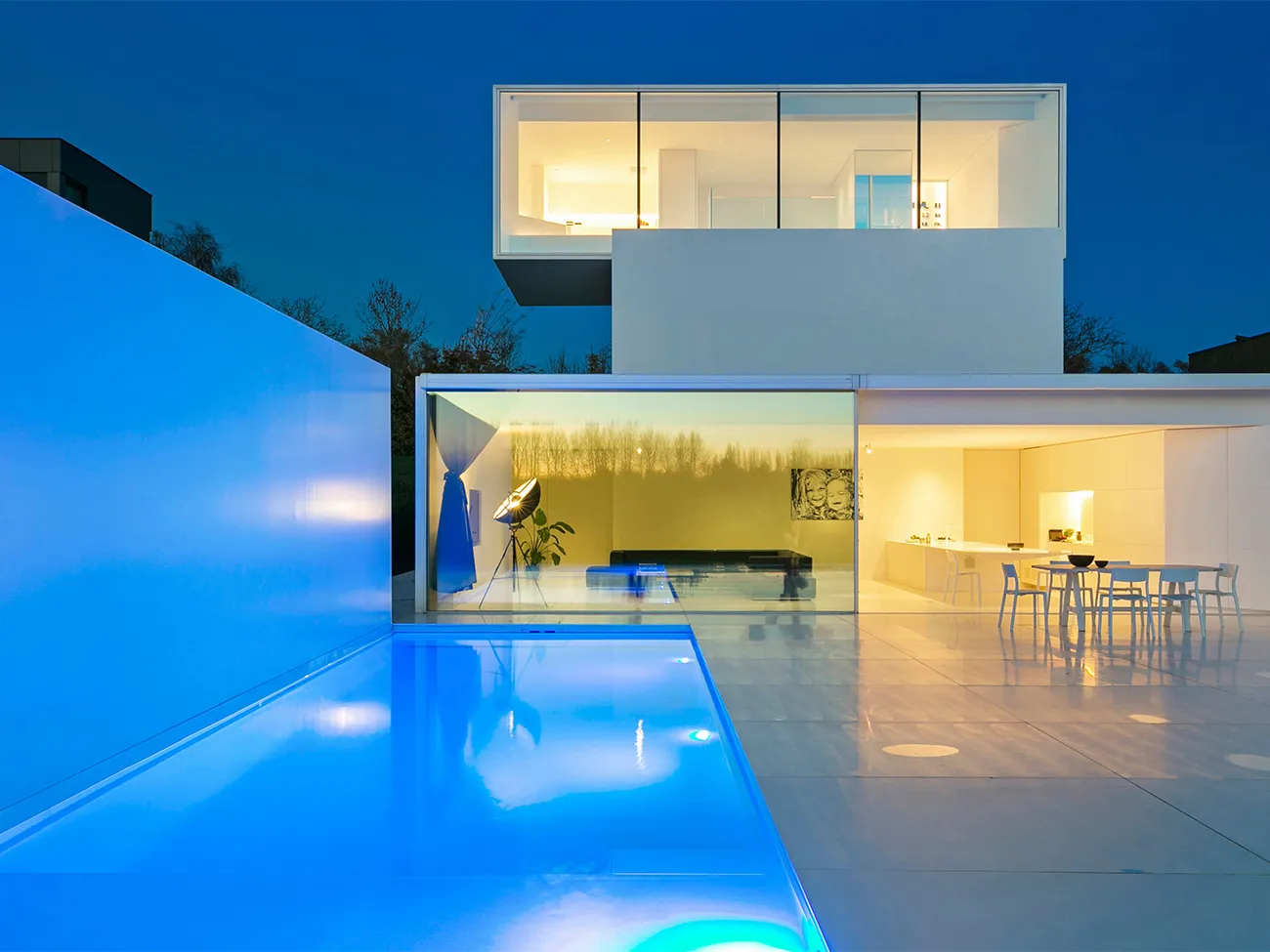
Decision fatigue. If you know that the range of pool copings is now almost as extensive as that of patio paving, you can understand why not everyone reaches a final decision quickly.
Ceramic or natural stone? Should the pool coping continue seamlessly into the patio, or would you prefer a special finish? Joren Verbruggen of ArtStone talks through the key questions and points to consider.
Appearance
“Most customers choose pool coping that complements the patio. This can be achieved by using exactly the same stone and finish for both, an option available in natural stone and ceramic, or by carrying the same colour palette through. We therefore encourage customers to bring samples of their existing patio or pool liner to the showroom, so they can compare them side by side.”
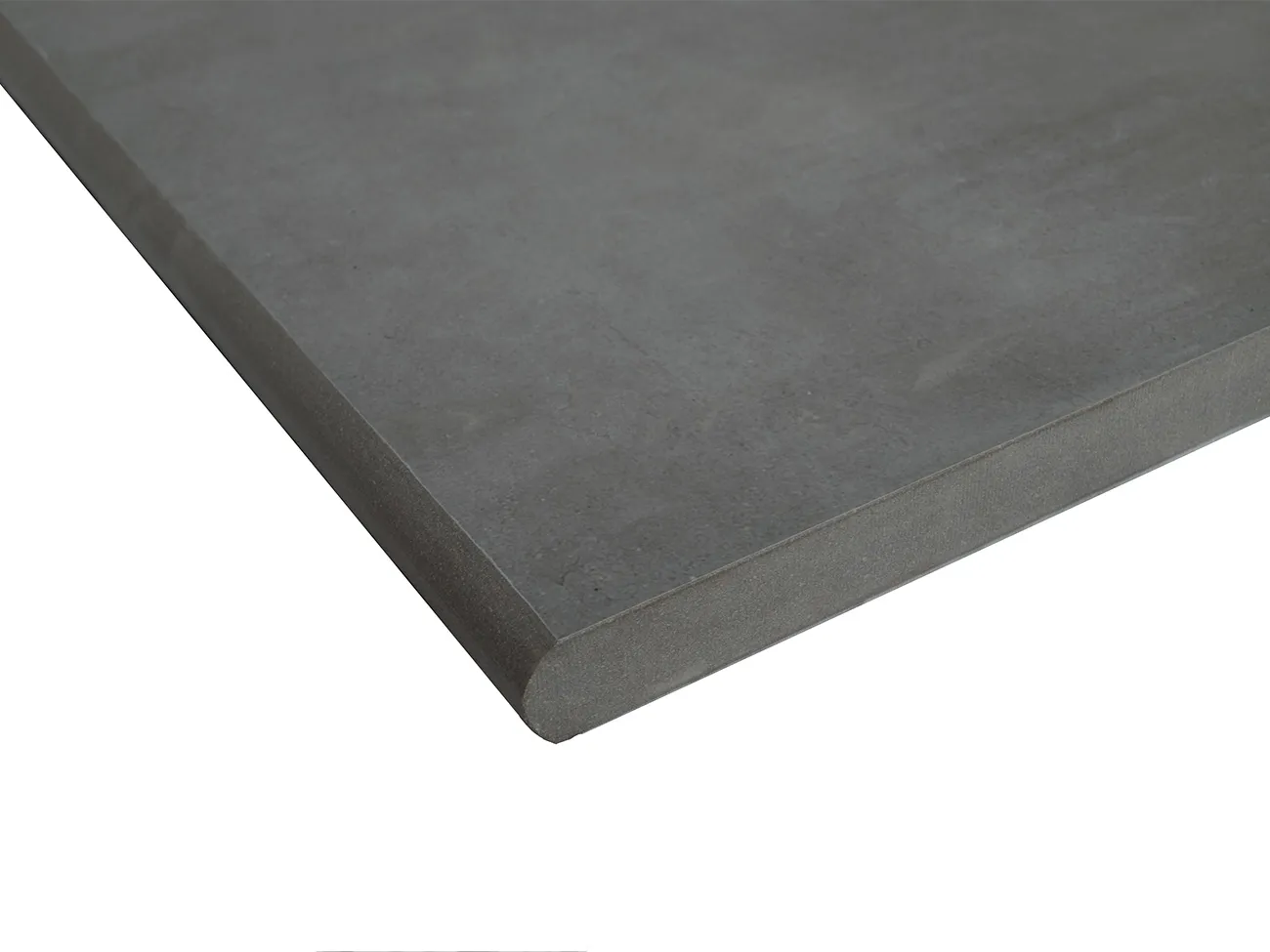
“The choice of stone ultimately depends above all on the atmosphere you want to create. Belgian bluestone is a classic, while ceramic with a concrete or even metallic look works well in sleek, modern gardens. If you are looking to create a warm, southern European feel, opt for sand and beige tones, such as those of Egyptian limestone Sinai Pearl.”
Safety
“Safety is an important consideration around the pool, and when it comes to tiles and coping, it is mainly about slip resistance. Ceramic tiles must meet certain standards. In Italy, these standards were recently tightened to ensure safety without compromise. Did you know that some tiles are smooth when dry but become rough when exposed to water?”
“With natural stone, safety is determined less by the stone itself than by its surface finish. That is why we only offer rough surface finishes for patio tiles and pool coping.”
Finish
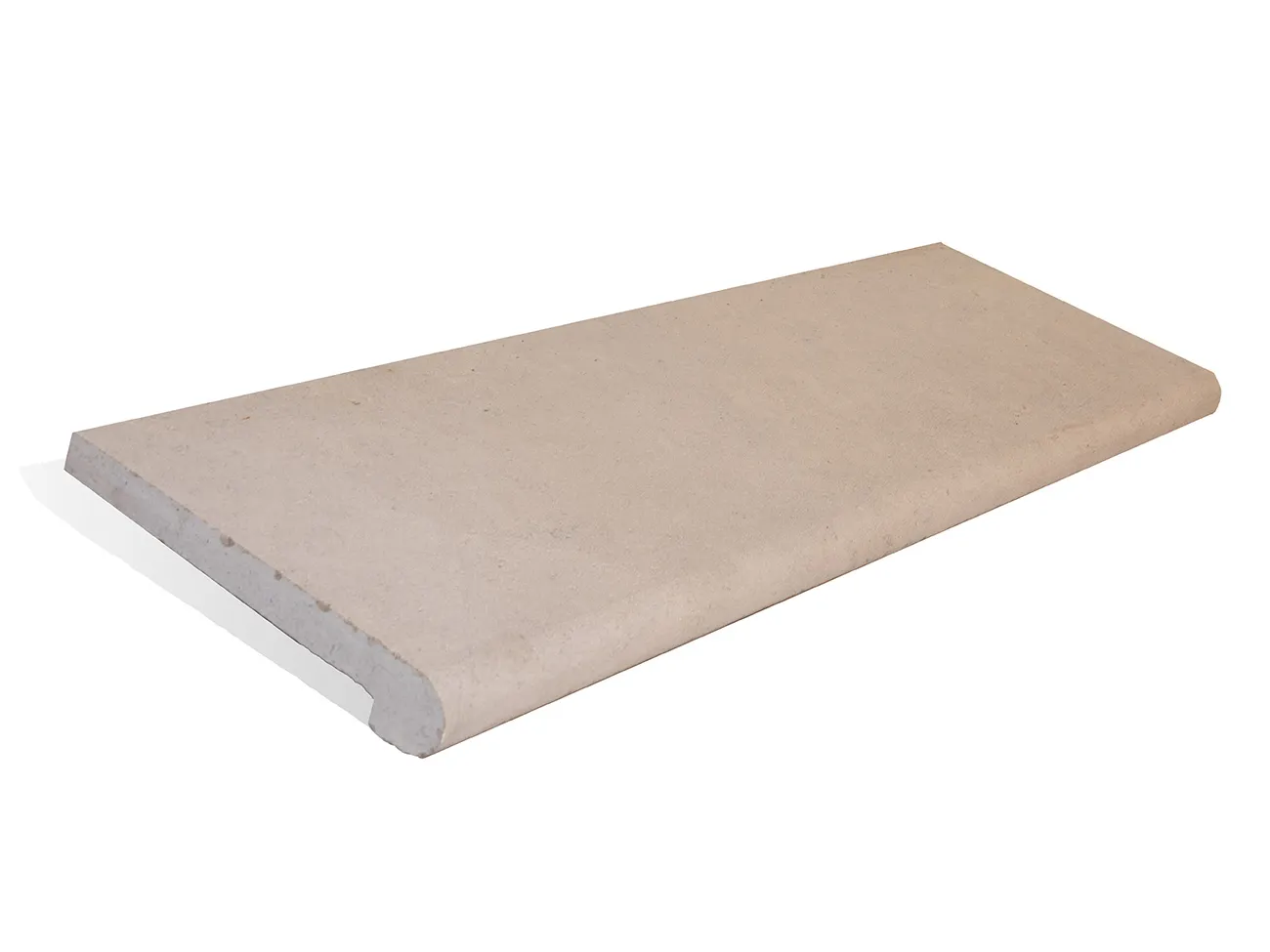
“The edge can be finished with either a bullnose or a parrot-beak profile. In the first case, the edge of the stone is simply rounded. In the second, it has an L-shaped profile, rounded or otherwise, that overlaps the edge of the pool. This makes the coping look somewhat thicker or more imposing, but neatly conceals the pool edge.”
“With natural stone, any edge profile is possible. In the past, ceramic options were mainly limited to bullnose and straight parrot-beak profiles, with the latter made by bonding an extra mitred edge strip to the tile. However, to offer the same versatility as natural stone, we recently expanded our ceramic production. This means we can now produce the familiar edge profiles ourselves, as well as supply solid ceramic copings, including a rounded parrot-beak profile, in both 2/3 and 3/5.”
Dimensions
“As with patio tiles, there is a clear trend towards larger sizes for pool coping. Sizes of 100×30 centimetres or 120×40 centimetres are no longer unusual, and with the right finish, a 100×100-centimetre patio tile can even be used perfectly well as pool coping. This makes the distinction between coping and patio virtually disappear.”
“A common mistake when it comes to dimensions is to place orders based solely on the pool’s internal measurements. This means you forget to allow for the corners of the pool, and suddenly find yourself short of material on site.”
Delivery times
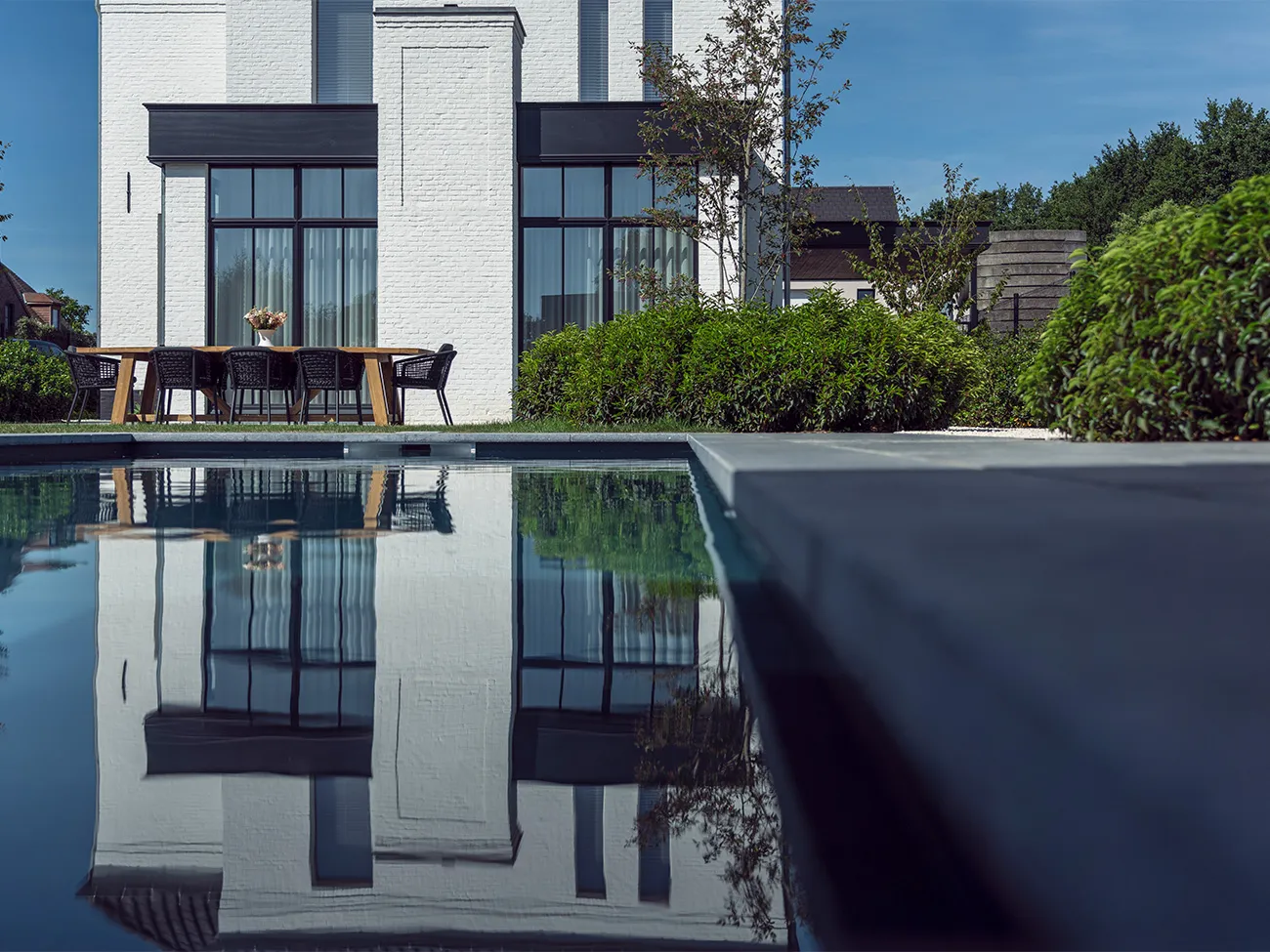
“Over the past year, demand for swimming pools and pool coping has been enormous, but the pandemic also caused supply problems from the East. As a result, stocks of many natural stones in Belgium, such as Vietnamese bluestone and granite, are almost depleted, although we expect new deliveries in August. We still have extensive stocks of Belgian bluestone and Sinai Pearl, as well as our full range of ceramic products.”
Question about this story? Ask your question
Companies in this story

Keep following this
Get an email when a new story is published. No account needed.
- ThemeWater and hard landscaping in the garden
- SubjectGeneral
- CompanyArtstone NV







