









Aesthetic and ecological value
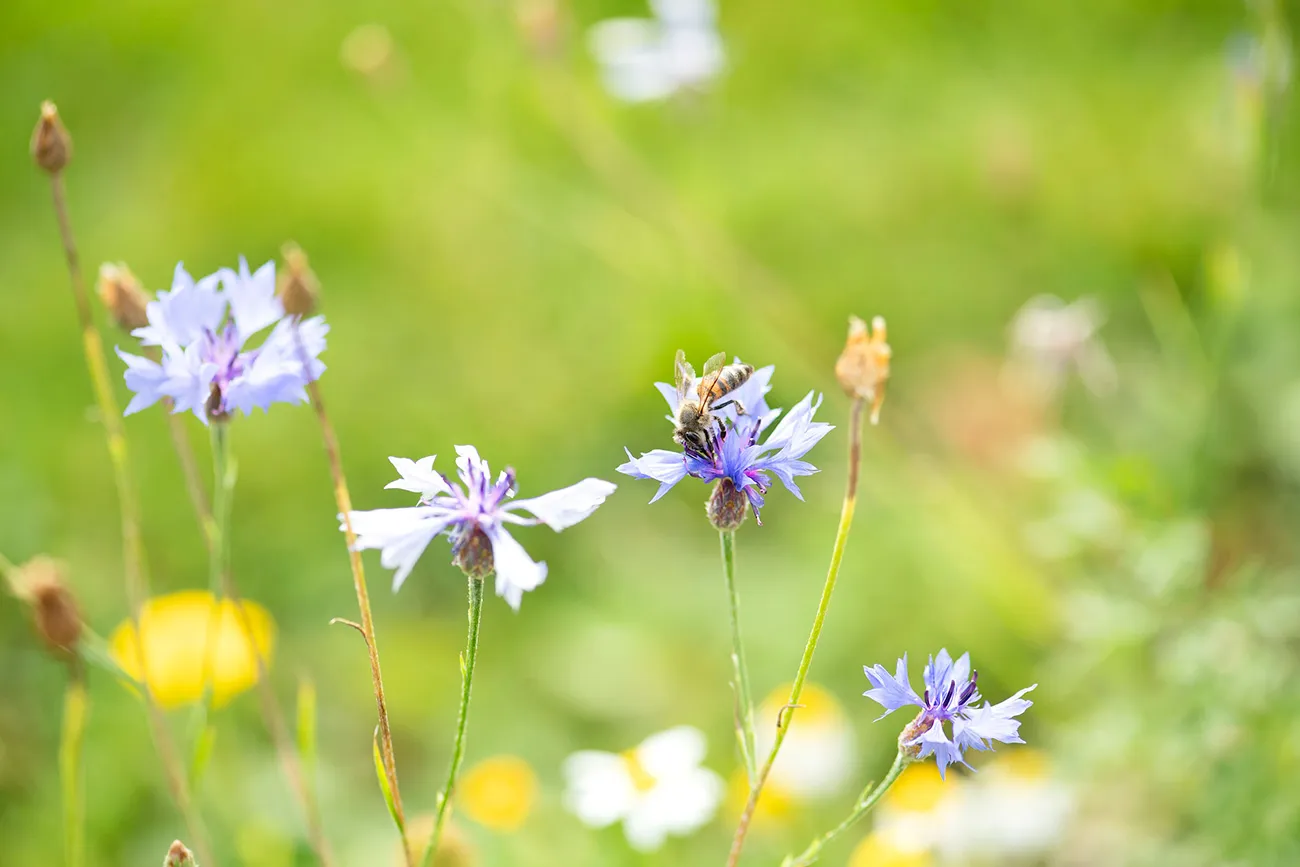
Borders alongside lawns cut by robotic mowers are pleasing to the eye and improve biodiversity
The lawn is a focal point in many gardens, and is increasingly maintained by a robotic mower. However, for technical reasons, the edges of lawns are often left unmown. A study by the University of Hohenheim, supported by STIHL, has now shown that sowing flower mixes in these strips is not only attractive, but also provides a better food source for pollinating insects and improves biodiversity in the garden. The experts recommend flower mixes made up of native seeds.
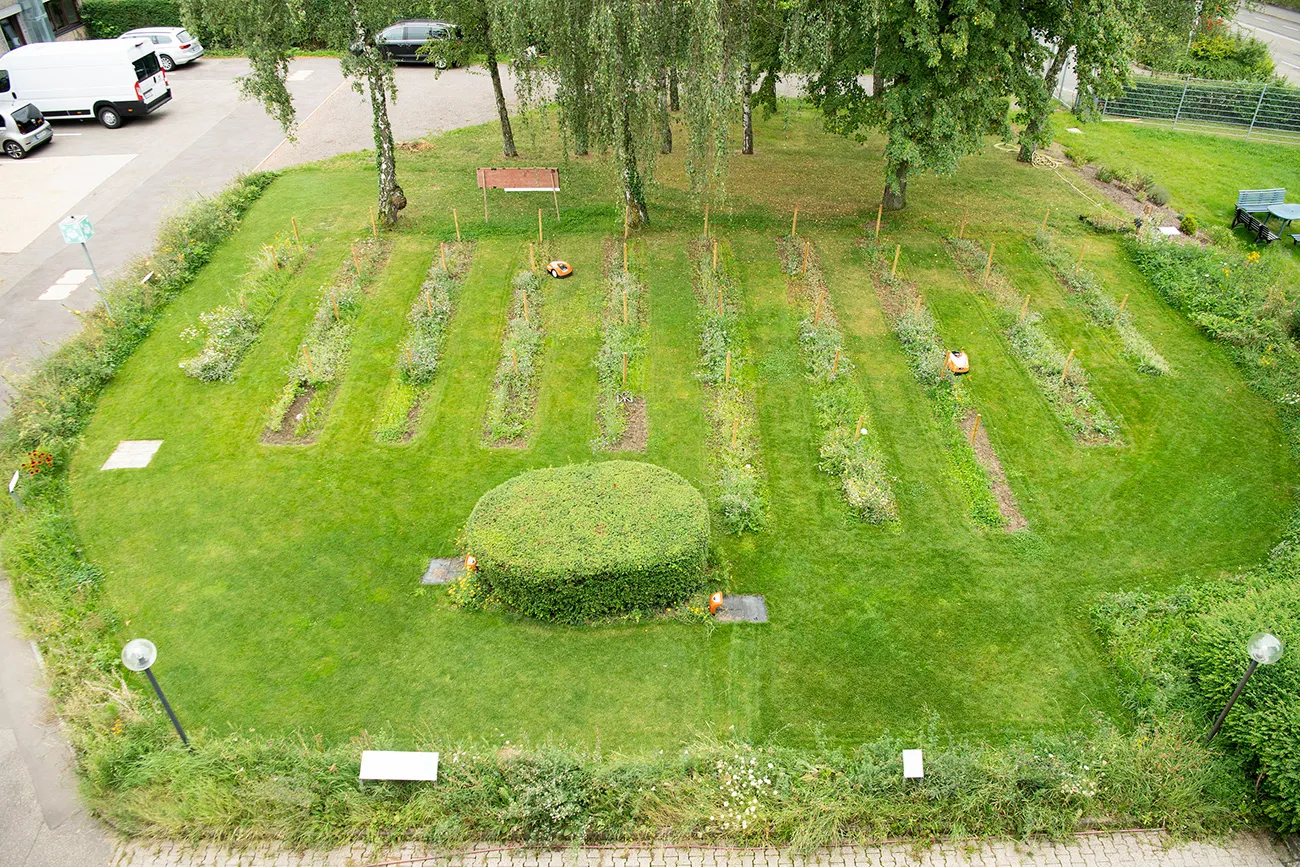
In the study “Anlage von Blühflächen zur Optimierung des Erscheinungsbildes von robotergemähten Rasenflächen” (Creating flower-rich areas to improve the appearance of lawns cut by robotic mowers), the trial site provided by STIHL was divided into strips of flower-rich areas. A total of 79 trial plots were established and sown with different flower mixes.
Gardens offer plenty of opportunities to enhance biodiversity. This applies, for example, to lawns maintained by robotic mowers. A strip 10 to 15 centimetres wide is often left unmown because the mower’s housing limits its reach. These edges are usually trimmed with a manual lawn edger to keep the lawn looking perfectly neat. A master’s thesis carried out at the University of Hohenheim with support from garden machinery manufacturer STIHL examined the extent to which deliberately sowing flower mixes in these strips improves the appearance of lawns enough to eliminate the need for regular edge trimming, while also contributing to biodiversity. The study builds on an earlier master’s thesis from 2020, which analysed the impact of mowing technology on lawn biodiversity. That study concluded that robotic mowers, which consistently keep the lawn short, can support greater diversity than manual lawn edgers, which are used only once a week. It also found that borders alongside lawns cut by robotic mowers significantly increase biodiversity.
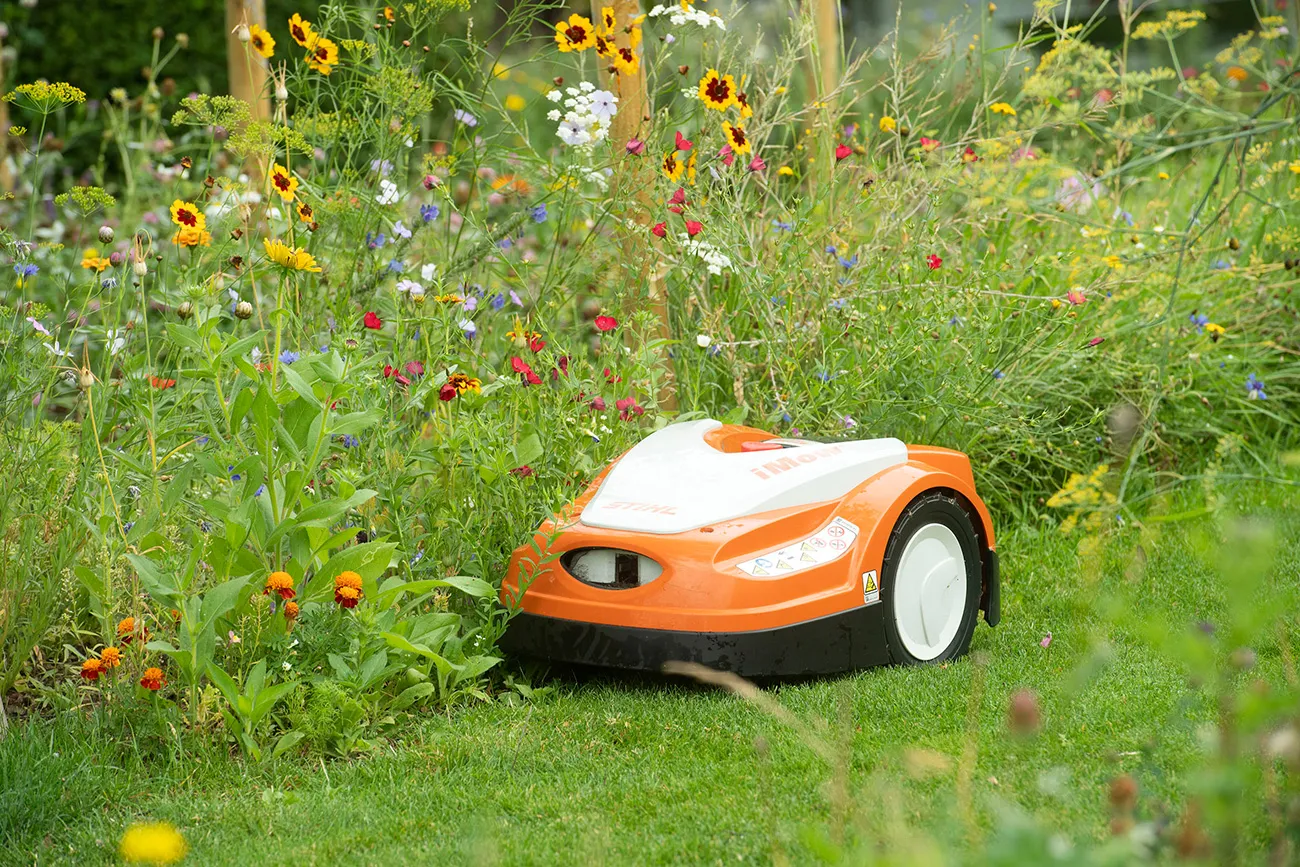
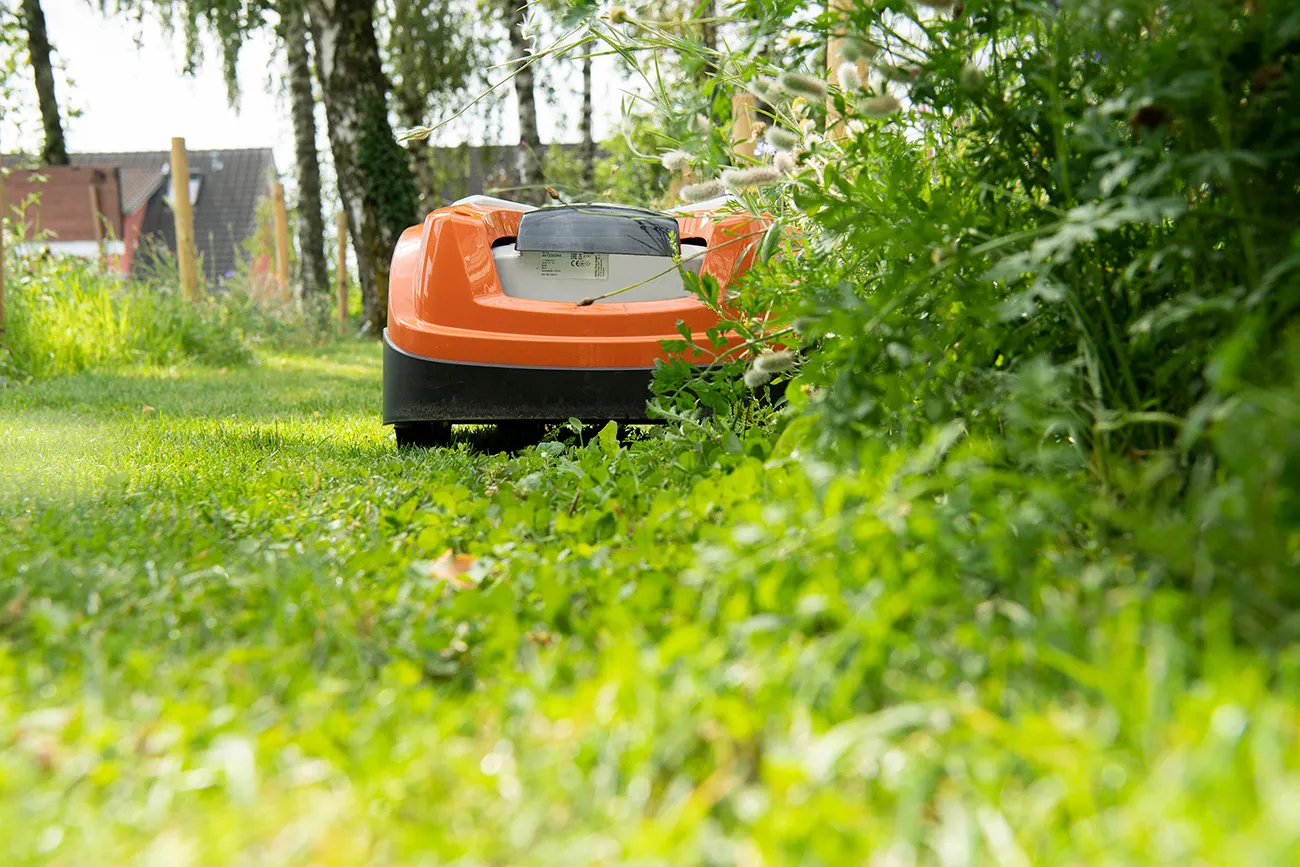
During the study, two STIHL RMI 422 robotic mowers cut the lawn and the transition zones with the flower mixes.
Field trial with different flower mixes
In her current research, master’s student Alicia Läpple investigated which seed mixes are robust enough to be cut or driven over by a robotic mower, making them ideal for creating borders that provide significant biodiversity benefits. To do this, she established strips of flowering areas on a lawn and sowed them with different flower mixes. The study comprised a total of 79 plots. Alicia Läpple used commercially available native seed mixes, as well as special native seed mixes that she had created herself using native seeds from low-growing and medium-height annual, biennial and perennial plants. A wire was then laid to mark the boundaries of the trial area. From July 2021, two STIHL iMOW RMI 422 robotic mowers cut the lawn strips between the flower plots at cutting heights of 3.5 and 6 centimetres.
From early July to late August 2021, the student regularly monitored the borders. Based on vegetation density and appearance, she identified the flower mixes best able to withstand the daily passage of a robotic mower. The findings showed that plant height and growth habit determine whether different plants are suitable for forming a flower strip cut by robotic mowers. Cutting height also proved important: a higher cutting height (6 cm) is better for growth than a lower one (3.5 cm). The master’s student therefore recommends adjusting the robotic mower’s cutting height when creating borders. Since herbs and grasses tolerate a low cutting height better than wildflowers, especially in mixes consisting entirely of flowers, the student also investigated a two-stage sowing approach: a first row of low-growing flower mixes “at the front”, followed by a second row of tall-growing flowers “at the back”. The results showed that this second row, further away from the lawn, can also be sown with visually attractive flower mixes that do not need to tolerate mowing or being driven over.
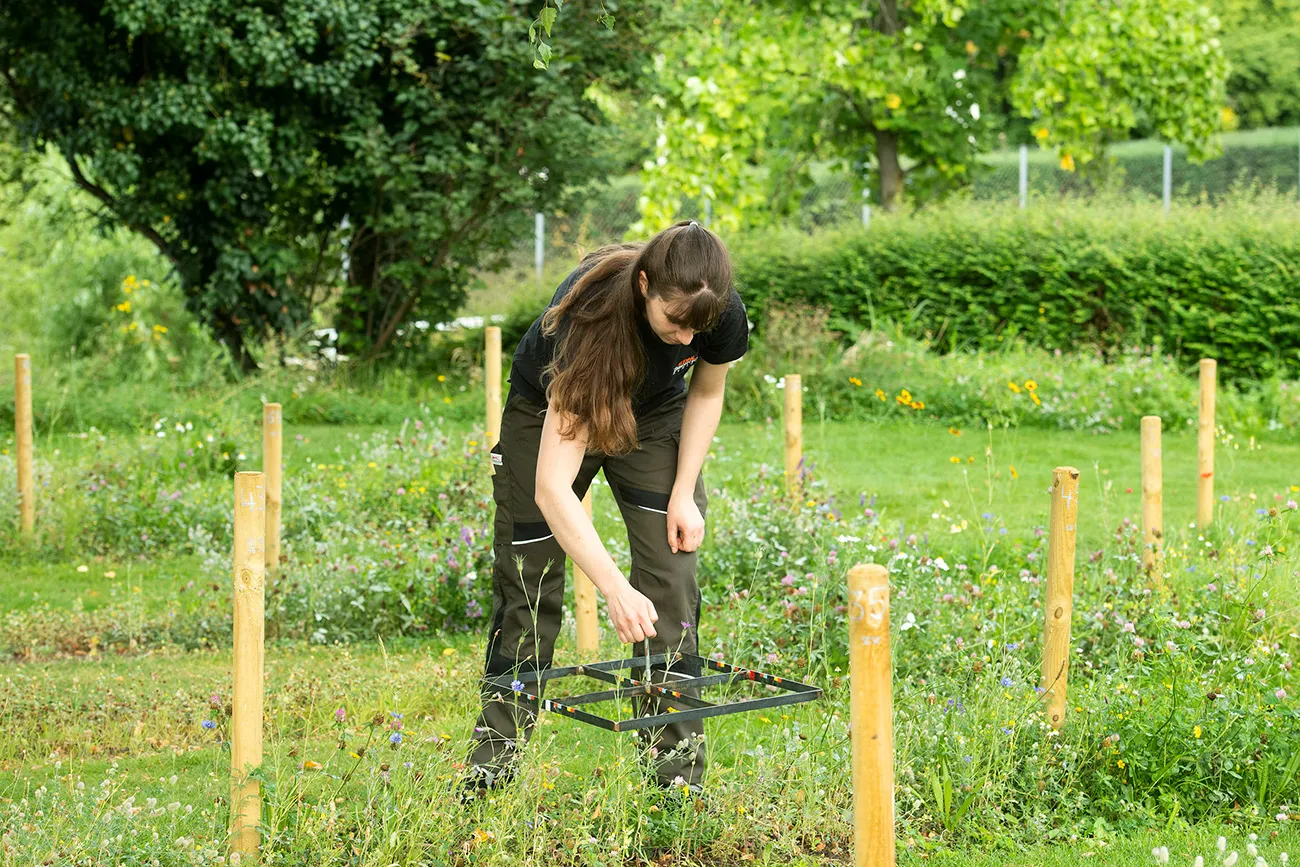
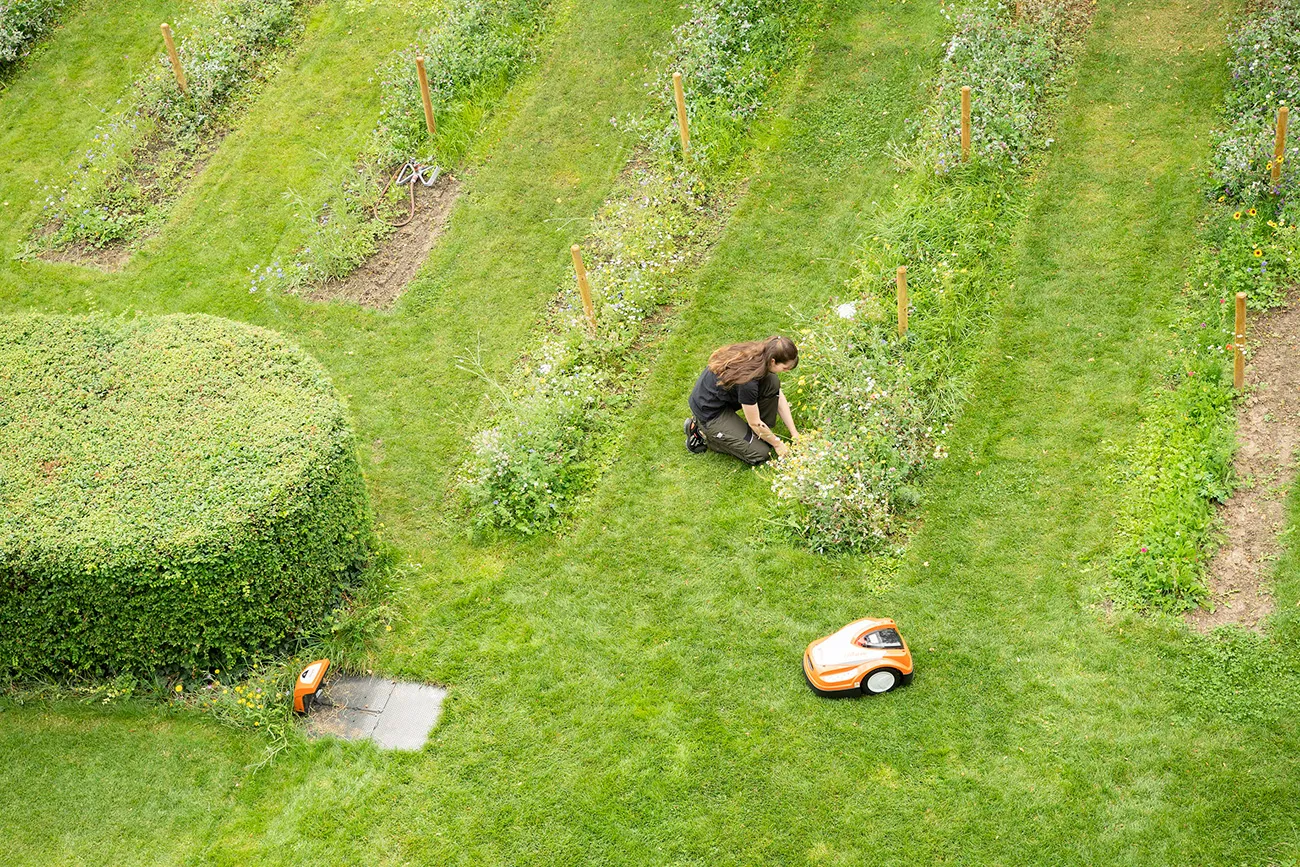
As part of the field study, the master’s student regularly assessed vegetation density and the appearance of the borders to establish what flower mixes need to withstand being cut or driven over by a robotic mower.
Native seeds promote biodiversity
The master’s student also investigated the extent to which creating borders promotes biodiversity. To do so, she observed and documented the hymenopterans visiting the strips. Her observations led her to conclude that borders sown with native seed mixes provided insects with an important food source throughout the study period. The future agricultural engineer also found that the increase in flowering plant species was accompanied by an increase in the insect species observed. Alicia Läpple recorded wild bees, honeybees, bumblebees, wasps, hoverflies, flies, Spanish flies, ladybirds, plant bugs and cabbage whites. The study clearly showed that creating borders not only improves the appearance of the site, but also promotes biodiversity. This is particularly true when native flower mixes are planted: the study found that flower-visiting insects prefer such mixes to exotic plants. Anyone looking to enhance their garden while also promoting biodiversity should therefore use native seed mixes when creating borders. It is also possible to combine different native flowering plants, for example by pairing a low- or medium-height mix at the front, where the robotic mower passes over part of it, with a tall-growing mix at the back. This technique particularly improves the quality of biodiversity.
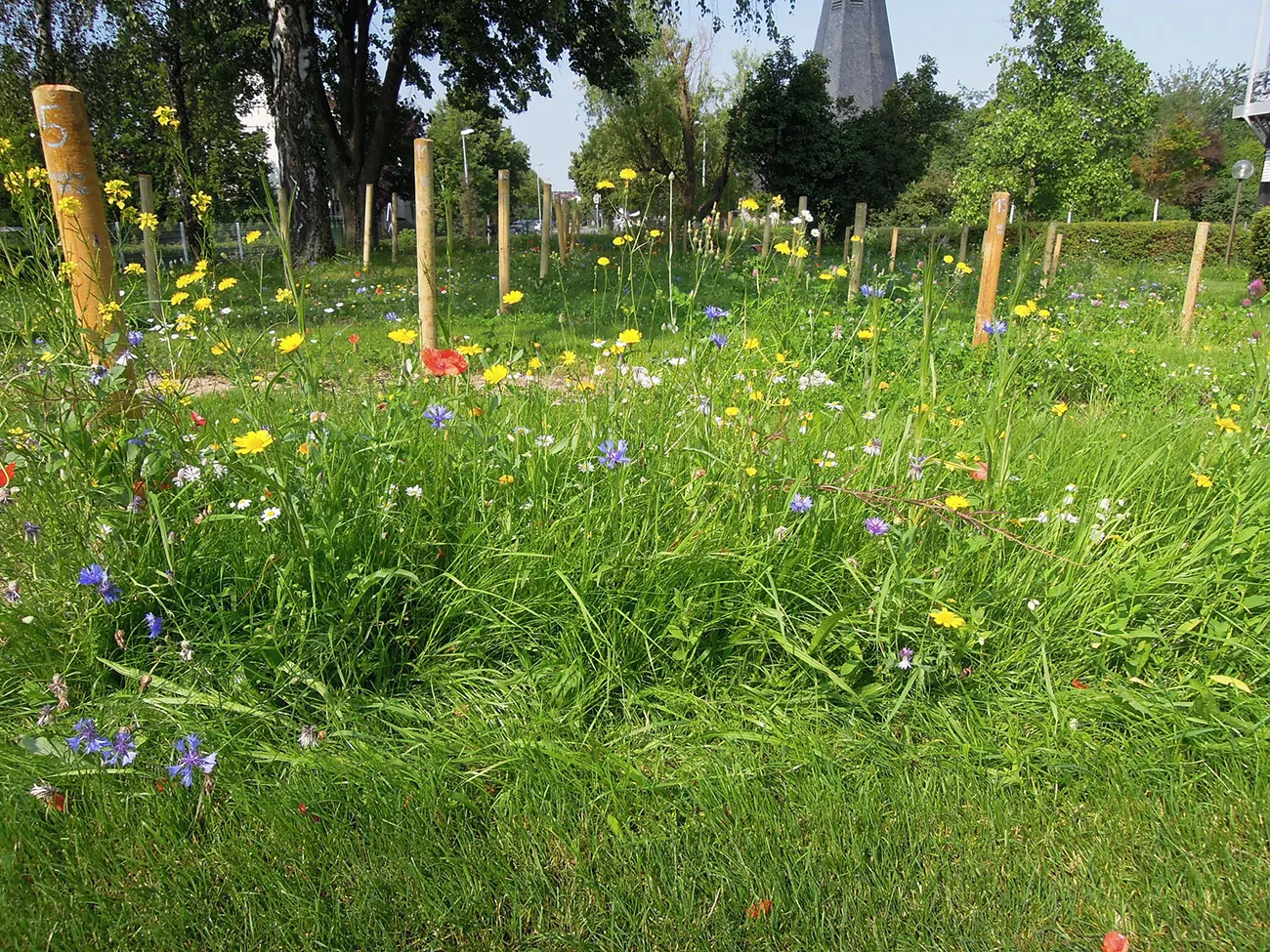
Borders along the edges of lawns are not only attractive, but also make an important contribution to promoting biodiversity in the garden.
A look at the results
As part of her master’s thesis, entitled “Anlage von Blühflächen zur Optimierung des Erscheinungsbildes von robotergemähten Rasenflächen” (Creating flower-rich areas to improve the appearance of lawns cut by robotic mowers), Alicia Läpple, a student at the University of Hohenheim in Baden-Württemberg, analysed in summer 2021 which native flower mixes were best able to withstand the daily use of a robotic mower. The aim was to establish which flowering plants are suitable for use along the edges of lawns maintained by robotic mowers. She sowed commercially available flower mixes, including mixes for flower and herb meadows (perennials), wildflower mixes (annuals) and mixes for colourful perennial borders, as well as special mixes that she had created herself from native seeds of low-growing and medium-height plants, comprising annuals, biennials and perennials in each case. In the field trial, the colourful perennial border mixes and the flower and herb meadow mixes proved suitable for grass edges cut by robotic mowers. These mixes achieved the highest overall scores and were equally attractive in terms of vegetation density and mowing tolerance. The colourful border mix came out best for the criteria “Aesthetics” and “Biodiversity quality”.
Question about this story? Ask your question
Keep following this
Get an email when a new story is published. No account needed.
- ThemeGreen space for everyone
- SubjectGeneral







