









Affordable, and increasingly tailored to the family
Text and images Marc Verachtert
Think ahead and create a garden for generations
Creating a garden costs about the same as, and possibly even less than, twenty years’ holiday spending, but offers more enjoyment for longer. Designed as a garden for generations, it keeps growing with the needs of everyone in the family.
Do people ever say that a garden costs a lot of money? They probably do, and your clients would have a point. A beautiful, high-quality garden costs money. The amount they have to pay is no small sum. But they all too often forget that a garden lasts a lifetime and provides the setting for a whole range of activities and enjoyable moments, year after year.
Dare to compare!
You don’t need us to tell you that a well-designed garden will last for many years, and that a garden often outlives a generation of residents. But does your client realise that when reviewing and discussing your quote? Make it clear to them, without exaggerating. Put the garden’s lifespan at twenty years. That is also the time horizon most young families look ahead to. Divide the amount in your quote by twenty to get an ‘annual price’ that is much more manageable, and can also be compared with what your clients spend on their annual holiday and any city breaks in between. There’s a good chance the garden will cost less to create, while, as you can rightly stress, providing enjoyment every day.
It is important, though, to make the garden future-proof, so it continues to suit the family perfectly. Create a framework or fixed layout that allows for changes and adaptations. A terrace, garden paths, a louvred roof, a pergola, borders… all can have their place, as long as they do not stand in the way of future developments.
Growing with the family
Don’t you often draw up a master plan that is then implemented in phases? This is no different, except that there is flexibility and the work is spread over a number of years. You put yourself in your clients’ shoes and think about, or with them, how their family will develop and how it will use, or be able to use, the garden as it grows. It is particularly important to consider how the children will use the garden, which clearly varies according to their age, both now and in the future. Toddlers don’t stay toddlers, after all. They grow into young children, teenagers, young adults and adults, who may still enjoy the comforts of hotel mum and dad. The garden needs to suit them, too, and continue to do so.
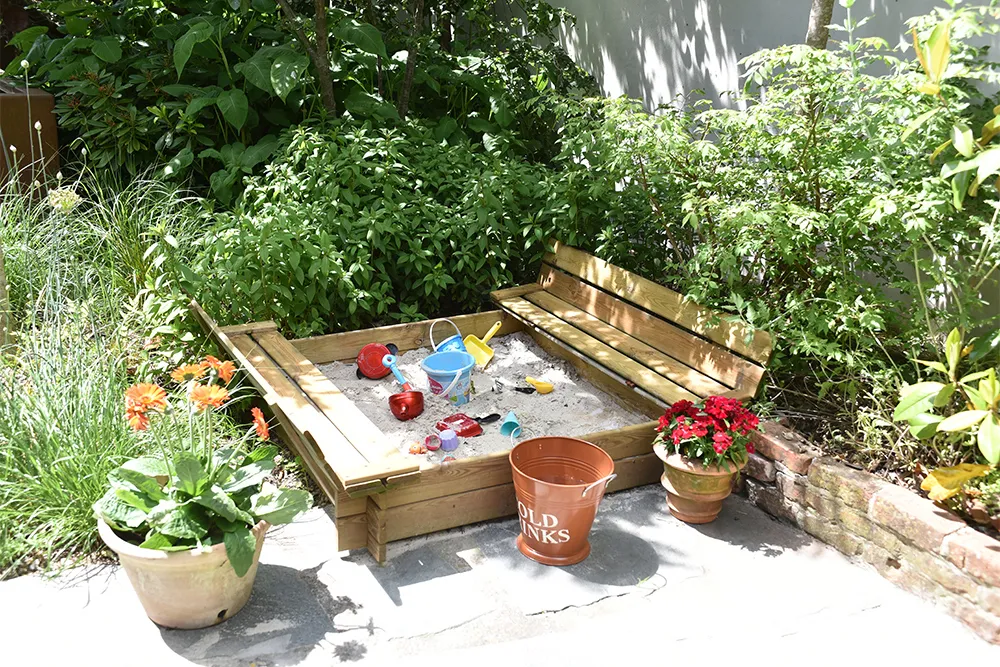
To explain what that means to your clients, you need look no further than the edge of the terrace. Young children and toddlers want to keep eye contact with their parents. That makes it the ideal spot for a play mat and, a little later, the much-requested sandpit. We’ll leave its design to your vision and expertise. Until they have children, however, the young couple can use this corner for herbs or even a mini-picking garden with leafy vegetables and other treats. Once the sandpit has served its purpose, it could make way for a proper playhouse, which can later be replaced by, for example, a water feature, a barbecue area or even an outdoor kitchen, complete with pizza oven.
Save money and preserve garden quality!
These adaptations cost money. Yes, quite a lot of them do. And naturally, they were not included in the garden’s initial budget. But think back to the holiday budget we compared the garden’s depreciation with, and ask your clients whether they realise that their holiday budget also increases year after year. Children don’t travel for free forever, and as they get older and bigger, they want a say in what to do and where to go, which means more expensive trips. What’s more, if everything is planned properly from day one, the cost of adapting the garden will remain limited. Think of plans for a swimming pond or swimming pool, perhaps still a distant dream. There’s a good chance the young family will put them off for some time. With a baby on the way, or young children already in the family, they are not keen on water. Deciding on the best location now takes little effort on your part, and lets you develop the garden design so that when the excavator finally moves in, no trees are in the way, hedges and shrub borders already provide the necessary shelter, and a terrace may be almost ready for sunbathing and relaxing by the water. In short, money spent, but also saved, and above all, lasting gains in garden quality.
A child-friendly approach
Making a garden future-proof almost always means designing and creating it with the children in the family very much in mind. That goes far beyond identifying the best spot for a ready-made play structure. Children want more. They want to feel at home in the garden and explore it from end to end. So, of course, you don’t plant anything poisonous or thorny in the borders.
But do you also turn borders into play areas? It need be no more difficult than winding a narrow path through a wide border. The children can supply the adventure in their own imaginations.
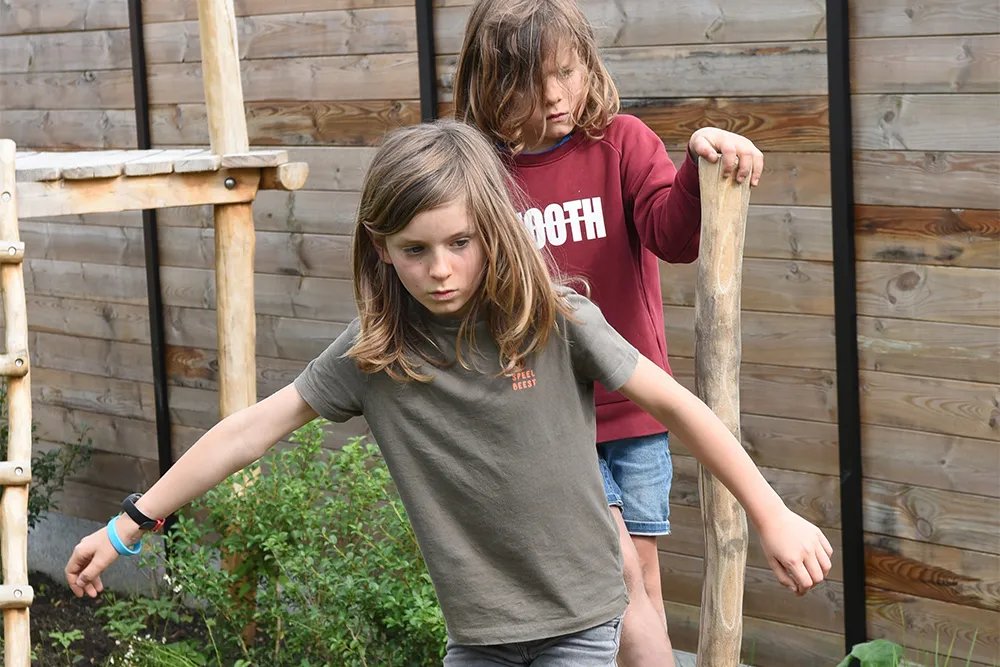
You can, of course, make it even more exciting with a reclaimed tree trunk laid down as a balance beam, or, in their imagination, a ship, rocket or monster. Set upright posts in the ground as stepping stones or for balance exercises, and add a dip or perhaps a mound. By combining all these elements, you can inspire even more play, and do it better. At the side, or even right at the back, away from the parents’ watchful eye and among plants that can take a bit of rough treatment, you can create an invitation to build a den or hut, with or without tent fabric. It will provide hours, days and weeks of fun, and help create lasting memories for the little ones, who are still young now.
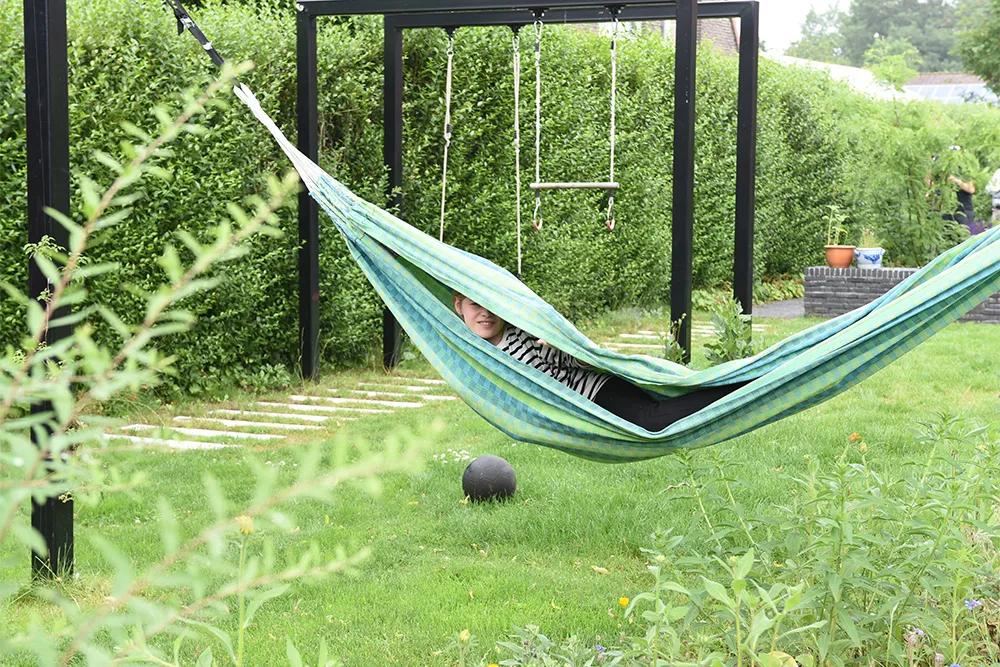
When it comes to play equipment, aim for maximum adaptability. Design a ‘grow-with-them play structure’ that can be fitted with different play elements over time, draped with a sail, and adjusted in height, with the level of challenge evolving as the children grow. Another option is a sturdy inverted U-shape anchored in the ground, from which you can hang a nest swing, a standard swing, a climbing rope, a climbing net, a trapeze and much more, depending on the children’s age and what they feel like doing. With two such frames spaced correctly, you can even attach a slackline or a hammock.
Question about this story? Ask your question
Keep following this
Get an email when a new story is published. No account needed.
- SubjectGeneral







