









Annuals and perennials as ground cover for naturalistic planting
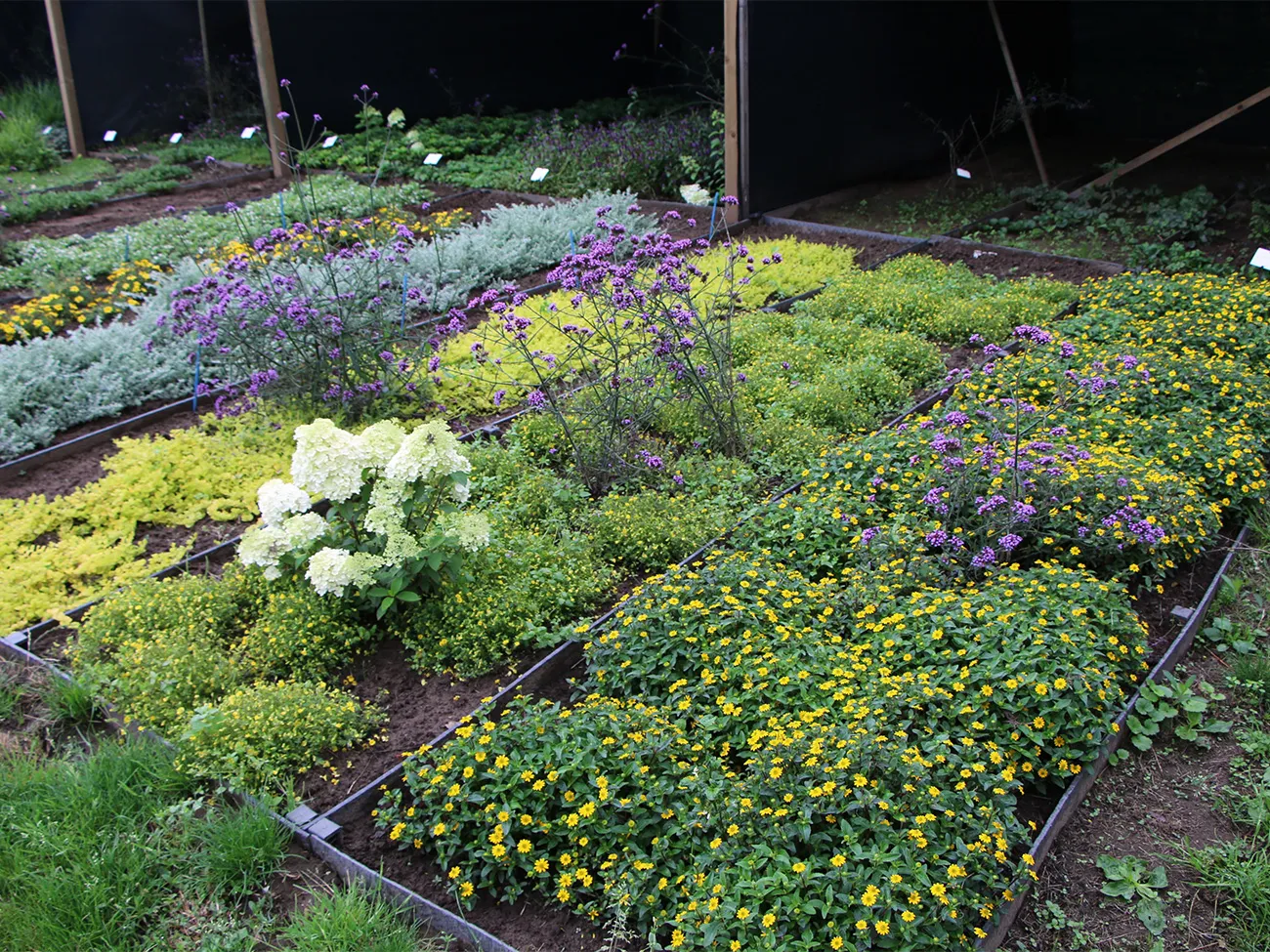
At the Ornamental Plant Research Centre, a range of ground-covering perennials was tested in different light conditions, alongside annuals and ground-covering shrubs. This article reports the findings after two years.
In naturalistic planting, ground cover forms the lowest layer, topped by a fringe layer containing shrubs, a shrub layer and a tree layer. In gardens and public green spaces, ground cover is also often used in beds, with or without one or more of the other natural layers. It covers otherwise bare soil, helping to reduce weed pressure and slow the soil’s drying through evaporation. However, planting schemes often rely on a few familiar species, which are not always suitable for every situation.
Ground-covering perennials in different light conditions
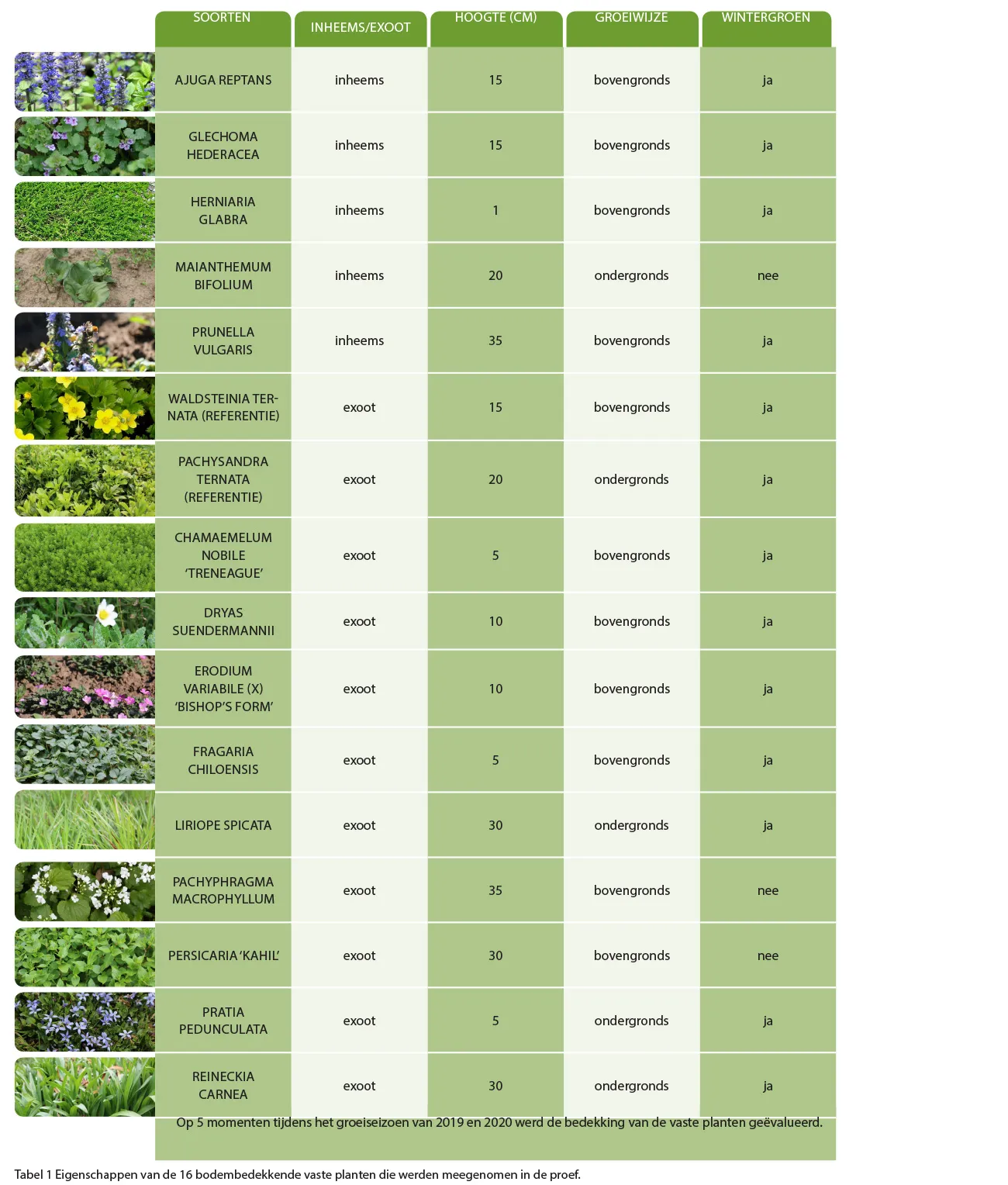
In 2019, a trial was established with a selection of sixteen ground-covering plants, each planted in full sun, partial shade and shade. Species were selected according to leaf shape, growth habit (underground versus above-ground runners), evergreen character and origin (native/non-native). The trial also assessed their association with a shrub (Hydrangea paniculata ‘Bobo’), a bulb (Narcissus poeticus and Crocus vernus ‘Remembrance’) and an upright perennial (Verbena bonariensis). The selection included reference species such as Waldsteinia ternata and Pachysandra ternata, as well as less familiar species such as Reineckia carnea.
Erodium and Maianthemum had low ground cover in all light conditions. By contrast, Fragaria, Prunella, Reineckia, Liriope spicata and Persicaria performed well in full sun, partial shade and shade. Species such as Ajuga, Dryas, Glechoma and Herniaria clearly preferred full sun or partial shade, while Pachysandra, Pachypraghma and Waldsteinia performed better in shade. Glechoma and Prunella are relatively short-lived, but local rejuvenation means they continue to provide good ground cover. However, they may also self-seed into nearby plantings.
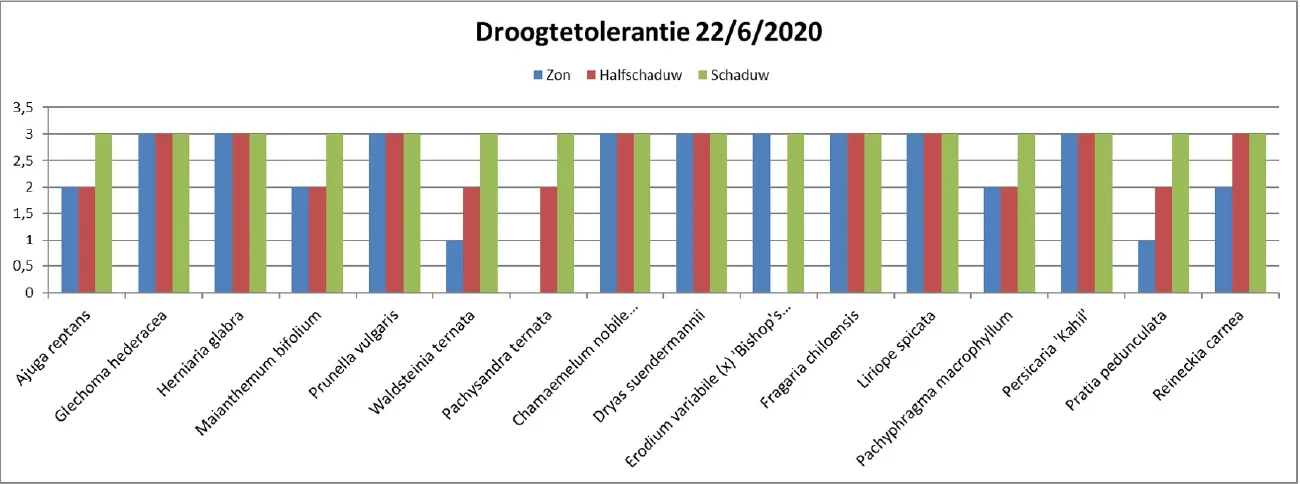
On 22/06/2020, following a prolonged dry spell, drought tolerance was scored (0 -> 3, where 3 = no drought damage), independently of ground-cover percentage. More shade-loving species proved significantly more sensitive, as did some species that performed well in full sun, such as Ajuga reptans and Reineckia carnea. All species recovered well after a period of rain.
Ground-covering bedding plants
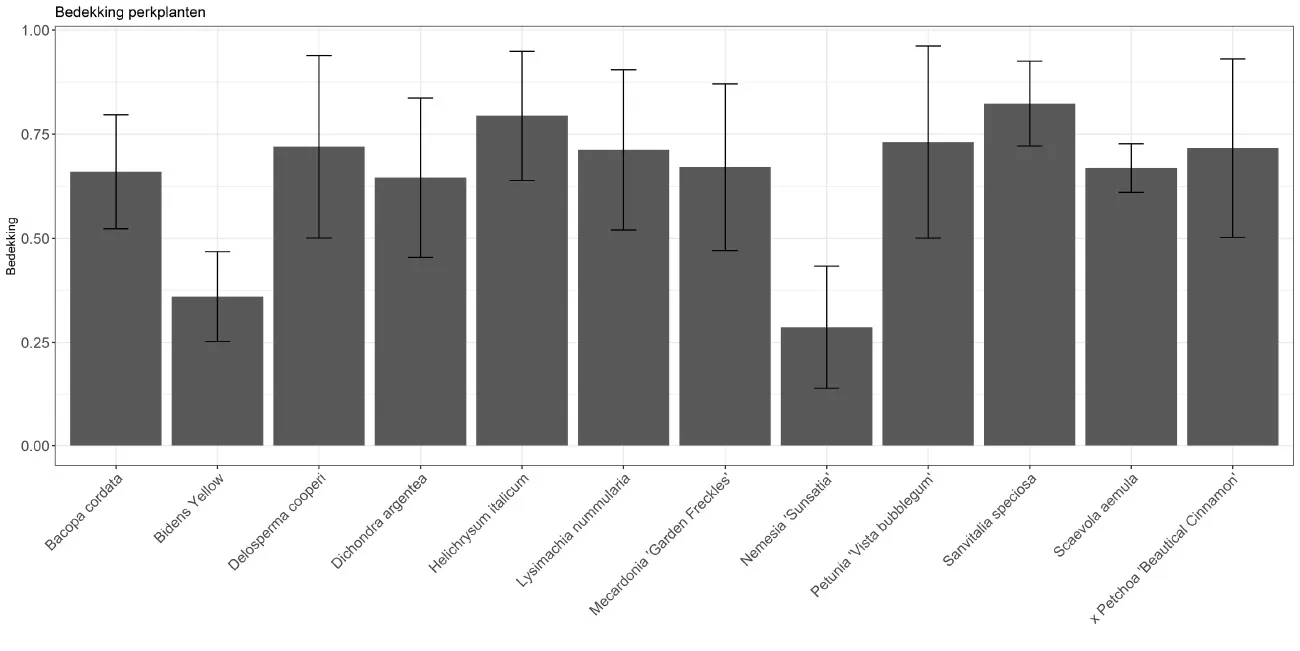
In both 2019 and 2020, plots of bedding plants were planted alongside the perennials, starting in June each year, with Sanvitalia speciosa as the reference species. Average ground cover from these bedding plants increased rapidly after planting and remained relatively constant throughout the growing season.
Only Nemesia and Bidens had insufficient ground cover, and therefore inadequate weed-suppressing ability. During the growing season, from June to September, bedding plants can certainly provide a full alternative to perennials for reducing weed pressure.
Future research: ground-covering shrubs and pre-grown plant mats
In 2020, ten ground-covering shrub species were planted: Hedera helix ‘Ivalice’, Hypericum ‘Black gem’, Lonicera nitida, Lonicera ‘Blond & beyond’, Potentilla ‘Bellisima’, Prunus pumila ‘Depressa’, Rhus ‘Gro low’, Rosa ‘Green summer’, Rubus ‘Betty Ashburner’ and Symporicarpos ‘Hancock low’. In the first year after planting, average ground cover had already reached 50 to 75 per cent, but this trial will continue to be monitored in 2021.
In 2021, pre-grown plant mats of Waldsteinia ternata and Vinca minor will be compared with planting in P9 pots. The difference in cost will be weighed against the time saved through faster establishment and reduced maintenance.
Research supported by the Flemish Government, the Agency for Innovation and Entrepreneurship, the European Union, the Province of East Flanders, Boerenbond and AVBS, the ornamental horticulture and green sector federation.
Question about this story? Ask your question
Keep following this
Get an email when a new story is published. No account needed.
- ThemeTrees and plants of tomorrow
- SubjectGeneral







