









Avoiding premature tree mortality is simple. How to plant trees properly
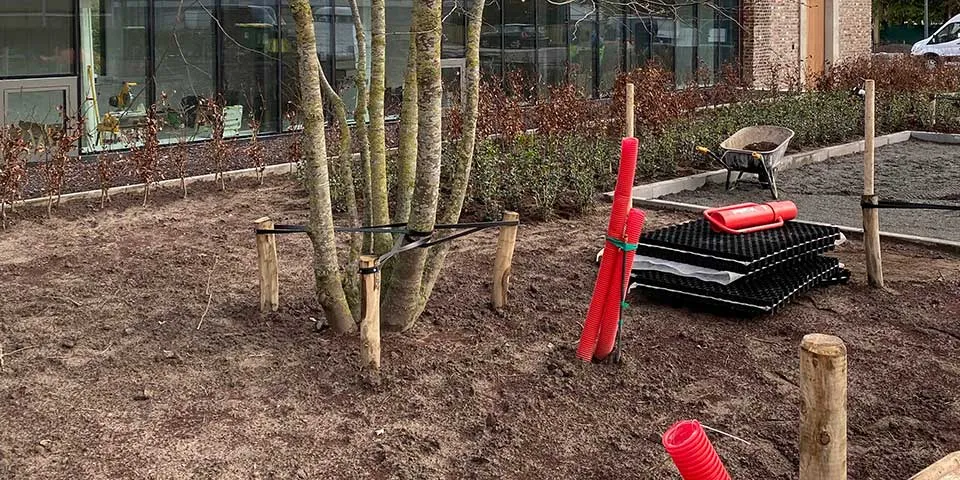
Every province and almost every city or municipality is now making plans to plant trees on a large scale.
A great idea, and one we can only applaud. However, despite the long lifespans trees can achieve, in practice we see many specimens dying within just a few years of planting and having to be replaced.
Simple, or not?
The cause of this problem is not hard to find. All too often, trees are planted without taking account of their specific needs and requirements, such as soil biology, texture and structure, as well as humus content and pH. Fertilisation is also sometimes overlooked, with the result that trees fail to grow properly, produce only small, pale leaves and put out no new shoots or additional leaves.
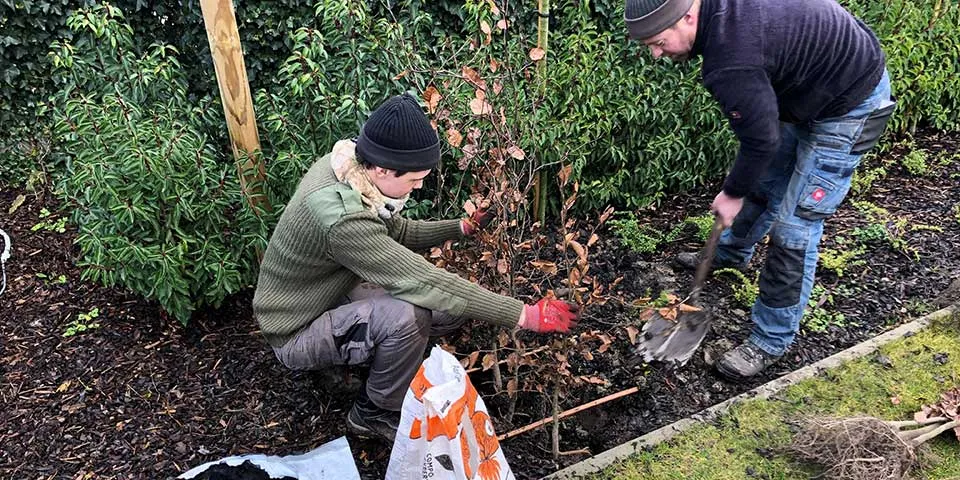
Yet all these problems can be avoided by making planting pits large enough, using the right soil improver and mixing it thoroughly into the soil in the planting pit and the backfill. Add a dose of nutrients, support and moisture, and the job is done. It really is that simple. And yet thousands of trees have to be replanted in Flanders every year because one or more of the factors mentioned above have not been taken into account.
10 practical points to consider
As a reminder, here are the ten most important points to consider when planting:
1. Choose the right species and take account of the space available. Consider the shape of the crown and the surroundings.
2. Allow enough space for the root system. Remember that the root system will spread to the same extent as the crown.
3. Make sure the trees you buy have a sufficiently large, healthy root system.
4. Analyse the soil in which the tree will be planted and make sure it contains enough organic matter (at least 2.5 to 3%).
5. Make planting pits large enough, twice the size of the root ball, and work the soil at the bottom of the pit. Even when the planting pit is dug with an excavator, the bottom must be dug over and mixed with soil improver. In heavy soils, planting pits can quickly act like bathtubs: excess water cannot drain away and the roots die.
6. Apply fertiliser and soil improvers, such as Agrosil® LR, Karisol® Complex and Basacote® Plus 16-8-12, in the correct proportions.
7. Make sure the tree is not planted too deeply.
8. Prevent soil compaction in the root zone, for example from parked vehicles. Soil compaction will throw the water-to-air balance in the soil completely off, again causing root death. It will also cause soil biology to deteriorate.
9. Remember to water in good time. In dry periods, sufficient water is essential.
10. Apply fertiliser regularly to ensure all the elements needed for a healthy, vigorous tree are available.
Revitalisation works!
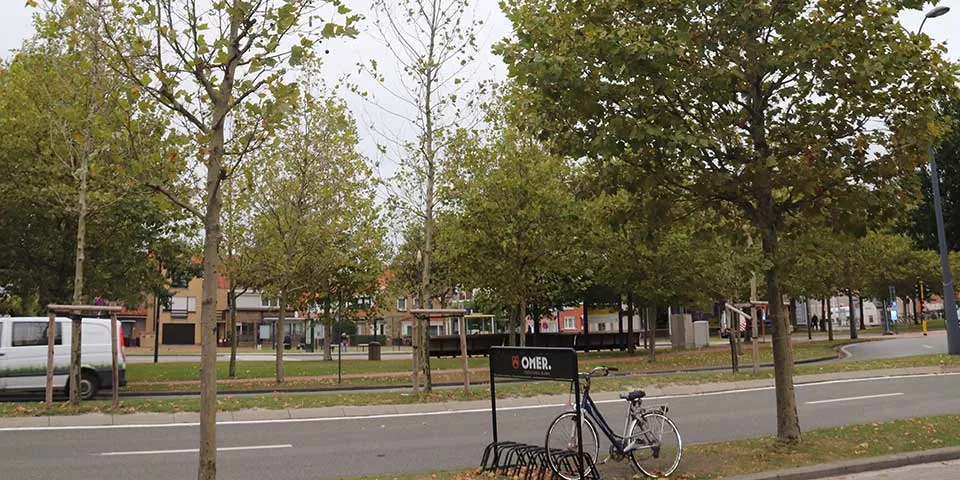
It is not necessarily too late for trees that have already been planted but are growing poorly. A revitalisation programme may be enough in such cases. To do this, drill four to six holes around each tree pit, each 10 cm in diameter and 35 to 40 cm deep, and fill them evenly with 10 to 20 litres of Karisol® Complex and 1.5 kilograms of Basacote® Plus 16-8-12 (coated fertiliser). Use Basacote® Plus with a six-month release period if treatment is carried out in late spring (April, May, June), and with a nine-month release period if carried out in early spring (February, March). If the tree in question has limited growing space, repeat this treatment every two years.
Question about this story? Ask your question
Keep following this
Get an email when a new story is published. No account needed.
- ThemeHealthy soil and smart water management
- SubjectGeneral







