









Back in favour: the western red cedar hedge
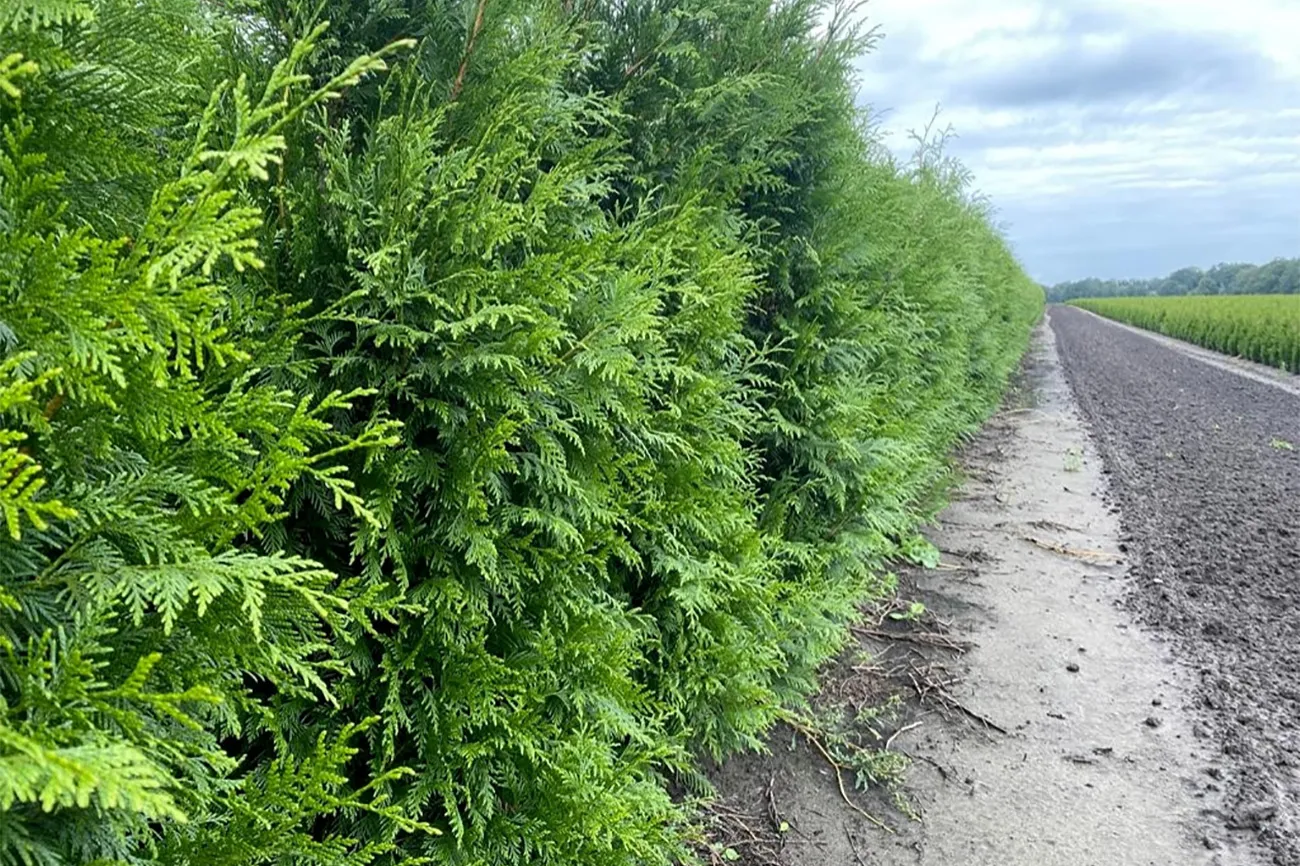
From dusty image to popular green boundary
More and more people are seeking tranquillity at home. They are renovating their gardens and getting closer to nature. It is therefore becoming increasingly common to have a beautiful, tall hedge instead of a wooden fence or concrete wall. The Thuja Plicata Martin is one example. Henri Nelissen, general manager at Coniplant B.V., tells us more about this beautiful hedge and the benefits it offers.
Thuja Plicata Martin is a tall conifer hedge that is becoming increasingly popular. “It is an incredibly robust hedge plant that deserves a place in every garden. Its dark green colour sets it apart from the others, giving the hedge a fresh, contemporary look. Five years ago, conifers still had a rather old-fashioned image, but now you see them making a comeback. It just goes to show that people want more greenery in their gardens.”
Easy to maintain and compact
“Thuja Plicata is a fairly easy plant to grow and thrives quickly. It can grow in both dry and wet soil, making it very versatile. And because it responds well to pruning, the hedge stays compact, so you do not lose unnecessary space in your garden,” says Nelissen.
This robust hedge plant offers several welcome advantages over a fence or concrete wall. “The living material of the hedge helps keep the garden cool. So during hot summers, it is lovely to find some shade or cool down there. The hedge also absorbs heavy rainfall much better than other types of fencing. Its roots allow water to drain through the soil much more easily than when there is paving. The hedge also benefits biodiversity. Birds and insects are happy to nest in this large, safe plant.”
Mechanical pruning
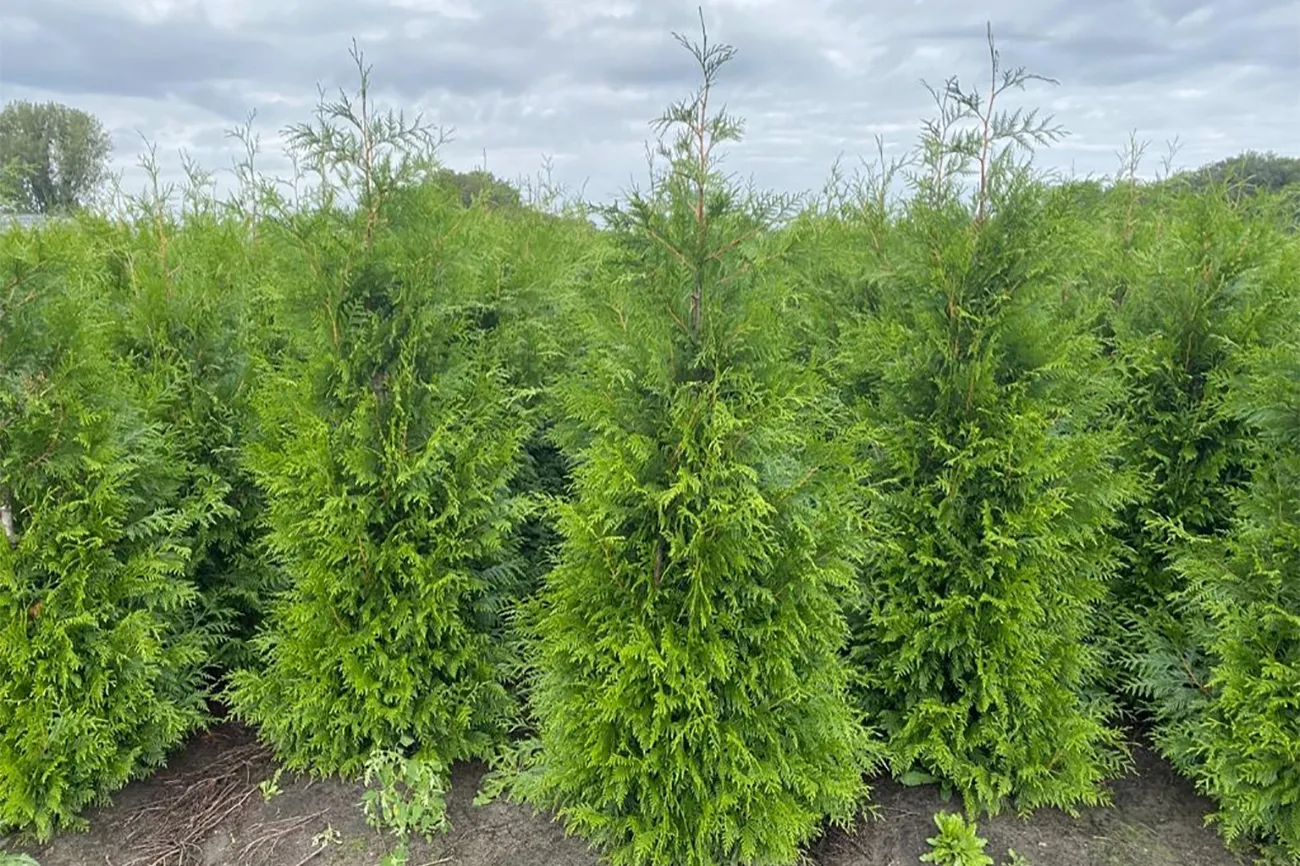
Before the plants leave Coniplant B.V., staff make sure they have been properly pruned. “We prune the hedges mechanically to give you a beautiful, compact hedge. A conifer normally grows in a conical shape. But by pruning and transplanting them, we give them more of a cylindrical shape. This means that the plants people buy from us are already nicely full, and will provide an opaque screen within a year. That is often the number one reason people buy a hedge: privacy.”
“Once the hedge conifers reach 1 metre in height, we transplant them once. This greatly improves the root system and minimises the risk of the hedge failing to establish. If you plant the hedge and do not transplant it, it may grow faster, but it will only develop three or four thick roots. By lifting the plants and replanting them in different soil, we force the hedge to start producing roots again. This gives it many more, finer feeder roots and makes the hedge much more resilient.”
Nelissen adds: “If you buy an unpruned hedge that is between two and two and a half metres tall, it is often already more than a metre wide. That takes up a lot of space in your garden. By pruning them, we reduce that to about half a metre, and they are also nicely branched. In a relatively short time, you will have a beautiful, dense hedge that is a real asset to your garden, not only for you, but for nature too.”
Question about this story? Ask your question
Keep following this
Get an email when a new story is published. No account needed.
- SubjectGeneral







