









Bringing light deep into the plant
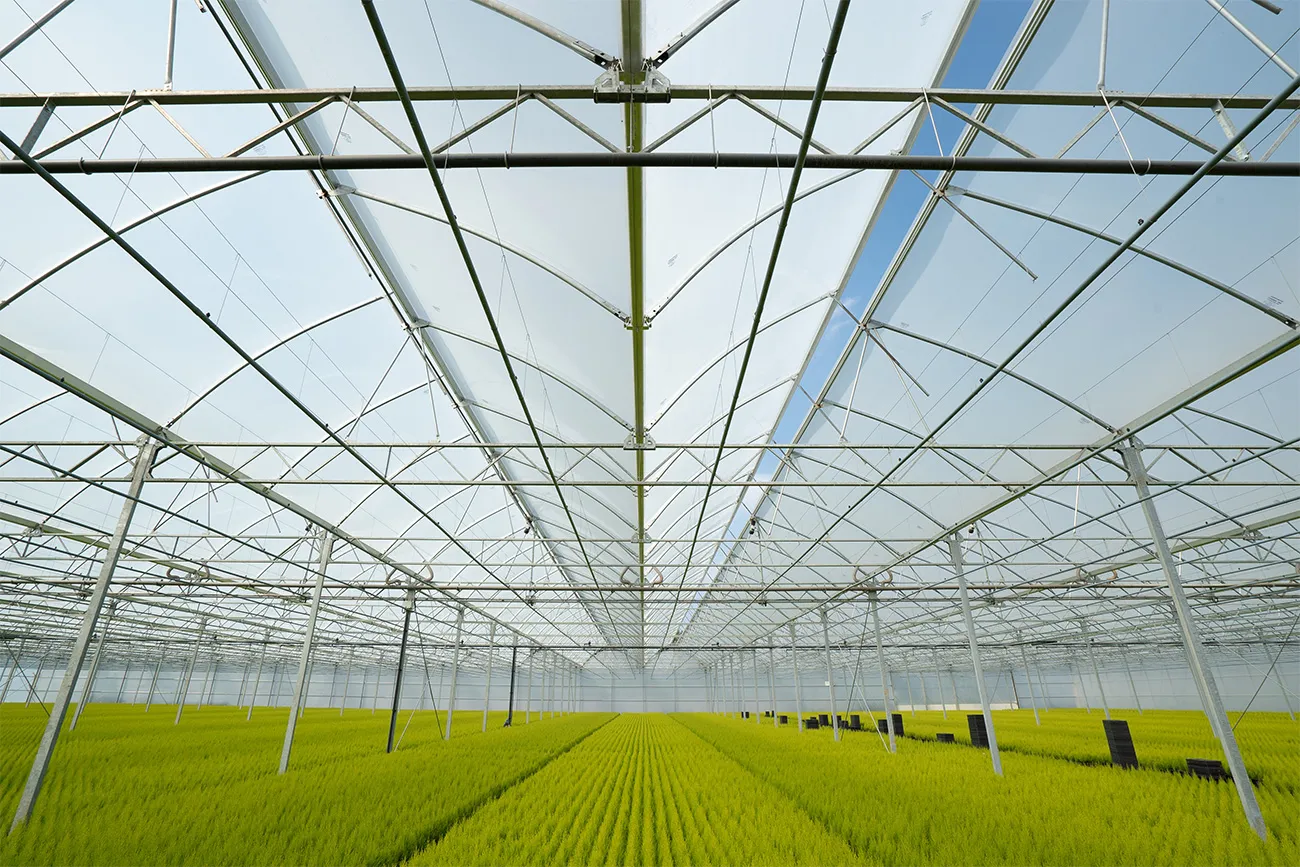
At West Flanders family business Vermako, the second generation is poised to take the reins. Following a transition year, Kim, Kevin and Karl Maes will officially take over from their father Jacques in 2024. With the launch of a new type of polytunnel, however, they are already cautiously making their mark. “As an alternative to our familiar truss structure, we are now also offering a more budget-friendly option with a tubular frame,” says Kevin Maes.
Under the name Vermako Greenhouses, the Maes family has specialised in the production, construction and installation of polytunnels since 1989. These are generally built using trusses and to the strictest German and British standards.
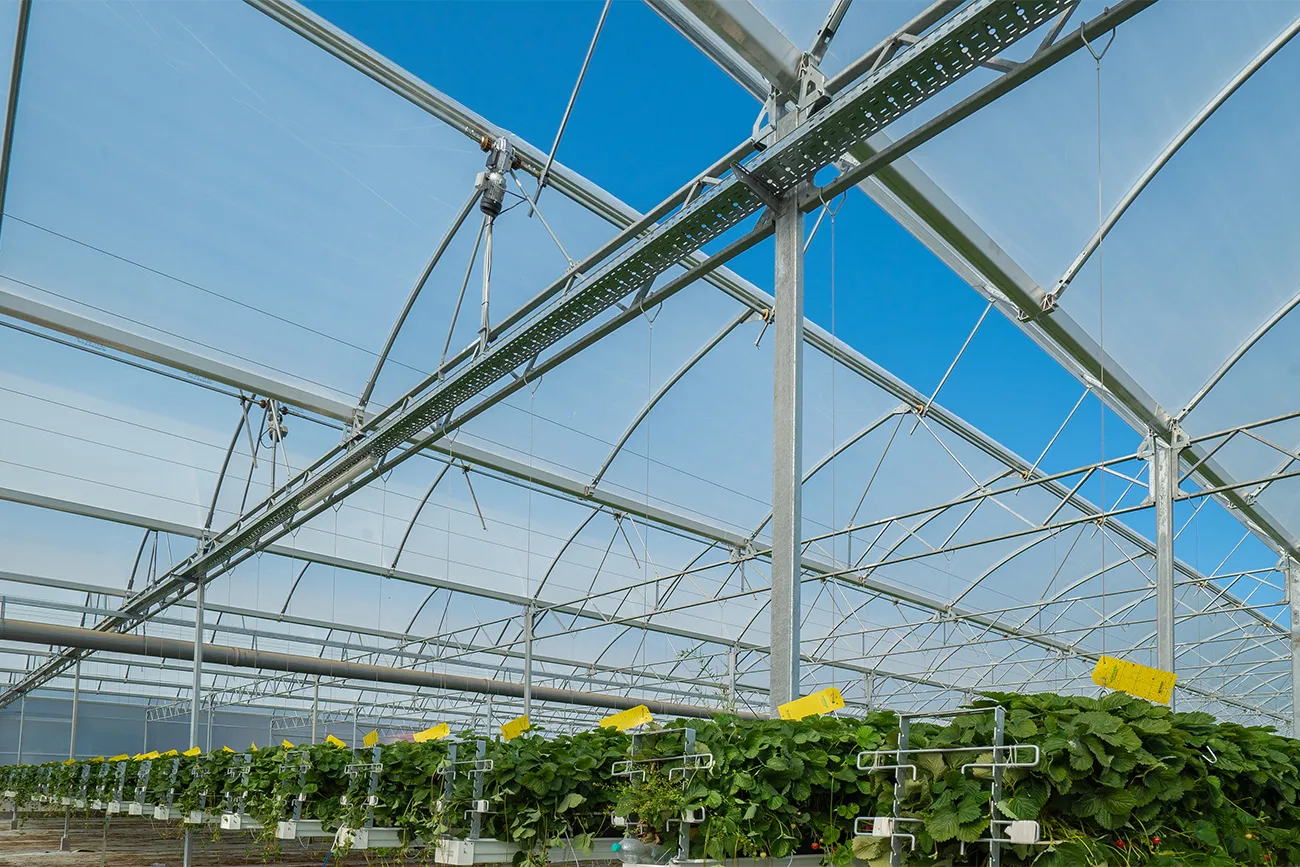
“To meet market demand even better, we recently invested in a new building and a ‘tube mill’ for manufacturing tubular profiles,” says sales manager Steven Van Hoof. “Our two-hectare workshop now enables us to produce everything for both the truss and tubular-frame structures.”
Three sizes
The new tubular-frame polytunnels are available in three spans and, like Vermako’s other greenhouses, can be built to the required length and width.
“The 8 m and 9.60 m spans, for example, are particularly suitable for strawberry production,” says Kevin Maes. “The larger 12.80 m span is more likely to be used for other crops. As with our other greenhouses, customers can choose between single and double film, and there are several ventilation options too. Alongside our semi-ventilation system, we also offer butterfly ventilation in these greenhouses.”
Stronger plants
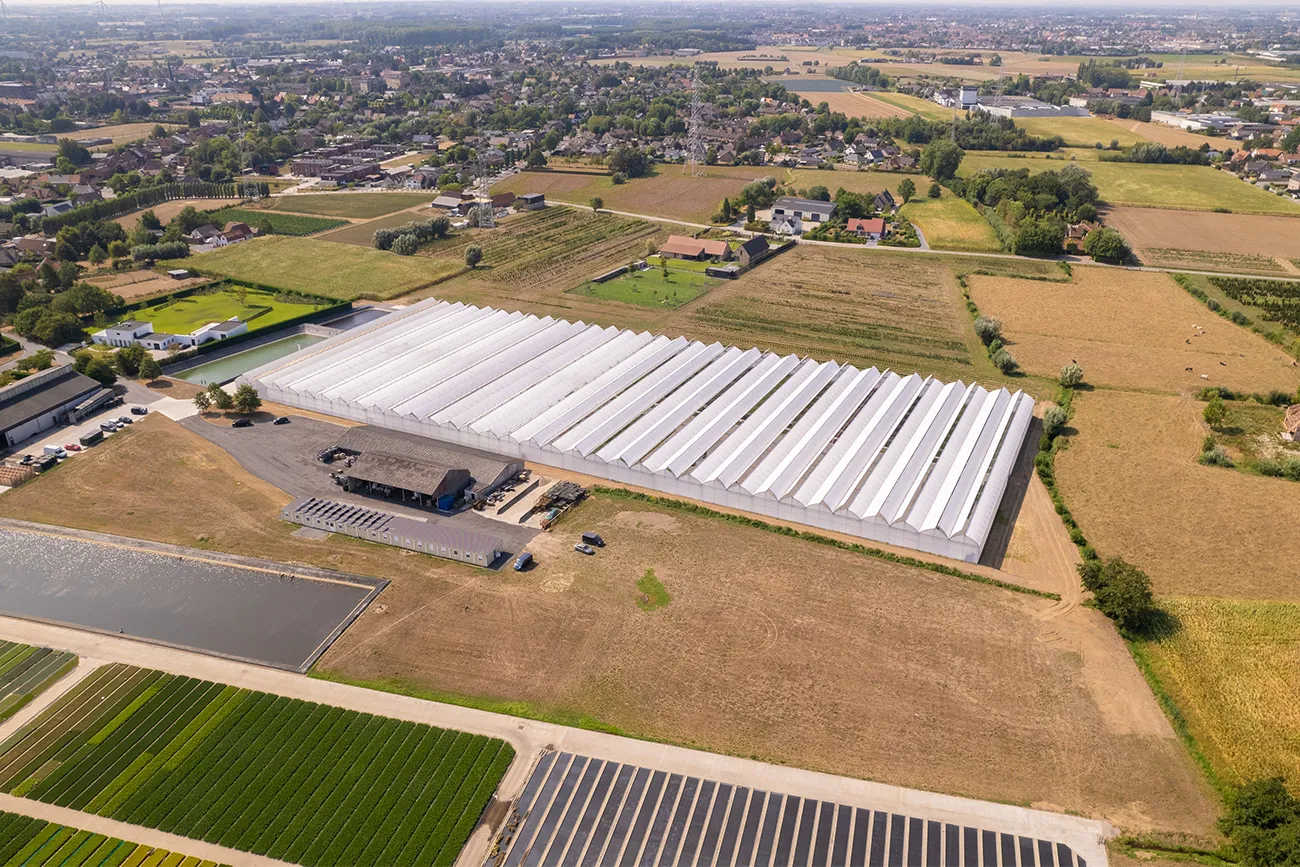
The new tubular-frame structure offers a slightly more economical alternative without compromising the real strength of the polytunnels. Van Hoof says: “The film distributes light rays more evenly. This allows them to penetrate not only further into the greenhouse, but, more importantly, deeper into the plant. The result is more attractive, sturdier plants.”
“Those who opt for a double-skinned greenhouse can also make substantial savings,” Maes adds. “Blowing a layer of air about 10 cm thick between the two films significantly improves insulation. Compared with a glass greenhouse or a single layer of film, this can mean savings of up to 30%.”
Chimney effect
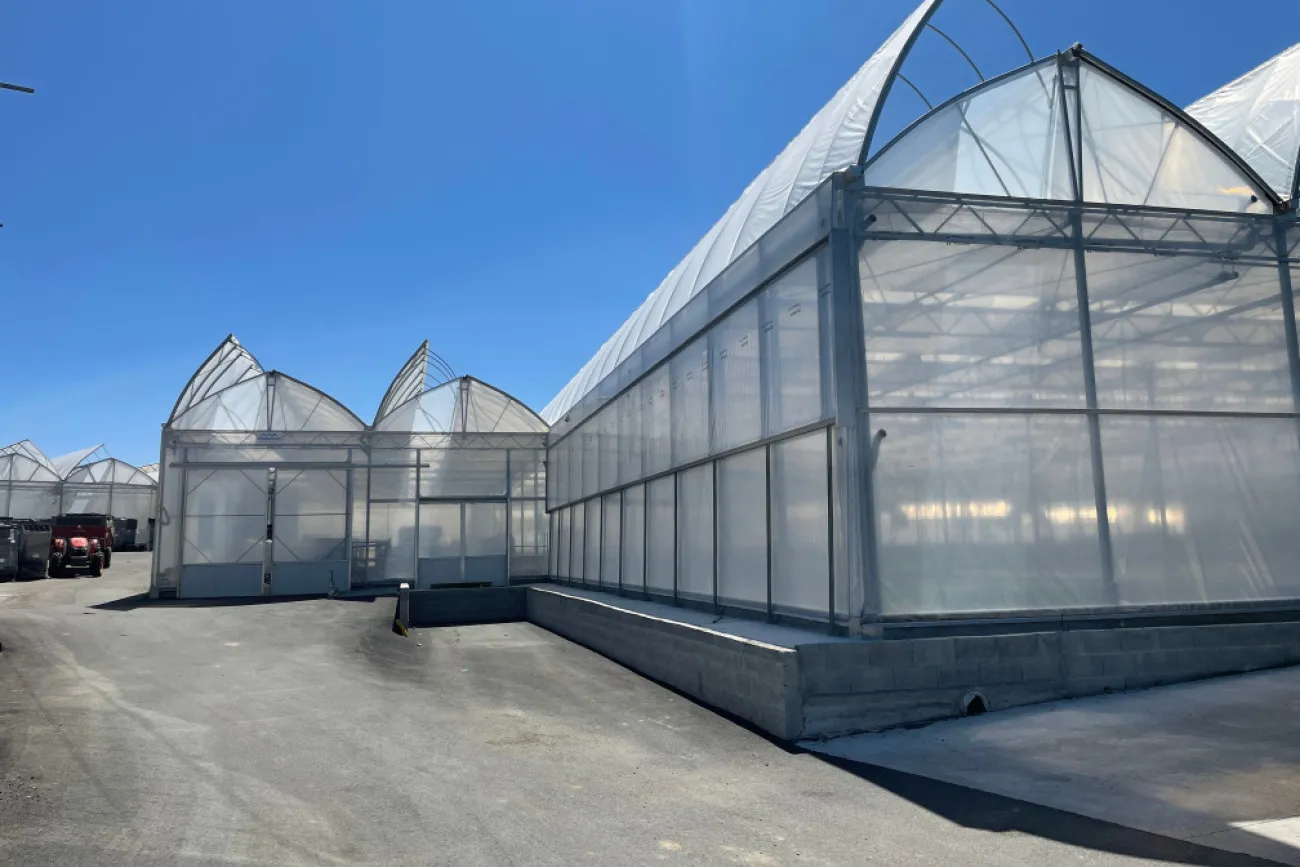
According to Maes and Van Hoof, the ventilation system also plays a central role in the success of Vermako greenhouses. Maes says: “With the semi-ventilation system, the ridge can be opened along its full length, improving air circulation in both the greenhouse and the crop, while also giving you much better control over ventilation. Plants in the centre of the greenhouse, for example, receive as much fresh air as those at the edges. Greenhouses with trusses can also still be fitted with the poly-ventilation system. As the two sections of roof ventilation can move independently, this design allows you to respond even more effectively to factors such as wind direction.”
“Our greenhouses also protect you from condensation problems,” Van Hoof adds. “This is partly because the thermal, diffusing film prevents condensation, but is further reinforced by the chimney effect created by semi- and poly-ventilation. It is particularly important for botrytis-prone or mould-sensitive plants that humid air is removed straight away in this way.”
Question about this story? Ask your question
Keep following this
Get an email when a new story is published. No account needed.
- SubjectGeneral







