









Climate adaptation requires a systems approach
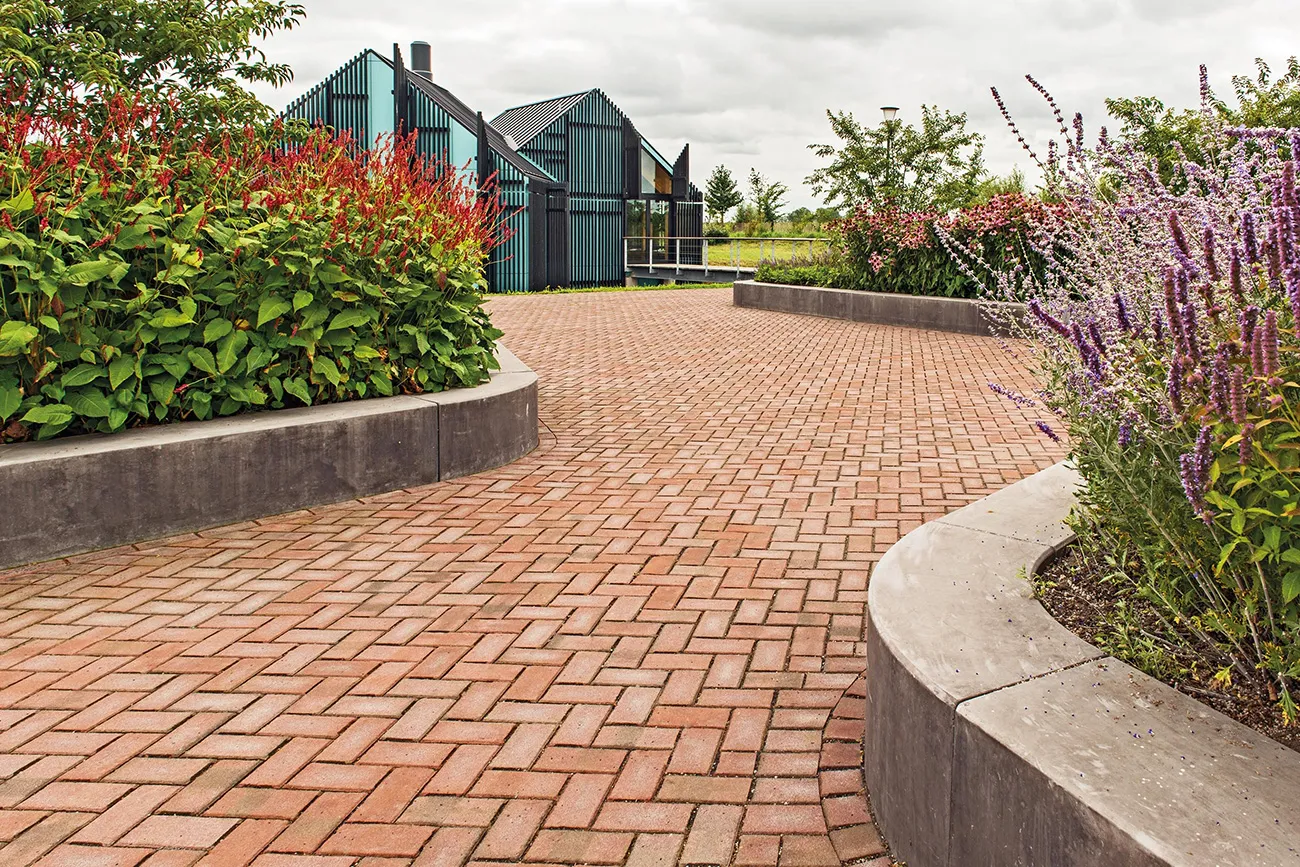
The effects of the increasingly wild swings between prolonged drought and intense downpours are becoming harder to ignore. Stricter urban planning regulations are intended to limit the damage. Anyone still planning to pave an area today would therefore be wise to look for a water-permeable alternative. One option, for example, is Vandersanden’s Drainflow® permeable clay pavers, although the manufacturer is quick to point out that this alone is not enough. A complete systems approach is needed.
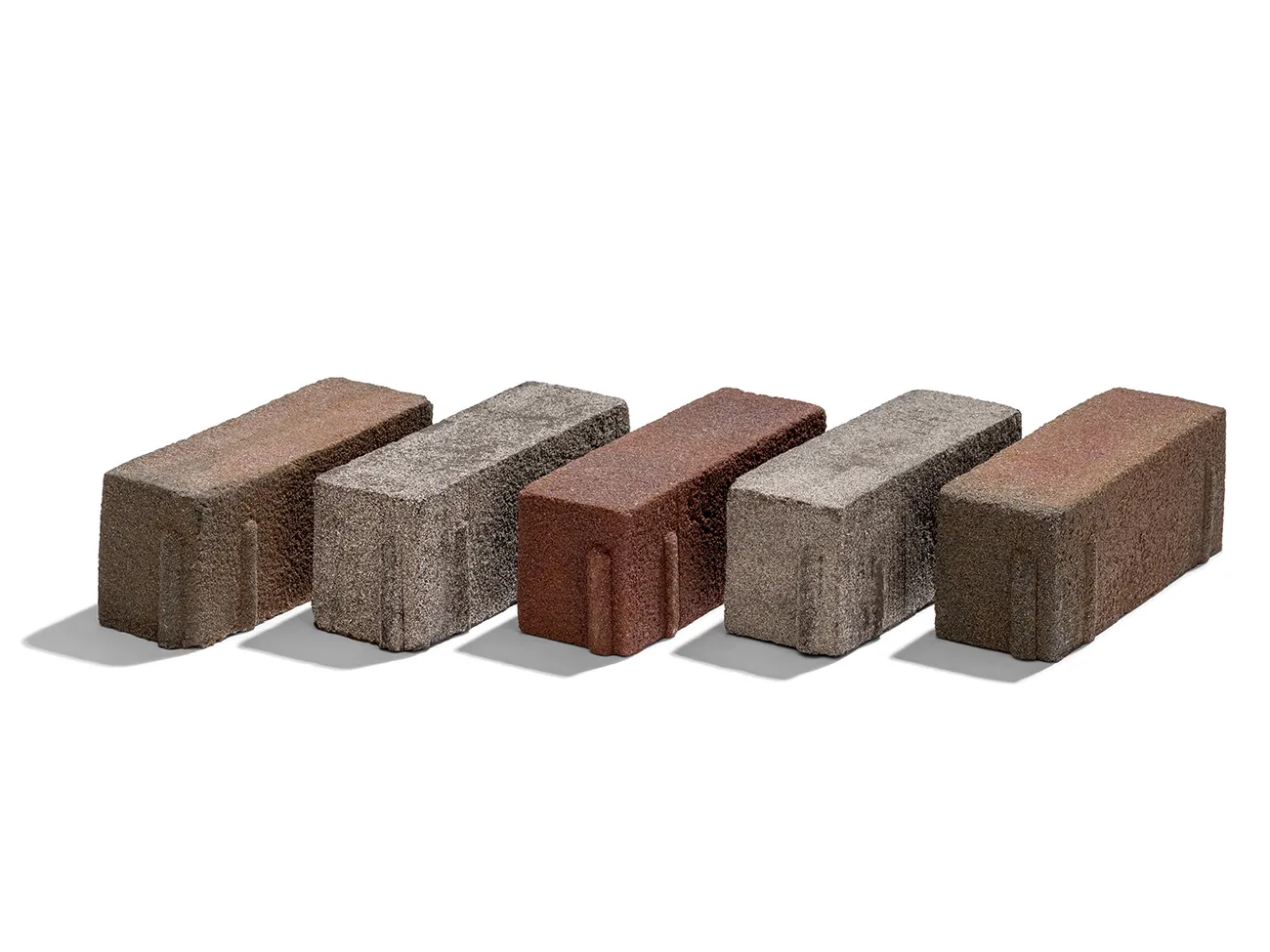
Drainflow® is a range of water-permeable clay pavers, available in various sizes and thirteen sanded moulded colours. “The pavers are designed with spacers or recesses on the short sides, or even all the way round,” explains Kris Van Duyse, Commercial Director Pavers at Vandersanden. “When laid, this creates an open space between each paver, allowing water to seep into the ground.”

The benefits of fired clay
The fact that Vandersanden offers a water-permeable, rather than water-porous, solution is inherent to the product. Van Duyse explains: “Fired clay is not porous, so you cannot simply make it water-permeable. On the other hand, it offers exceptional strength and durability, a proven average service life of 135 years, and excellent recyclability, for example.”
“Drainflow®’s water-permeable design means all these qualities can still be combined with the key water-permeability standards. And without all the extra work involved in using plastic or other spacers, either. Here, it is the design of the pavers themselves that ensures the required spacing, making installation straightforward.”
The system also determines water permeability
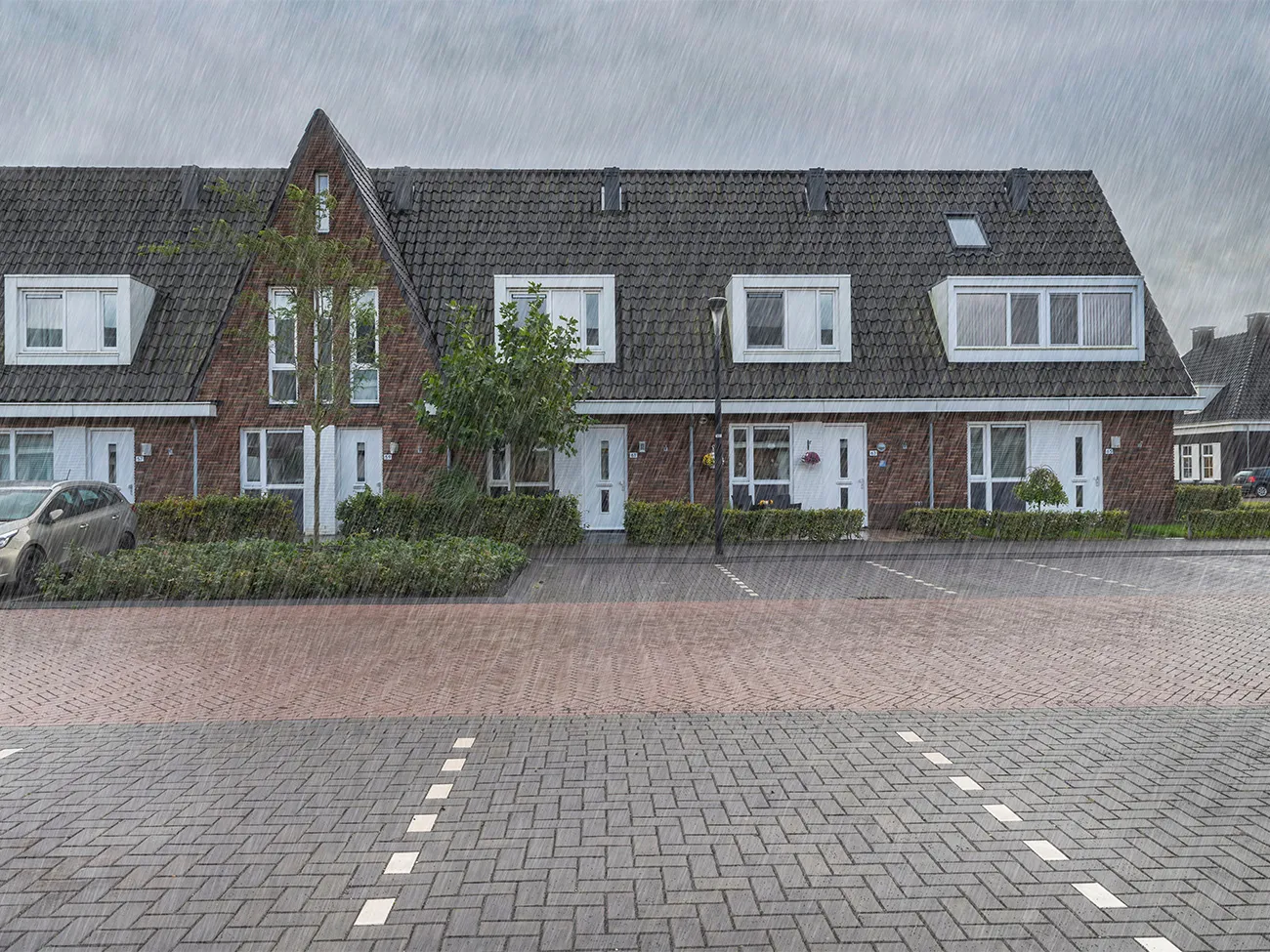
Drainflow®’s water-permeability has been tested across a range of test areas. “The minimum standard of 540 litres of infiltration per hectare per second, equivalent to twice the average rainfall, was comfortably exceeded,” says Van Duyse. “In some cases, the paving even allowed through more than twice that amount. But that is not down to our permeable pavers alone. The entire system build-up matters.”
As well as the pavers themselves, Van Duyse emphasises the importance of the materials used for the joints and sub-base. “Depending on the type of subsoil, it may also be necessary to install infiltration crates or other buffer systems. Periodic maintenance, in the form of brushing and high-pressure air cleaning, is also needed to maintain the high infiltration rate of the permeable paving.”
“Ultimately, all these factors help determine the system’s infiltration capacity and therefore the success of our product. It makes sense, then, that we provide sound advice on this too.”
The full cycle
At the same time, Van Duyse is well aware that the production of Drainflow® pavers is also part of a wider system. “In terms of water management, it is worth noting that clay extraction contributes to better water management. Clay extraction sites become new nature areas and retention basins, where water can be collected during periods of heavy rainfall and then returned to nature.”
With its ‘Together to Zero’ initiative, Vandersanden is taking things a step further.
“We want to be completely CO2-neutral by 2050,” he says. “This ambition requires action at every level: from manufacturing products that help create a climate-resilient environment to greening our production methods, dematerialising products as much as possible and generating our own electricity. Next year, we even plan to bring a carbon-negative brick to market,” Van Duyse reveals, “made from a by-product of the metal industry. This is how we deliberately look beyond our own sector.”
Question about this story? Ask your question
Keep following this
Get an email when a new story is published. No account needed.
- ThemeGreen space for everyone
- SubjectGeneral







