









Climate adaptation: the foundation of a pleasant living environment
Climate change is having an unmistakable impact on our daily lives. Heatwaves, heavy rainfall and prolonged dry spells: they are becoming increasingly frequent. These developments are causing considerable heat and water stress, particularly in built-up areas.
Based in De Meern, Landschappartners helps public authorities, developers and contractors take climate adaptation measures to reduce this stress for people, animals and plants. An integrated approach and a strong focus on sustainability are central to its work.
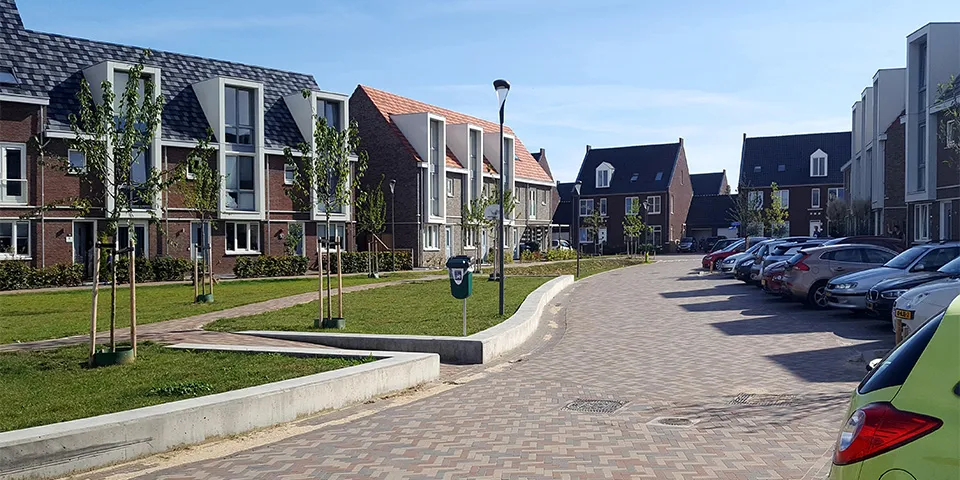
Waterways with rows of trees provide rainwater storage, cooling
and nature in this densely built residential neighbourhood (Veldjesgraaf, Ederveen).
Landschappartners has been active in landscape architecture and spatial planning since 1979. Over the past forty years, the firm has drawn up public-space plans for both rural and urban areas. “Climate adaptation is playing an increasingly prominent role in this work,” says Antony Marcelis, who runs the firm with fellow partner Corné van Overveld. “Following the extremely severe weather conditions of recent years, climate adaptation is hotter than ever. We are therefore increasingly being asked to reduce climate stress in urban areas and create a pleasant living environment for people, animals and plants alike.”
Balance
Adding planting often offers a way to create a more pleasant environment in which to live, reside and work. “Flowers and plants do more than simply brighten up the streetscape, they also help keep things cooler on hot days,” says Marcelis. “They can make a difference of 3 to 5 degrees. However, space is needed to provide these amenities. At the same time, the extra greenery must not hinder traffic. Smart and effective solutions are therefore needed to strike the right balance between hard surfaces and green space.” This has been Landschappartners’ speciality since the firm was founded, as the extensive list of reviews on its website shows. And whatever advice or design it comes up with, the solution is always sustainable. “This is very much at the heart of our approach and philosophy,” Marcelis continues. “For example, we helped develop the Nationaal Pakket Duurzame Stedenbouw in 1999 and two Voorbeeldenboeken Duurzame Stedenbouw, in 2005 and 2011. These publications demonstrate our expertise and underline our ambition to contribute to an environmentally friendly living environment.”
Question about this story? Ask your question
Keep following this
Get an email when a new story is published. No account needed.
- ThemeGreen space for everyone
- SubjectGeneral







