









Climate roofs with clout!
Text Eva GoossensImage Embuild, EnGredi, Soprema, Krinkels nv
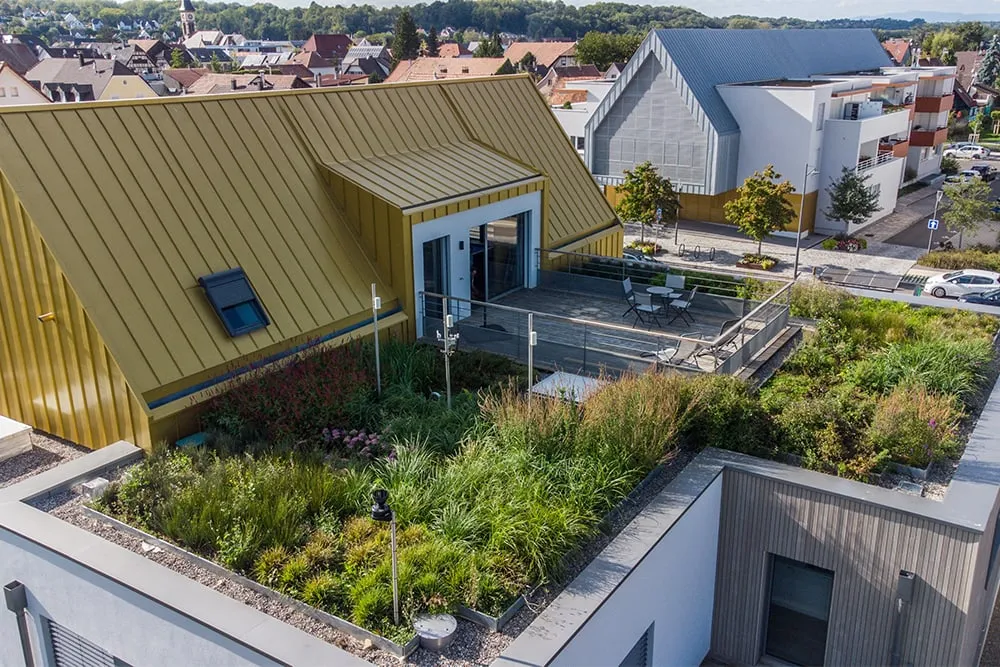
Climate change is an increasingly urgent problem, and there is still plenty of work to do in the construction sector, especially with the European Green Deal in mind. Flat roofs have the potential to help tackle the climate challenge. Embuild Vlaanderen and Buildwise agree, and with the Klimaatdak protocol they aim to encourage the construction sector and all stakeholders to make better use of these often untapped surfaces.
The construction sector as a whole has heard the call for greater sustainability. Everyone can contribute, and it is important to keep reiterating this. Following the Flemish concrete agreement, the ‘Klimaatdak’ has now been in place since the beginning of this year: a Flemish protocol that can help achieve climate targets. It also aims to make a positive contribution to other societal challenges, such as biodiversity loss and the growing scarcity of available space.
140 … and counting
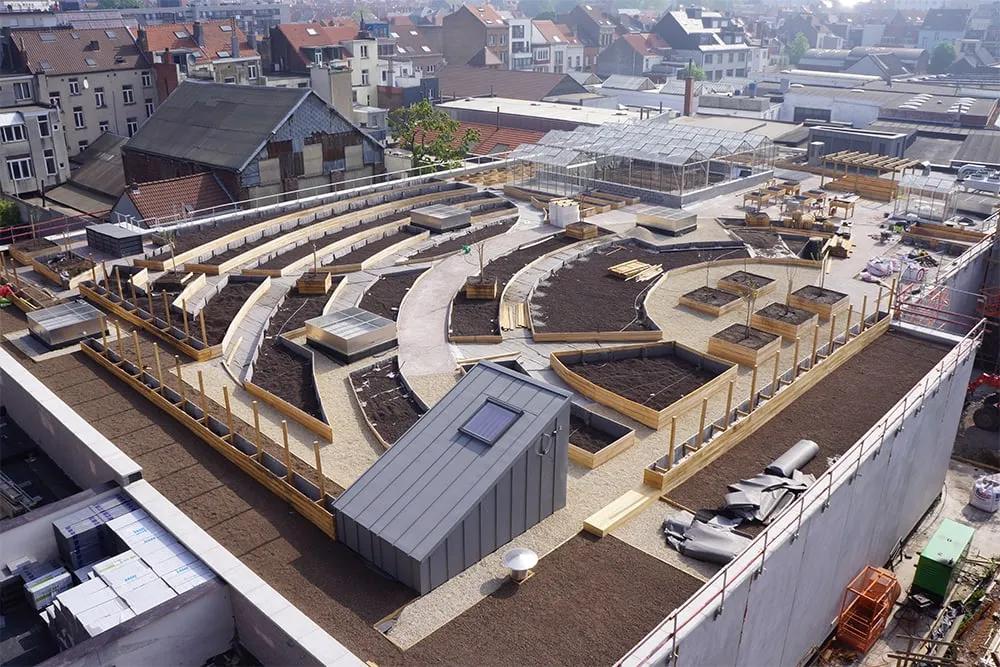
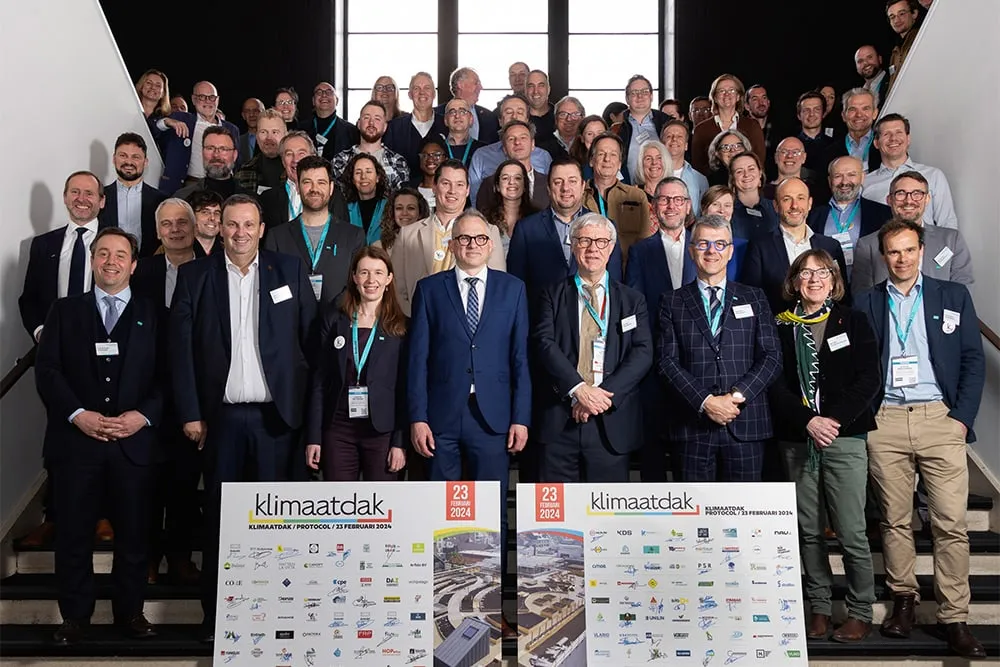
More than 140 stakeholders have now signed the Klimaatdak protocol. They include not only contractors, manufacturers of building materials and public authorities, but also engineering consultancies, designers and architects, all of whom have an important role to play. The aim of the protocol? To build broader support for climate roofs, focusing not only on greater sustainability but also on making the best possible use of the space available to us. Circularity and reducing CO2 emissions are important themes, but there is more. A flat roof can bring together several functions, including greater biodiversity, improved water retention, renewable energy, and space for recreation and social interaction. In other words, a climate roof is about more than just green roofs. Alongside green roofs, the protocol also focuses on blue, or water-retention roofs; yellow, or energy roofs; and red, or functional roofs, which create additional living space. Each roof needs to be assessed to determine how best to make it multifunctional. There is, of course, no ‘one size fits all’ solution: the choice always depends on needs, surroundings and feasibility. What is more, it is not an either-or proposition. Different functions can often be combined to best effect.
The potential of moss
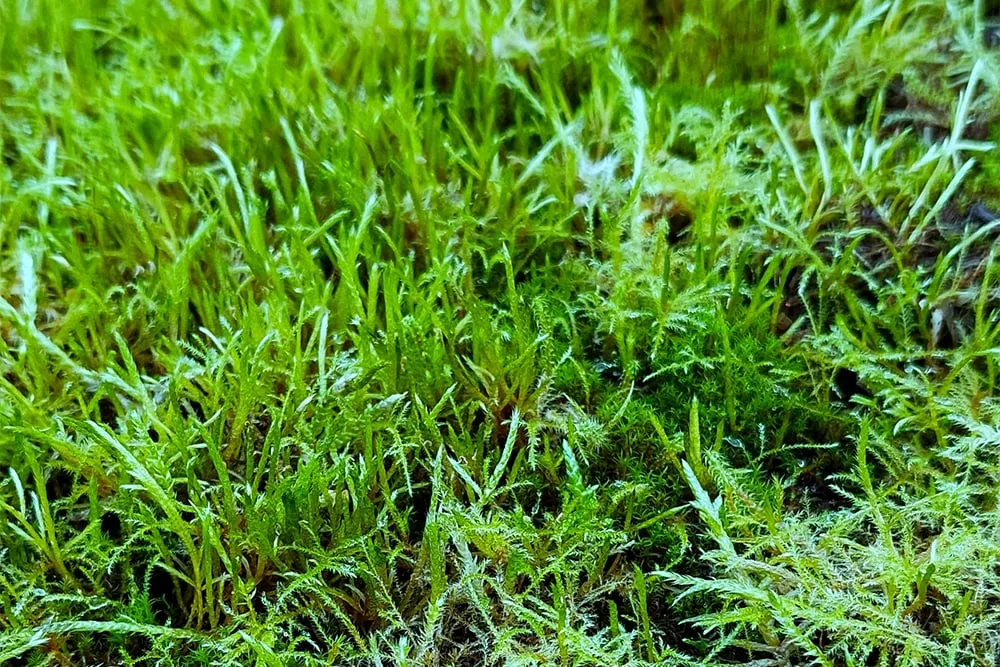
One of the signatories to the Klimaatdak protocol is EnGreDi, an innovative company that develops construction solutions using mosses. While moss is generally kept off roofs, EnGreDi is researching it as an alternative to conventional green roofs. Moss mats are not only suitable for lightweight green roofs, as they require no substrate layer, but have also proved to be powerful botanical air filters. André Voet, CEO of EnGreDi, says: “Mosses filter around 140 kg/ha of fine particulate matter from the air every year, almost a hundred times as much as sedum. Moss also has excellent properties when it comes to CO2 capture and water retention.” The downside is that moss grows slowly, and harvesting it from the wild is clearly not the answer. That is why EnGreDi is conducting extensive research into the in-vitro cultivation of mosses, including as part of a VLAIO development project. André says: “The extreme weather conditions presented a number of challenges when we were hardening off our in-vitro mosses in the field, which we had not encountered in our earlier tests. We are therefore taking the time to make the necessary technical improvements: hardening off the moss for extreme climatic conditions, choosing the most suitable moss for each application, and so on. The various field trials under way are progressing in the right direction, and we plan to develop our first pilot projects further within a few months. We have already done a great deal of pioneering work in biotechnology, but there are still some important steps to take commercially.” There is sure to be more to come.
Question about this story? Ask your question
Keep following this
Get an email when a new story is published. No account needed.
- SubjectGeneral







